
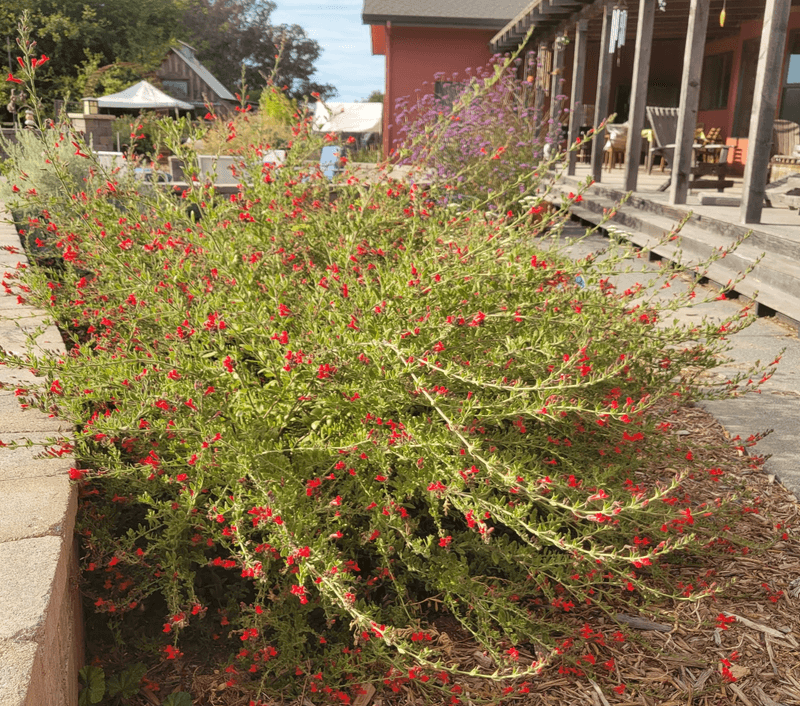
Anna’s hummingbirds stay in California all winter, and many of them start nesting as early as December. A sugar-water feeder can help, but it cannot give them the tiny insects and steady natural nectar they need to raise healthy chicks.
If your feeder goes moldy or empty during a cold snap, those birds may be left with nothing nearby. The good news is that a handful of tough, water-wise native plants bloom right when Anna’s need them most, and they can turn your yard into a year-round hummingbird refuge.
1. Fuchsia-Flowered Gooseberry
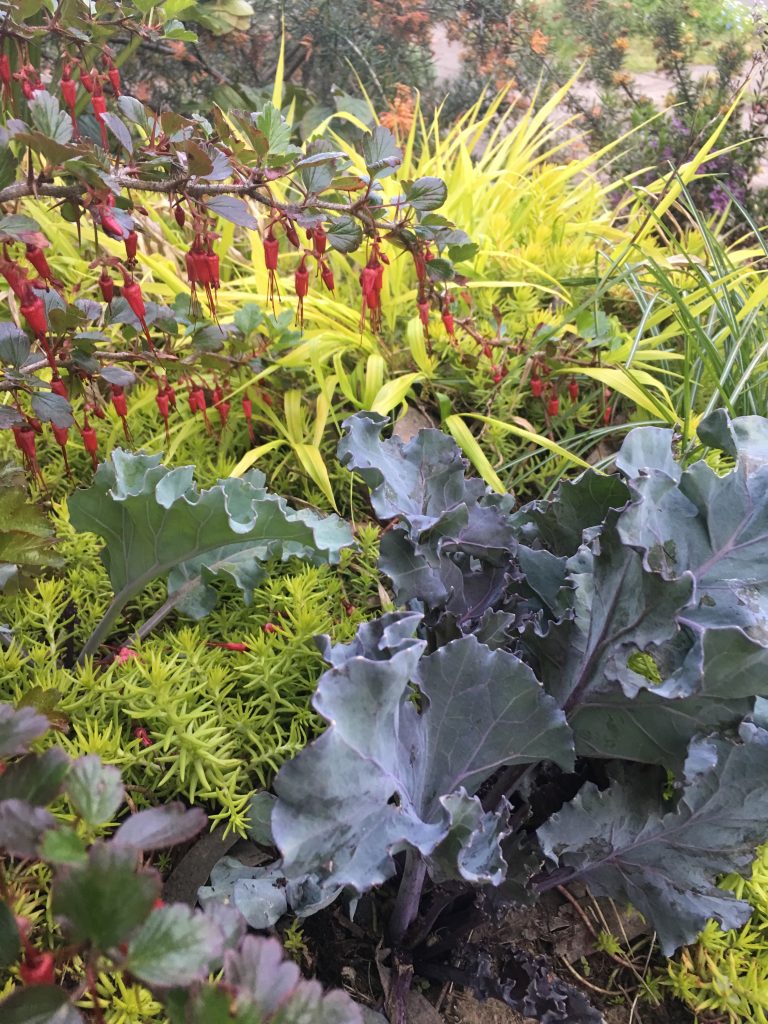
Picture a cold January morning, and a male Anna’s hummingbird is already hovering at a shrub dripping with red, lantern-shaped flowers. Fuchsia-flowered gooseberry (Ribes speciosum) often starts blooming in winter, right as these birds begin building nests.
The flowers hang down like little chandeliers, which suits a hummingbird’s hovering style perfectly. Bees struggle to reach the nectar, so more of it can stay available for your birds.
Plant it in partial shade, especially under oaks or along a fence. It handles dry summers well once established and may drop its leaves in heat, which is normal.
Mind the spines, and keep it away from walkways.
2. Manzanita
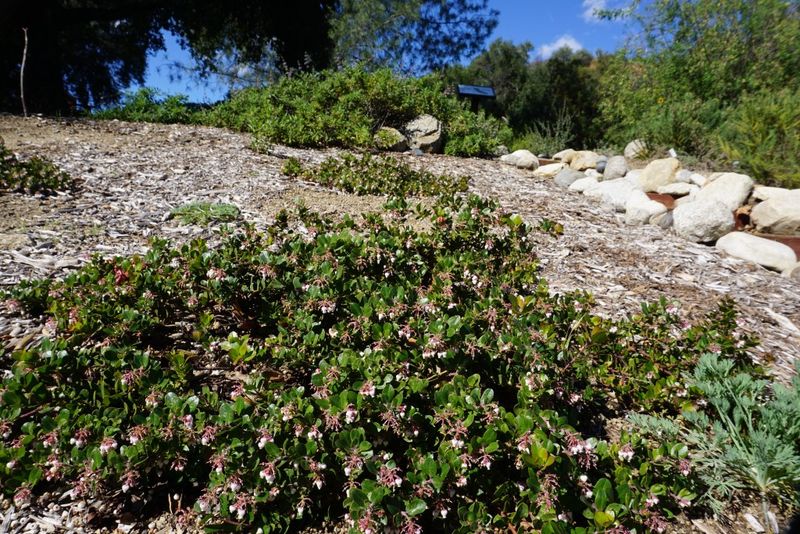
Few plants say California quite like manzanita. Its twisting red bark looks sculptural all year, but the real winter gift is thousands of small pink or white bell-shaped flowers.
Many manzanita varieties bloom from December into March, a time when little else is flowering. Those blossoms can also attract small insects, and hummingbirds need that protein to feed their growing chicks.
Sugar water simply cannot provide it.
Choose a size that fits your space, from low groundcovers like ‘Emerald Carpet’ to upright forms like ‘Howard McMinn.’ Give it sun, fast-draining soil, and almost no summer water. Overwatering is the most common way homeowners lose these shrubs.
3. Chaparral Currant

Here is a plant that quietly fills a hungry gap. Chaparral currant (Ribes malvaceum) can push out its soft pink flower clusters as early as November, sometimes even before the first big rain.
That early timing matters. Anna’s hummingbirds do not migrate, so late fall can be a lean stretch, and a reliable natural source nearby may help them stay strong heading into nesting season.
It loves dry shade and slopes, and it asks for little once settled. Pair it with manzanita and you can stretch the bloom calendar for months with almost no extra watering.
4. Hummingbird Sage
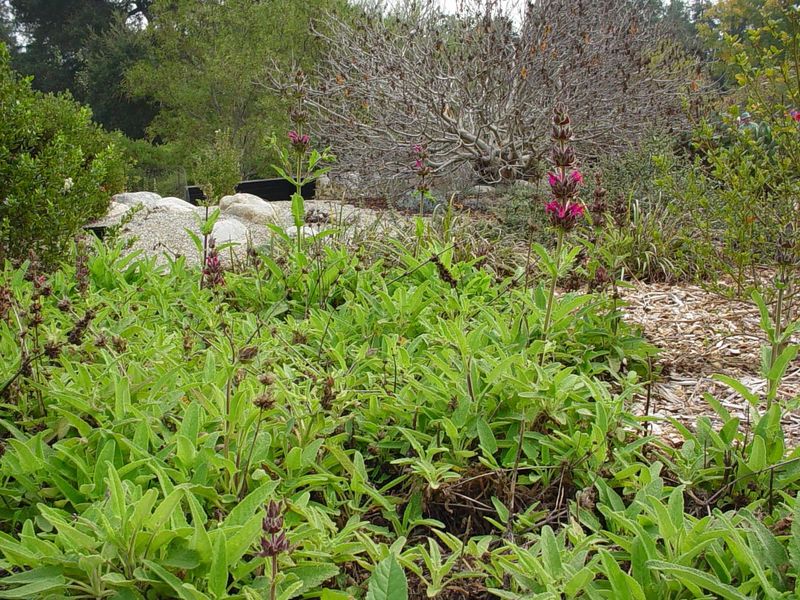
The name is not a coincidence. Hummingbird sage (Salvia spathacea) sends up rosy magenta flower stalks starting in late winter, and Anna’s hummingbirds tend to find them fast.
Brush the fuzzy leaves and you will smell a fruity, sagey scent. It spreads slowly into a lush groundcover, which makes it a handy fix for dry shade where lawn grass struggles.
Tuck it under oaks or along a north-facing wall. It can go mostly dormant in summer heat, so do not panic and drown it.
Fun fact: it is one of the few native sages that actually prefers shade.
5. California Fuchsia
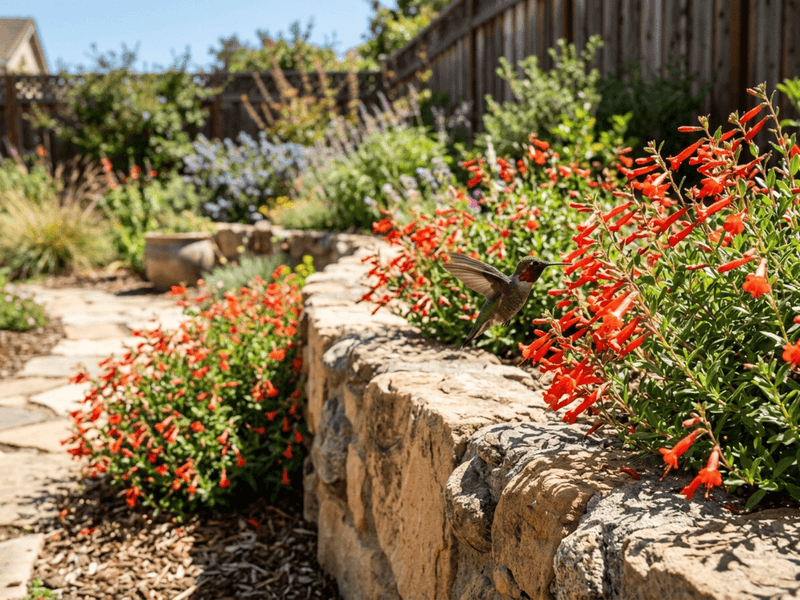
Why would a fall bloomer land on a winter list? Because California fuchsia (Epilobium canum) is the bridge that carries Anna’s hummingbirds from late summer straight into the cool season.
Its fiery orange-red trumpets often keep going into November in milder coastal and valley yards. When most gardens look tired and crispy, this one is still serving nectar.
It thrives in full sun and poor soil, and it shrugs off drought. Cut it back hard in late winter, and it returns bushier.
Plant it near a window, and you will have front-row seats.
6. Island Bush Snapdragon
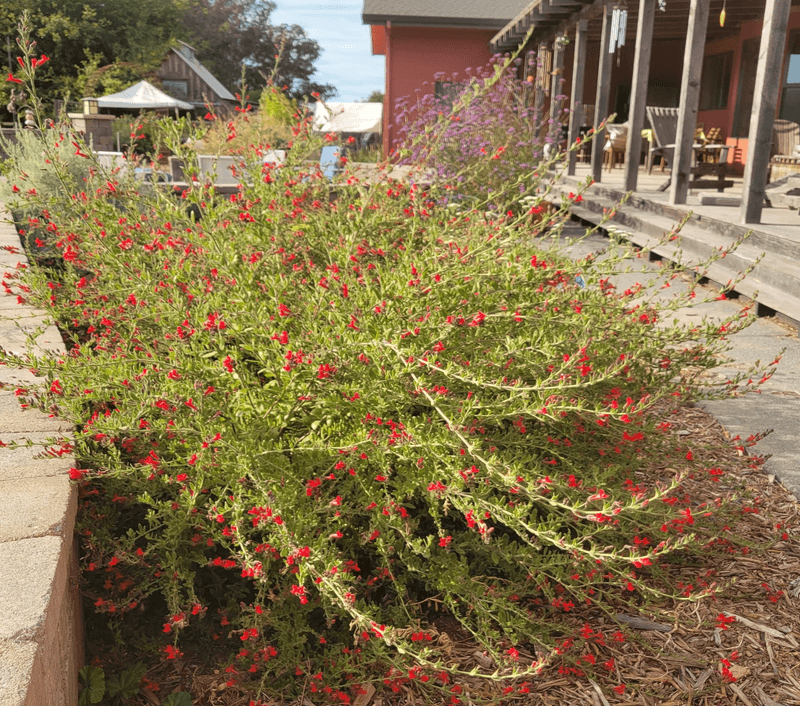
Native to the Channel Islands, island bush snapdragon (Gambelia speciosa) brings a splash of red when your garden needs it most. In frost-free coastal yards, it can flower on and off nearly all year.
That near-constant bloom is a big deal. A feeder needs cleaning every few days in warm spells to stay safe, while this shrub refills itself.
It loves sun along the coast and a little afternoon shade inland. It looks great spilling over walls or slopes.
Inland gardeners should note it may need protection during hard frosts.
7. Pink Flowering Currant
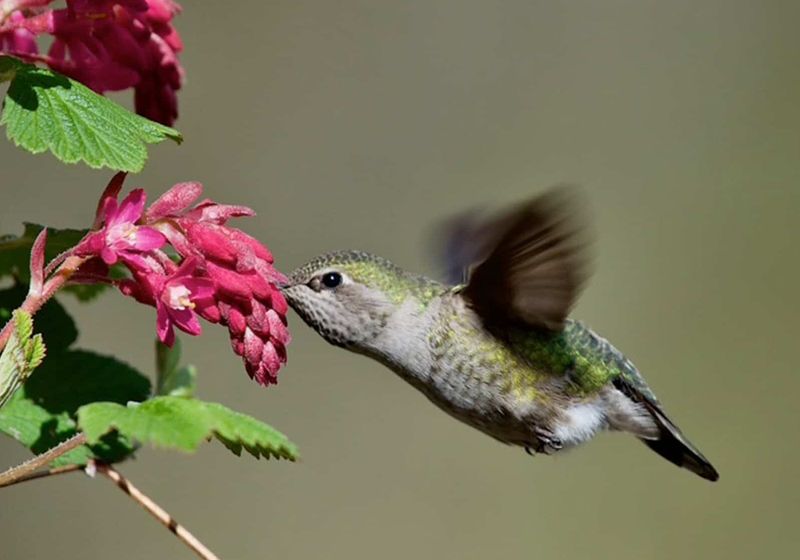
Gardeners in Northern California often call pink flowering currant (Ribes sanguineum var. glutinosum) the first sign that spring is coming. Long pink flower clusters droop from bare branches in late winter.
Timing is everything here. Anna’s hummingbird moms may be feeding chicks by February, and they need nectar plus insects within a short flight of the nest.
A blooming currant nearby can make that job much easier.
It handles part shade and seasonal water, and it fits nicely along a fence line. Keep your feeder if you love it, just clean it often and let plants like this do the heavy lifting.