
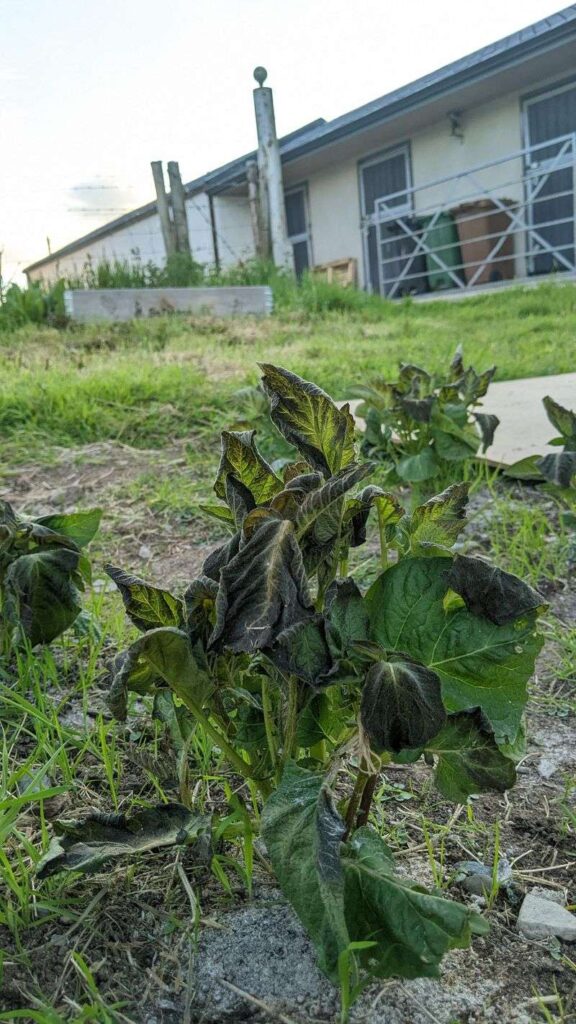
Walk out one cold morning and find your sweet potato vines drooping and black, and it is easy to panic. Your crop is still down there in the soil, and what you do next can help it keep well into winter.
Acting quickly matters, but you do not need to believe a rumor about a one-day deadline. Here is a calm, step-by-step plan for Southern gardeners.
Act promptly, but don’t assume a 24-hour deadline
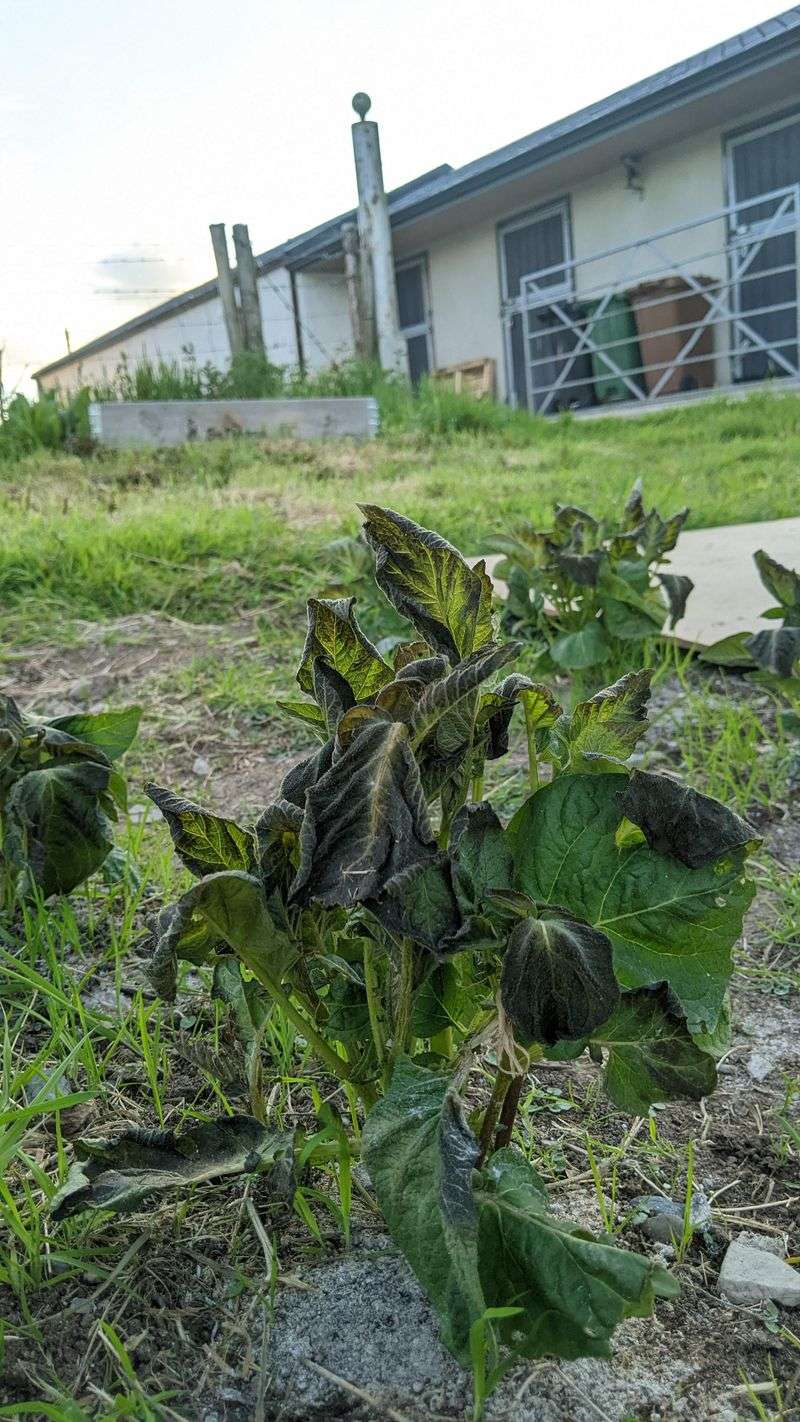
Black, wilted tops after a hard frost are your signal to get moving. Cut the vines away from the roots and dig as soon as you can.
UMass Extension says to harvest as quickly as possible once the tops turn black, and University of Illinois Extension advises cutting vines right away to help keep decay from spreading.
You may have seen the claim that roots start rotting after exactly one day. The extension guidance does not say that.
It supports urgency, not a countdown clock, and it does not say roots are doomed after 24 hours. A day or two of delay for rain or work is not the same as a lost crop.
Black vines alone do not prove frost was the cause. Disease can also hurt vines and stems.
Texas A&M’s disease handbook describes foot rot with browning at the soil line and yellowing, dropping leaves near the crown. Frost is a likely culprit when a cold night came first and the whole planting blackened at once.
Frost on the vines does not tell the whole root story
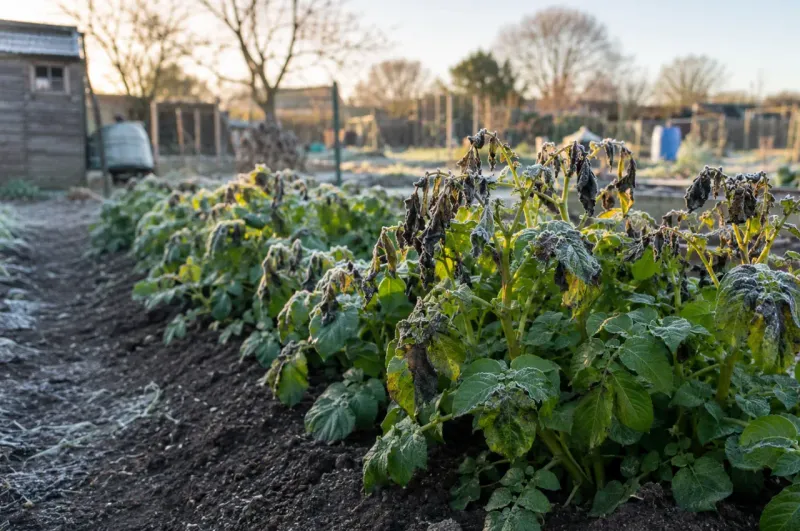
Frost hits leaves first, and the soil acts like a blanket for what lies underneath. A cold night can wipe out the foliage while roots a few inches down stay fairly protected.
NC State Extension notes that roots still in the ground may escape frost injury, depending on the soil temperature around them.
Roots close to the surface are more exposed. A hard frost can damage them, and colder soil can lower root quality and storage life, as Iowa State Extension explains in its harvest advice.
Iowa State suggests harvesting right before or after a vine-killing frost.
What matters is how cold the soil gets and for how long. Sources point to chilling trouble below roughly 50 to 55 degrees F, with time spent in the cold also counting.
A mild dip is a different situation from a week of icy ground. Penn State Extension also lists frost as a reason to get roots out of the garden at the right time.
Cut the vines, then lift roots carefully
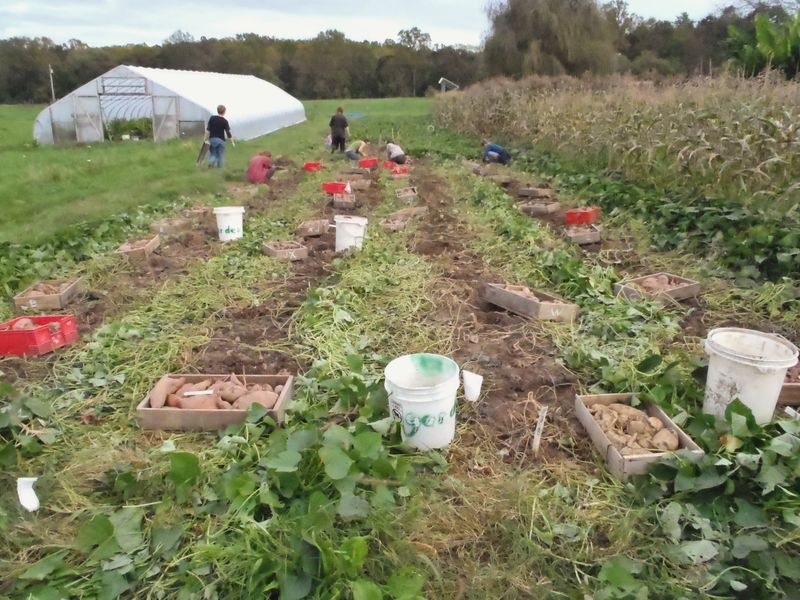
Start with the shears. Cut the dead vines away from the crowns and haul them off, which helps keep any decay from creeping toward the roots.
Leave a few inches of stem so you can see where each plant sits.
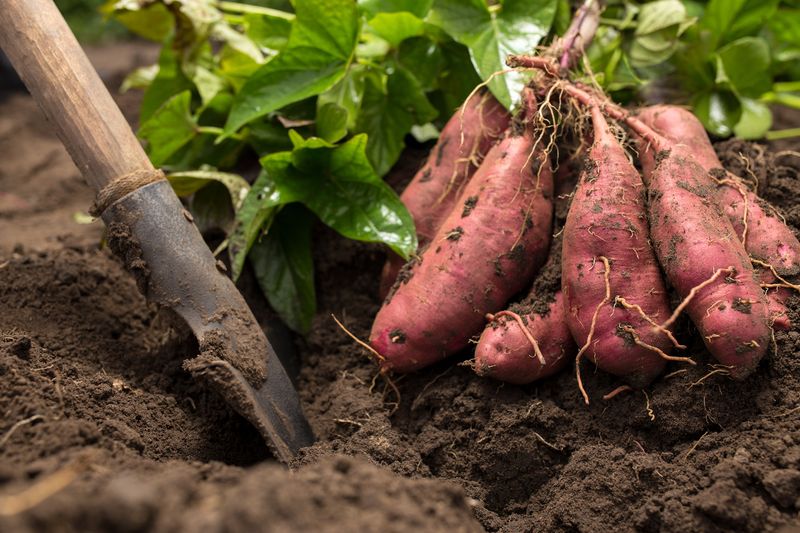
Next comes the digging, and this is where patience pays. Sweet potato skins are thin, and cuts or bruises give decay an easy way in, as noted by Illinois Extension.
Push a fork or shovel into the soil well away from the plant, a foot or so out, then pry up the soil rather than stabbing toward the center.
Lift each root by hand and brush off loose dirt without scrubbing. NC State’s postharvest guide stresses careful handling for the same reason.
Set any roots you nick aside and eat those first, since they will not store as well as clean ones.
Bring harvested roots out of the cold
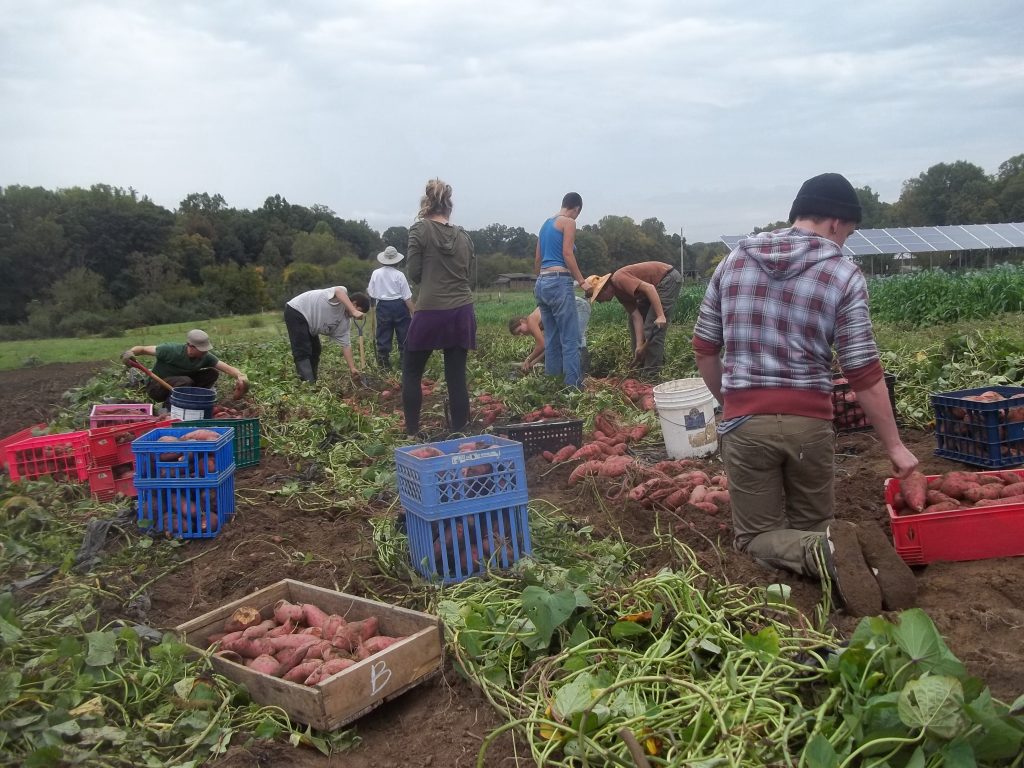
Roots left underground and roots already dug face different risks. Soil gives buried roots some cushion.
Once a root is out of the ground, it loses that cover, so an evening on the lawn can matter more than a night in the bed.
Move dug roots indoors or under cover the same day. NC State Extension warns that roots left in the field overnight can be substantially injured.
It also explains that chilling injury depends on both temperature and how long roots are exposed.
That means not every cool night does the same harm. A brief, mild chill is less worrying than a long stretch near freezing.
Still, there is no reason to gamble. A garage, porch with a closed door, or spare room keeps harvested roots out of the danger zone while you get ready to cure them.
Cure roots before storing them
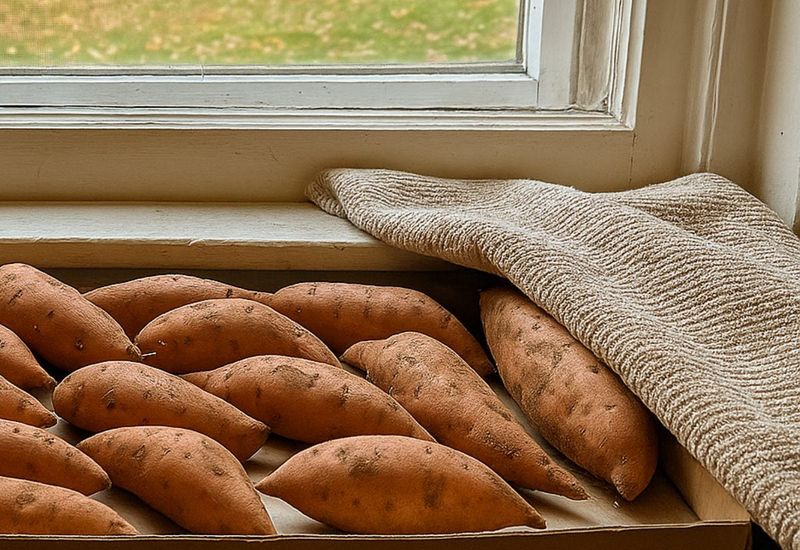
Skip the hose. Washing can add moisture and invite decay, so leave the roots unwashed.
Curing is the step that heals small harvest wounds. Roots go into warm, humid conditions first, then move to a spot that is cool but not cold.
Extension offices do not all give the same numbers. Iowa State recommends about one week at 80 to 85 degrees F with 90 to 95 percent relative humidity.
Illinois Extension suggests 10 to 14 days at around 85 degrees F and 85 percent humidity.
Treat those as examples of varying advice, not one formula. Home setups rarely hit exact numbers anyway.
A warm closet or small room with a pan of water nearby may come close. After curing, move roots to a cool, not cold, place and check them now and then for soft spots.
Plan around local frost risk, not a universal first frost
The South does not share one frost calendar. A North Texas gardener may see a killing freeze weeks before a Gulf Coast neighbor, and parts of Florida may skip one altogether.
Texas A&M AgriLife advises harvesting late in fall but before an early frost.
Florida runs on a different rhythm. UF/IFAS describes sweet potatoes as a warm-season crop, generally grown in zones 9a to 11b, and says the season may stretch when conditions cooperate.
In those areas, a forecast matters more than a date.
Watch your own forecast and soil. If a vine-killing frost does arrive, cut the vines, dig promptly, keep roots out of the cold, and cure them before storing.
That plan can lower the chance of cold injury and decay without promising a deadline or a loss.
Your garden answers to its own weather, so let the thermometer set the schedule.