
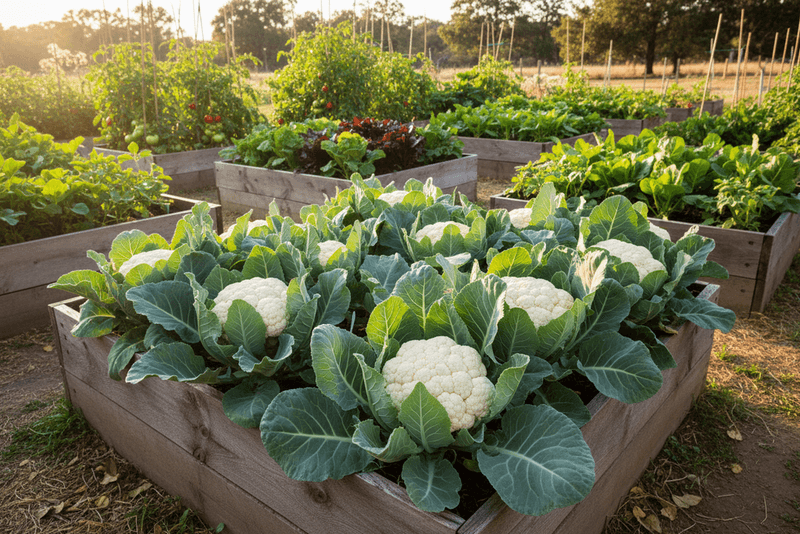
A white cauliflower head that turns yellow or looks fuzzy can make any gardener worry. The cause is not always the sun, and the right fix depends on what you are actually seeing.
Tying the outer leaves over a young head can protect its color, but only in the right situation. Here is how to tell the problems apart and decide whether to cover your plants.
Sun-related yellowing and fuzziness are not the same problem

Sunlight can discolor a white curd, but it does not explain every odd-looking head. According to Oregon State University, sun exposure can yellow or green a curd, and overmaturity can also cause yellowing.
So yellow color by itself does not prove the sun was the culprit.
Texture is a separate matter. A ricey or velvety curd is made of tiny developing flower buds, and it is linked to high temperatures during curd development.
Overmaturity and fast growth can make it worse, and shade will not repair it.
Gray fuzz is something else again. University of Minnesota Extension lists fuzzy gray growth on leaf undersides as a possible downy mildew symptom, often alongside leaf spots.
Flip a few leaves over before you decide what you are dealing with.
Cover a developing white curd only when it needs shade
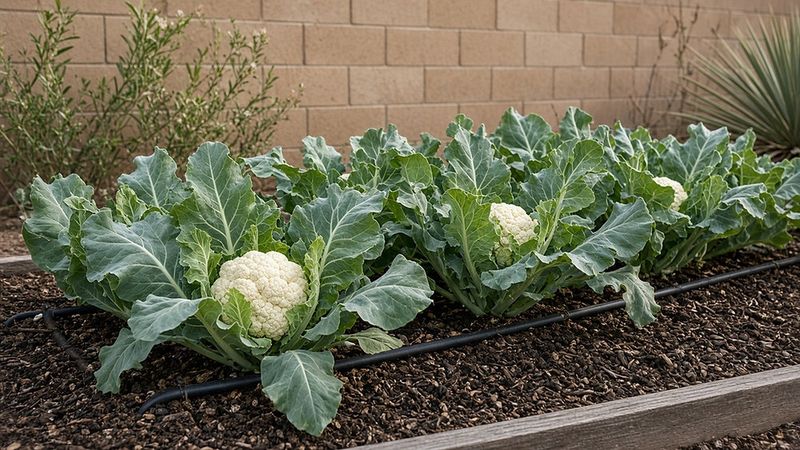
Here is the decision point: consider blanching when a white cauliflower curd is about 2 to 3 inches across and needs shade. UF/IFAS Gardening Solutions describes gathering the outer leaves over the head and securing them to keep light off it.
Think of it as prevention. Covering protects a curd that is still developing, but it cannot bring back color on a head that has already yellowed.
It also will not fix a ricey texture or cure a plant problem.
Check your variety before you grab twine. Self-blanching types have leaves that wrap the head on their own, so they may already shade themselves.
If the curd is still tiny or already large and discolored, tying leaves is probably not the answer.
Gather the leaves without sealing in the curd
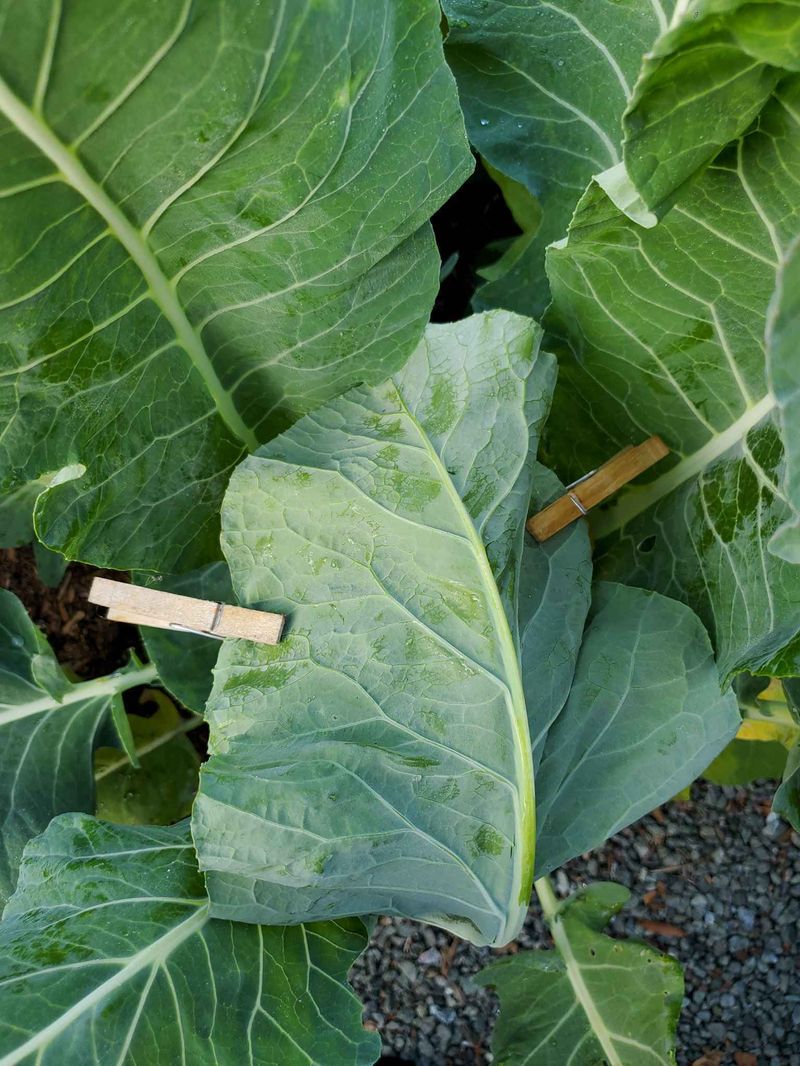
Start with the longest outer leaves and pull them up and over the curd. Secure them firmly enough to block light, but not so hard that you crush or tear the leaves.
Soft twine, a rubber band, or a garden clip all work.
Warm, humid weather changes the technique. Oklahoma State Extension advises tying higher above the head to allow airflow, which may reduce the risk of rot.
In Gulf Coast fall weather, a loose tent usually beats a tight wrap.
Keep the purpose clear. The leaves shade the curd from light, and that is all.
Tying them does not establish frost protection, so do not count on it when a cold night is forecast. For more on the technique, see UF/IFAS guidance.
Leave colored cauliflower and Romanesco exposed to light
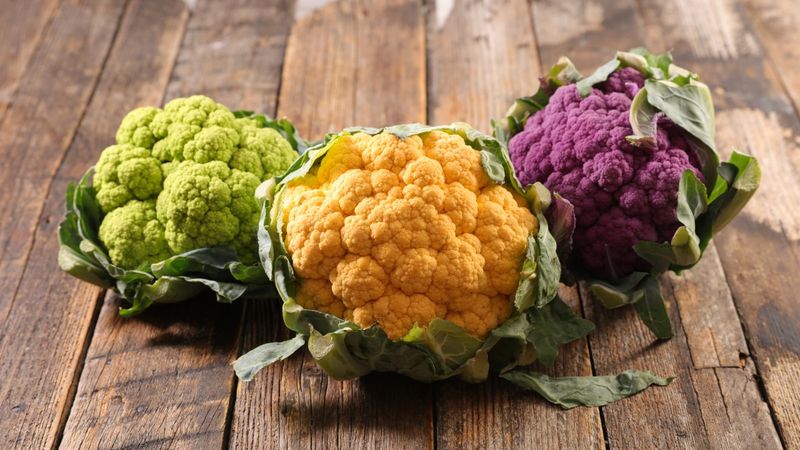
Orange, green, purple, and Romanesco types are grown for their color, and they need light to develop it. University of Minnesota Extension notes that these should not be blanched if you want that characteristic color.
So the leaf-tying advice from the headline applies to white curds only. A purple head wrapped in leaves may come out pale and dull, which defeats the reason you planted it.
If you grow a mix, label your rows. A quick tag saying white, tie or colored, leave open saves guesswork when you are out in the garden checking heads.
Check tied heads often and harvest while they are compact
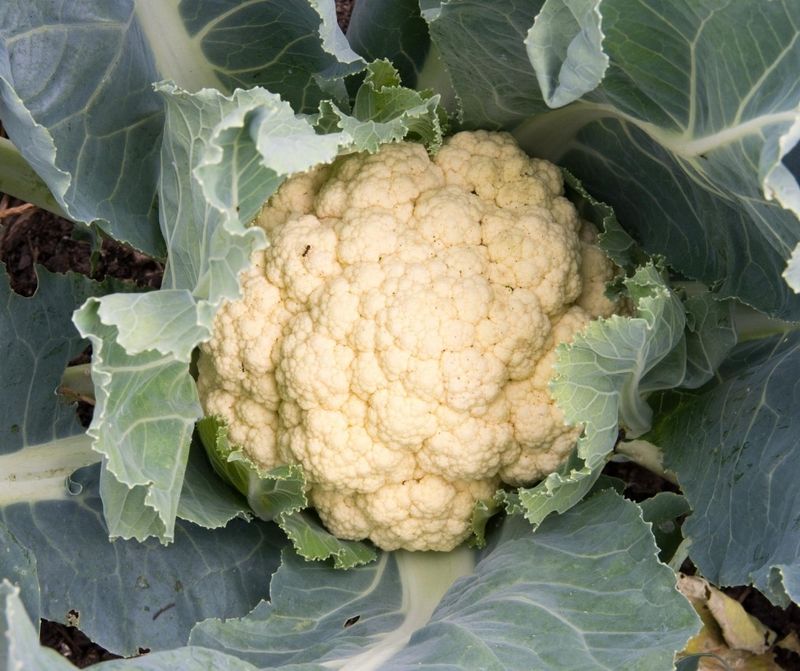
Once leaves are tied, peek under them often. University of Illinois Extension advises harvesting when the curd is firm and compact, before it separates or becomes overmature.
There is no fixed countdown from tying day to harvest day. Growing conditions change the pace, and warm spells can speed things up.
Judge the head itself rather than the calendar.
A good habit is a quick look every day or two. If the surface looks loose, grainy, or starts to spread apart, cut it soon.
A head left too long can turn ricey and yellow no matter how well it was shaded.
Keep fall planting and frost advice local
Planting dates depend on where you garden. UF/IFAS lists North Florida planting from late August through January and Central and South Florida from September through January.
Texas A&M AgriLife gives different last optimum planting dates across its five regions, from August 1 to November 20. Use the dates for your own area.
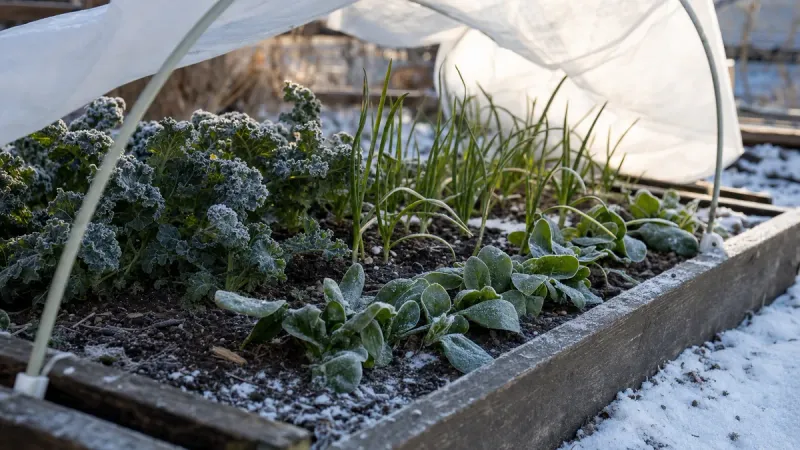
Frost advice varies too. Texas A&M classifies cauliflower as frost-tolerant, while Oklahoma State says it handles light frosts but suggests planning harvest before the first expected frost.
A hard freeze is a different story from a light one.
Keep the two jobs separate. Seasonal planning decides when you plant and cut, while tying leaves only shades a curd from light.
Blanching is not an established way to protect a crop from cold.
A calendar tells you when to plant, and the curd tells you when to cut.