
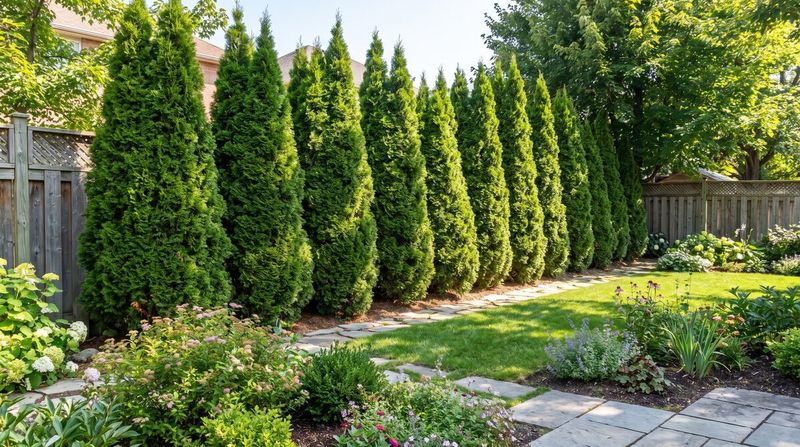
A privacy screen has to look good and hold up through long Texas summers, so the plant you pick matters. Maybe your arborvitae looks thin, or you are starting fresh and want something that fits Central Texas.
Two native evergreens, yaupon holly and eastern redcedar, are worth a close look, and each suits a different kind of yard. Here is how to match the plant to your space, your goals, and your site.
Arborvitae performance depends on the plant and the site
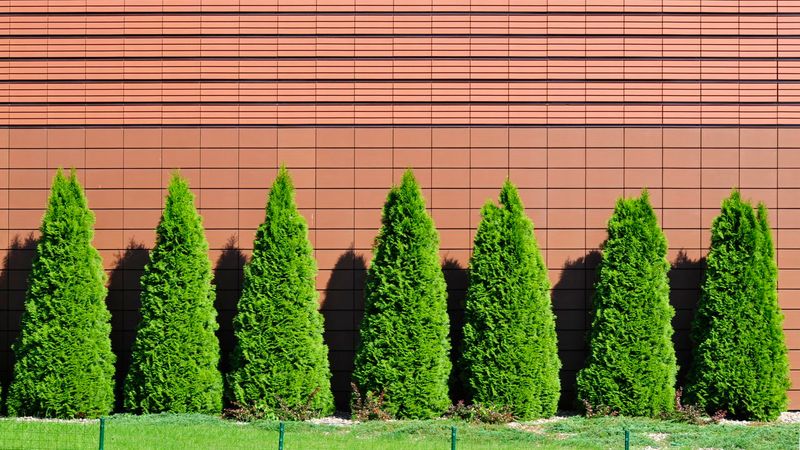
Arborvitae is not one plant. The name covers several species and many cultivars, and they do not all handle Texas the same way.
San Antonio’s Garden Style guide describes Oriental arborvitae (Platycladus orientalis) as heat- and drought-tolerant, though slow-growing.
That same guide warns about a common pruning mistake. Cutting into old brown wood can leave bare areas that do not fill back in.
If your hedge has gaps, heavy pruning may be part of the story.
You may also run across advice saying arborvitaes struggle in heat and drought. One example is a Utah State University Extension answer describing sensitivity under the conditions discussed there.
It is not Texas-specific, so it cannot tell you how every arborvitae will do in Central Texas.
Before pulling anything out, find out which arborvitae you have. Then look at the site.
Poor drainage, a spot with reflected heat, a plant that was never settled in well, or past hard pruning can each cause thinning. If the plant is still putting out green growth, it may deserve another look before you replace it.
Yaupon can form a native evergreen screen
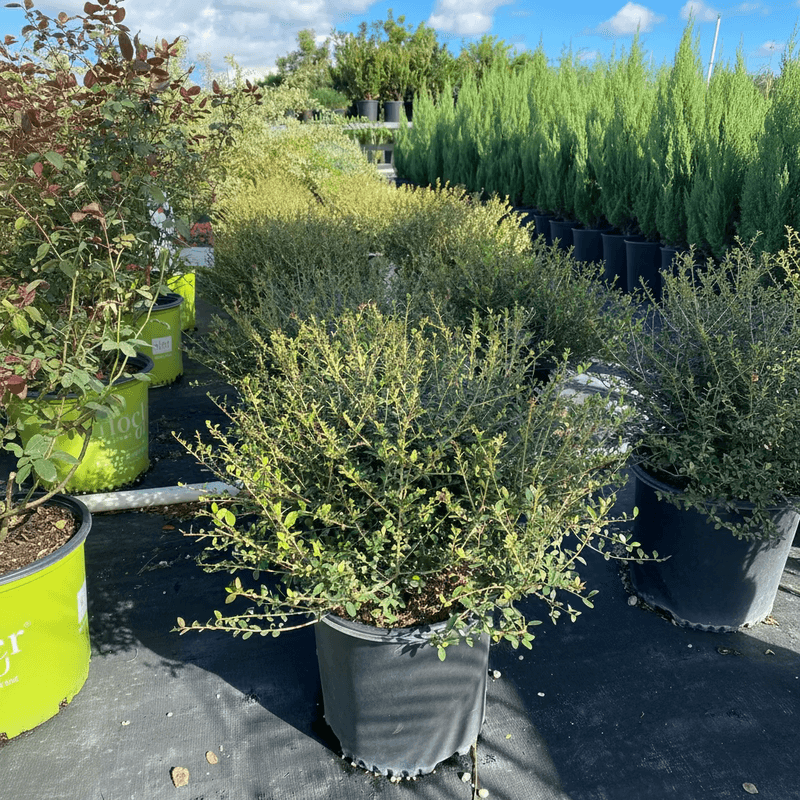
Yaupon holly is a strong candidate if you want a native evergreen screen. Austin’s Watershed Protection plant guide lists it as native to the Blackland Prairie, evergreen, and 12 to 20 feet tall at maturity.
The USDA NRCS fact sheet says yaupon can be trimmed into a thick screen and that established plants tolerate drought well. Its berries also feed birds and other wildlife, which adds value beyond privacy.
Keep the limits in view. Nobody has run a side-by-side density test of yaupon against arborvitae, so there is no proof it outperforms every arborvitae.
It also will not fit every yard, and it is not a guaranteed fix for a spot where another plant struggled.
Yaupon also looks different from a conifer. It is a broadleaf evergreen with a multi-stemmed form, so the screen has small dark green leaves and a more natural, branching look rather than the narrow, flat-sprayed texture of arborvitae.
If you want a formal column shape, that difference matters. If you like a fuller, softer hedge you can shear to size, it may suit you well.
Match yaupon’s size and berries to your needs
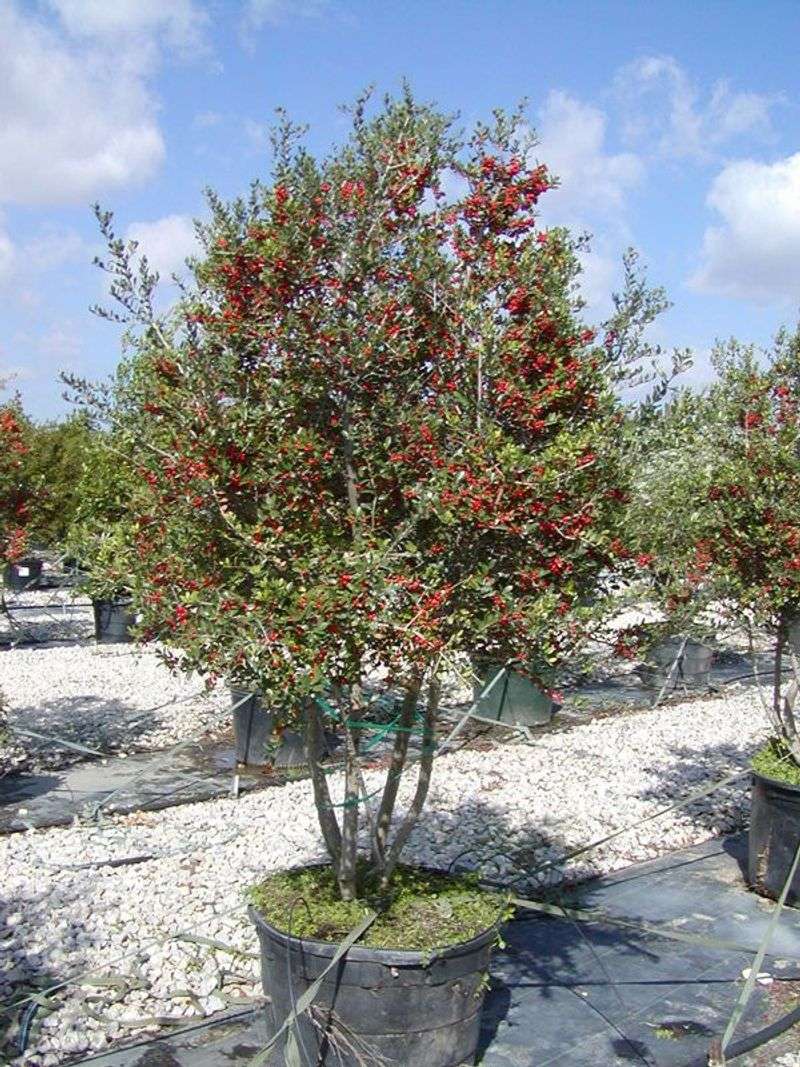
Size comes first. Ordinary yaupon reaches 12 to 20 feet tall, and Austin’s plant guide gives a mature spread of about 10 to 15 feet.
Measure the strip you have before you buy.
Dwarf cultivars stay much smaller. They can work for low borders, but they will not give you the same tall screen.
Check the tag for the exact cultivar and its mature size.
Berries are the next choice. The Texas Tree Selector notes that female plants produce the red berries that feed wildlife.
USDA NRCS says a male plant is needed to pollinate the females.
If berries matter to you, ask the nursery about the plant’s sex and whether a male grows nearby. Plants sold without that information can leave you guessing.
Treat the berries as bird food only. The same NRCS fact sheet warns that eating them causes nausea and vomiting, and Poison Control says holly berries can cause stomach symptoms in people and pets.
If kids or pets use the yard, keep that in mind when choosing where to plant.
Establish new plants without a fixed watering calendar
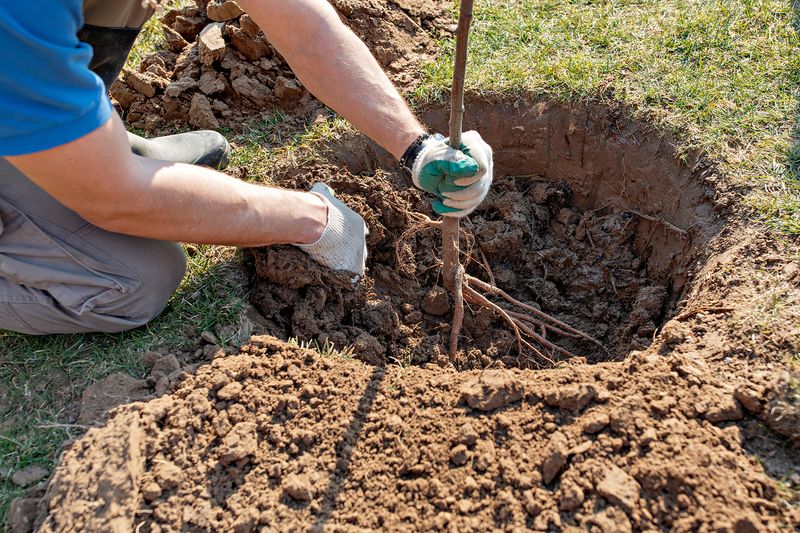
Whatever you plant, the first months matter. Texas A&M AgriLife’s planting guidance for new woody plants starts with the hole.
Dig it about twice as wide as the root ball, and no deeper than the root ball.
A wide hole gives roots loosened soil to push into. Keeping the depth no greater than the root ball helps the plant sit at the right height instead of sinking.
Water after planting to settle the soil around the roots. After that, the guidance is to check soil moisture instead of following a rigid schedule.
Push a finger or a trowel into the soil near the root ball and see whether it is dry, damp, or soggy.
That check matters because overwatering can also kill plants. Soil that stays soggy can hurt roots as much as drought can.
Clay soil common in parts of Central Texas drains slowly, so a calendar that works for one yard may drown another.
These are general steps for new woody plants, not a yaupon-specific watering plan. Let the soil, the weather, and the plant guide your checks.
Consider eastern redcedar for a tree-height screen
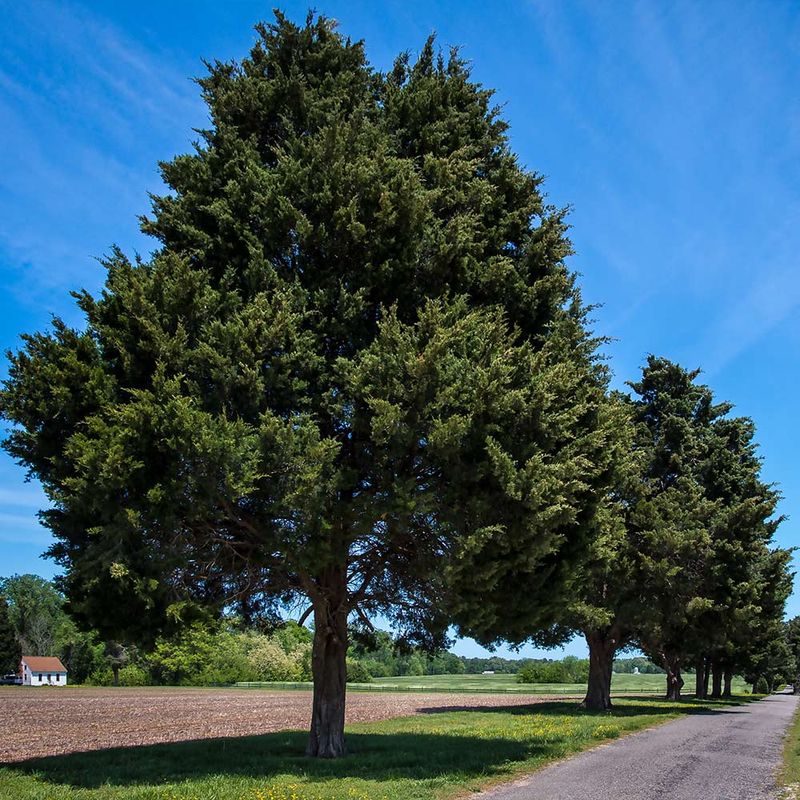
Eastern redcedar is a different kind of answer. It is a Texas native conifer for people who want a tall, evergreen screen, not a compact hedge.
Texas A&M’s Plants of Texas Rangelands page describes it as drought-tolerant, commonly used as a windbreak, and a source of food and shelter for wildlife.
Size is the main tradeoff. Typical heights run around 18 to 26 feet, and mature trees sometimes reach 40 to 50 feet.
That is far taller than most home hedges, so it suits larger lots with room to spare.
The same source calls it an aggressive invader that spreads by seed. Seedlings can pop up in fence lines and open ground, which matters if you manage pasture or want a tidy property edge.
The Texas Tree Selector also rates it Firewise: No. If you live where wildfire is a concern, think about that before planting it close to buildings.
Gardeners who grow apples or related plants have one more thing to weigh. University of Minnesota Extension explains that eastern redcedar and other junipers take part in the life cycle of cedar-apple rust.
That does not mean every cedar will cause a serious problem, only that it is worth considering near susceptible fruit trees.
Choose by mature size, form, and site
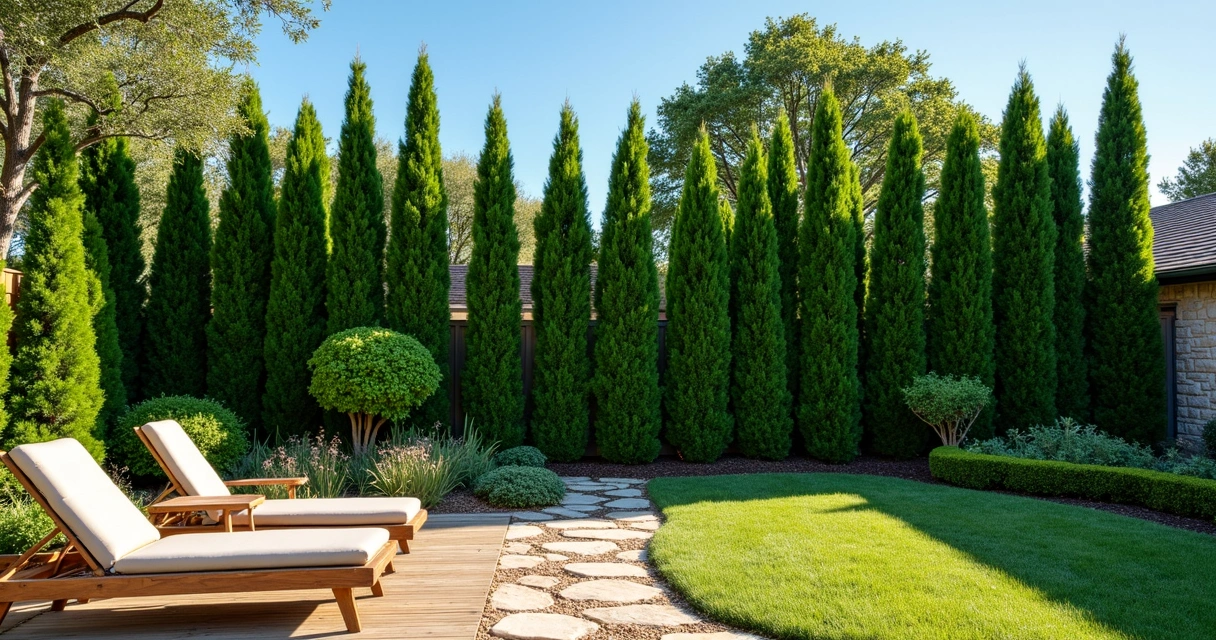
Start with space and shape. Yaupon fits a native broadleaf evergreen screen you are willing to trim, and the Austin plant guide helps you check its mature size.
Eastern redcedar belongs only where a much taller screen fits, and Texas A&M’s range plant page shows how large it can get.
If you already have arborvitae, check its species and condition before deciding. San Antonio’s guide is a good place to start for Oriental arborvitae.
No plant suits every yard, so the best screen is the one that fits your fence line.