
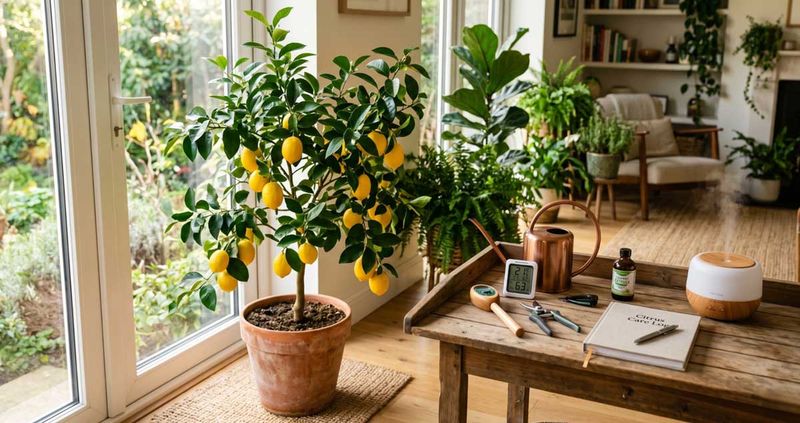
You carry your container lemon or lime inside before a cold snap, and a few days later leaves are piling up on the floor. It is a worrying sight, especially when you want fruit next year.
The move itself is a good clue, but it is not the whole story. Here is how to check light, water, drafts, and pests so you can work out what your tree needs.
The move indoors is a clue, not a diagnosis
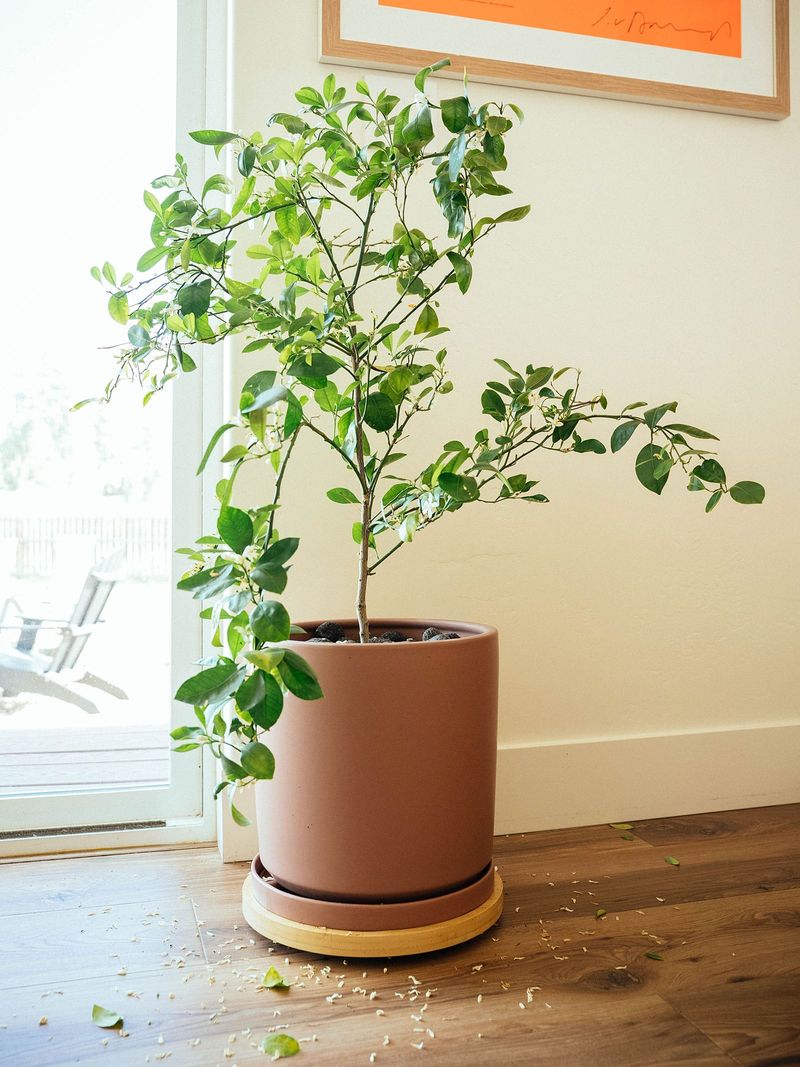
Leaves on the floor a few days after a move make the timing feel like proof. Timing is a strong hint, but it does not name the cause.
Something changed, so it is worth looking at everything that changed at once.
Houseplant trouble rarely has a single source. UC Statewide IPM guidance on houseplant problems points to several possibilities, including sudden changes in light, temperature, or humidity, too much or too little water, poor root health, and pests.
Citrus fits that pattern.
Indoor air, window light, and pot moisture all differ from your patio, and winter growth slows too. Wisconsin Extension’s indoor citrus advice treats indoor citrus as a tree needing steady attention to its conditions, not one that simply shuts down.
So think of the move as the place to start your detective work. Count what changed: light, temperature, watering rhythm, and any new pests hitching a ride.
Then check them one at a time, in the order the next sections lay out, instead of changing everything in a single weekend.
A sharp drop in light can trigger leaf loss
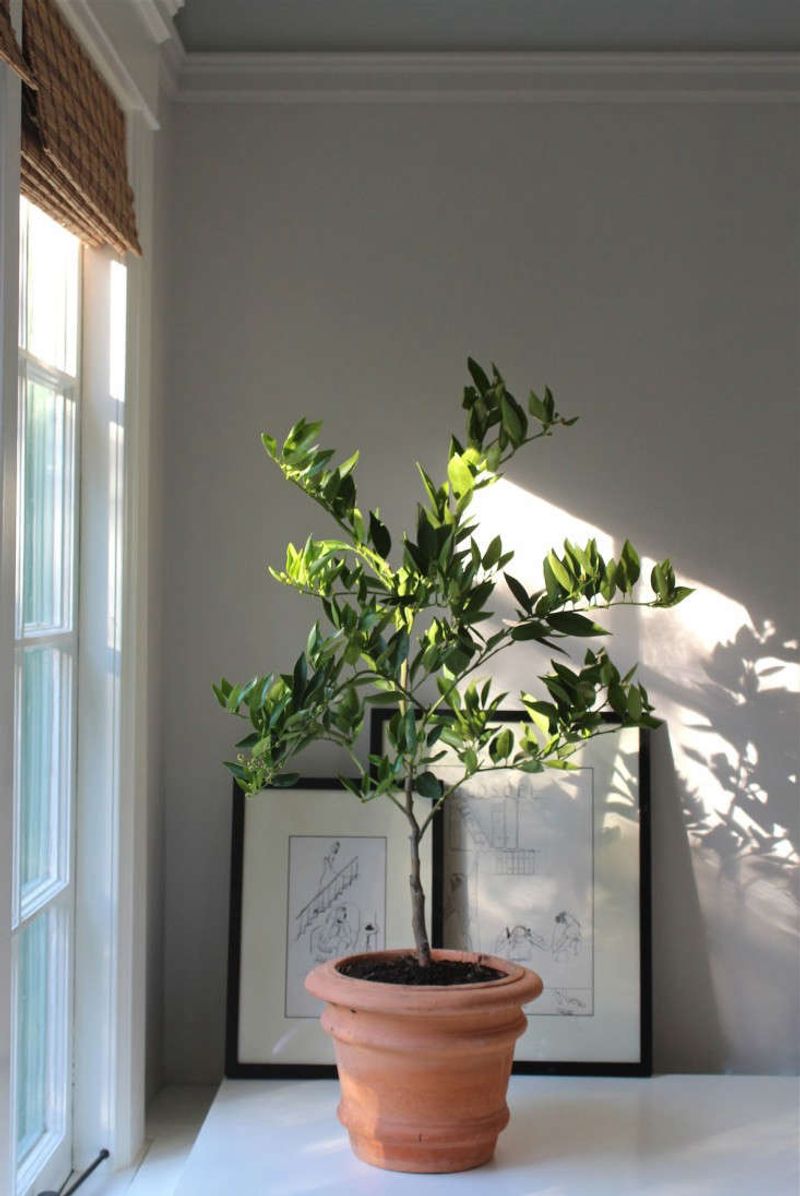
Picture your tree basking in hours of open Southern sun, then suddenly parked in a corner of the den. Even a bright room can be far dimmer than the outdoors.
A tree built for that strong light may respond by shedding leaves it can no longer support.
Texas A&M AgriLife Extension warns that abrupt changes in light can cause excessive leaf drop. That makes a sudden light drop a plausible cause, though it does not prove the cause in your particular tree.
You may hear that the tree is just going dormant. Citrus does not behave like many plants that way.
Wisconsin Extension notes that growth slows in winter, but citrus does not go dormant in the usual sense.
A useful clue: if the leaves that fall are mostly older ones, and the tree sits well away from a window, light is a strong suspect. Treat it as a lead to follow up, not a final answer.
Give the tree the brightest practical indoor spot
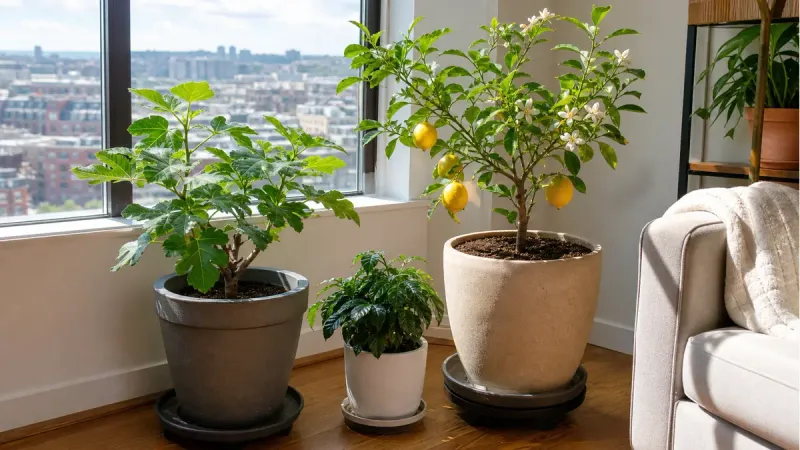
Once the tree is inside, aim for the brightest place you have. Iowa State Extension recommends a south- or west-facing window that offers about six to eight hours of direct light.
Supplemental lighting can fill the gap when window light falls short.
Walk through your house on a clear afternoon and note where the sun actually lands. A window blocked by a porch roof, a tree, or a sheer curtain may deliver far less than you expect.
Moving the pot a few feet closer to the glass can make a real difference.
Light also matters beyond leaves. The same Iowa State guidance explains that a tree in low light may survive but is unlikely to flower and fruit reliably.
Keep expectations realistic, though. More light may fix one possible contributor, but it will not cure leaf loss from soggy roots, cold drafts, or pests.
Use it as step one, then keep checking the other causes.
Let the potting mix set the watering schedule
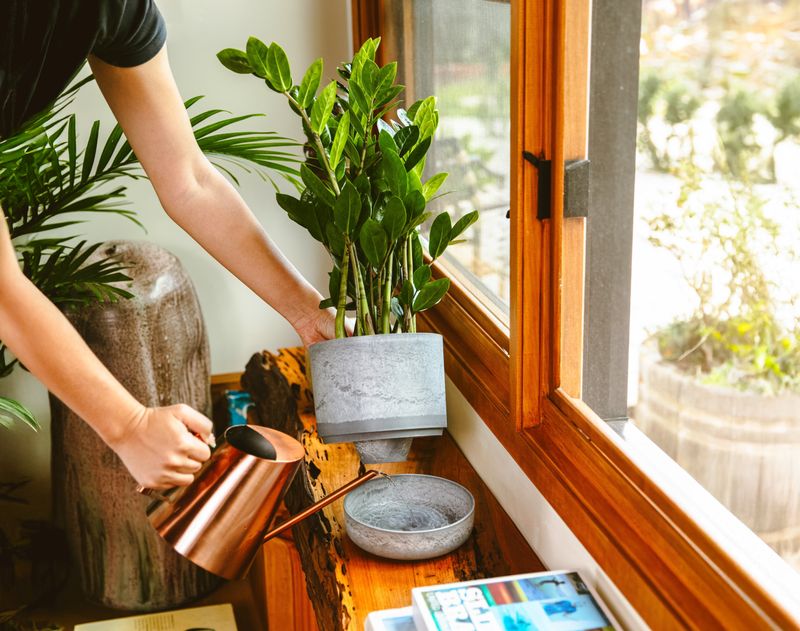
Forget the calendar and use your finger. Push it about an inch into the mix.
If that top inch is dry, water thoroughly until extra runs out the bottom, then let the pot drain fully. That is the method Texas A&M AgriLife Extension describes, and it names overwatering as a common problem.
So what does water less really mean? Indoors, cooler rooms, dimmer light, and slower growth can make the mix stay damp longer.
If so, you will water less often. If the mix still dries quickly, your schedule may be fine.
Do not swing to the other extreme. A root ball that turns bone-dry can cause leaf loss too, so the goal is moisture that comes and goes, not a pot kept dry.
Check the container as well. University of Maryland Extension stresses consistent moisture without waterlogging.
Use a pot with drainage holes and empty the saucer so roots never sit in standing water.
Check drafts, drainage, roots, and pests
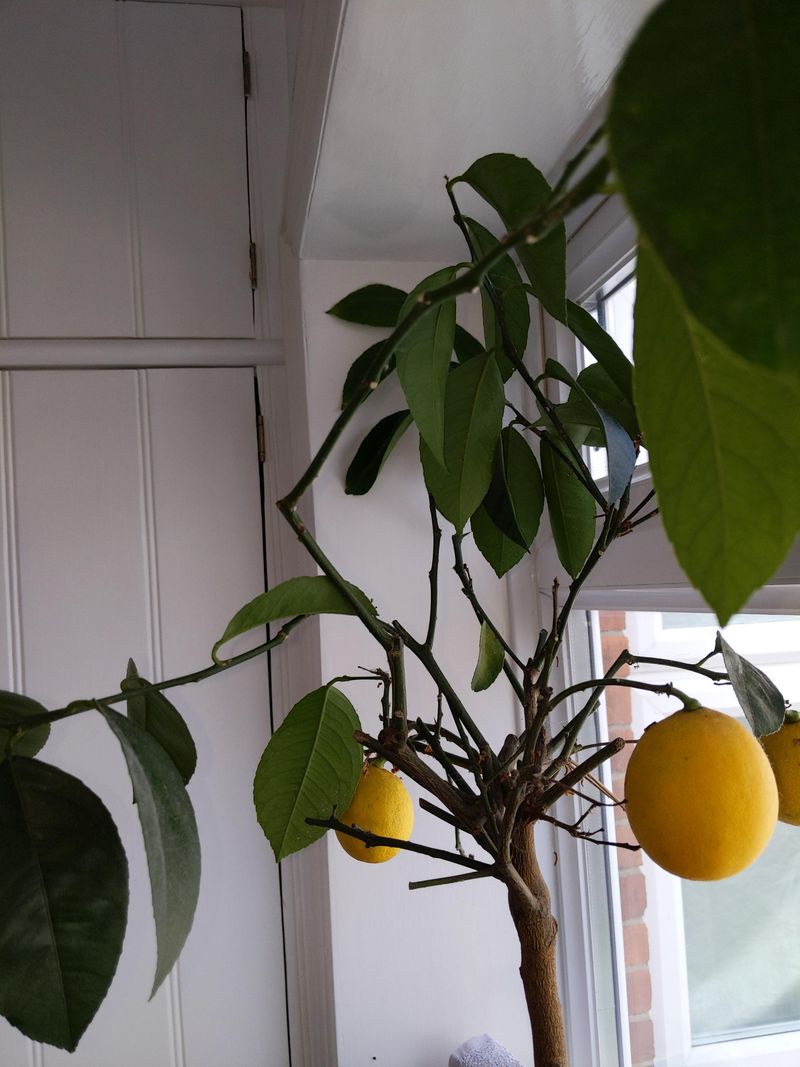
Before you change several things at once, run a quick checklist. Each item is a possible contributor, not a full diagnosis.
Start with temperature. Feel for cold air near doors, leaky windows, or heating vents.
Iowa State Extension notes that temperatures below 50°F can cause leaf loss. That is that source’s guidance, not a fixed line for every variety or situation, but it is a good reason to avoid chilly spots and sudden swings.
Next, look at the pot. Water should run freely out of the bottom holes.
If the mix stays soggy for days, roots may be struggling, and leaf drop can follow.
Then inspect the leaves. University of Maryland Extension lists scale, mites, mealybugs, whiteflies, and aphids among indoor citrus pests.
Check leaf undersides and stems for webbing, sticky residue, cottony spots, or small bumps.
Broader houseplant guidance from UC IPM reminds us that several causes can overlap, so work through them one at a time.
Acclimate citrus before the next move indoors
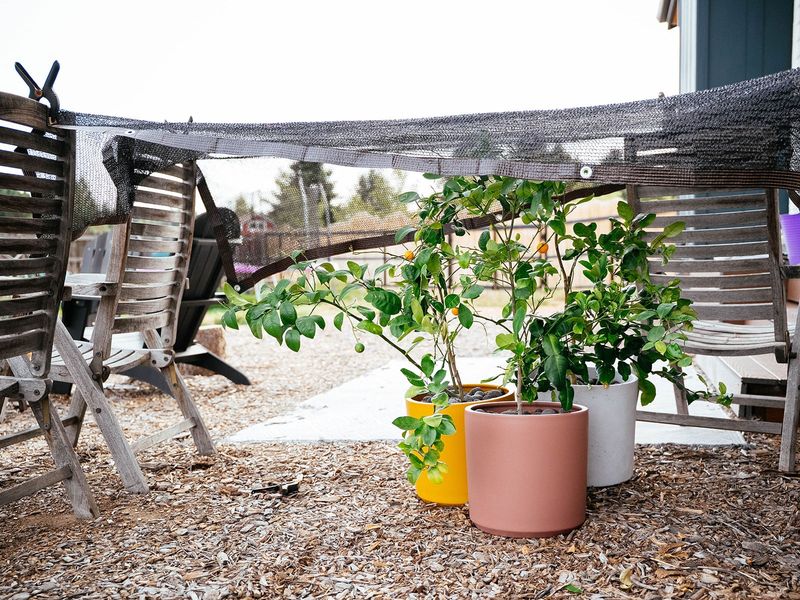
Next fall, give the tree a head start. Texas A&M AgriLife Extension recommends gradually reducing outdoor light before a tree moves inside for winter, using partial shade over two to four weeks.
You can find that advice in their citrus fact sheet.
A simple way to do it is to slide the pot under a porch roof, then a shade cloth, then deeper shade as the weeks pass. The tree gets used to lower light in steps instead of one big jump.
Not every Southern tree needs to come inside. UF/IFAS Gardening Solutions describes moving containers indoors as one cold-protection option.
Whether you need it depends on your local freeze risk and where the tree sits.
Watch the forecast. In many parts of Florida and Texas, a covered porch or a short indoor stay during a freeze may be enough, and the tree can go back out when the cold passes.
Good winter care supports fruiting, not a guaranteed harvest
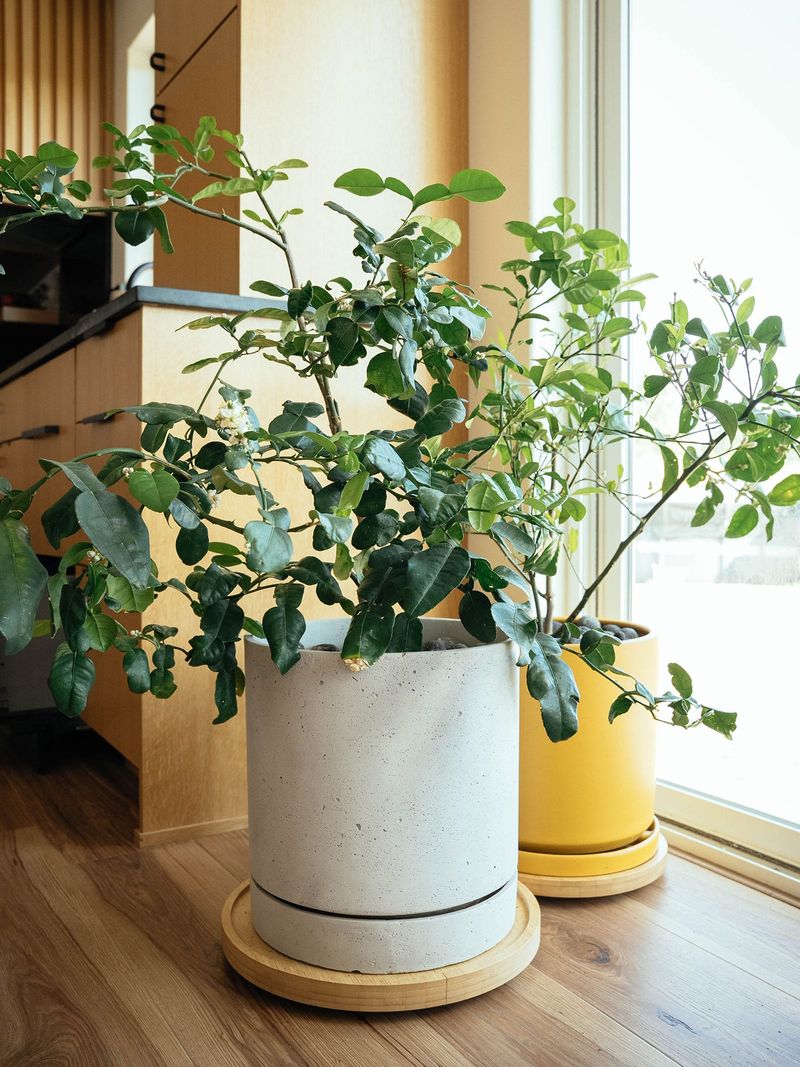
Steady winter care keeps a tree healthy, and a healthy tree has the best shot at flowering later. Light is a big piece.
Iowa State Extension explains that adequate light supports flowering and fruiting, while indoor fruit production also depends on other conditions and can be unreliable.
If leaves are dropping, begin with two checks. First, ask how much light the tree really gets.
Second, push a finger into the mix and let that, not the calendar, decide when to water. Those checks may help, and they often point you toward the next step.
Some leaf loss may continue while the tree adjusts, and new growth in spring is a hopeful sign. Lemons and limes are never guaranteed, but a tree that comes through winter in good shape is ready to try again.
Think of winter as holding the line, not racing for a prize.