
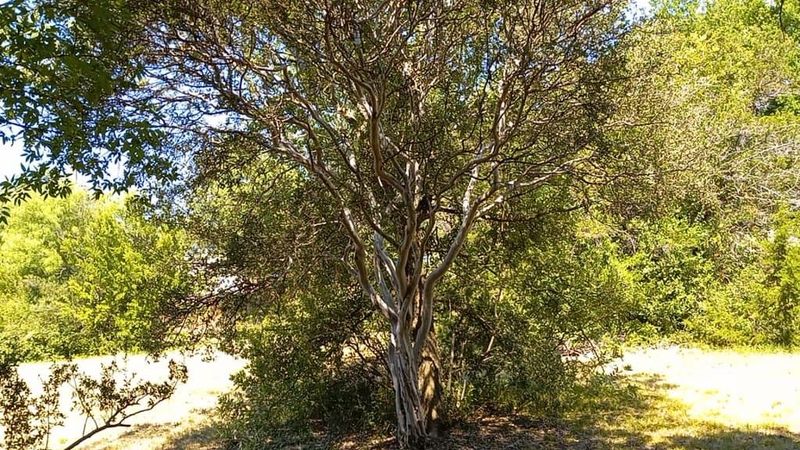
A small Texas tree with peeling gray bark produces fruit that turns jet black. That fruit belongs to the Texas persimmon, a native that handles dry ground and summer heat.
Its fruit is mostly a late-summer story, but the tree is worth knowing about any time of year. Here is how to spot it, what to expect from it, and whether it belongs in your yard.
Texas persimmon’s black fruit ripens in late summer
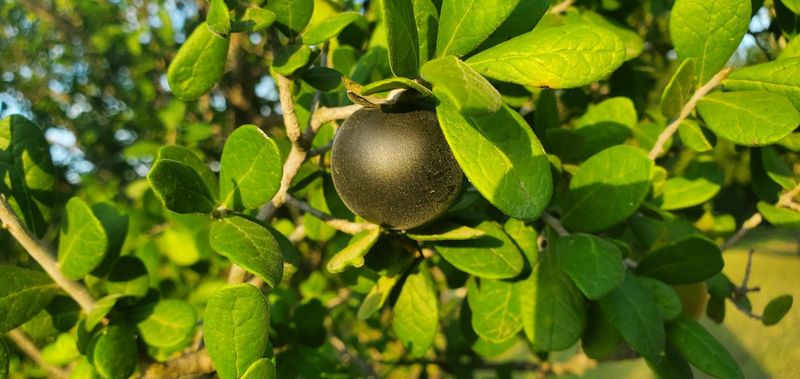
Few native fruits look as odd as this one. Texas persimmon (Diospyros texana) is a small tree native to central and southern Texas and northern Mexico, and its small fruits turn black when ripe.
Against pale, peeling bark, that dark color gets noticed fast.
The title’s idea of fruit still hanging in late fall needs a correction. USDA Forest Service species review reports that the fruit matures in August and September, and Texas Parks and Wildlife also points to late summer.
Those sources do not show that fruit commonly stays on the tree into November. In some places or years, you might still find a few early in fall, but do not count on it.
Part of the confusion comes from a better-known relative. American or common persimmon (Diospyros virginiana) bears larger orange fruit tied to fall, and Texas A&M AgriLife Extension notes that American persimmons usually ripen after the first frost.
Texas persimmon is a different tree with a different clock. If you want to see the black fruit, check in late summer, not after the first cold snap.
Any frost-ripening advice you hear belongs to the orange kind.
How to recognize ripe fruit
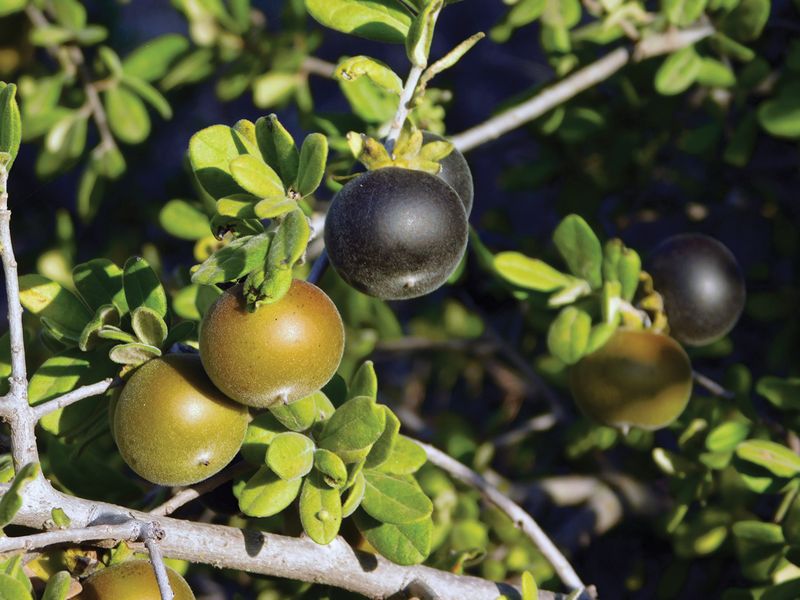
Color is the main clue. Ripe Texas persimmon fruit is black, and Texas A&M Forest Service describes it as sweet and edible.
Nothing in these Texas sources calls the ripe fruit poisonous.
Fruit that is still green or not fully dark is another matter. Unripe persimmons are astringent, meaning they dry out your mouth with a harsh pucker, so skip them and wait for fully black fruit.
Persimmons in general can cause tannin-related trouble when eaten unripe, as discussed in UF/IFAS guidance on persimmons. That is general persimmon advice, not research on Texas persimmon, but it is one more reason to be patient.
Once the fruit is ripe, the USDA Forest Service notes it has been used in puddings and custards. Expect a small fruit with a sweet, soft pulp.
One practical warning: the pulp can stain. USDA describes the stain as indelible, so keep it off light clothing, patios, and countertops.
Staining is a cleanup issue and has nothing to do with whether ripe fruit is safe to eat.
A distinctive native tree offers more than fruit
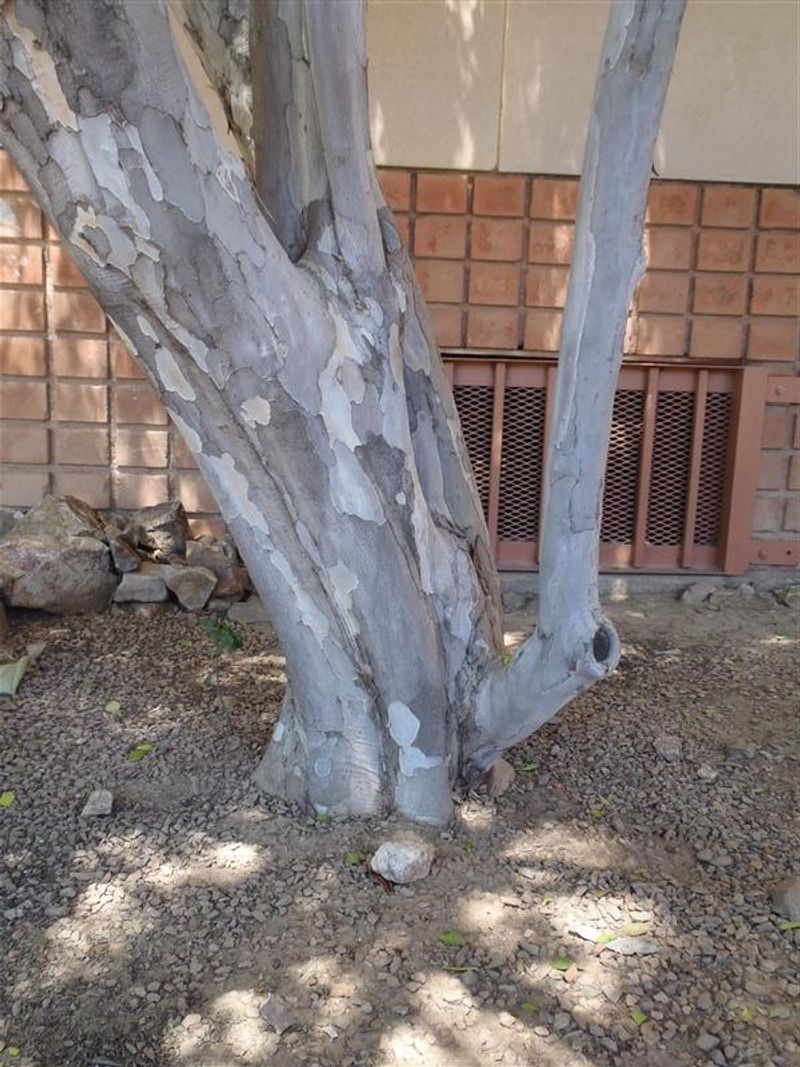
Even without fruit, the trunk earns attention. Smooth, gray, peeling bark gives the tree year-round interest, and the Texas A&M Texas Tree Selector lists it as a landscape-worthy native.
It stands out in beds dominated by rough, dull bark.
Wildlife gets a payoff too. Texas Parks and Wildlife reports that birds, small mammals, and insects eat the fruit, and that the tree provides cover plus nesting or roosting sites.
For a yard meant to feed and shelter local animals, that is a real plus.
There is a tradeoff. Fruit that drops can be messy, a point also noted in the City of Austin plant guide.
Think twice before planting it over a driveway, a pale walkway, or a spot where you park a car.
A good placement is somewhere you can enjoy the bark up close and let wildlife do the cleanup. A corner bed, a native border, or the edge of a wild area suits it better than a tidy patio.
Choose a dry, well-drained site
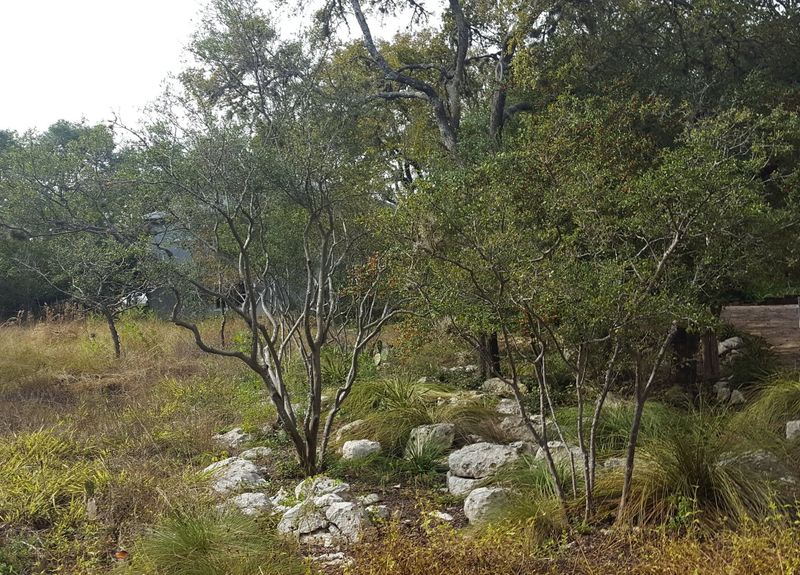
Drainage decides whether this tree is happy. Texas A&M Forest Service describes it on rocky, dry sites and says well-drained soil is required.
A low spot where water pools is the wrong place.
That toughness is its strength. The Texas Tree Selector lists dry water needs and tolerance of drought and alkaline soils, which fits many Texas yards with thin, limy ground.
It suits dry to moderately dry conditions, not consistently wet soil.
Expect patience. USDA says the tree grows slowly and is commonly about 10 feet tall, though it can reach up to 40 feet on good sites.
Final size depends on your site, so do not count on a specific height, and do not plant it as a quick shade tree.
The strongest fit is Texas, especially central, southern, and western parts of the state, where it grows naturally. A quick test before planting: after a hard rain, see whether water drains away within a few hours.
If it lingers, pick another spot.
Growing fruit takes patience—and a nursery question
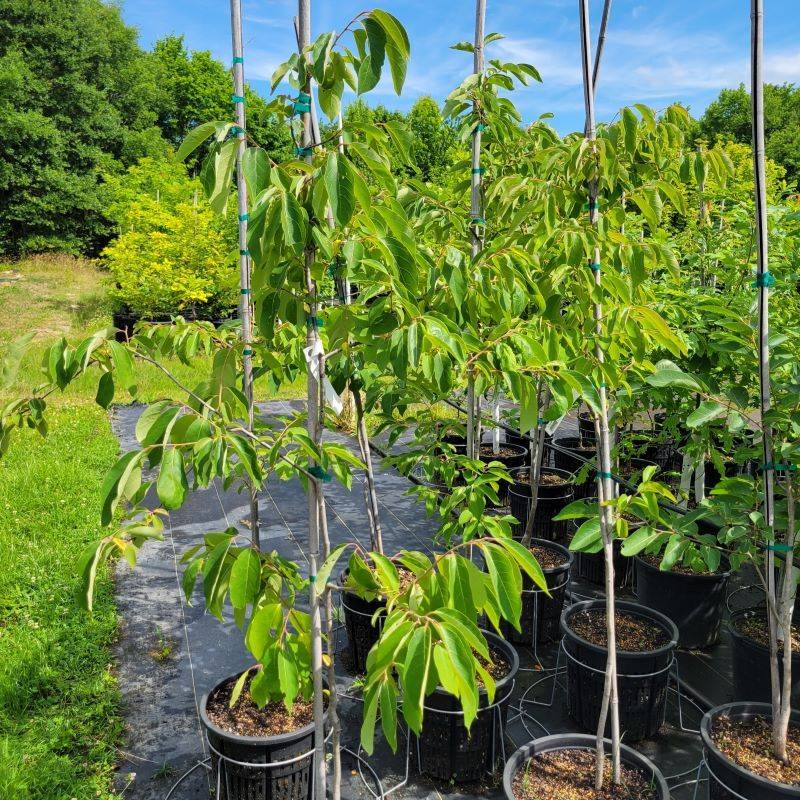
Planting for fruit means playing a long game. The tree is slow-growing, and USDA reports that some individuals begin fruiting at five to six years.
That is not a promise for your yard, since site, health, and the individual tree all matter.
Fruit also depends on the tree’s sex, and sources disagree. USDA and Texas A&M Forest Service describe separate male and female trees.
A University of Texas flora page calls the species monoecious.
Because of that split, no planting arrangement can guarantee fruit. A single tree might not fruit, and two or three trees might not either.
Your best move is to ask the nursery. Ask whether the plant’s sex or fruiting status is known, and whether it has been seen producing fruit.
Many young nursery trees will not be old enough to tell, so ask honestly and plan for some uncertainty.
If fruit is a bonus rather than the goal, the wait gets much easier.
Plant it for the whole tree, not a promised crop
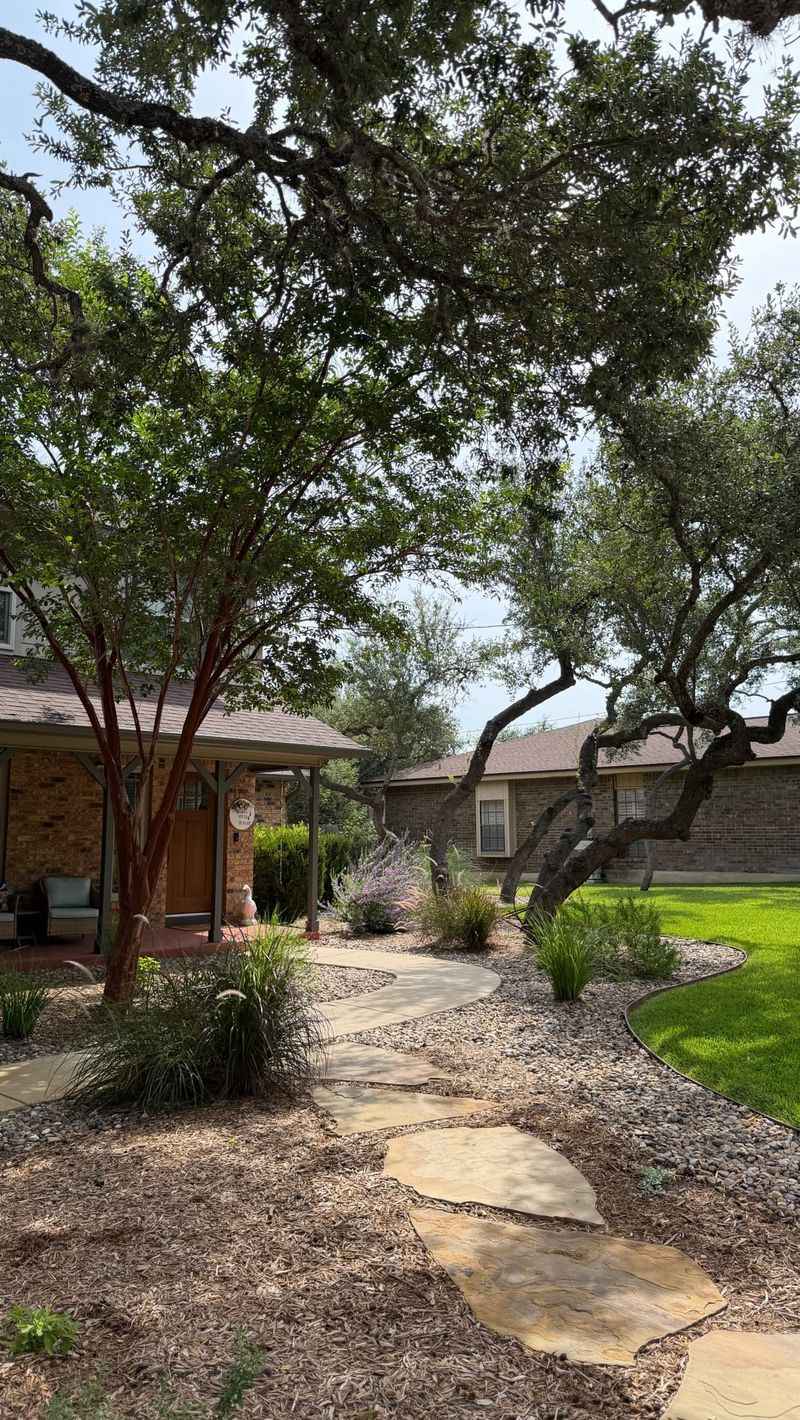
Ask what you want from the spot. If you like a slow, sculptural native with striking bark and a home for wildlife, Texas persimmon fits well in a dry, well-drained yard.
If you want a guaranteed harvest or fast shade, look elsewhere. Treat any black fruit as a late-summer surprise.
A tree that rewards patience will outlast most garden trends.