
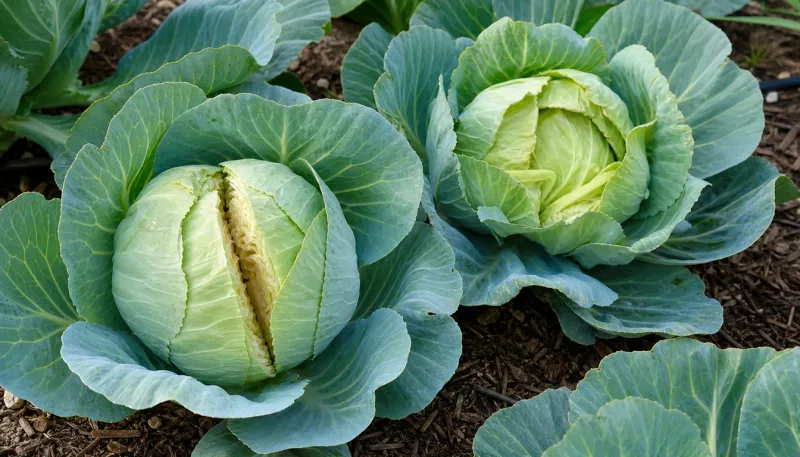
A heavy fall rain can leave cabbage heads cracked wide open, and it often happens just as they are ready to pick. Many gardeners have heard that one quick twist fixes it, but the real story is a little different.
The right move depends on whether the head has already split or is still intact. Here is how to tell which situation you have and what to do next.
Why heavy rain can split mature cabbage
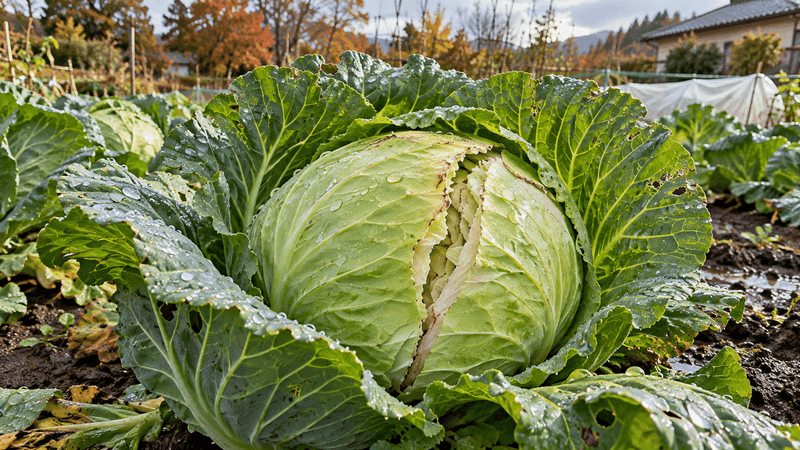
Picture a cabbage head packed tight with leaves, then picture a sudden flood of water arriving at the roots. The head swells faster than its outer leaves can stretch, and it cracks.
Illinois Extension guidance notes that mature heads are the ones at risk, especially when wet weather follows a dry spell.
Heavy irrigation can do the same thing as rain. If the bed dried out for a week and then got a soaking, the plant may take up more water than the head can hold.
Rain is one contributing condition, not the only possible cause.
Variety matters too. Iowa State Extension explains that susceptibility differs, and early-maturing varieties may be more prone to splitting.
If one type in your row cracks while another stays whole, that difference is a useful clue for next season’s seed order.
Harvest a split head and assess it promptly
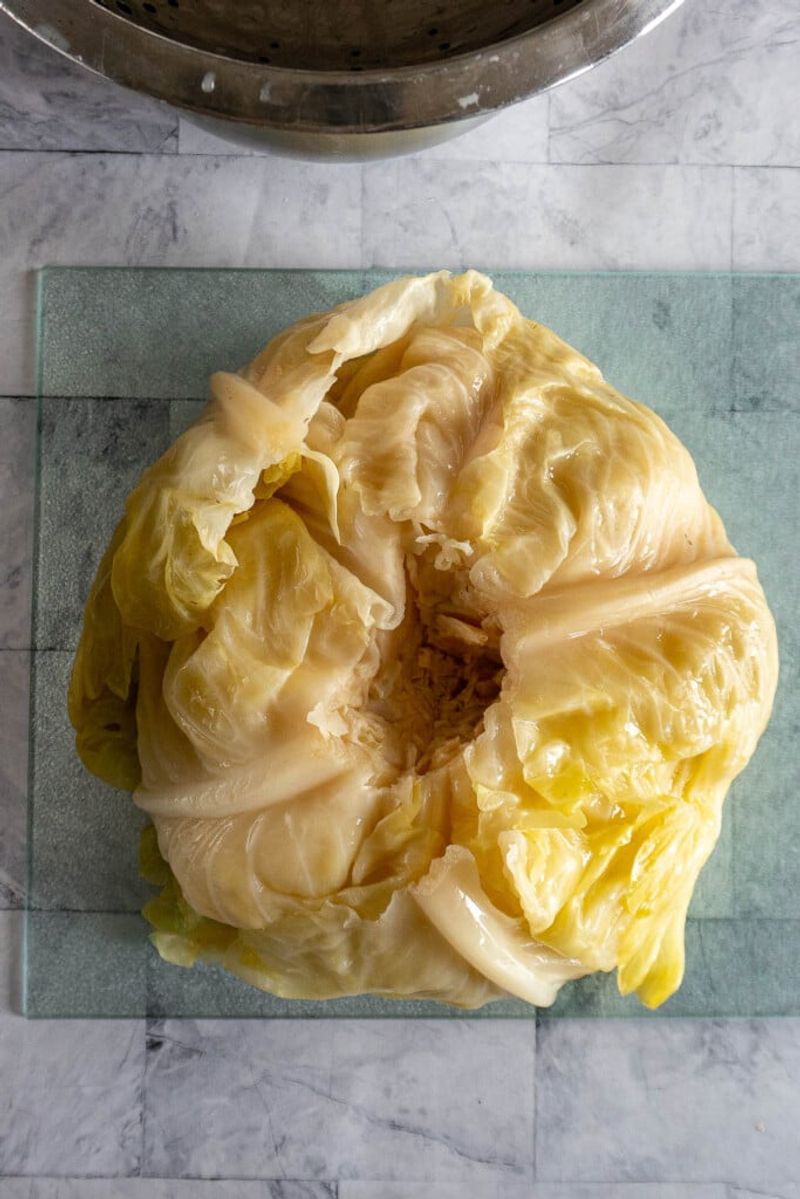
Once a head has cracked, the clock is running. The exposed inner leaves can start to deteriorate, so Illinois Extension advises harvesting a split head as soon as possible.
Twisting the plant will not close or repair a crack that is already there.
Next, look closely at the cut surfaces and inner leaves. A minor, clean split may be fine to use quickly, but University of Saskatchewan gardening guidance says to discard produce showing signs of infection.
Slimy spots, dark mold, or a sour smell mean those parts should go.
Rinse the whole head under running water before you cut into it, as FoodSafety.gov recommends. Then trim away any damaged or deteriorated portions.
Cabbage with a small crack can still make slaw or soup tonight, while a badly rotted one belongs in the compost.
A quarter-turn may help an intact mature head
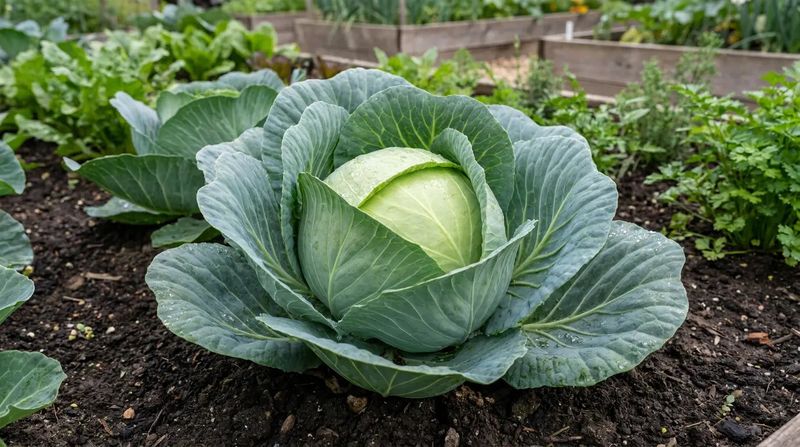
Say your cabbage is firm, full-sized, and not cracked, but you cannot pick it yet. Maybe a storm is on the way, or the kitchen schedule is packed.
In that case, extension guidance describes one limited option.
Grip the whole plant or head and turn it about a quarter-turn. This is not twisting the stem.
The turn breaks some of the roots, which may slow how fast water reaches the head. Another method from Illinois Extension is to push a spade into the soil to cut roots on one side of the plant.
Do it before the heavy rain, not after the crack appears. Results depend on the plant and the conditions, so this may reduce the risk but it will not guarantee a whole head.
Think of it as a short delay tactic for a head that is ready or nearly ready.
Treat root damage as a short-term measure
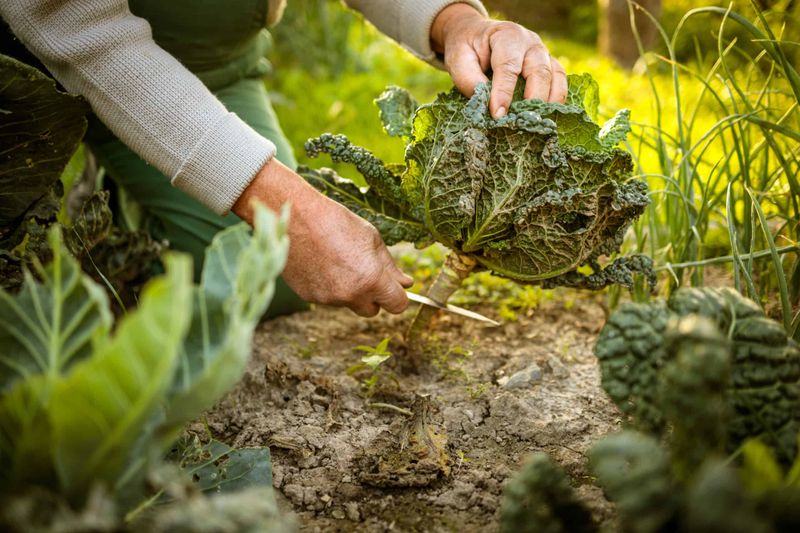
Breaking roots slows water, but it also hurts the plant. A cabbage with damaged roots has less ability to feed itself, so this is not routine care.
It is also not a way to leave a head in the garden for weeks.
Florida guidance spells out the tradeoff. A UF/IFAS Extension Baker County tip sheet says root-cutting, or lifting and twisting, can reduce splitting, but gardeners should be prepared to harvest within about a week because the plant is damaged.
Treat that week as a guideline, not a hard deadline. A hot spell, a wet forecast, or a thirsty variety could shorten your window.
Illinois Extension frames the method the same way, as a stopgap. Check the head every day or two, and pick it when the weather turns or the head looks stressed.
Use steady moisture and harvest before heads crack
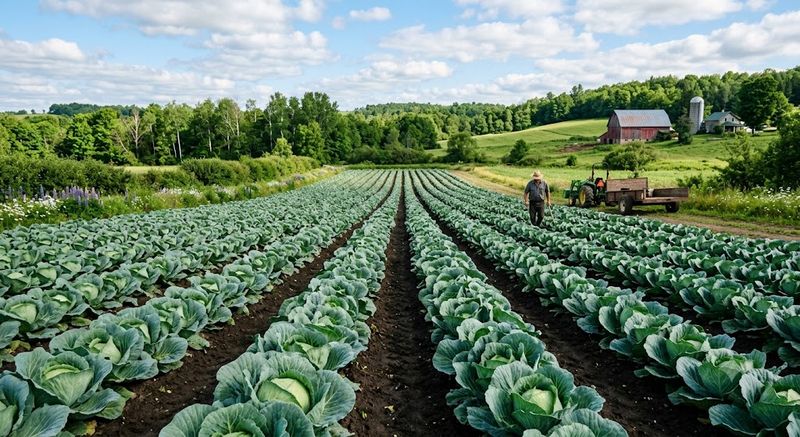
Prevention starts well before the storm. Cabbage likes steady, small amounts of water while it grows, which is the advice in the UF/IFAS tip sheet.
Keeping plants dry on purpose is not the answer. The trouble comes from big swings, like a long dry stretch followed by a soaking.
Check heads by squeezing them gently. Iowa State Extension suggests harvesting when heads are firm and solid, before they crack.
A head that feels dense is ready, even if it is smaller than the seed packet photo.
Timing in the South is not the same everywhere. UF/IFAS Gardening Solutions says Florida grows cabbage in cooler months, with planting dates that vary by region.
Texas gardeners can check the Texas A&M fall vegetable guide for local timing. Not every garden has mature heads in the same week, so this advice applies only if yours are close to ready.
Match the response to the head
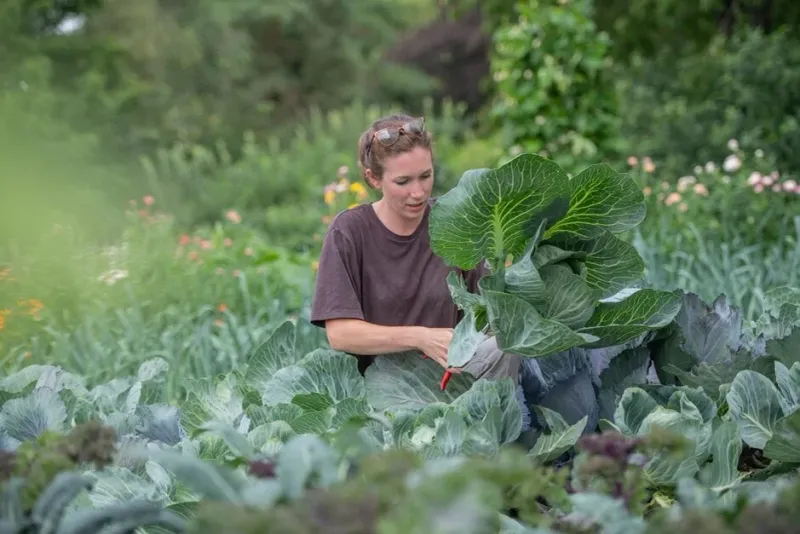
Here is the simple rule. If the head has already split, pick it, rinse it, inspect it, and trim away anything damaged.
If the head is mature and intact but must stay in the ground a little longer, a quarter-turn of the plant may lower the odds of a crack, as Illinois Extension describes.
Neither move comes with a promise. The turn might not stop a split, and a cracked head might be too far gone to save.
What you control is timing: watch the forecast, check firmness often, and keep the knife handy.
The best cabbage rescue is usually a sharp blade and a little attention to the weather.