
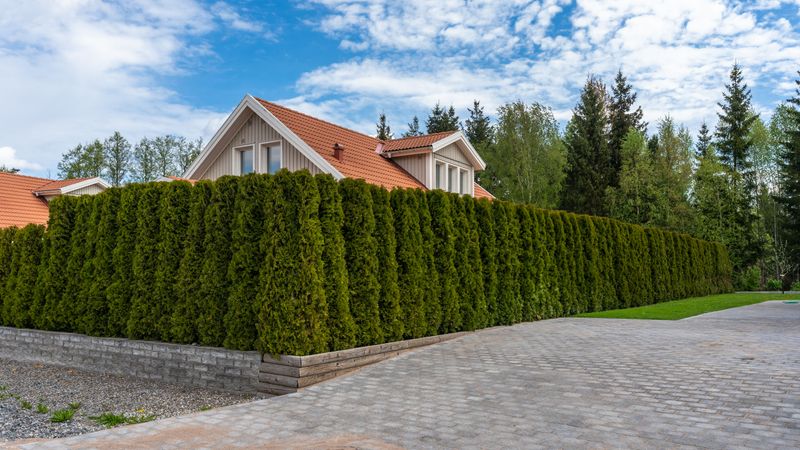
You planted a hedge on your own land, and now the neighbor wants it trimmed down. It feels like the property line should settle things, but California law is a bit more layered than that.
A blocked view, a very tall row of trees, and a branch crossing the fence are three different problems with three different answers. Knowing which one you face can save you from a costly mistake.
Does California guarantee a neighbor’s view?
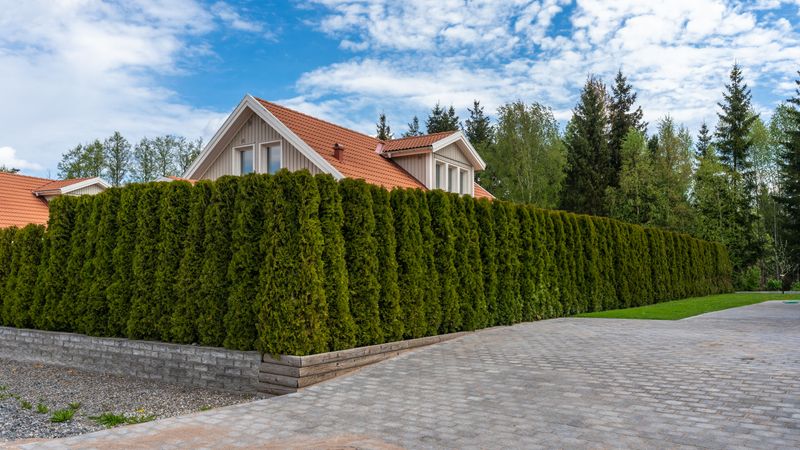
Here is the baseline. California courts generally do not recognize a common-law right to an unobstructed view across a neighbor’s land.
As a 2016 Court of Appeal decision in Boxer v. City of Beverly Hills explains, a view right usually has to come from somewhere else.
A neighbor who simply dislikes losing a view does not automatically have a legal claim against your hedge.
That “somewhere else” matters, though. A view right can come from a recorded easement, from the CC&Rs of a homeowners association, or from a state or local law.
Each of these is a separate source, and each has its own terms. Having none of them in play is the usual situation, but you should not assume that without checking.
Many homeowners stop thinking once they confirm the hedge sits entirely on their own side. That is a sensible first check, but it does not answer every question.
A very tall, fence-like row of trees may raise a statewide issue, and a local ordinance may apply no matter where the roots are planted.
Think of the blocked view as the starting point, not the finish line. Your neighbor’s complaint does not prove you did anything wrong, and your ownership of the land does not close every door.
The next sections walk through the exceptions one at a time.
A hedge on your land can still fall under the spite-fence law
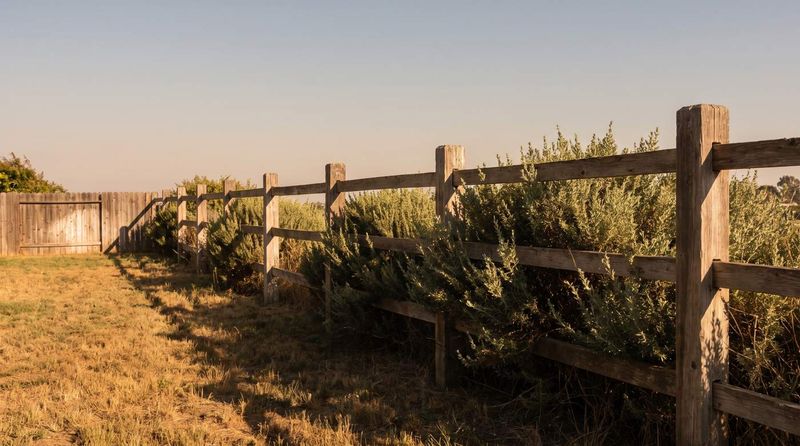
California has one narrow statewide route that can reach a hedge even when every root sits on your parcel. Civil Code section 841.4 covers a “spite fence,” and in Wilson v.
Handley, the Court of Appeal said a row of trees can be a structure in the nature of a fence. The official text of the law is on California’s legislative information site.
The law says such a structure must unnecessarily exceed 10 feet in height. That number is part of a legal test.
It is not a statewide maximum height for hedges, and a hedge taller than 10 feet is not automatically unlawful.
Not every screen planting counts either. A loose line of shrubs for privacy is different from a solid, wall-like row of trees planted to function as a barrier.
Courts look at what the planting actually is and how it works.
What about a hedge set back from the line? Whether it is close enough, and fence-like enough, depends on the facts.
The cases do not set a universal distance test, so no number of feet reliably protects you or a complaining neighbor.
In Wilson, the court sent the remaining questions back to the trial court rather than declaring the trees a spite fence. That is a good reminder that the statute is a tool with several conditions, not a shortcut around them.
Height and a blocked view are not enough
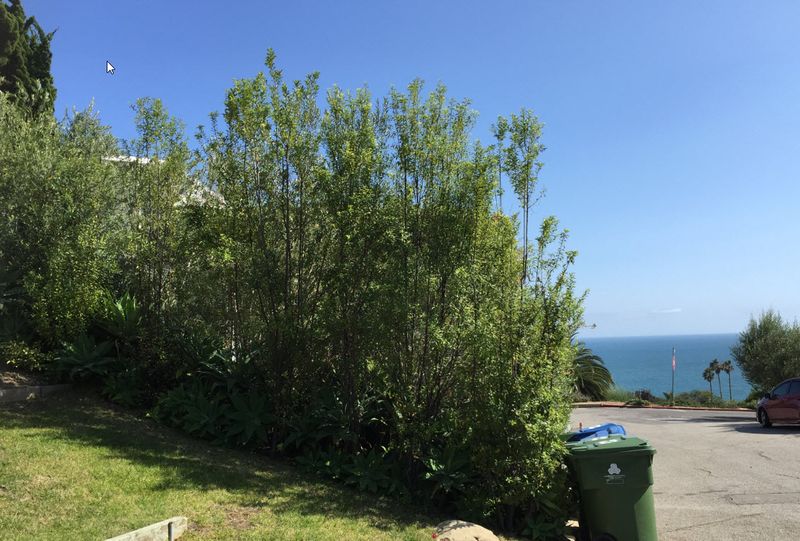
Even a fence-like hedge over 10 feet has more hurdles to clear. The neighbor must show that annoyance was the dominant purpose for erecting or keeping it.
In Wilson v. Handley, the court treated claimed practical reasons, such as privacy or looks, as relevant to whether the extra height was unnecessary.
Annoyance has to be the main driver, not just one motive among several.
That is why your reasons matter. If you planted tall trees to screen a street, block wind, or add privacy, those facts can bear on the question.
Photos, planting dates, and notes about why you chose the plants can help show what you were thinking.
The neighbor must also prove injury to the comfort or enjoyment of their property. In Vanderpol v.
Starr, findings about height and intent alone were not enough because the jury had not made the required injury finding. Each element has to be established.
Notice what this means in practice. A blocked view by itself does not complete the claim, and neither does height by itself.
The dispute turns on proof and on the particular facts of each yard.
None of this predicts how a case would end. It simply shows that the statute has several parts and that all of them matter.
If you receive a demand letter citing a spite fence, a California property lawyer can tell you how those parts apply to your hedge.
Local rules and recorded agreements may change the answer
Statewide law is only part of the picture. A local view ordinance, a recorded easement, or an association’s CC&Rs can create duties that go beyond the general baseline.
Whether any of them applies to you depends entirely on where your home is and what is recorded against it.
Torrance is one example. Its View Equity Ordinance covers a designated Hillside Overlay District.
It limits restoration to a view that existed when the property was purchased or, if more recent, March 7, 2002.
Kensington is another. The Contra Costa County ordinance applies only in unincorporated Kensington, and residents, not the County, pursue the dispute process.
Neither ordinance is statewide law, and their procedures should not be assumed to apply elsewhere.
CC&Rs work differently again. The California Attorney General’s homeowner association page explains that CC&Rs can govern homeowner obligations and remedies, and that terms differ by association.
They do not automatically give a neighbor an enforceable view right.
So read the actual documents. Pull your recorded easements and CC&Rs, and check your city or county code for view, tree, and permit rules.
A neighbor’s claim that a rule exists is not proof that it does, or that it covers your lot.
Overhanging growth is a separate boundary issue
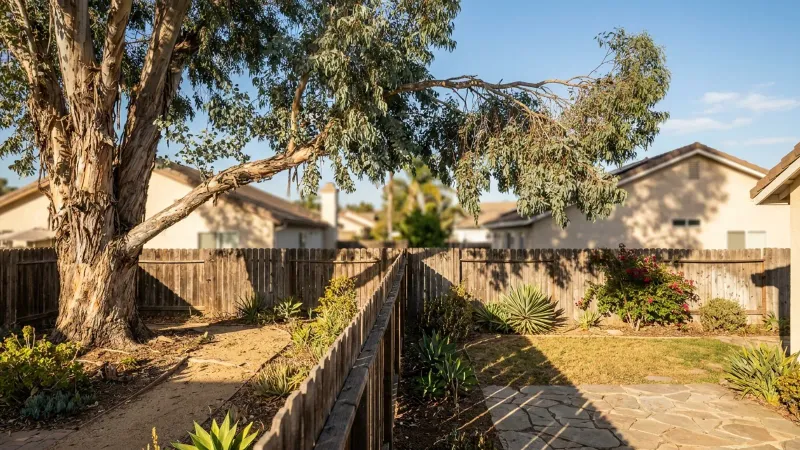
Branches and roots crossing the property line are a different matter from a blocked view. A neighbor can generally address growth that reaches onto their land, even though they have no view right to point to.
The two disputes should be kept apart, because the rules and remedies differ.
That ability has limits. In Booska v.
Patel, the court rejected an absolute right to cut encroaching roots regardless of negligence or consequences. Cutting that damages or destabilizes a tree can carry consequences for the person holding the saw.
Picture a neighbor trimming a large oak’s roots along a shared line. If the tree later declines or falls, questions about care and responsibility can follow.
The same applies to a hedge owner who assumes a neighbor can chop anything back to the fence however they like.
Before substantial pruning, talk to a certified arborist. The University of California’s guide to tree disputes in California is a helpful plain-language resource on how these conflicts are usually approached.
A short written note to the neighbor, offering to talk about reasonable trimming, often solves a boundary issue faster than any legal argument.
Check the property, the rules, and wildlife before anyone cuts
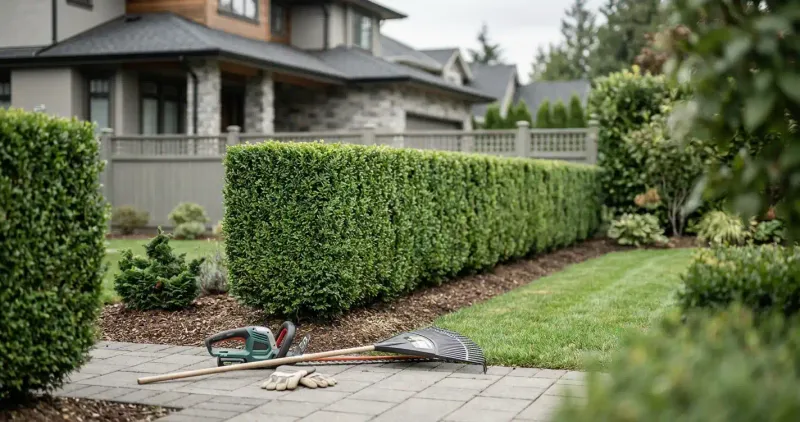
Start with the basics. Confirm where the property line actually is, then review any recorded easements and CC&Rs.
Next, check your city or county’s current view, tree-protection, and permit rules, since some places require approval before removing certain trees.
Document the hedge and the dispute. Dated photos, measurements, and copies of messages create a clear record.
Try written communication first, whether you are the owner hoping to defend the hedge or the neighbor hoping to resolve a complaint. The University of California’s tree dispute guide is a useful companion at this stage.
Wildlife deserves a look before any cutting begins. The California Department of Fish and Wildlife says nesting season varies by species and location.
Many California species nest from February through August and some nest year-round, and Fish and Game Code section 3503 prohibits needlessly destroying a bird’s nest or eggs. Look closely for active nests first.
If the dispute turns substantial, a California property lawyer can review your documents and the facts of your hedge.
A blocked view alone rarely decides anything, but the right paperwork often does.