

Fall in Texas can look like a quiet time for your lawn, but the choices you make now still matter. Many people think the first freeze is the cutoff for feeding Bermuda grass, yet the real timing is earlier and depends on where you live.
Mowing, watering, and fertilizer all need small changes as the weather cools. Here is how to handle each one so your lawn heads into winter in good shape.
Why the first freeze is the wrong fertilizer deadline
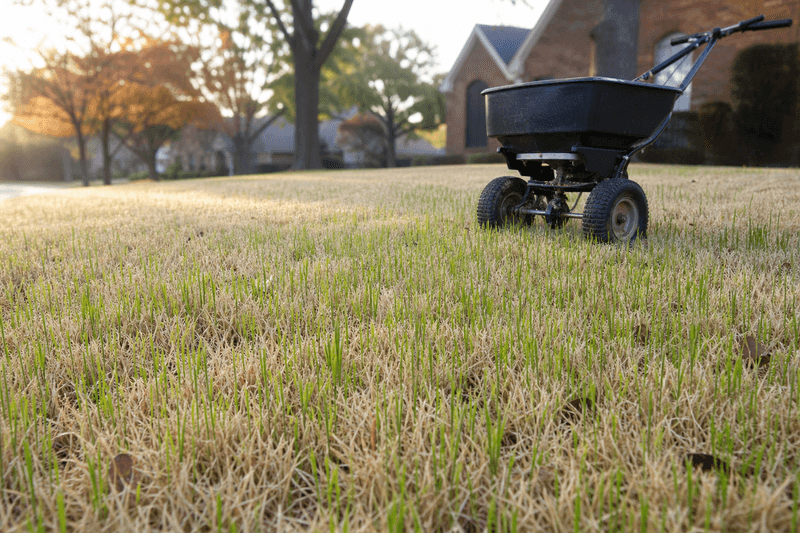
A freeze forecast is a poor signal for feeding your lawn. By the time cold air is in the forecast, bermudagrass is slowing down and has little ability to use fresh nitrogen.
Texas A&M AgriLife lawn fertilizer guidance sets the last nitrogen application at least six weeks before the average first autumn frost for your area.
Three different things often get mixed together. The average first frost date is a historical figure for your region.
A freeze forecast is a weather prediction for the coming days. Dormancy is the point when the grass stops growing and turns tan.
The fertilizer cutoff is tied to the first one, with a six-week lead time, not to the other two.
AgriLife lists these regional cutoff dates: September 15 for Amarillo; October 1 for Abilene, Dallas, El Paso, Lubbock, and Midland; October 15 for Austin, Houston, San Antonio, and Waco; and November 1 for College Station, Laredo, Victoria, Harlingen, McAllen, and Corpus Christi.
Treat those dates as regional averages, not promises for your particular yard. A warm fall, a cold snap, shade, or soil type can shift how your grass behaves.
A separate AgriLife bermudagrass calendar also advises against fertilizing once the lawn is becoming dormant, so if growth has already slowed, skip the bag.
Does your lawn need another nitrogen feeding?
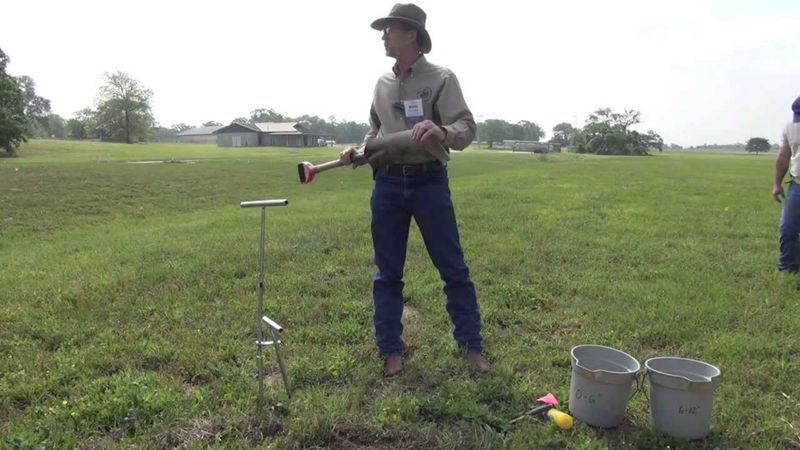
Before you buy a single bag, find out whether your lawn is asking for food. Plenty of bermudagrass lawns are still growing vigorously in early fall, and that kind of growth can mean extra nitrogen is not needed.
AgriLife fall preparation guidance suggests checking soil nutrient status first for exactly this reason.
A soil test takes the guessing out of it. AgriLife recommends regular testing to guide fertilizer choices, especially before adding phosphorus or potassium, as noted in its bermudagrass management calendar.
Many Texas soils already hold plenty of some nutrients, so a blanket feeding can waste money.
The Texas A&M soil lab offers lawn and garden nutrient recommendations based on your sample. Pull several small cores from across the lawn, mix them, and send them in following the lab’s instructions.
Also look at the grass itself. Is it still green and mowing weekly, or has growth slowed and color started to fade?
Thin turf can also come from shade, compaction, pests, or disease, so a pale lawn is not always a hungry one. If the test and the lawn both point to a need, and you are inside your regional cutoff, move on to the next step.
A modest dose only helps while Bermuda is growing
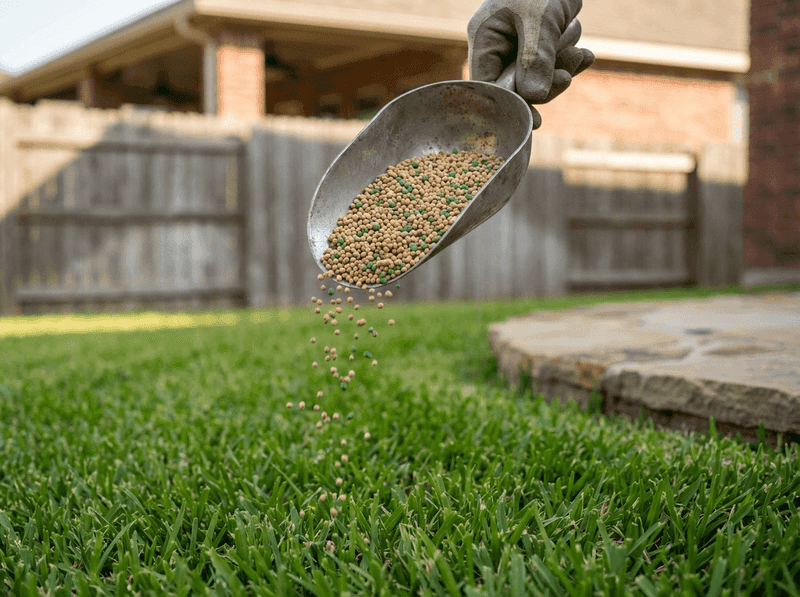
If your test and lawn say nitrogen is warranted, keep the dose small. AgriLife’s Texas lawn fertilizer guide calls for 1 pound of actual nitrogen or less per 1,000 square feet, applied by your regional cutoff while the grass can still take it up.
The bermudagrass calendar gives a growing-season range of 0.5 to 1 pound of nitrogen per 1,000 square feet per application. That range describes feeding turf that is actively growing.
It is not permission to fertilize grass that is going dormant.
The bag shows a nitrogen percentage, and that number drives the math. A 20-0-0 product is 20 percent nitrogen, so about 5 pounds of product delivers 1 pound of actual nitrogen.
Always follow the product label for spreader settings and safety.
More is not better here. AgriLife warns that early-fall nitrogen can increase how often or how badly large-patch disease shows up.
A heavy winterizer dose will not guarantee a thick spring lawn, and it may set up problems instead. If the date has passed or growth has slowed, waiting until spring is a perfectly sound choice.
Keep mowing as growth slows; do not scalp
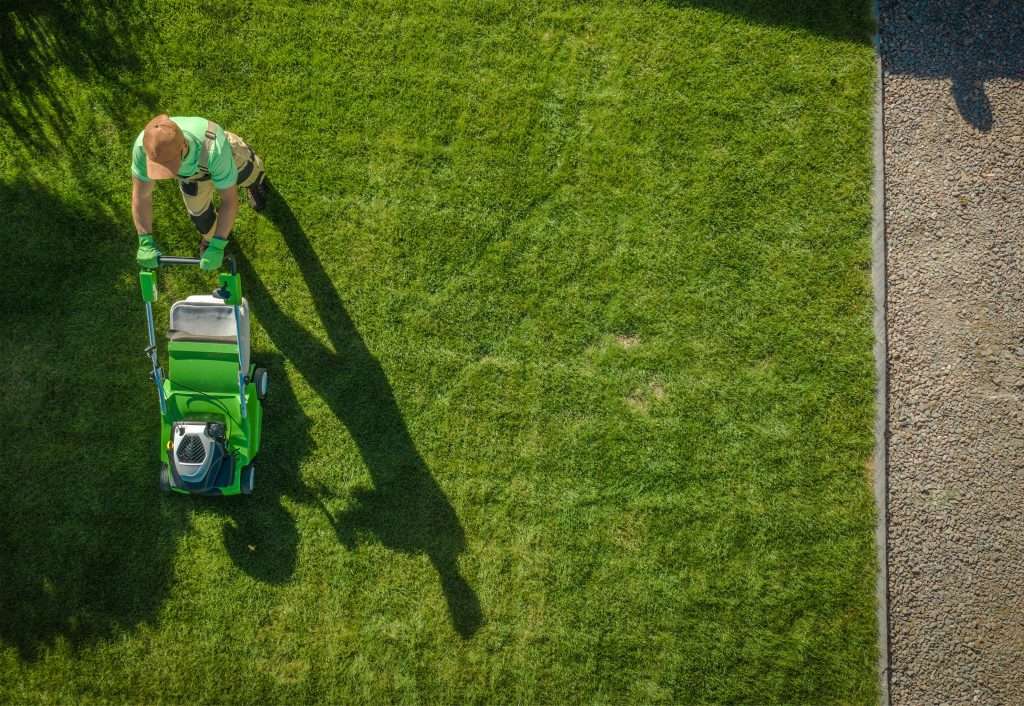
Grass that is still growing still needs a haircut. Keep mowing on your usual rhythm until growth tapers off, then stretch the time between mows.
A lawn that grows an inch in a week needs attention far sooner than one that barely moves.
For home lawns, AgriLife recommends a height of 1 to 2 inches, as laid out in its bermudagrass home lawn calendar. Cutting lower than that can reduce density, root development, and overall turf health, which is the opposite of what you want heading into winter.
Some people scalp the lawn right before cold weather, hoping to clear thatch or speed spring green-up. Texas guidance does not recommend scalping as a generic pre-freeze treatment.
The AgriLife fall turfgrass tips point toward steady, sensible mowing as the season changes.
Keep the blade sharp, and leave clippings on the lawn when you can. Check your mower height before each outing, since settings can shift.
When the grass stops growing and turns tan, the mower can rest until spring.
What should change in your watering routine?
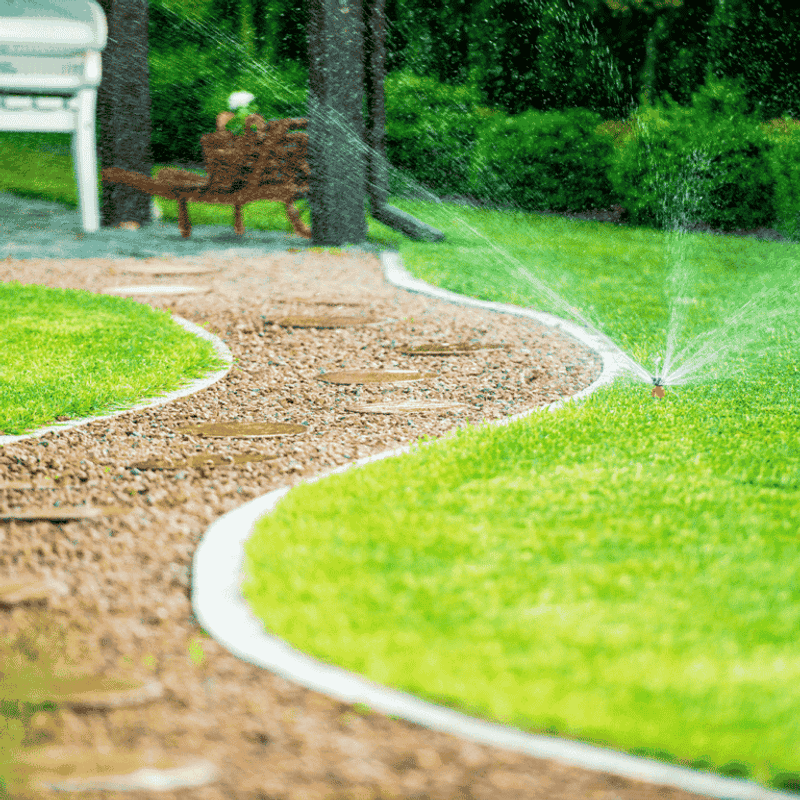
Summer watering habits do not belong in November. As temperatures cool and rain becomes more common, bermudagrass uses far less water, and a timer still set for July can leave the soil soggy.
AgriLife advises turning off or substantially reducing irrigation in late fall and winter when the lawn is dormant, as explained in its bermudagrass management calendar. Check the sky and the soil before running a cycle, and let rainfall do part of the job.
Not every yard fits that pattern. Warm-season grass may not go fully dormant in southern Texas, so those lawns may keep needing some water.
Sandy soils dry out faster, and newly laid sod has shallow roots that need steady moisture. The AgriLife fall turf tips are a handy reference for adjusting to your conditions.
Too much water carries a cost, too. Excess fall moisture can increase large-patch disease incidence or severity.
There is no single schedule that works for every Texas yard, so watch the grass and soil and adjust as conditions change.
Skip automatic winterizer treatments and required-ryegrass thinking
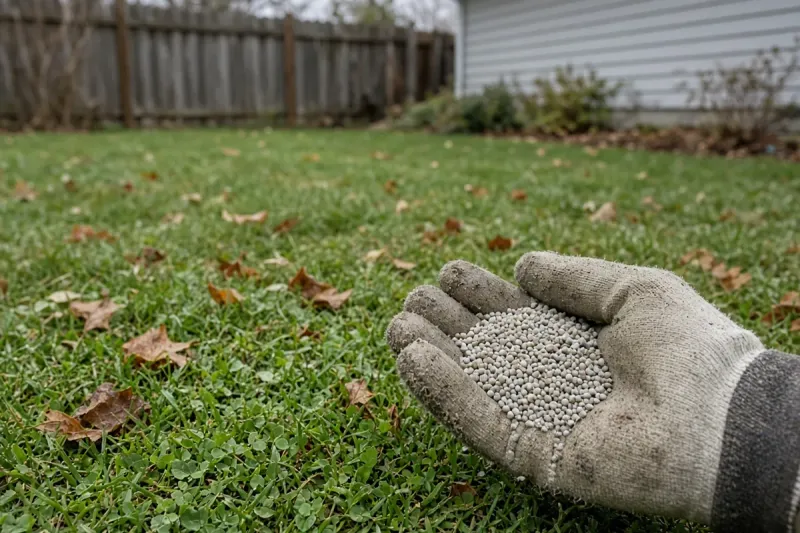
Two fall habits get more credit than they deserve. The first is a potassium winterizer for cold protection.
Clemson Extension recommends potassium only when a soil test shows levels are too low. A University of Kentucky publication on bermudagrass winter survival reports little benefit from extra fall potassium when soil potassium is already adequate.
So test first. If the lab report says potassium is low, follow its recommendation.
If the numbers look fine, extra potassium will not act as a cold-weather shield.
The second habit is treating ryegrass as a must. Overseeding with ryegrass is a way to get green color over winter while bermudagrass sleeps.
It is optional, and AgriLife says in its turfgrass establishment tips that overseeding is not necessary.
There is a tradeoff. In spring, the transition back to bermudagrass can be delayed, and if the ryegrass lingers and then dies, bermudagrass can come back weak.
If you love a green winter lawn, overseed with eyes open. If not, a tan lawn is normal and healthy.
Neither choice guarantees a thicker lawn in spring.
Set up a healthier spring return, not a guaranteed thick lawn
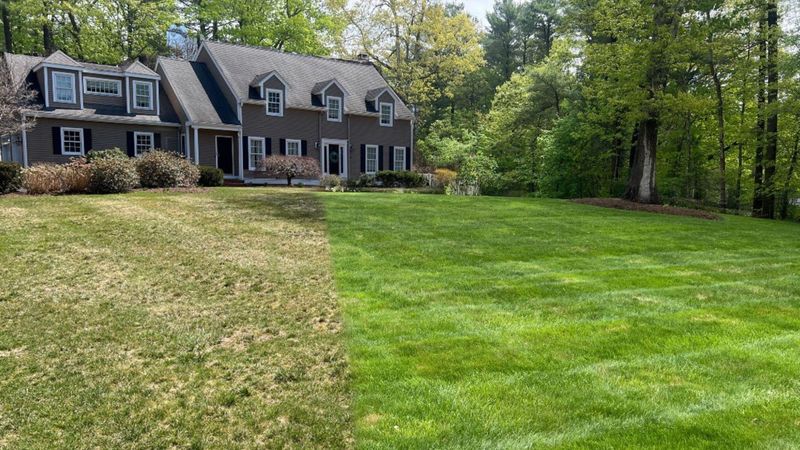
Good fall care comes down to timing and restraint. Use your region’s AgriLife nitrogen cutoff instead of a freeze forecast, test before adding nutrients, and feed only when it is justified and the grass is growing.
Then let mowing and watering follow the season, as the bermudagrass calendar suggests.
These steps support a healthy lawn, but they cannot promise thickness. Shade, pests, compaction, and a hard winter can all leave thin spots behind.
A tan lawn in January is simply bermudagrass doing what it does, and spring will tell the rest of the story.