
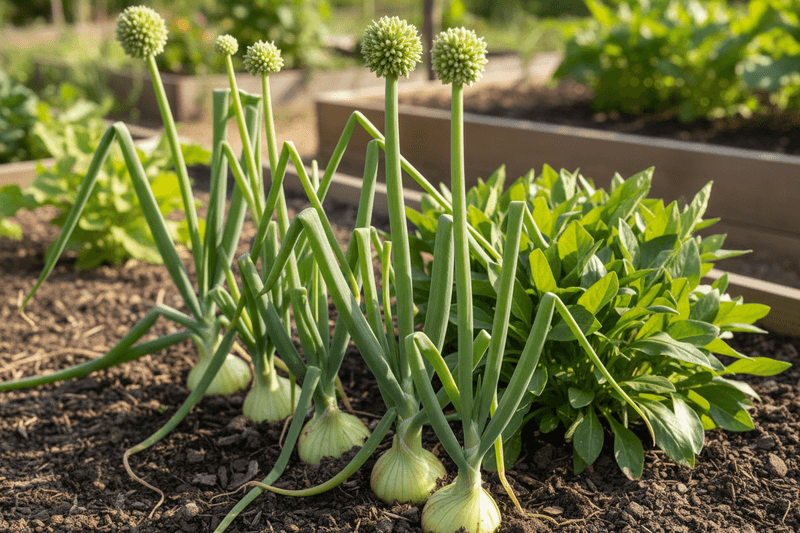
You planted onion sets in fall, and now a few plants are pushing up a tall, round-topped flower stalk. That stalk is called a bolt, and it shows up before the plant has formed a mature bulb.
It looks like a disaster, but it usually points to one plant, not a ruined bed. Here is what causes it, what to do today, and how to plan a better crop next season.
Harvest bolted onions promptly for fresh use
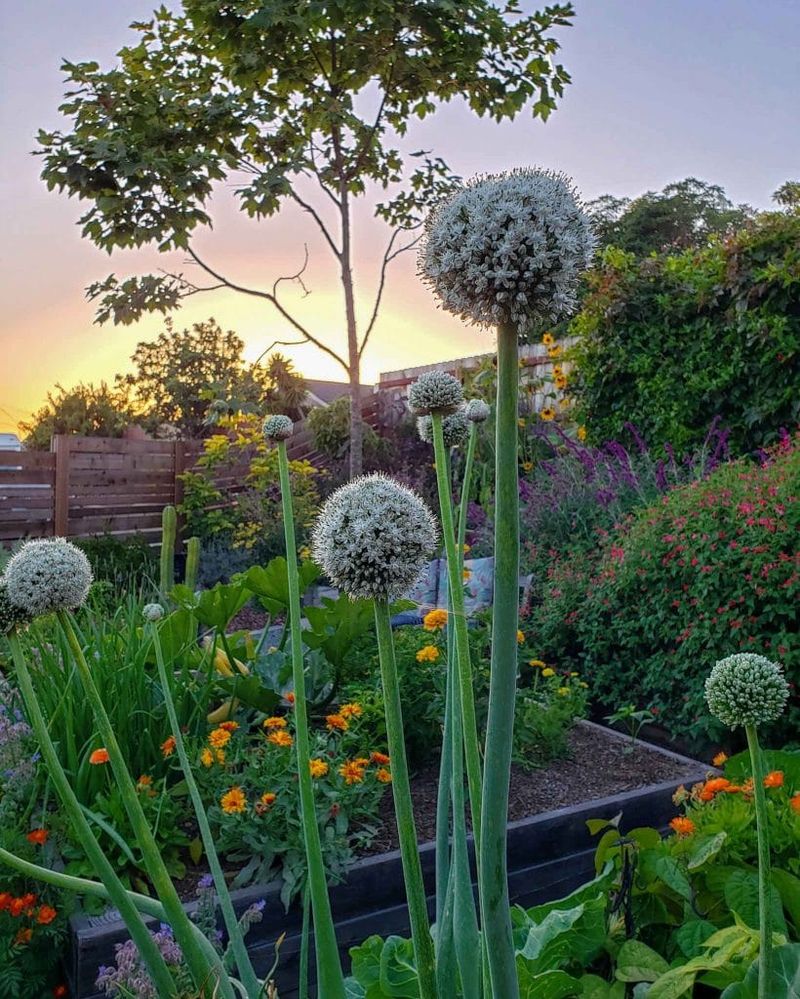
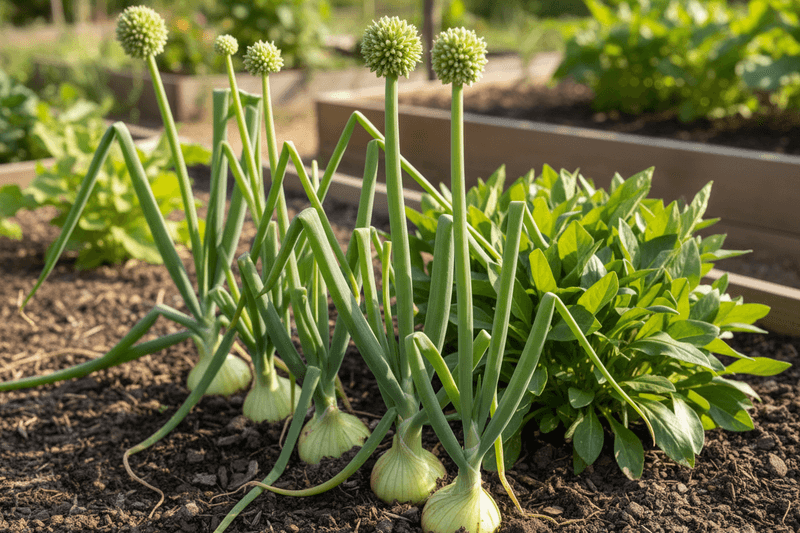
Spotting a bolt is easy. A stiff, hollow stalk rises from the center of the plant, topped with a pointed bud that opens into a round cluster of small flowers.
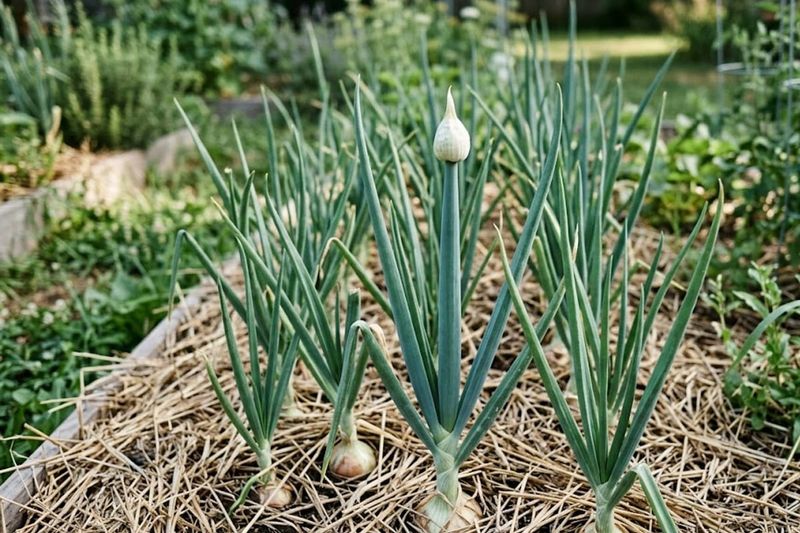
Regular onion leaves are soft and arranged like a fan, so the stalk stands out.
Pull that plant soon and eat it fresh. Both Iowa State Extension and Illinois Extension point toward using bolted onions quickly, because they make poor storage bulbs.
The base often stays firm and a bit woody in the center, so slice around the tough core.
Snipping off the stalk is tempting, but it does not reliably bring back normal bulb growth. Treat it as a quick-harvest plant rather than a rescue project.
This advice is for the plants that show a stalk. Onions with only leaves can stay right where they are.
Prolonged cool exposure can trigger flowering
Onions are biennials, which means they are built to grow leaves one season and flower the next. A long stretch of cool weather can send the flowering signal early.
Gardeners call this vernalization, and it works as a running total of cool exposure rather than a single cold night.
The plant has to be big enough to respond. Missouri Extension describes a general pattern of about five leaves and temperatures below 50°F for three to four weeks.
Michigan State Extension gives a wider range, roughly 35 to 59°F for three to 12 weeks, depending on the allium and its stage.
Treat those numbers as broad patterns, not dependable lines. A different variety or a different Southern garden may respond differently.
Flowering is also a separate process from bulbing. A plant can get the flower signal long before it has made a mature bulb, which is why the bolted onion often has such a small base.
A weather swing alone cannot explain why an onion bolted
Blaming a weather swing is a natural first guess, but it is only a guess. Bolting depends on how long the cool exposure lasted, how far along the plant was, which variety you grew, and what kind of planting material you used.
Without those details, the weather cannot be named as the sure cause.
Size matters too. One Utah State guide says larger sets or transplants, over 5/8 inch across, tend to bolt more.
Take that as a risk factor from a single source, not a cutoff that applies to every garden.
Extension guidance such as the Georgia onion production guide also notes that cultivars and plant stage change how onions respond to chilling.
One bolter also says little about its neighbors. Plants in the same row may have been bigger, smaller, or a different variety.
Check each plant on its own.
Flowering and bulbing respond to different cues
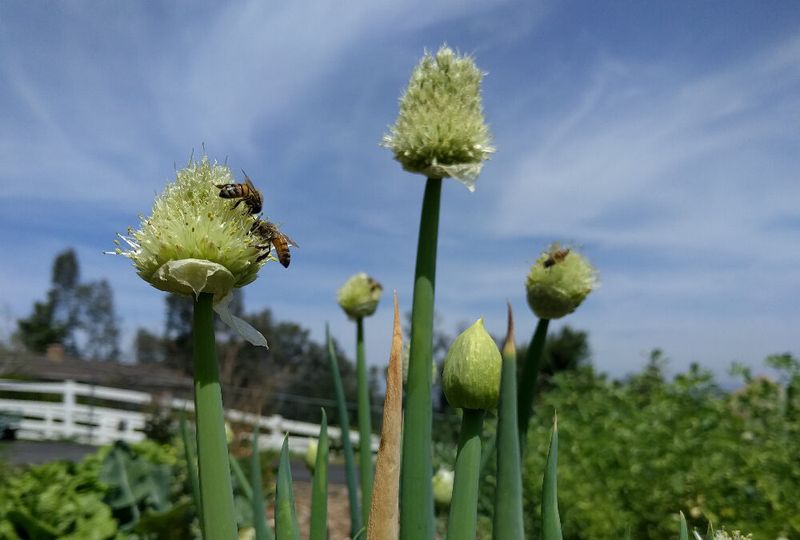
Two separate signals run the show. Cool temperatures can induce flowering, while day length is the main cue that tells an onion to swell its bulb.
Mixing them up leads to wrong guesses about what went wrong.
Short-day onions start bulbing when days are around 10 to 12 hours long, while long-day types wait for much longer days. As the Georgia guide and Missouri Extension both explain, a variety that does not suit your region’s day length may fail to bulb even if it never bolts.
So a leafy onion with no bulb is not always a bolting story. It may simply be the wrong day-length type for your area.
Use this idea when you shop next season. It points you toward choosing the right variety, but it cannot diagnose a bed by itself without knowing the variety, planting date, and weather.
Leave non-bolting onions in place
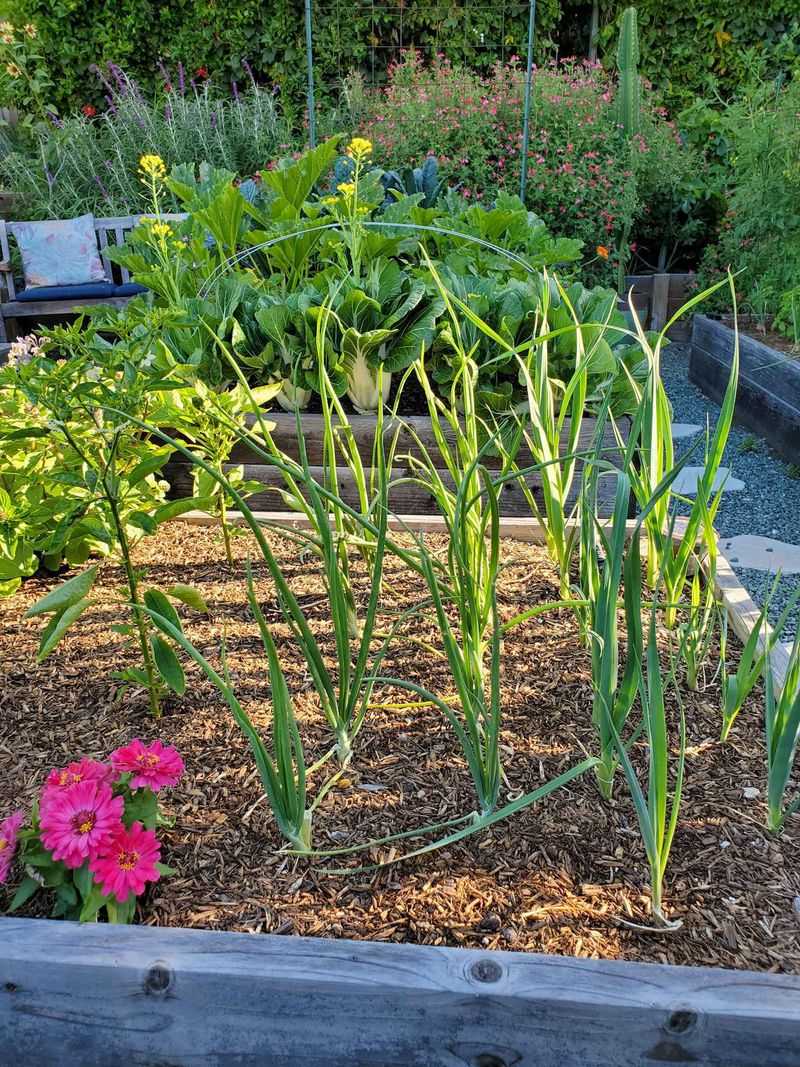
Walk the bed after you pull the bolters. Any onion with only leaves should stay put, and ordinary care can continue: steady moisture, weed control, and the feeding you normally give.
Pulling healthy plants early just because a neighbor bolted costs you bulbs you may still get.
Wishing for a rescue is understandable, but the available guidance does not establish a reliable way to stop plants that were already exposed from bolting. Covers, mulch, extra fertilizer, or changes in watering may be worth doing for general plant health, yet none are promised to undo the flowering signal.
Local guidance can help you judge timing. UF/IFAS and Texas A&M AgriLife Extension both describe fall planting of short-day onions as a normal Southern practice.
Check the bed every few days. If another stalk appears, harvest that plant and keep the rest growing.
Choose locally recommended varieties and planting dates
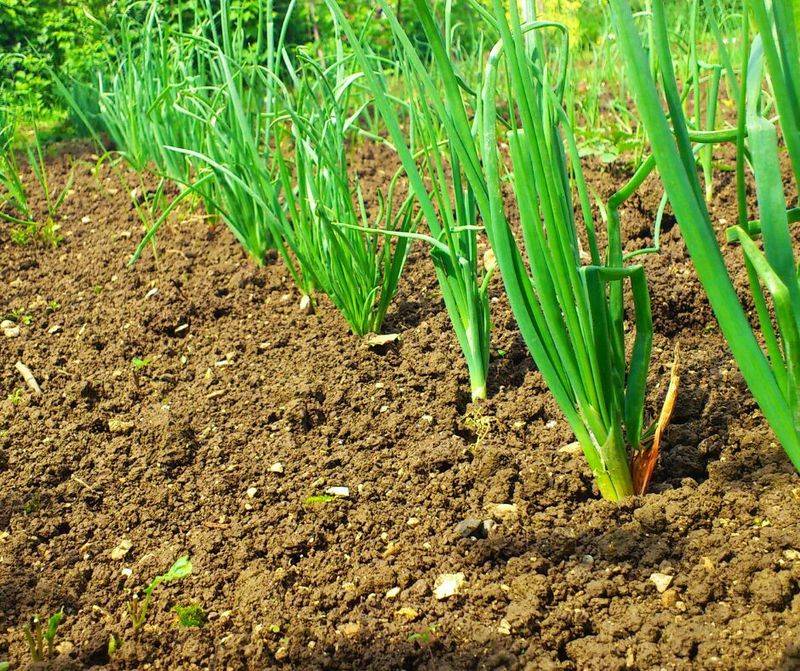
Fall planting is not a mistake in the South. Florida guidance from UF/IFAS recommends short-day varieties and fall planting, and Texas A&M lists short-day varieties for Texas home gardens.
What matters is that timing and variety match your area.
Start with your county Extension office. Ask which varieties and planting dates work in your zone, since north Texas, the Gulf coast, and central Florida can differ a lot.
Know what you are buying, too. Sets are small bulbs, while seedlings and transplants are young plants, and they do not behave the same way in the cold.
Plants that are already large at planting may carry more bolting risk, and the Utah State guide flags sets over 5/8 inch for that reason. That is a possible risk, not a guarantee.
Write down the variety, size, and planting date this year. Those notes will tell you far more next fall than a guess about the weather.