
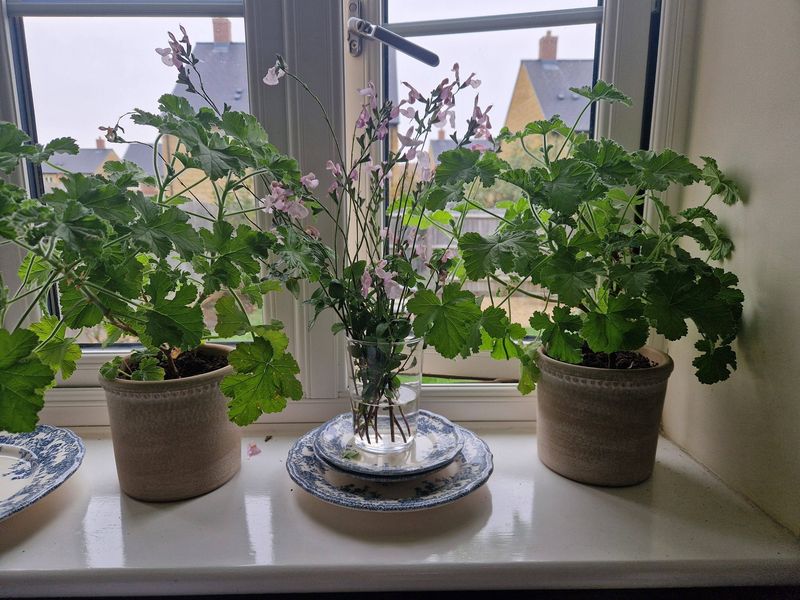
Your geranium looked full and bushy on the patio, and now it is all long, bare stems reaching for the glass. Winter indoors can do that to a potted plant in just a few weeks.
The good news is that a couple of simple changes may help it grow back more compact by spring. Here is how to read what your plant is telling you and what to try first.
Why indoor geraniums get leggy
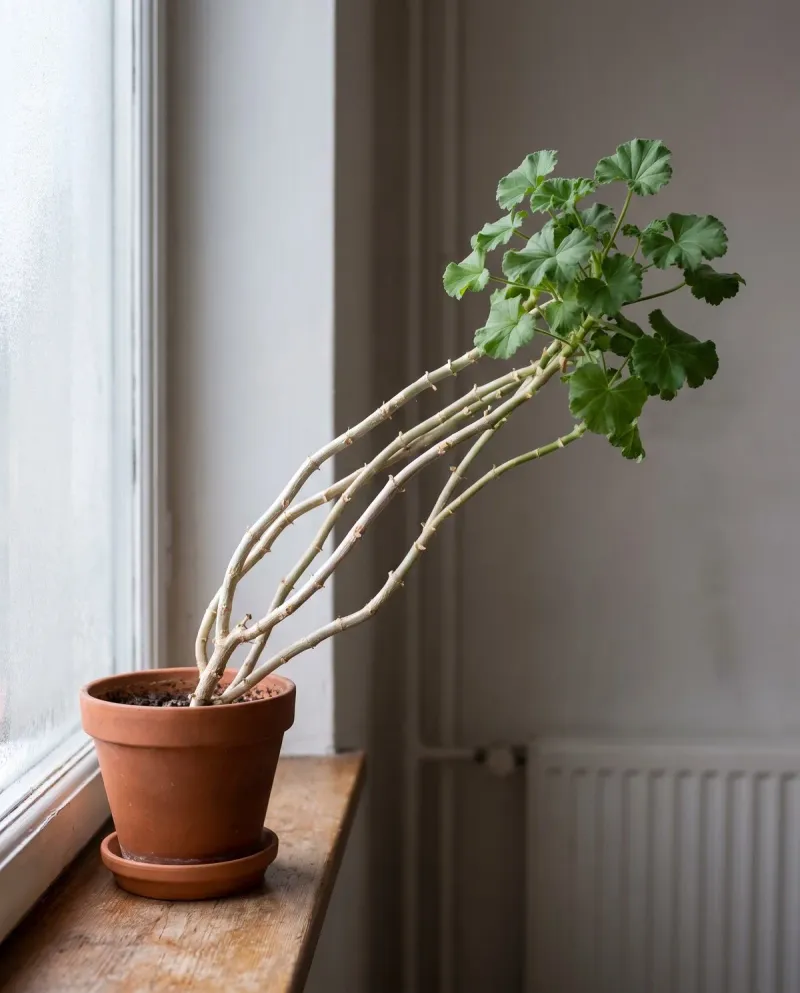
Walk a patio geranium into a dim living room and the stems often start to stretch. University of Minnesota Extension notes that low indoor light can make geraniums grow long and thin between the leaf nodes, and it can also cut down on flowering.
The plant is not being lazy. It is spending its energy on reaching toward light instead of building sturdy, short growth.
Iowa State Extension also points out that plants kept in warm, poorly lit spots can turn lanky.
So the clearest sign to look for is stem length. Wide gaps between leaves, thin stems that lean toward the window, and fewer blooms all fit the pattern.
Pale leaves alone do not prove low light, and we will come back to that.
Keep in mind that this advice is about common garden geraniums, which are Pelargoniums. Other plants with the name geranium may not behave the same way indoors.
Move the pot toward brighter light
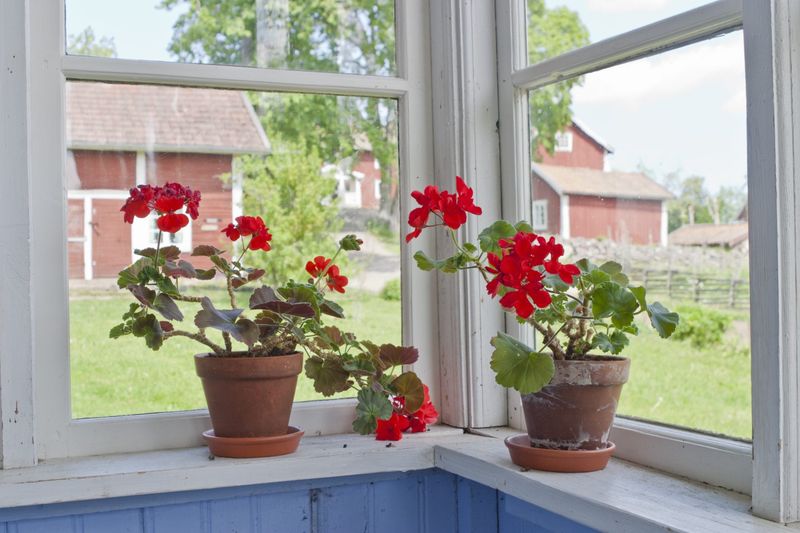
Start by giving the plant the brightest spot you can offer. A south- or west-facing window is often a good starting point, and Clemson Extension recommends keeping geraniums in a sunny window indoors.
Slide the pot close to the glass, but check that leaves are not pressed against cold panes on frosty nights.
A window facing the right way is not a promise of enough light. Distance from the glass, a porch roof, trees, or a sheer curtain can all cut down what reaches the plant, as Illinois Extension explains in its houseplant lighting guide.
For a target, Texas A&M AgriLife Extension says geraniums need at least four hours of direct sun daily to flower well. If your windows fall short, a supplemental grow light is an option worth trying.
Turn the pot a quarter turn every week or so to keep growth from leaning to one side.
Pinch or prune just above a leaf node
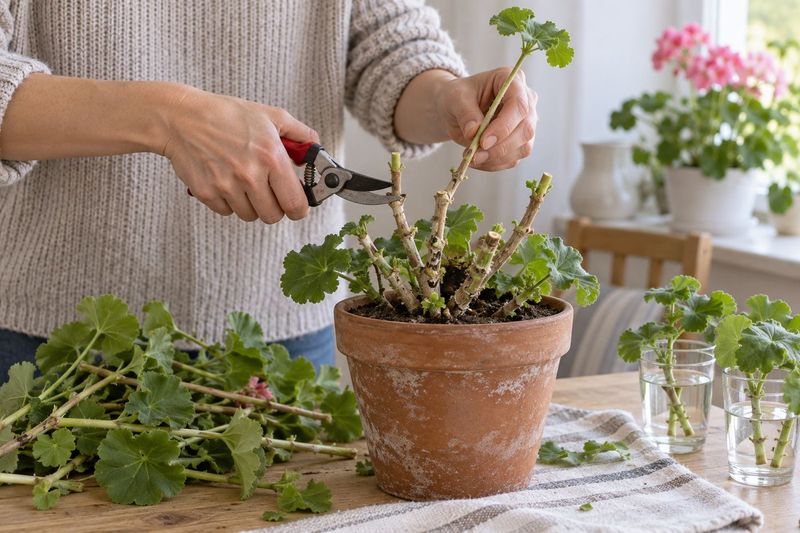
Once the plant has better light, you can tidy those stretched stems. Find a leaf node, the spot where a leaf joins the stem, and cut or pinch just above it.
Minnesota Extension describes this as a way to encourage new branching.
Iowa State Extension also suggests occasional pinching to keep plants compact. Use clean snips or your fingertips, and work on one stem at a time rather than cutting everything at once.
Here is the catch. Pinching does not fix the reason the plant stretched.
If the pot stays in a dim corner, new growth may stretch out again.
Treat the pinch and the brighter spot as a team. Results vary by plant and conditions, so expect some stems to branch well and others to take their time.
Support growth with sensible winter care
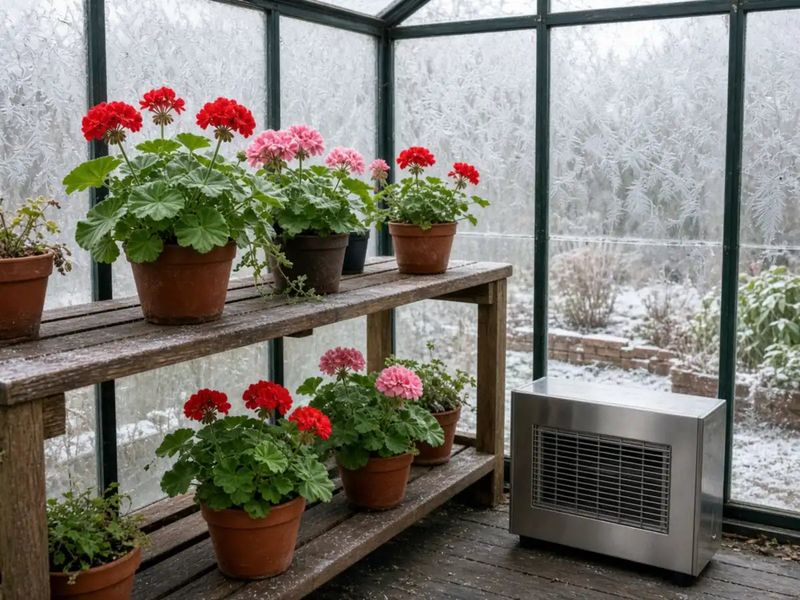
Warm and dim is the combination to avoid, since Iowa State Extension links it to lanky plants. Keep the pot away from drafts and heat vents too.
Temperature advice differs a bit by source. Minnesota Extension suggests about 60 to 65°F indoors.
Clemson gives 65 to 70°F by day and about 55°F at night. Treat those as ranges, not one perfect number.
Skip a fixed watering calendar. Poke a finger into the soil, water when it feels dry, and use a pot with good drainage so roots never sit in standing water.
Constantly wet soil invites rot.
Go easy on fertilizer too. Minnesota Extension advises feeding during active growth, so when light is low and growth is slow, holding back makes sense.
Check pale leaves before diagnosing the cause
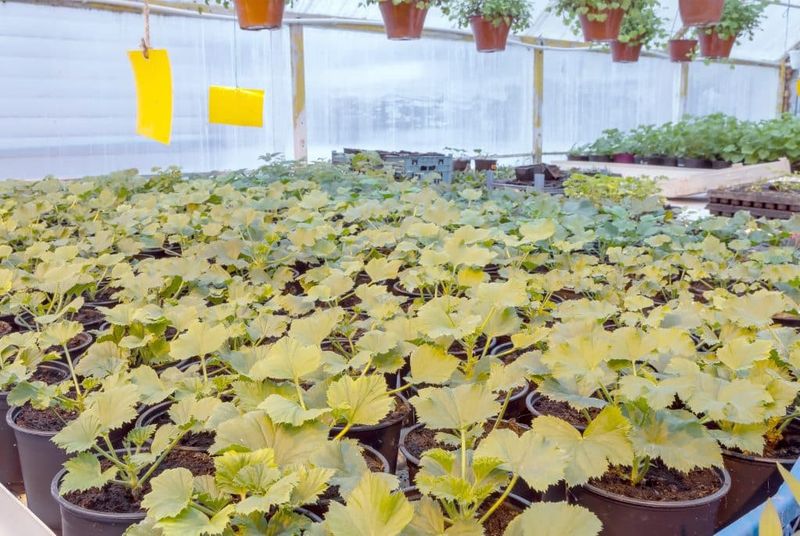
Pale leaves worry people, and it is tempting to blame the window. But color alone cannot tell you the cause.
Low light is a good explanation for long, thin stems, yet leaf color can shift for other reasons.
Michigan State University Extension describes nutritional problems that can discolor geranium leaves. The UC IPM program also lists diseases and pests that affect geraniums.
Before changing anything, look closer. Is the soil soggy or the pot slow to drain?
Are the spots, edges, or veins following a pattern? Do you see insects on the undersides of leaves or sticky residue?
Fertilizer is not an automatic rescue for pale foliage, especially in winter. If the problem looks like disease or you are unsure, a local extension office can help you narrow it down.
Overwintering needs depend on the plant and region
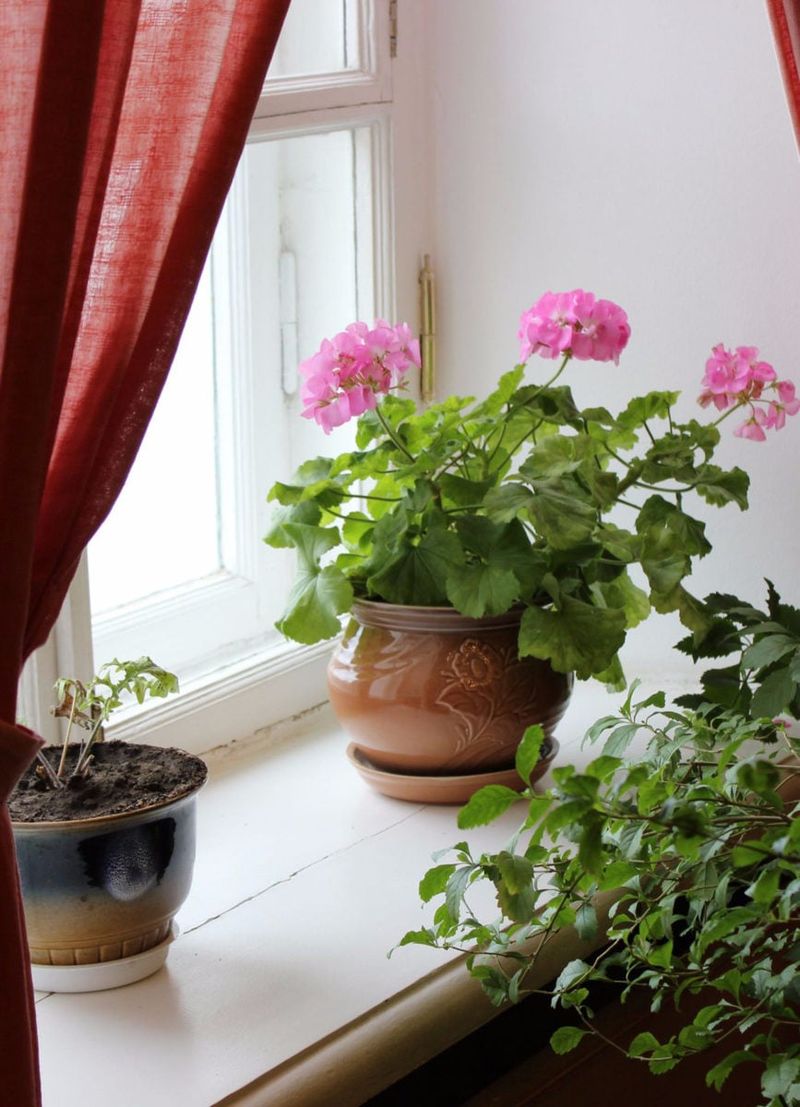
The geraniums most people overwinter are Pelargoniums, the zonal, ivy, and scented types. Iowa State Extension separates them from true hardy geraniums, which belong to a different genus.
The tips here are not meant for those hardy plants.
Nor does every Southern gardener need to bring pots inside. UF/IFAS Extension says geraniums can perform outdoors in south and central Florida from about October through March.
In north Florida, gardeners may keep plants in a full-sun indoor spot on cold nights.
Your own frost risk, your plant type, and your winter weather decide the plan. A Texas Gulf Coast porch and a Panhandle patio may call for very different choices.
The plant tells you more than the calendar does, so watch it and the forecast together.