
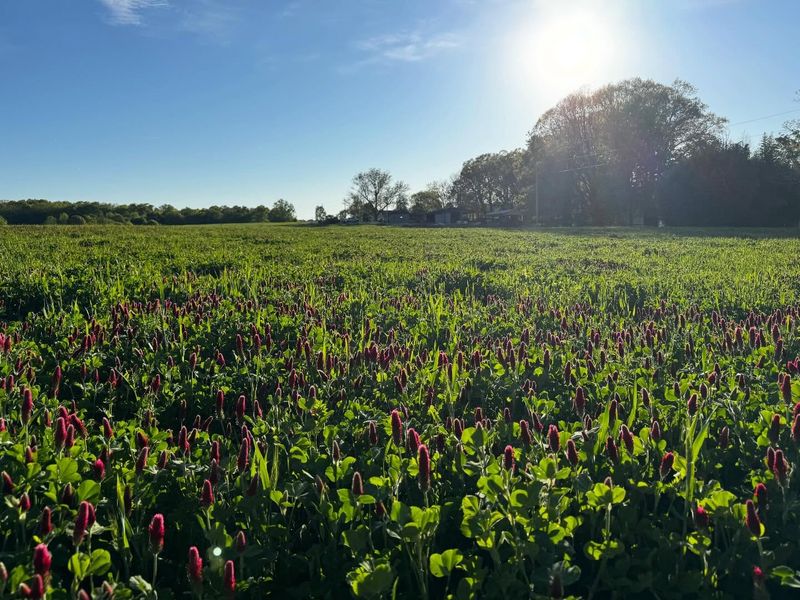
Bare soil in winter is an open invitation for weeds, and pulling them gets old fast. Crimson clover is a cool-season cover crop that some Texas and Florida gardeners sow to fill empty beds.
It may help hold back weeds and add nitrogen to the soil before tomato season. Whether it works for you depends on timing, soil, and a few pest concerns, so let’s sort that out.
Crimson clover may help, but it will not guarantee a weed-free bed
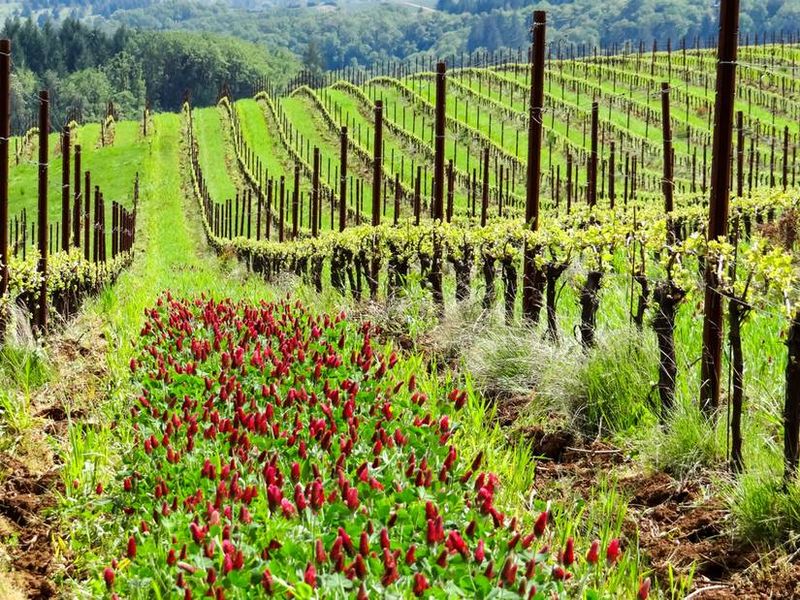
Crimson clover is a cool-season annual legume. It grows a leafy living cover over winter, and with the right root bacteria it can fix nitrogen from the air.
Those are real perks for a bed that would otherwise sit bare.
Still, they are conditional. USDA NRCS rates its weed suppression as fair, which means a thin or patchy stand will let plenty of weeds through.
A thick, well-established stand does better, but it is no replacement for weeding or mulch.
The same goes for nitrogen. Florida guidance lists crimson clover as a cover crop for nitrogen and weed suppression, but how much you get depends on how well it grows.
It is not a promise of free fertilizer for tomatoes.
Before you buy seed, check three things: your local planting window, your soil type, and your bed’s pest history. SARE’s crimson clover profile is a good place to read up on how the crop behaves.
Check your local planting window before sowing
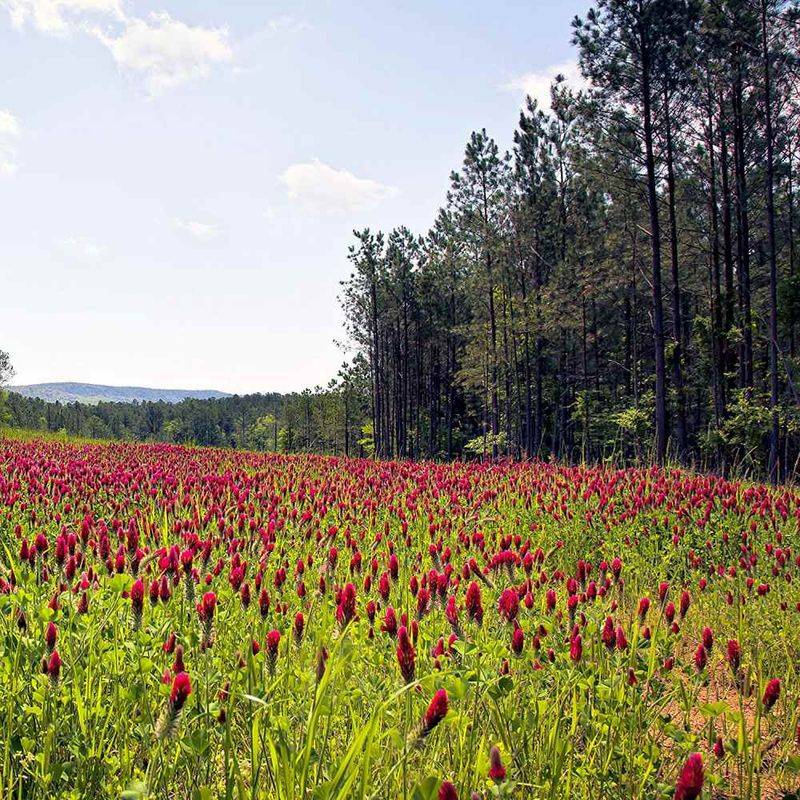
A mid-November sowing date cannot fit every garden in two huge states. A bed near Houston, one in the Panhandle, and one near Miami all sit in different seasons.
The window may already have passed where you live.
For Florida, a UF/IFAS cover crop guide gives crimson clover planting dates of September through November. It adds that South Florida dates usually run about two weeks earlier than North Florida.
Farther north in the South, SARE notes that planting may continue until about mid-November in the lower Gulf Coastal Plain. That is a regional reference, not a guarantee for your yard.
Your next step is simple. Call or visit your county Extension office, or check its planting guides, and ask whether sowing now still makes sense.
If the window has closed, mulch the bed and plan a cover crop for next fall.
Check soil conditions and pest history first
Soil comes first. Texas A&M AgriLife identifies Gulf Coast regions as areas where crimson clover is adapted.
It also cautions that the plant does not tolerate poorly drained or calcareous soils well.
If water stands in your bed after rain, or your soil is chalky and alkaline, expect a weaker stand. That is a good reason to look at another cover crop or to improve drainage first.
Florida tomato growers have one more issue to weigh. UF/IFAS warns that crimson clover can encourage root-knot nematodes over winter.
These tiny soil worms cause knotted, swollen roots and stunted plants.
If you already know nematodes live in your bed, do not treat crimson clover as an easy pick. Ask your county Extension office about options that fit your situation.
These two cautions are specific, so do not stretch either one to every garden in either state.
Sow shallowly and encourage an even stand
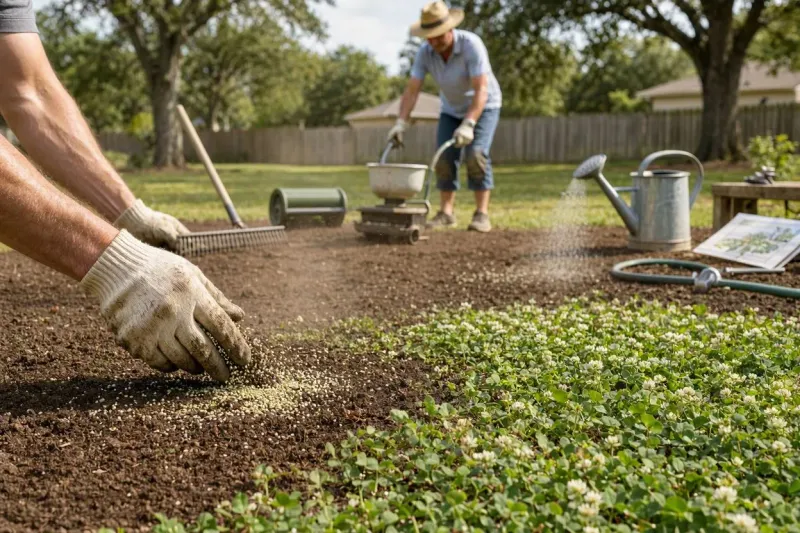
Clover seed is tiny, so burying it deep is the quickest way to waste it. A Texas NRCS technical note lists a planting depth of one quarter to one half inch.
Rake lightly and press the seed into the soil for good contact.
UGA Extension also suggests keeping small clover seed near the surface. A light rolling or tamping helps.
For amounts, follow the seed label and local advice. The Florida rates of 25 pounds per acre broadcast and 20 drilled, listed in the UF/IFAS guide, are field-scale references, not a recipe for a 4 by 8 bed.
Inoculation matters too. The USDA plant guide recommends the appropriate clover inoculant if crimson clover has not grown in that spot in the previous three years.
An even, dense stand gives the best shot at shading out weeds. It still will not give you a weed-free bed, so keep pulling any that break through.
Plan termination around your spring tomato date
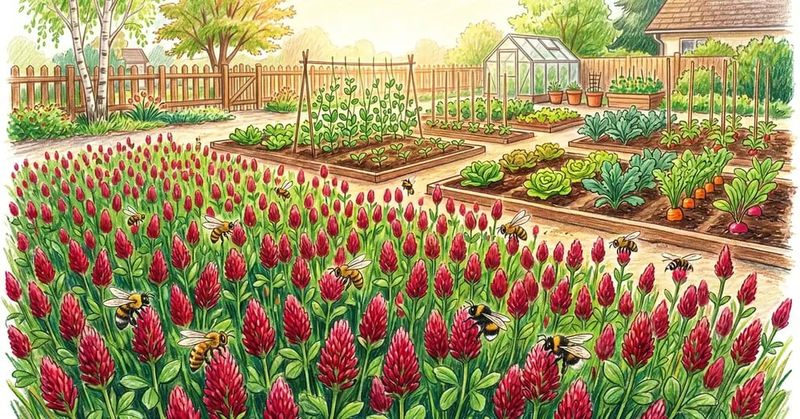
Work backward from the day you want tomatoes in the ground. Iowa State Extension advises terminating cover crops two to three weeks before planting vegetables.
For crimson clover, tilling and smothering are both supported methods.
There is a tradeoff. Letting the clover grow longer can build more biomass and more nitrogen, but it may push back your tomato date.
SARE ties maximum nitrogen to late bloom or early seed set. Cutting earlier fits your calendar better, but you may get less.
Watch for regrowth after you cut or till. Pull or cut anything that resprouts.
If you do not want clover popping up all over the garden, stop it before it sets seed.
Also avoid planting right after you work in fresh green material. As it breaks down, microbes can temporarily tie up nitrogen, and young tomatoes may show pale, hungry leaves.
Give the bed those two to three weeks.
Treat nitrogen as a possible contribution, not a tomato fertilizer guarantee
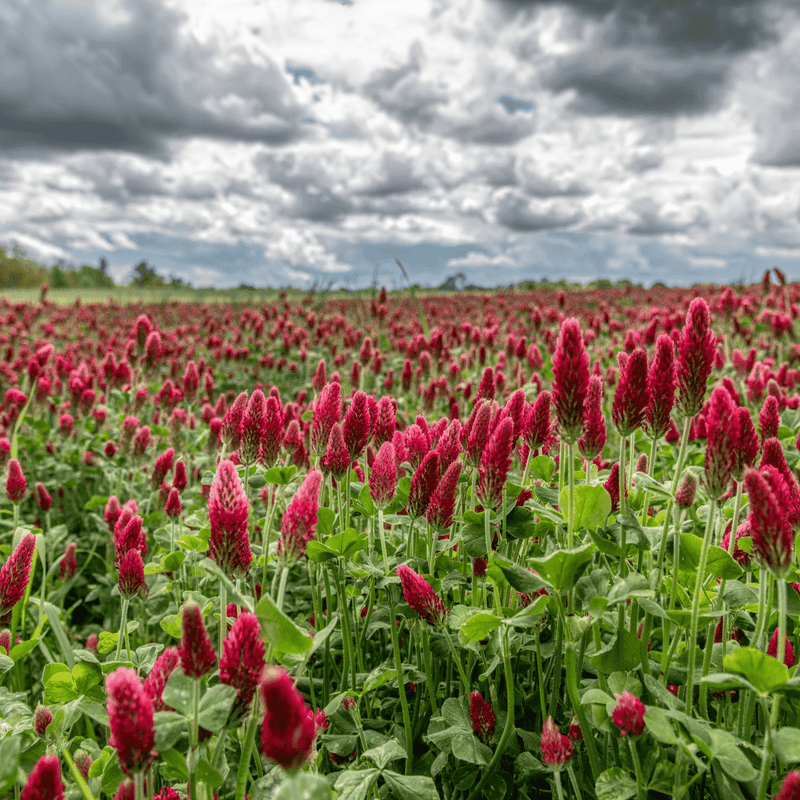
Nitrogen fixing sounds like free fertilizer, but the amount varies a lot. UF/IFAS gives broad Florida field estimates of 35 to 120 pounds of nitrogen per acre for crimson clover.
Those numbers come from fields, so do not read them as a set credit for your tomato bed.
Growth, weather, soil, and termination timing all change what actually reaches the next crop. A thin stand adds little, and a good stand adds more, but nobody can promise a specific yield bump.
So keep your soil test habit. Tomatoes still need a thoughtful fertility plan, and the clover is only one input to it.
If you till in fresh material, wait the two to three weeks the Iowa State guidance suggests, so decomposition does not rob young plants of nitrogen.
Think of crimson clover as one possible piece of bed prep, alongside local timing, well-timed termination, and your regular feeding plan. Sometimes the best thing a cover crop does is keep the soil busy while you wait for tomato weather.