
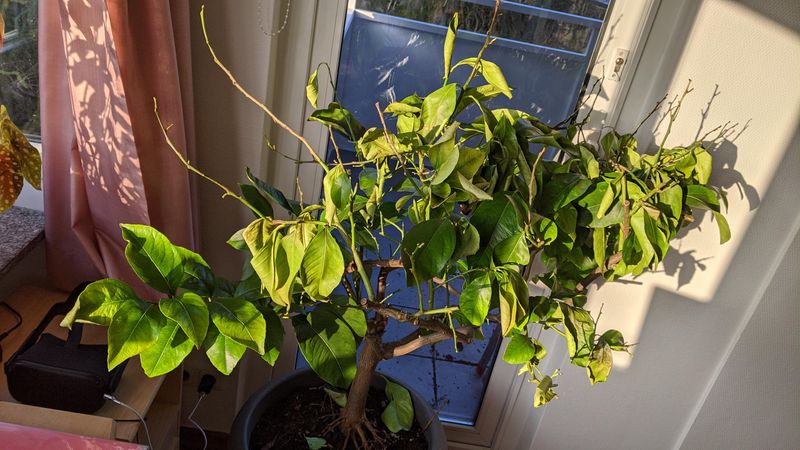
Curled citrus leaves are a clue that your tree is reacting to something, and cold nights are one of the possible causes. Thirst and tiny feeding insects can twist leaves in much the same way.
Reading the clue correctly can save you from watering a soggy tree or spraying a healthy one. A few quick checks will tell you what your tree is trying to say.
Start with weather, soil, and leaf evidence
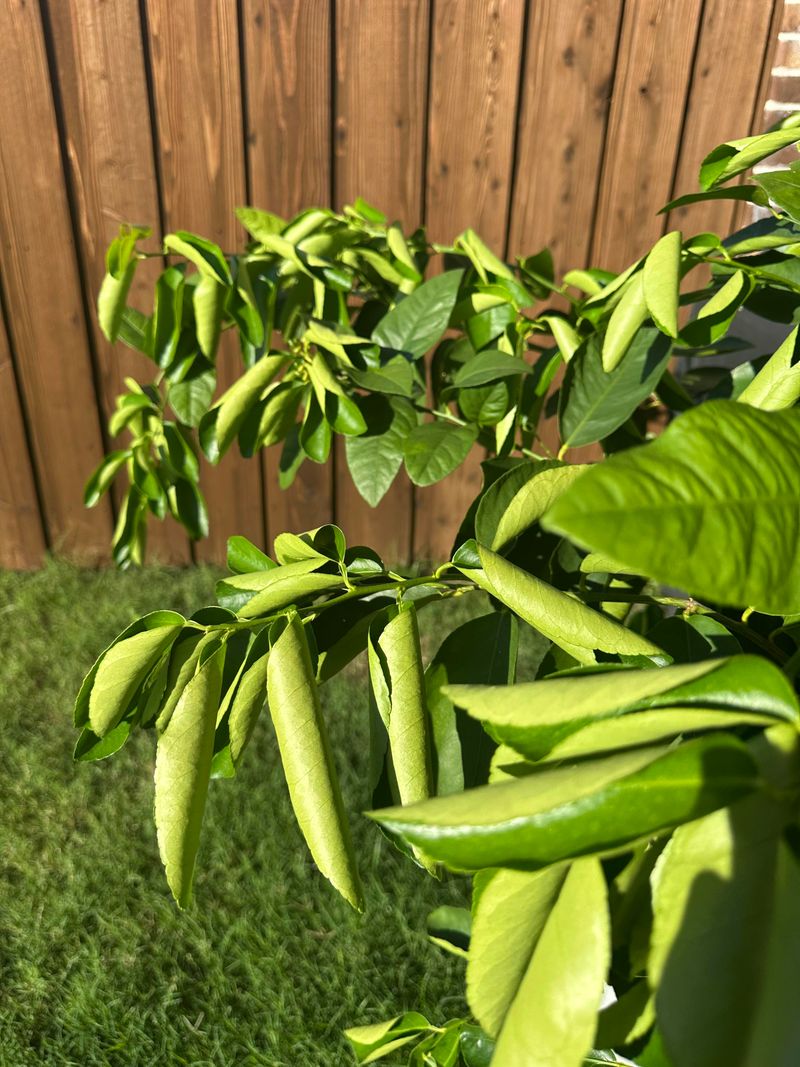
Cold exposure can curl citrus leaves, but so can water stress and feeding insects. That overlap is why the calendar alone cannot name the cause.
A curl that shows up in November might be cold, thirst, or pests.
Three checks sort things out. First, look back at the recent weather and ask whether frost or freezing temperatures actually happened.
Second, test the soil moisture. Third, study the leaves and new shoots up close, including the undersides.
Each cause leaves its own fingerprints. UC IPM frost guidance lists water deficit among the problems that can look like frost injury, and Arizona Extension describes distinct curling patterns from water stress and aphids.
Insects such as the citrus leafminer can also distort leaves, as UC IPM notes.
Do these checks before you pick up the hose or a spray bottle. The answer may be no action at all.
Look for signs of freeze injury
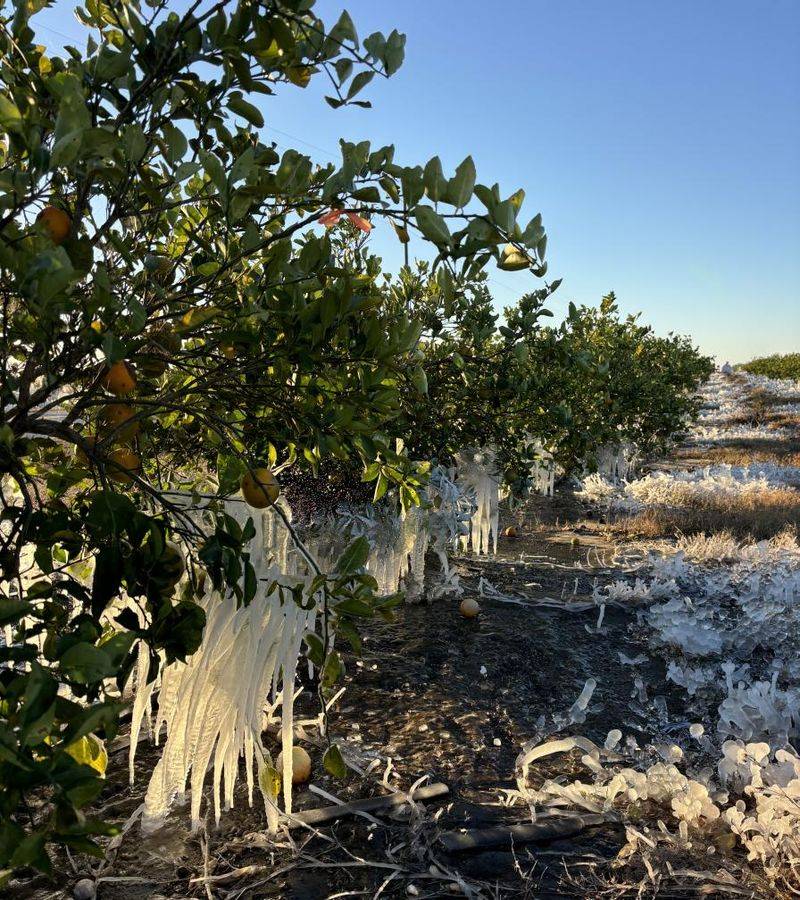
Recent frost or a freeze makes cold injury a much more believable cause. Curling by itself is a weak clue, so look for stronger partners.
Leaves may wilt or turn curled and brittle while they are frozen.
After thawing, more serious damage often shows up as tissue that looks water-soaked, dark, bleached, or brown. UC IPM describes these symptoms in detail.
Recent tender growth is especially vulnerable, so check the newest shoots first.
Cool nights without freezing do not prove cold injury. If the thermometer never reached freezing, look harder at soil and pests.
Freeze risk also depends on several factors: how cold it got, how long it stayed below freezing, the type of citrus, and how well the tree had acclimated. Texas A&M gives one example: a dormant satsuma may handle 18°F in early February, yet be seriously damaged at 24°F in early December.
Treat those numbers as examples, not guarantees. No single temperature marks the point where every citrus tree is hurt.
Check the soil before you water
Thirsty citrus leaves tend to lose their shine. They turn dull green and curl inward from the edges.
Arizona Extension notes that continued stress can make them crisp and cause leaf drop.
For a tree in the ground, check moisture through the root zone, not just the surface. A long screwdriver or soil probe slides in easily where soil is moist.
If the soil is dry down deep, water deeply rather than giving frequent shallow sprinkles.
If the soil is already damp, extra water will not help, and soggy roots cause their own trouble.
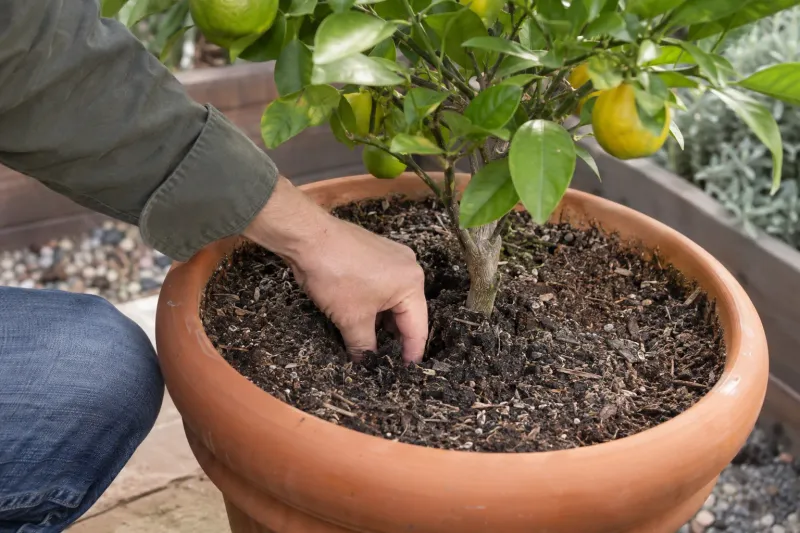
Containers follow different rules. Texas A&M advises letting the top inch of soil dry before watering, making sure the pot drains freely, and watering less often in cool weather.
Try the finger test: push a finger an inch into the mix. If it feels damp, wait a day or two and check again.
Inspect young leaves for feeding damage
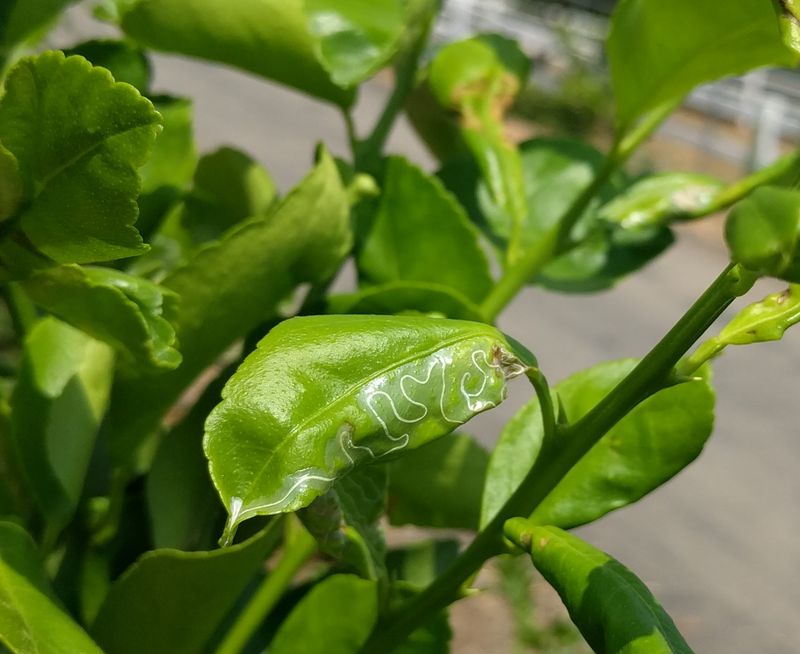
Tiny feeders can bend leaves out of shape, and the clues are often on new growth. Turn leaves over and look at the undersides, then check the tips of fresh shoots.
Citrus leafminer leaves shallow, winding trails inside young leaves, and the leaf may curl and distort. UC IPM explains that mature citrus usually tolerates this damage without reduced growth or yield, while young trees can have stunted growth.
Aphids give different clues. Look for the insects themselves or for sticky new growth.
UC IPM’s leaf damage guide can help you match what you see.
Some pest damage is mostly cosmetic. Arizona Extension says thrips damage can be only skin deep.
If you find no pests, do not spray. Even when you do find some, treatment is not always needed, and broad-spectrum insecticides are best avoided without evidence of a real problem.
Prepare for a hard freeze without overwatering
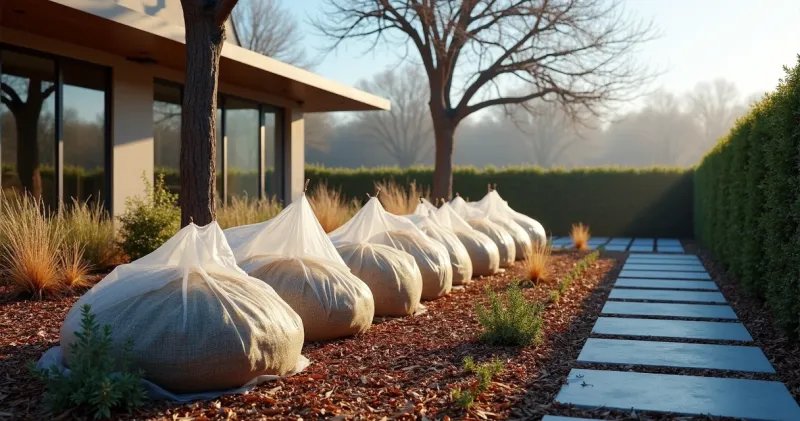
Freeze prep is a special case, not a reason to water whenever leaves curl. For in-ground Texas citrus, Texas A&M recommends irrigating thoroughly several days before a hard freeze.
If the soil is already wet, keep it that way without saturating it further.
The same source describes covers and supplemental heat. Be careful with outdoor electrical equipment, and keep cords and connections safe from moisture.
Plastic covers should come off on sunny days so heat does not build up under them.
Containers have their own plan. Texas A&M advises cold protection or moving pots indoors during freezing weather.
A pot on a rolling plant stand can be tucked into a garage or porch in minutes. Keep watering gentle while it sits there, since cool conditions slow the tree down.
Wait for new growth before pruning
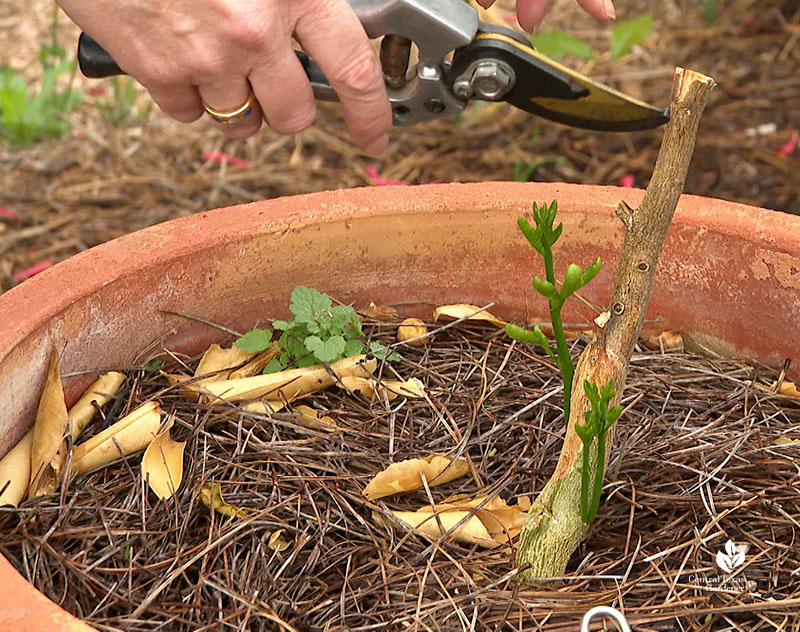
Freeze damage can look different after the tree thaws. Some injury becomes clearer over days or weeks, so the first look is rarely the final answer.
UC IPM frost guidance points out that damage can develop over time.
A tree that drops many leaves is not necessarily dead. Bare branches can still hold living wood that will sprout when warm weather returns.
Resist the urge to grab the pruners. Cutting early can remove wood that is still alive.
Let spring growth show you which branches are truly gone.
Texas A&M recommends delaying pruning until May. Once new shoots push out, cut back to healthy wood just beyond where growth stops.
Know which signs need a closer look
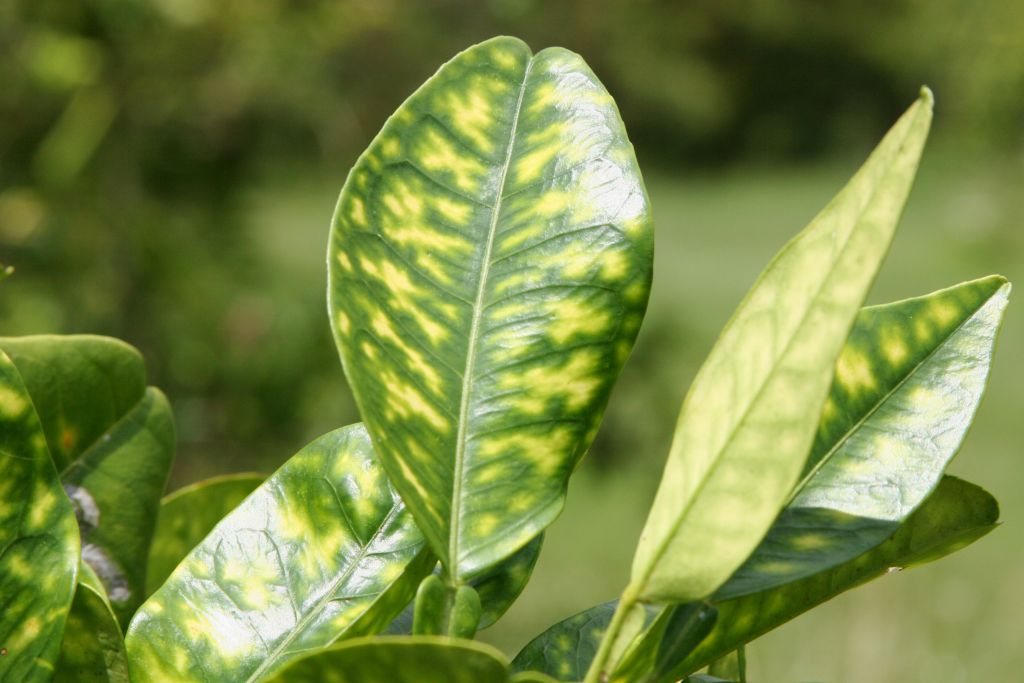
A few signs deserve more attention than ordinary winter fuss. Asymmetrical blotchy mottling on leaves, twig dieback, and small, misshapen, poorly colored fruit are all associated with citrus greening.
USDA APHIS lists these signs and notes that Asian citrus psyllid occurs in portions of Texas.
If curling comes with these clues, do not write it off as cold or watering stress. Still, one symptom alone does not diagnose a tree.
Look at the whole picture across leaves, twigs, and fruit.
If you suspect citrus greening, report it to the relevant plant-health officials, such as your county Extension office or state agriculture department. They can advise on sampling and next steps.
Match your response to what you find
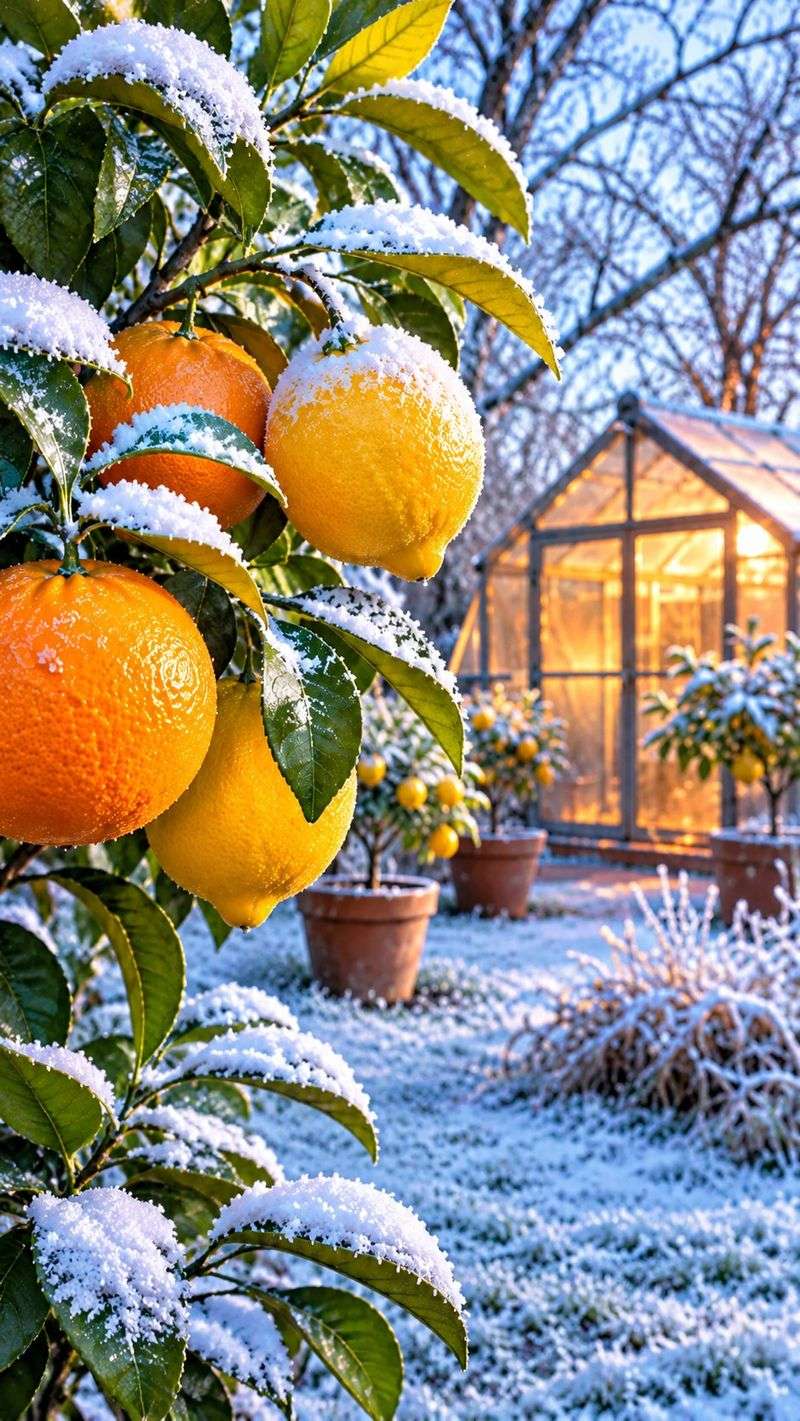
Put your three clues side by side: recent cold, soil moisture, and what the leaves and shoots show. Then act on what matches, whether that is protecting, watering, treating, or simply waiting.
Sources like Texas A&M and Arizona Extension back that evidence-first approach, and UC IPM backs patience with minor pests.
A curl alone is a question, not an order. Your tree is only asking you to look closer.