
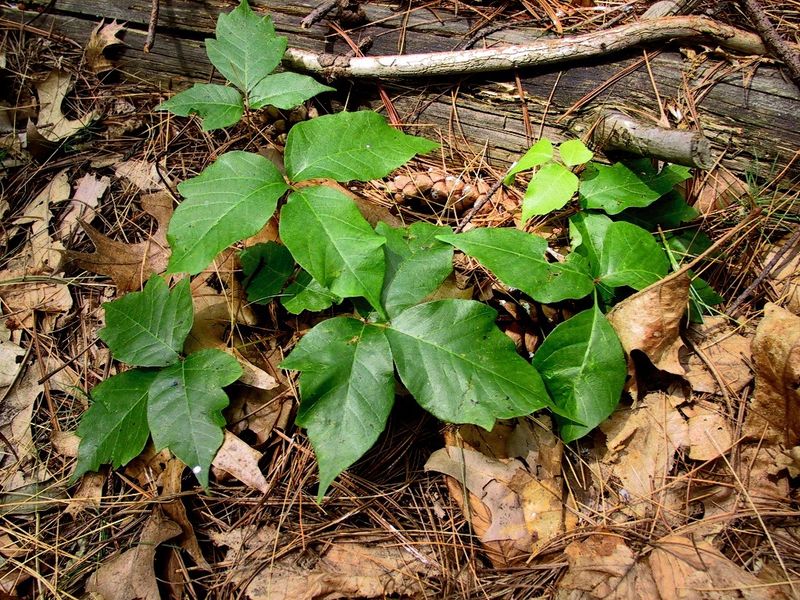
Burning a pile of leaves that has poison ivy mixed in can put the plant’s irritating oil into the smoke you and your neighbors breathe. That smoke can cause serious breathing problems for some people.
Many North Carolina homeowners rake up vines and leaves together without a second thought. A quick look at the pile before you strike a match could save you a very bad day.
Smoke can carry urushiol on particles
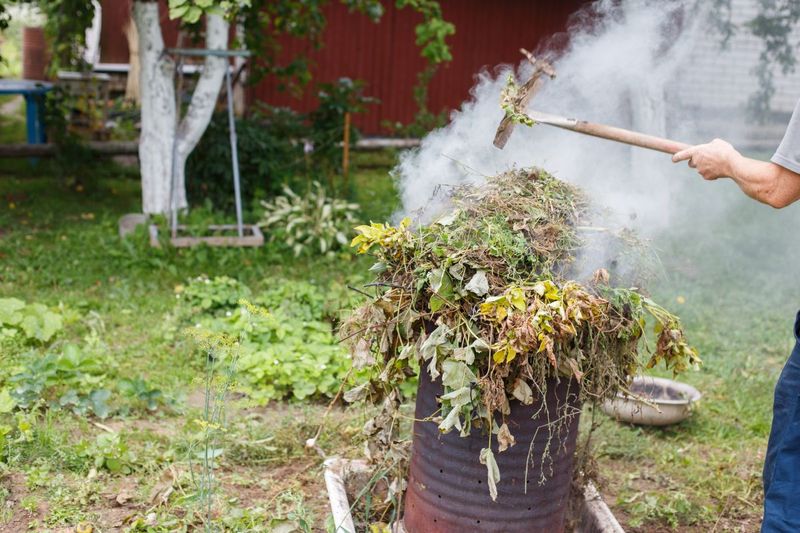
Poison ivy gets its sting from urushiol, a sticky plant oil found in the leaves, stems, and roots. Most people know the oil causes an itchy rash when it touches skin.
Fewer realize that fire does not simply erase it.
According to Oregon State University Extension, urushiol can travel as tiny droplets on smoke, ash, and dust particles. That is different from saying the oil floats around as a vapor.
It also does not mean every bit of oil survives every fire. The point is that some of it can hitch a ride on the particles a pile throws into the air.
That matters because smoke does not stay put. Wind can push it across a yard, over a fence, and through an open window next door.
The person raking and tending the fire is not the only one who can be exposed. Kids playing nearby, a neighbor hanging laundry, and a dog sniffing around the ash pile are all in the path.
This is why CDC and NIOSH guidance says plainly not to burn poison ivy, poison oak, or poison sumac. A hotter fire or a careful spot to stand does not turn this into a safe job.
Poison ivy loves to climb tree trunks and tangle through fence lines and brush, so it often ends up in a pile without anyone noticing. If you cannot be sure the pile is clear of it, the safest choice is to leave the match in the drawer.
Serious breathing problems are possible
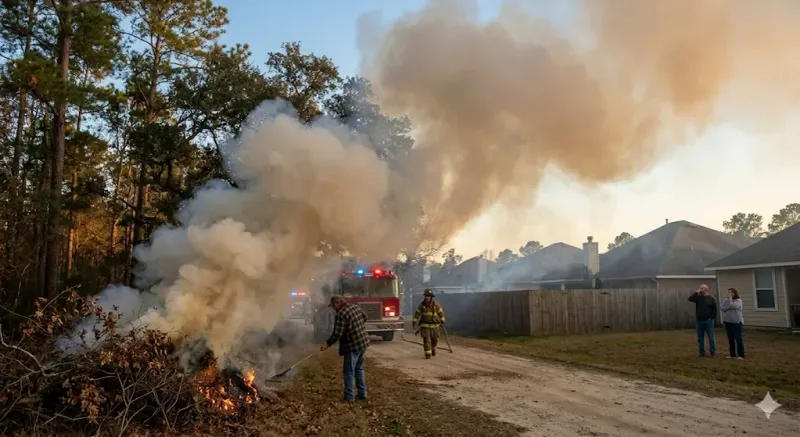
Breathing in smoke from burning poison ivy can irritate the lungs and, in some people, cause serious breathing problems. Poison Control lists smoke exposure as a real hazard of burning these plants.
Eyes and skin can also be exposed to the particles.
Severe reactions are possible, but they are not what happens to everyone. A 2022 forensic case report described two deaths linked to poison ivy smoke inhalation and noted that injuries beyond the skin are far less common.
A case report like that shows what can happen. It does not tell us how often it happens or how likely it is for any one person.
Plain leaf smoke is a separate problem. According to North Carolina DEQ, burning leaves and other yard debris makes smoke that can irritate eyes and airways, even with no poison ivy in the pile.
Stinging eyes and a scratchy throat from ordinary smoke are common and do not prove urushiol was involved.
The clue to watch for is how bad it gets. Mild coughing that fades once you step away fits ordinary smoke.
Trouble catching your breath, wheezing, or chest tightness, especially after burning vines or brush, is a reason to take it seriously. Since you cannot see urushiol in smoke, the practical rule is to keep suspect plants out of the fire altogether.
Dead leaves and contaminated gear can still expose you
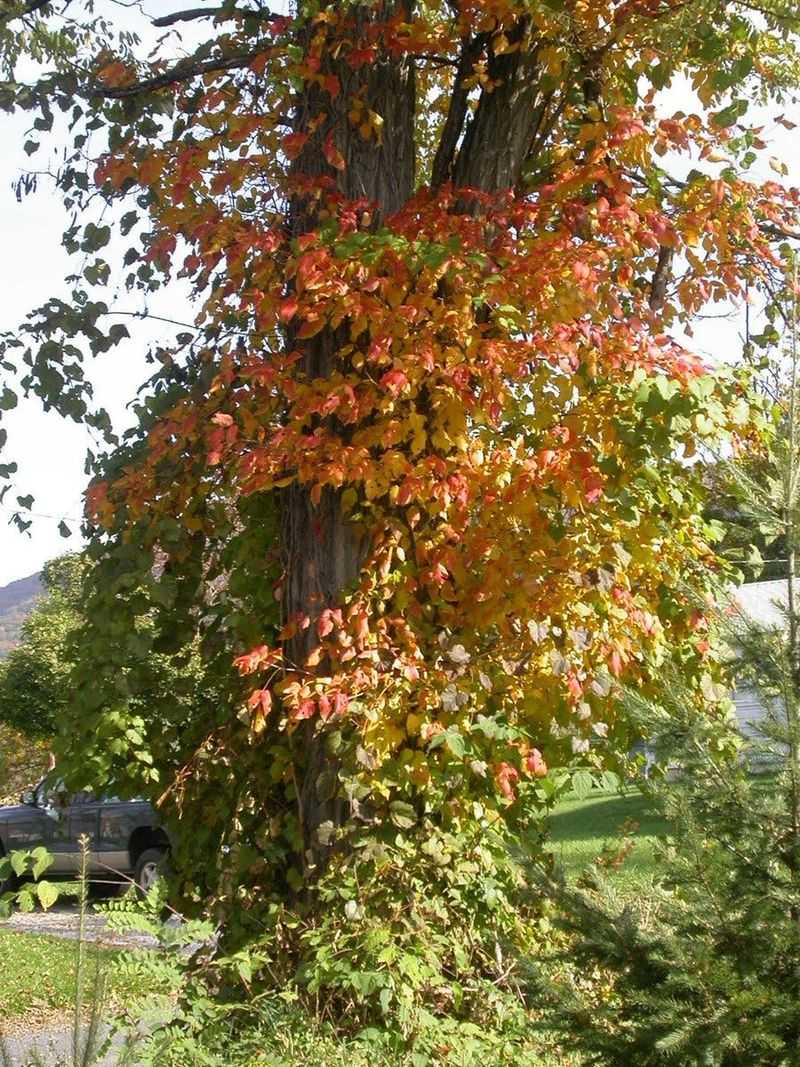
Brown, brittle, and curled up does not mean harmless. Poison Control explains that dried or dead poison ivy can still carry urushiol.
Fall color, a hard frost, or a dead-looking vine is no sign that the plant is safe to handle.
The oil also hitchhikes. It can sit on rake handles, pruning shears, gloves, boots, and sleeves, and it can rub off onto a dog’s or cat’s fur.
Touch the tool or pet and then your face, and you may carry it right where you least want it. CDC and NIOSH point to contaminated gear as a common way people get exposed.
This is skin contact, which is a different path from breathing smoke. The steps are simple:
Avoid touching your eyes or face while you work. If you think you brushed against the plant, take off the affected clothing and wash your skin soon with soap and water.
Wash tools and clothes separately from the family laundry, and give a pet a bath if fur may have touched the plants, wearing gloves while you do it.
Acting quickly matters because the oil can spread from surface to surface. A few minutes of cleanup after yard work is much easier than dealing with a rash that shows up days later.
What to do after breathing the smoke

If you realize you have been breathing smoke from a pile that held poison ivy, move away from it right away. Get into fresh air, upwind and well clear of the fire, and keep other people and pets away too.
Do not stay to finish the job.
Watch how you feel. Poison Control says anyone who has trouble breathing after inhaling poison ivy smoke should get emergency medical treatment.
Call 911 or go to the nearest emergency room. Do not wait to see whether it passes, and do not drive yourself if you are struggling to breathe.
Not every exposure is an emergency. If you have no serious symptoms but still have questions, such as what a mild cough might mean or how to care for a child or pet who was nearby, you can call Poison Control at 1-800-222-1222.
The line is free and staffed by experts, and the Poison Control assistance page explains how to reach them.
Think of it as two lanes. Trouble breathing means emergency care.
Questions without severe symptoms mean the advice line. The phone number is not a stand-in for the emergency room.
Remove suspect brush without burning it
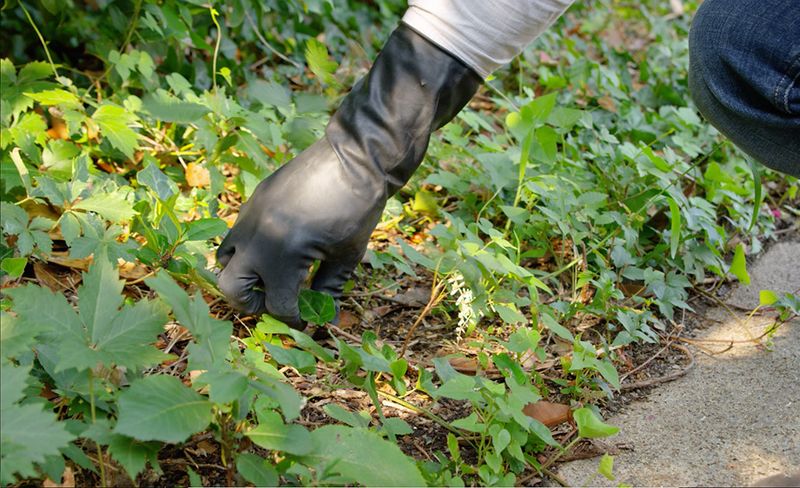
Skipping the fire does not mean ignoring the plant. The best approach is to avoid direct contact in the first place.
North Carolina State Extension advises against burning it and recommends careful handling. For large patches, thick vines up tall trees, or spots that are hard to reach, hiring a professional is a smart call.
If you tackle a small area yourself, dress for it. Wear long sleeves, long pants, boots, and sturdy gloves.
Bag the material carefully and avoid shaking it or crushing it into the air. Afterward, wash gloves, tools, and clothing separately, and shower with soap and water.
Where the bag goes depends on where you live. Do not assume your town’s yard-waste pickup takes poison ivy, because rules differ.
Asheville is one local example: city sanitation tips tell residents not to put poison ivy in the yard-waste pile and to bag it for the trash instead.
Your own city or county may say something different. A quick call or a look at the local public works or sanitation page will tell you what is accepted and how to package it.
That small step keeps sanitation workers and neighbors safer too.
Burning rules do not make poison ivy safe to burn
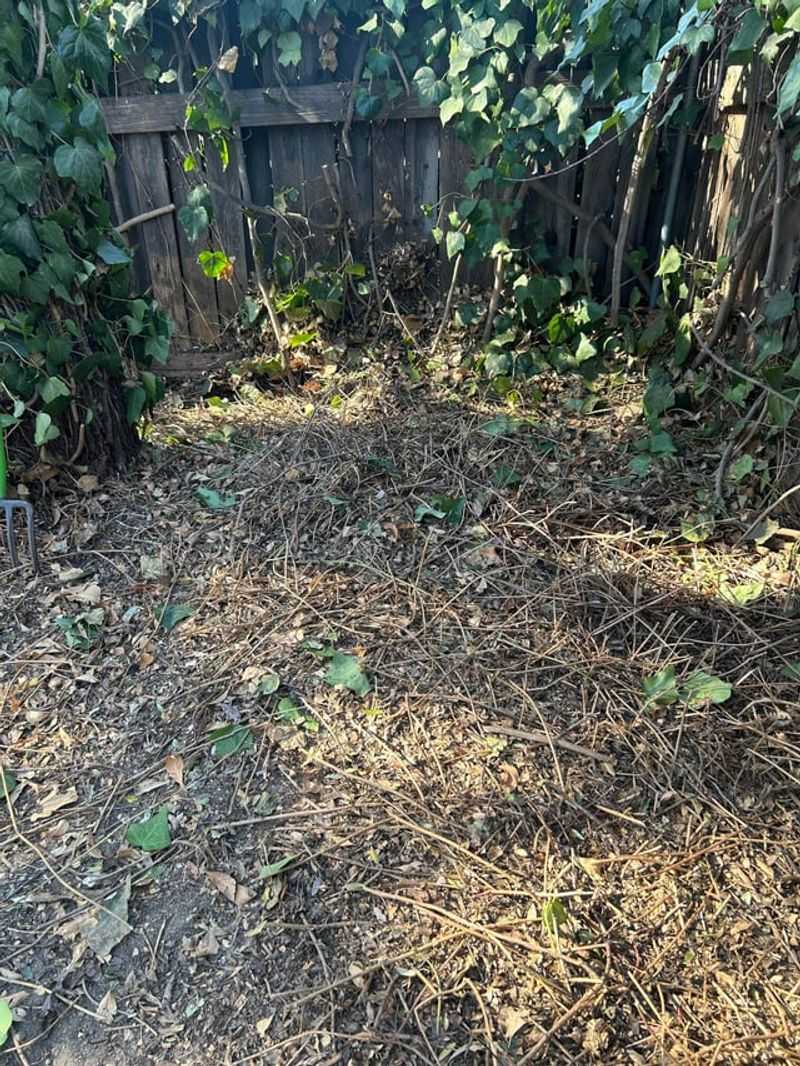
Open-burning rules can sound like a green light. In North Carolina, general rules may allow some residential yard burning, but only under specific conditions.
The state open burning guidance lays out what can and cannot be burned and how.
Other layers can apply on top of that. Your county or town may have its own rules, air quality alerts can shut burning down for a day, and some places require a permit.
Public pickup may also be available and may be a better choice than a fire.
Here is the catch. Those rules are about air quality and fire control.
They are not a safety endorsement, and following them does not make a pile with poison ivy in it safe. Even a fully legal burn can send urushiol-bearing particles downwind.
The health guidance stays the same either way. CDC and NIOSH say not to burn poison ivy, oak, or sumac.
If the pile may include any of them, treat the permit as beside the point and choose another way to get rid of it.
Keep suspect plants out of the fire
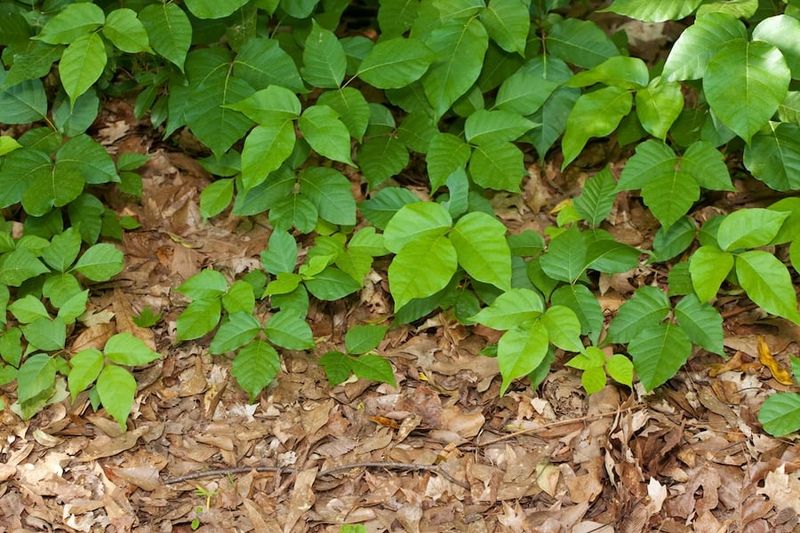
When in doubt, leave it out of the fire. Check piles for vines before you light anything, handle suspect material as little as you can, and look up your local disposal rules before you bag it.
CDC guidance is clear about not burning these plants.
If smoke exposure ever leaves you struggling to breathe, treat it as an emergency, as Poison Control advises. A tidy yard is nice, but a cold fire pit beats a hospital visit every time.