
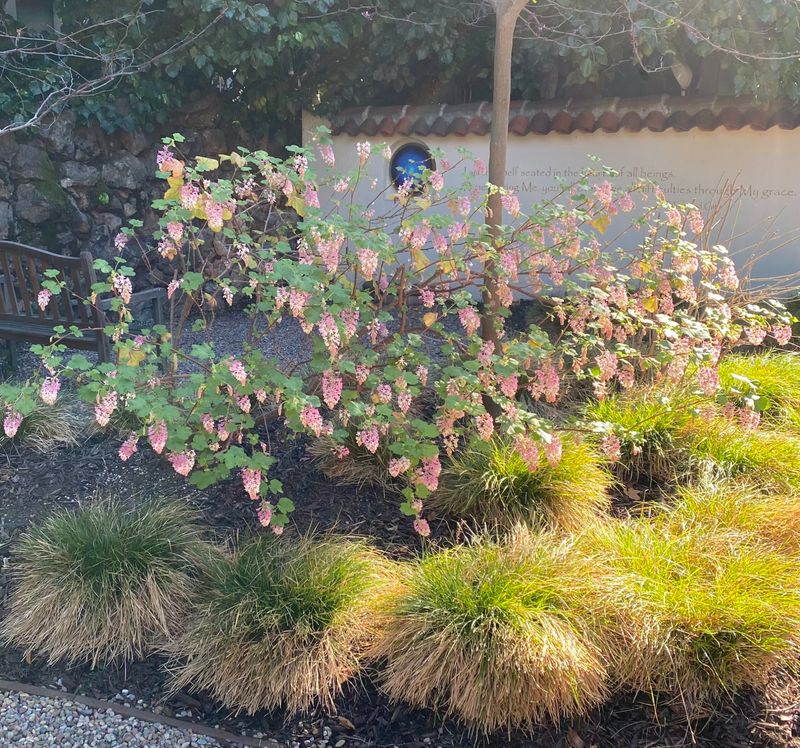
Most gardens go quiet in December, but hummingbirds never take a winter break. Anna’s hummingbirds live in California all year, and they need nectar every single day, even when it’s cold and rainy.
The good news is that some tough, water-wise shrubs save their best flowers for exactly this season. Plant a few of these and your yard can turn into the busiest hummingbird diner on the block from fall until spring.
1. Fuchsia-Flowered Gooseberry (Ribes speciosum)
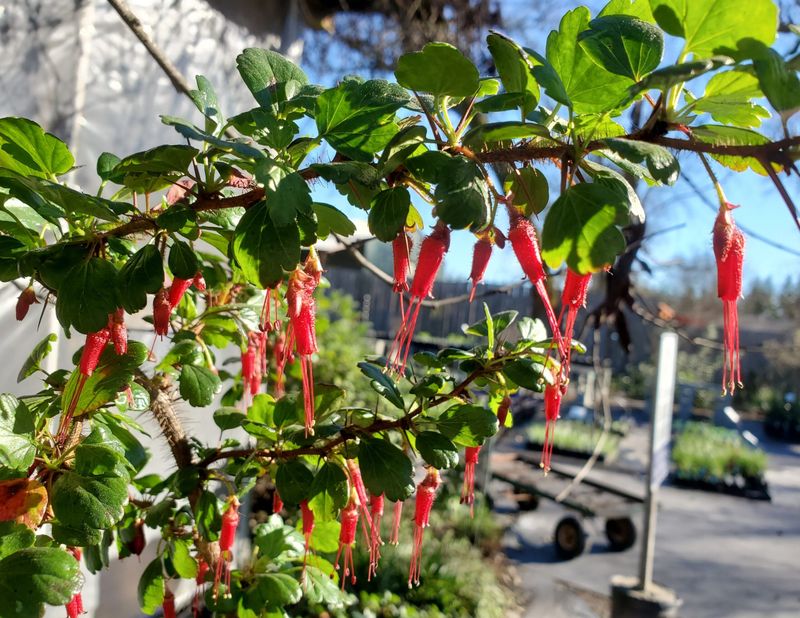
Picture tiny red lanterns hanging from every branch in January, and you’ve got the fuchsia-flowered gooseberry. Native to coastal California from the Bay Area south, it starts leafing out with the first winter rains and blooms almost immediately after.
The flowers look like miniature fuchsias, with long red stamens sticking out like little paintbrushes. Anna’s hummingbirds will guard a single shrub fiercely, chasing rivals away all morning long.
Here’s the quirky part: the plant goes summer-dormant and drops its leaves when things get hot and dry. Don’t panic and water it heavily, since that can cause root rot.
Give it partial shade, decent drainage, and space away from paths, because those stems carry sharp spines that also make it a handy barrier hedge.
2. Manzanita (Arctostaphylos)
Few plants say California quite like manzanita. With its sculpted, cinnamon-red bark and clusters of tiny pink or white bells, it looks like living art even before it blooms.
Many species and cultivars flower between December and March, which makes them a reliable early food source for hummingbirds and native bees. Popular picks include ‘Howard McMinn’ for its tidy shape and ‘Sunset’ for its coppery new growth.
Bigger forms like ‘Dr. Hurd’ can become small trees.
Manzanitas despise summer water once established, so plant them in fall and let the rains do the work. Drainage matters more than anything else.
Did you know the name means little apple in Spanish? The berries that follow the flowers really do look like tiny apples, and birds love them too.
3. Chaparral Currant (Ribes malvaceum)
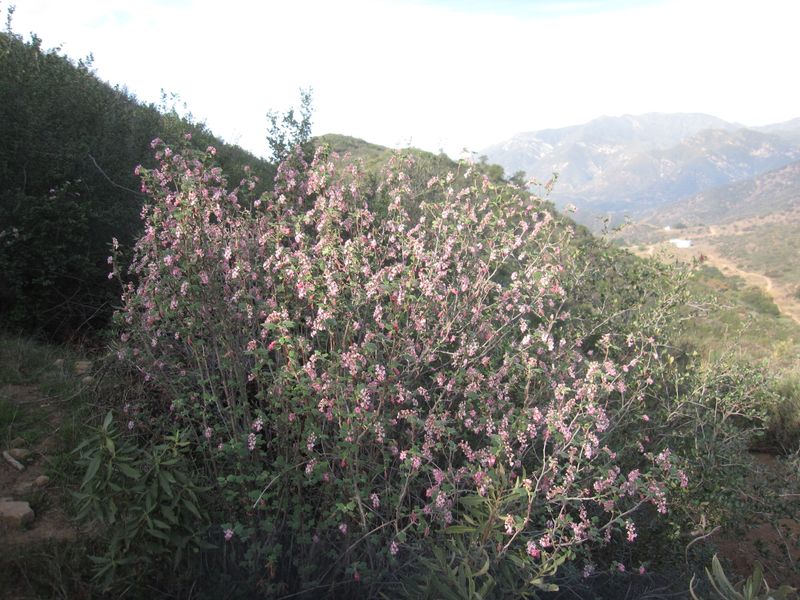
Sometimes the first flowers of the season show up before you’ve even put away the Thanksgiving leftovers. Chaparral currant is famous for blooming as early as November, right after a good rain.
Its pink, drooping flower clusters are softer and more muted than its gooseberry cousin, and the leaves smell faintly spicy when you brush past. It handles heat and drought better than most currants, making it a smart choice for inland yards.
Expect it to drop leaves in summer, then spring back to life when fall rain arrives. Tuck it among other natives on a slope where its roots help hold soil during winter storms.
A few blue-black berries follow the blooms, adding a snack for birds later in the year.
4. Cape Honeysuckle (Tecomaria capensis)
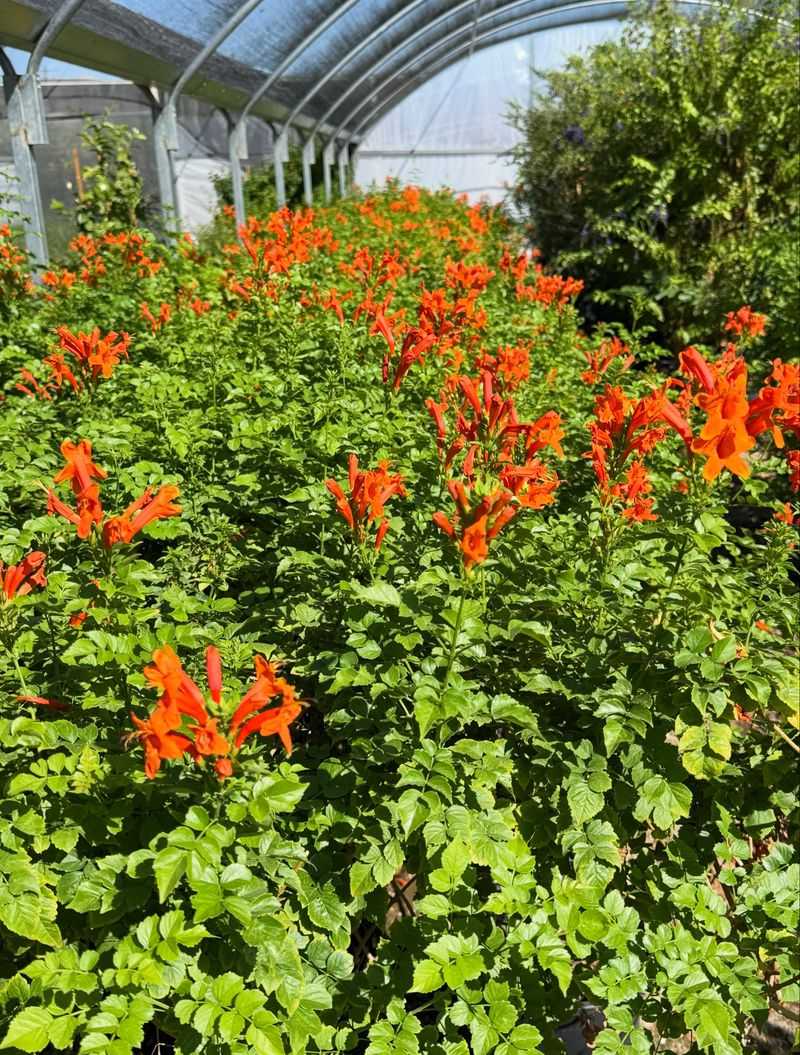
Not every hummingbird favorite needs a California passport. Cape honeysuckle comes from South Africa, but it has been a staple of coastal and Southern California gardens for decades, and for good reason.
From fall through winter, it erupts in clusters of bright orange trumpets that hummingbirds visit nonstop. It grows fast and dense, making it a great privacy screen along a fence without the aggressive roots that crack patios.
The catch is that it can sprawl like a teenager taking over the couch. Prune it hard after blooming to keep it shaped as a hedge.
It tolerates drought once established, though a light drink every few weeks in summer keeps it lush and flowering heavily.
5. Grevillea
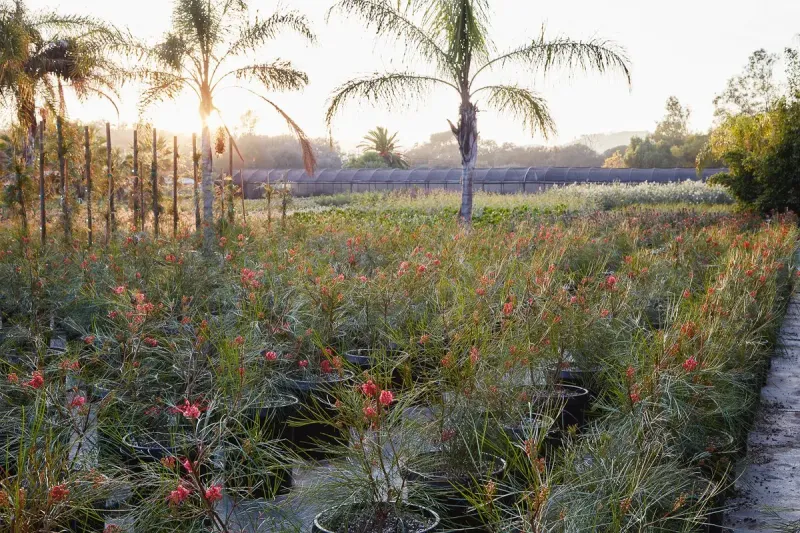
Ask any hummingbird watcher in San Diego or Santa Barbara about grevilleas, and you’ll probably hear a story about birds fighting over them. These Australian shrubs bloom for months, and many varieties peak right through the cool season.
The flowers look like curly spider legs in red, pink, or apricot, packed with nectar. Varieties like ‘Long John’ and ‘Superb’ bloom almost year round, while compact types such as ‘Mt.
Tamboritha’ fit small spaces.
Grevilleas share California’s taste for dry summers and lean soil. Skip the fertilizer, especially anything with phosphorus, since they’re sensitive to it.
Give them sun, fast-draining ground, and patience, and they’ll reward you with a steady stream of feathered visitors.
6. California Fuchsia (Epilobium canum)
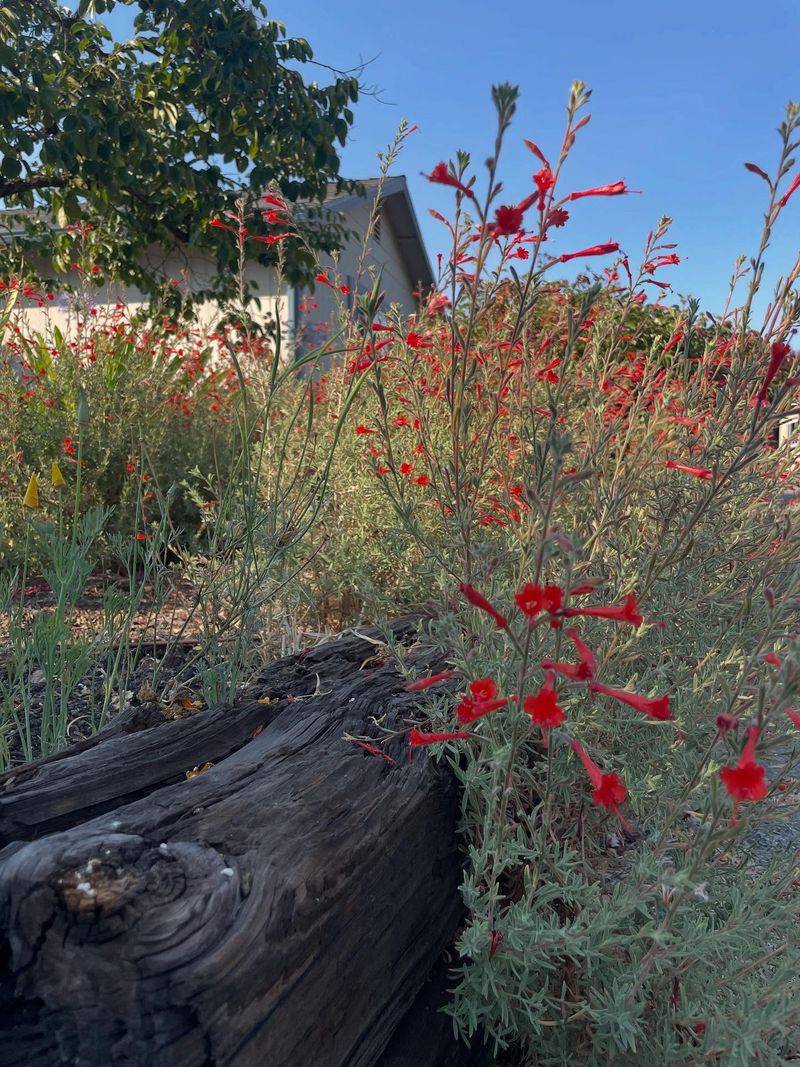
Call it the bridge plant. California fuchsia lights up just as summer flowers fade, often blooming from late summer deep into fall and, in mild coastal areas, lingering into early winter.
That timing is everything, because it carries hummingbirds through the gap until the manzanitas and currants take over. Its scarlet tubes practically glow against silvery foliage.
Low forms like ‘Everett’s Choice’ spill nicely over walls and slopes.
Once blooming ends, cut it back nearly to the ground. It returns fresh in spring and spreads by underground runners, which is handy for erosion control.
Pair it with the winter bloomers on this list and you’ll have a nearly seamless nectar calendar.
7. Bush Mallow (Malacothamnus fasciculatus)
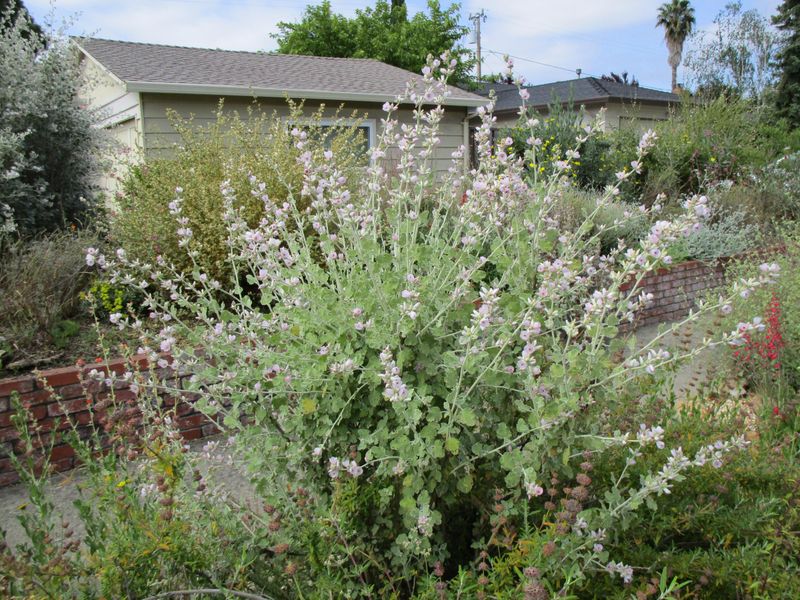
Here’s an underdog worth cheering for. Bush mallow rarely gets a spotlight at the nursery, yet it quietly blooms on and off for much of the year, including mild winter stretches in Southern California.
Its pale pink, cup-shaped flowers line tall, airy stems above fuzzy gray leaves. Hummingbirds visit along with bees and butterflies, so you get a lot of wildlife from one plant.
It grows quickly, handles poor soil, and asks for almost no water once settled. Cut it back by a third each year to keep it from getting lanky.
Look for it at California Native Plant Society sales, where volunteers often know which local forms do best in your area.
8. Hummingbird Sage (Salvia spathacea)
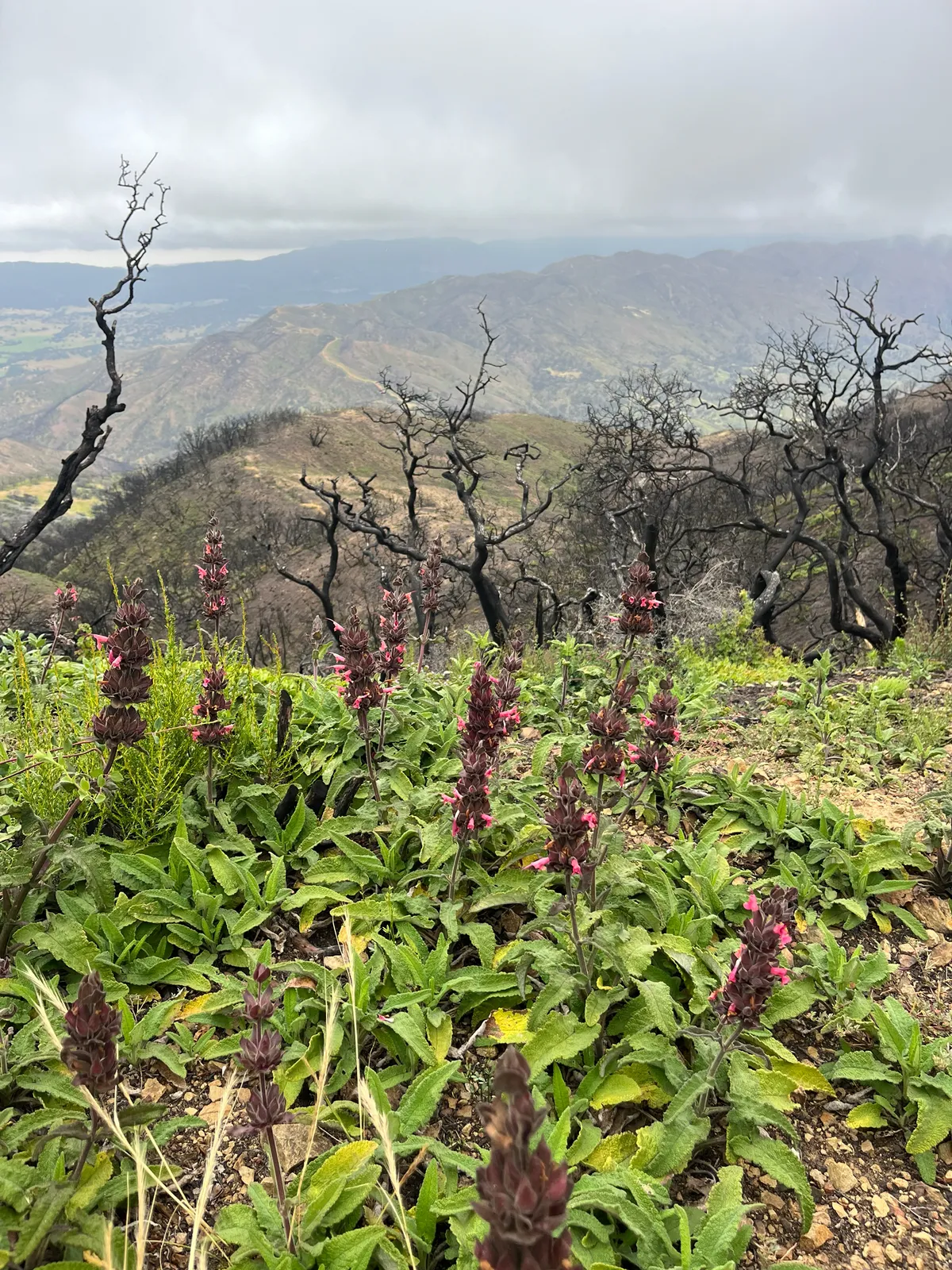
With a name like that, you already know who it was made for. Hummingbird sage sends up tall spikes of rose-magenta flowers starting in late winter and keeps going well into spring.
It shines in a spot many gardeners struggle with: dry shade. Plant it under oaks or along a north wall where most flowers sulk, and it spreads slowly into a fragrant groundcover.
Rub a leaf and you’ll catch a fruity, pineapple-like scent.
Although it’s more of a low perennial than a woody shrub, it earns its place by closing out the season. When the early bloomers start to fade, these spikes take over and carry hummingbirds right into nesting time.
Snip off spent stalks and give it an occasional deep summer soak in hot inland gardens.