
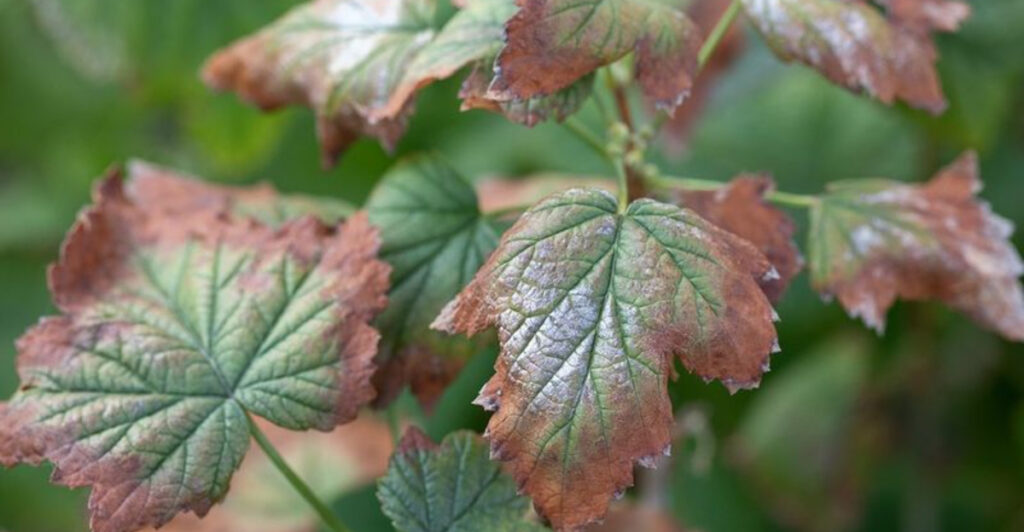
Chrysanthemums, affectionately known as mums, are beloved for their vibrant blooms and hardy nature. However, these beautiful flowers face numerous threats that can jeopardize their health and beauty.
From tiny insects to devastating diseases, understanding these threats is essential for any gardener looking to preserve their mums’ splendor. In this blog post, we’ll explore 15 pests and diseases that pose a significant risk to chrysanthemums, offering insights into identification and prevention.
Whether you’re a seasoned gardener or a newcomer, being informed will help you protect your precious blooms and ensure their flourishing.
1. Aphids
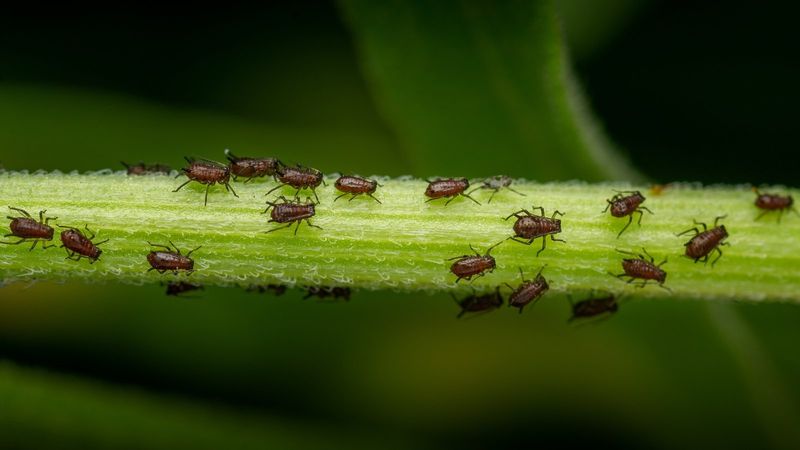
Aphids, the tiny sap-suckers of the plant world, often appear in clusters on chrysanthemum stems. Their presence leads to curled, yellowed leaves and stunted growth. These minuscule pests may seem insignificant, but their impact can be substantial. Aphids feed on the plant’s sap, depriving mums of essential nutrients. As aphids multiply, they secrete a sticky substance known as honeydew, which attracts ants and promotes sooty mold. To manage an aphid infestation, gardeners should inspect plants regularly and consider introducing natural predators like ladybugs. Effective control ensures chrysanthemums remain robust and vibrant throughout the growing season.
2. Spider Mites
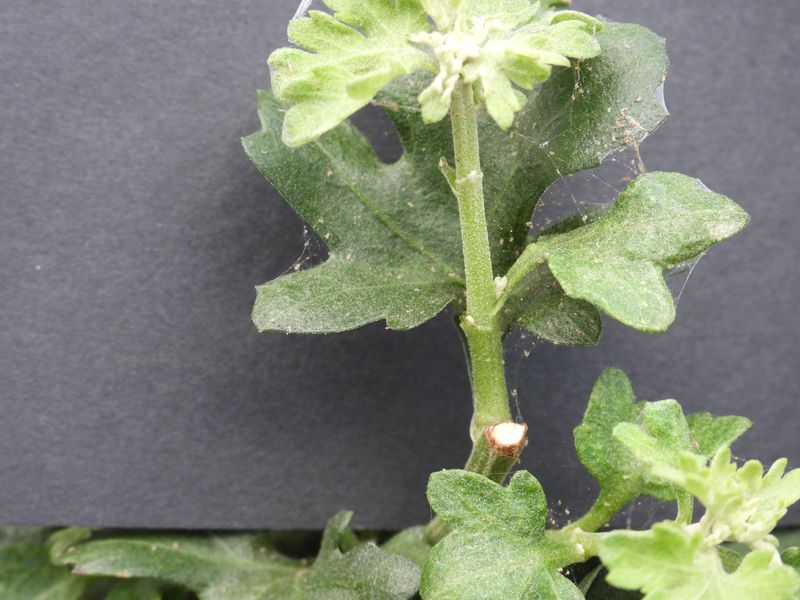
Spider mites thrive in hot, dry conditions, making them a common adversary for chrysanthemums. These microscopic pests are nearly invisible to the naked eye, but their presence is unmistakable. Look for fine webbing beneath leaves and speckled, faded foliage. Spider mites suck sap from the plant, causing discoloration and reducing vigor. A severe infestation can lead to leaf drop and plant decline. Controlling spider mites requires maintaining humidity and gently washing leaves with water. Introducing predatory mites can also help in severe cases. Vigilance and timely action ensure a healthy chrysanthemum garden.
3. Leaf Miners
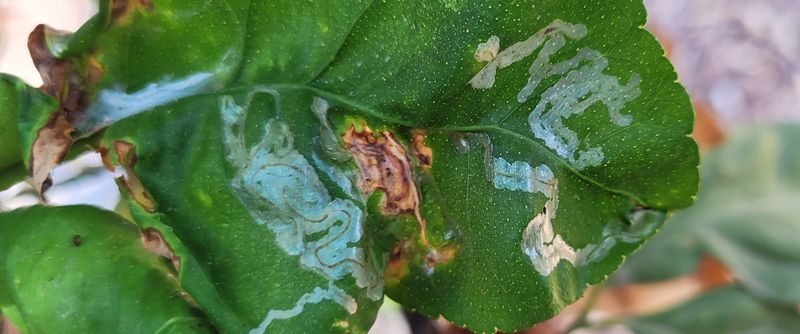
Leaf miners are notorious for their distinctive, winding trails on chrysanthemum leaves. These larvae tunnel within the leaf tissue, leaving behind unsightly discolored patterns. While primarily an aesthetic issue, severe infestations can weaken the plant. The larvae feed on chlorophyll, disrupting photosynthesis and reducing vitality. Leaf miner damage is most noticeable in mid to late summer. To control these pests, remove and destroy affected leaves promptly. Encouraging natural predators like parasitic wasps can also be effective. Regular monitoring and early intervention are key to keeping chrysanthemums free from leaf miner damage.
4. Thrips
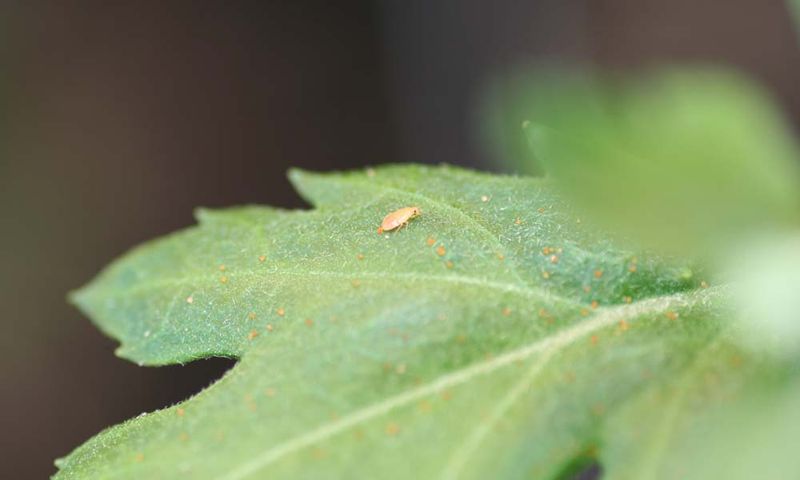
Thrips, with their slender bodies, are often found feeding on chrysanthemum flowers and leaves. These tiny pests cause streaks, silvery patches, or distortion, marring the plant’s appearance. Thrips feed by puncturing plant cells and sucking out the contents, leading to discoloration and deformities. Infestations are most common in warm weather and can spread rapidly. Effective control includes using insecticidal soap or neem oil and introducing beneficial insects like lacewings. Thrips can be persistent, so regular monitoring is essential. Ensuring healthy growth will minimize their impact and keep chrysanthemums looking their best.
5. Caterpillars (Loopers and Armyworms)
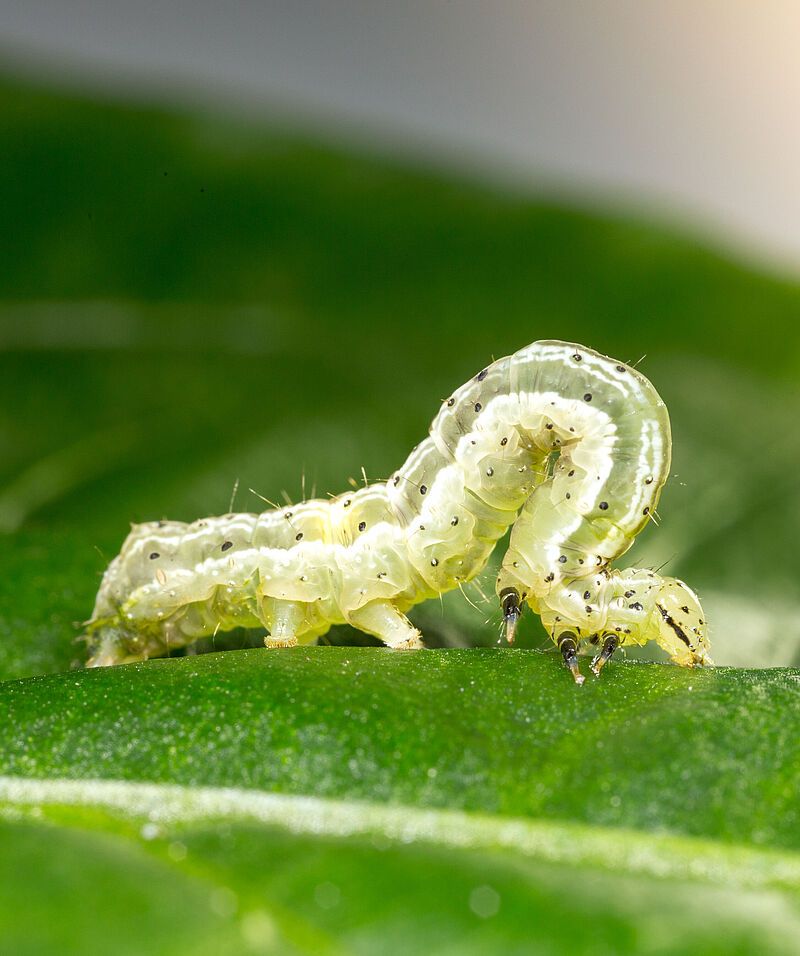
Caterpillars, including loopers and armyworms, are voracious feeders that can quickly defoliate chrysanthemums. These larvae emerge in spring and summer, chewing holes in leaves and buds. The damage is often rapid and conspicuous, with plants left bare if not addressed promptly. Caterpillars feed primarily at night, making detection challenging. Handpicking can be effective for small infestations. For larger outbreaks, applying Bacillus thuringiensis (Bt) provides targeted control. Encouraging birds and beneficial insects also helps keep populations in check. With vigilance and timely intervention, caterpillar damage can be minimized, preserving the beauty of chrysanthemums.
6. Whiteflies
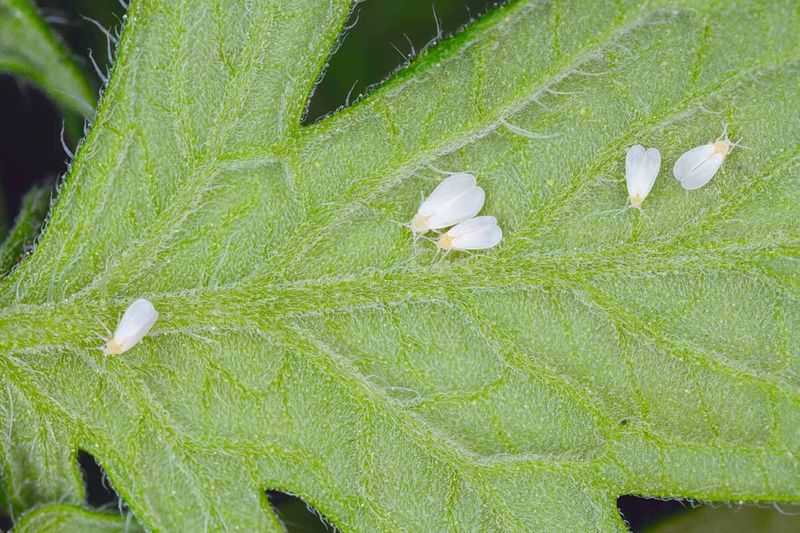
Whiteflies, with their delicate, white wings, are frequent visitors to chrysanthemum gardens. These pests congregate on the undersides of leaves, feeding on plant sap and causing yellowing or wilting. Whiteflies excrete honeydew, which fosters sooty mold and attracts ants. Infestations can escalate quickly, especially in warm weather. To control whiteflies, gardeners should employ yellow sticky traps and introduce natural predators like ladybugs. Regularly washing leaves with water also helps remove adult flies. Maintaining plant health and using integrated pest management strategies ensures a robust defense against these persistent pests.
7. Fungus Gnats
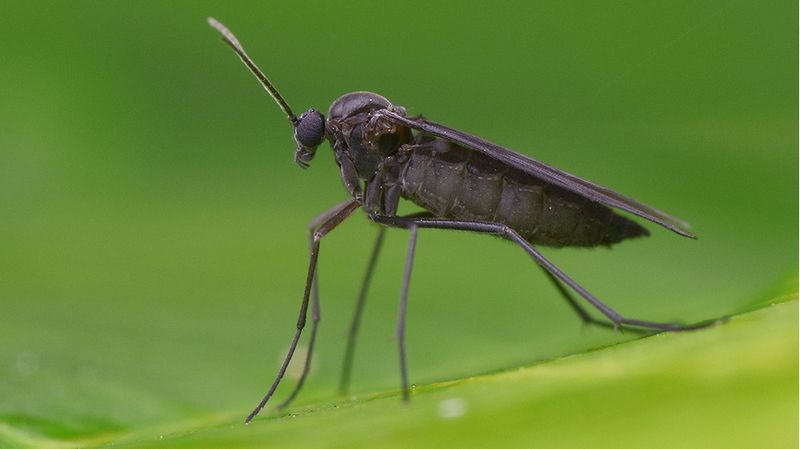
Fungus gnats are small, dark flies that often hover around potted chrysanthemums. While adult gnats are harmless, their larvae pose a threat to roots, especially in soggy soil. The larvae feed on organic matter and fine roots, potentially stunting growth. Fungus gnats thrive in moist environments, so allowing soil to dry out between waterings can deter them. Applying a layer of sand or gravel on the soil surface further discourages egg-laying. For severe infestations, using biological controls like nematodes is effective. By managing moisture and employing natural remedies, fungus gnats can be kept in check.
8. Powdery Mildew
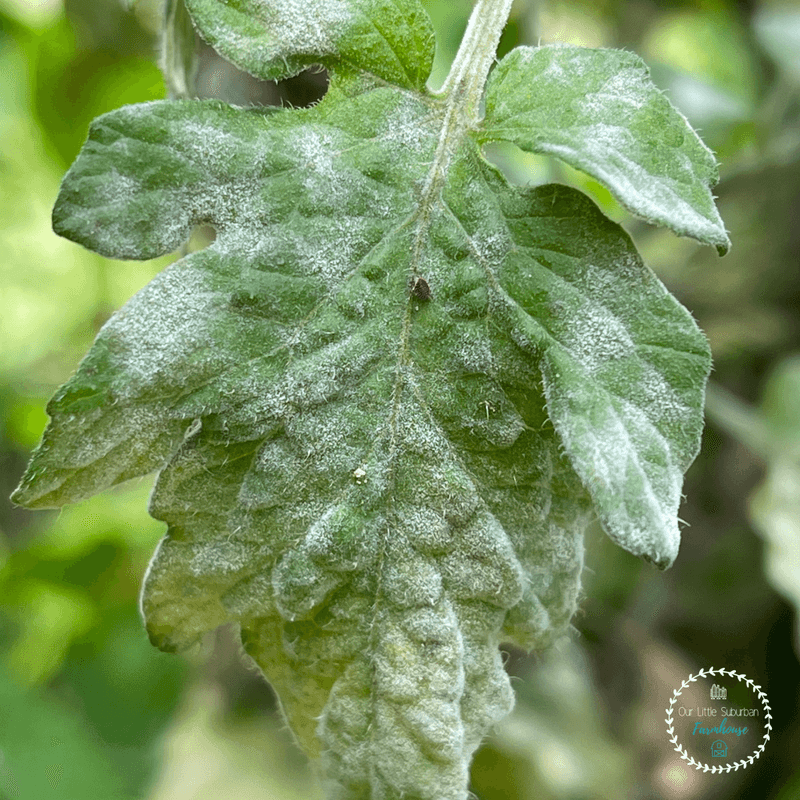
Powdery mildew is a common fungal disease affecting chrysanthemums, characterized by a white, powdery coating on leaves and stems. It thrives in humid conditions with poor air circulation, reducing photosynthesis and vigor. Infected leaves may yellow and drop prematurely. To prevent powdery mildew, ensure proper spacing and air circulation. Fungicidal sprays can control outbreaks, but early detection is crucial. Resistant chrysanthemum varieties are also available. Regular inspection and maintaining optimal growing conditions will help keep this unsightly disease at bay, allowing plants to thrive and bloom beautifully.
9. Botrytis Blight (Gray Mold)
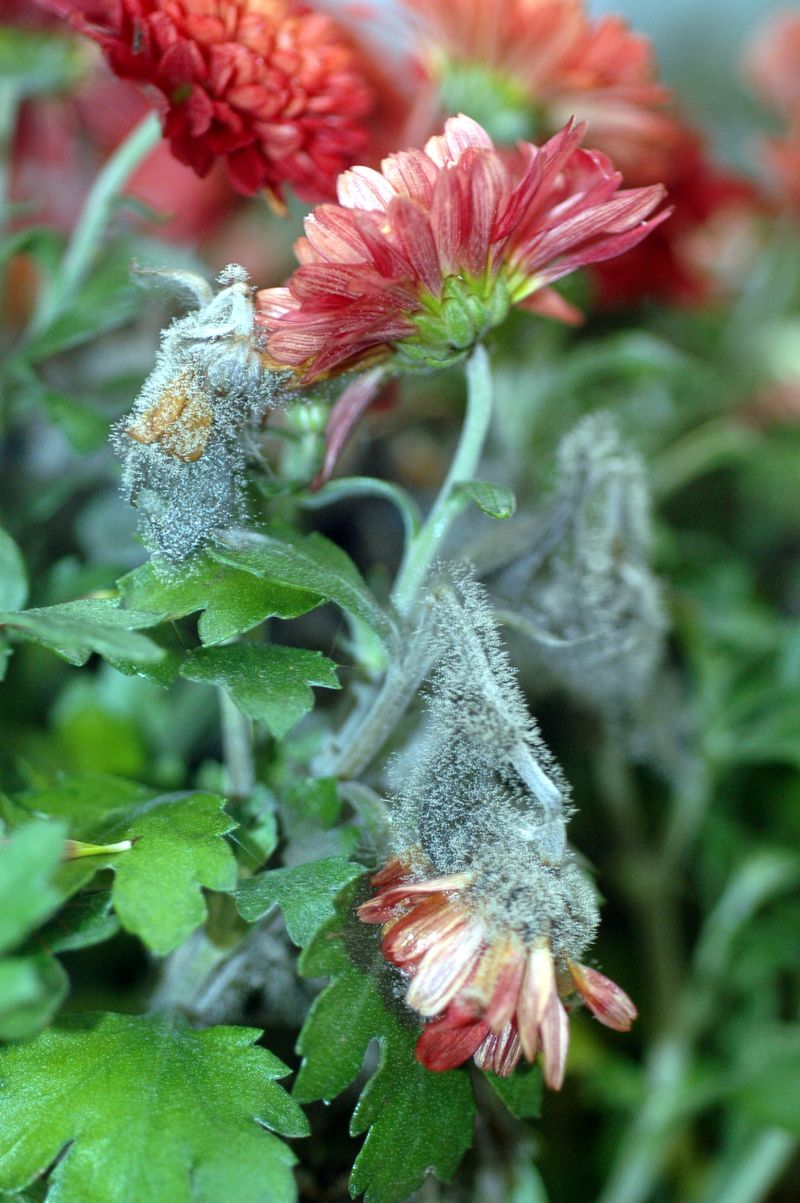
Botrytis blight, or gray mold, is a fungal disease that affects chrysanthemum petals, buds, and stems. In wet, cool weather, it causes browning and decay, leading to unsightly plants. The disease spreads rapidly through spores, especially in crowded or poorly ventilated areas. To manage Botrytis blight, remove affected plant parts immediately and increase air circulation. Fungicide treatments may be necessary for severe cases. Keeping foliage dry and avoiding overhead watering can prevent outbreaks. A proactive approach ensures that chrysanthemums remain healthy, vibrant, and free from the ravages of this pervasive mold.
10. Leaf Spot (Septoria or Alternaria)
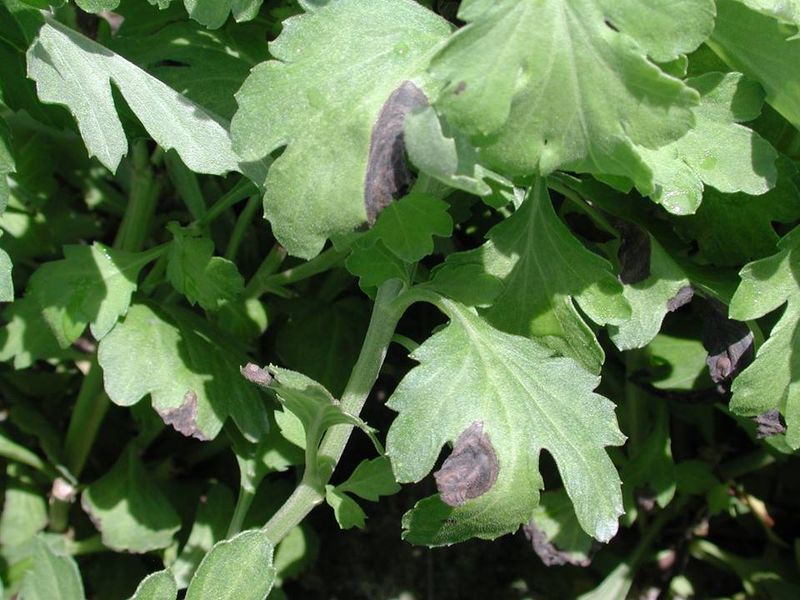
Leaf spot diseases, caused by fungi like Septoria or Alternaria, create dark, circular or irregular spots on chrysanthemum leaves. This condition may lead to premature leaf drop, impacting the plant’s overall health. These fungi thrive in wet, humid conditions and spread through water splashes. To prevent leaf spot, ensure good air circulation and avoid overhead watering. Removing infected leaves can limit the spread. Resistant varieties and fungicidal sprays offer additional protection. Keeping chrysanthemums healthy and monitoring regularly can minimize the impact of leaf spot, preserving their lush foliage and vibrant blooms.
11. Rust
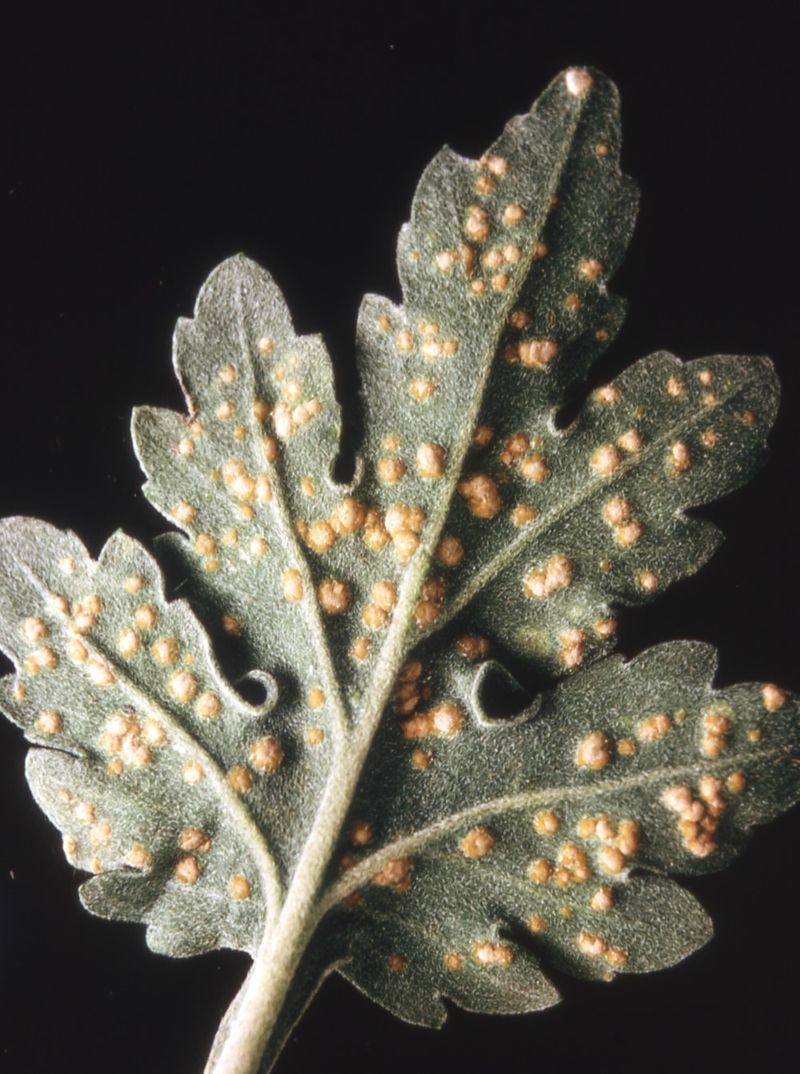
Rust is a fungal disease that manifests as orange, brown, or yellow pustules on the undersides of chrysanthemum leaves. This condition spreads rapidly, leading to leaf yellowing and drop. Rust thrives in moist environments, particularly in late summer and fall. To combat rust, ensure good air circulation and remove infected leaves promptly. Applying fungicides can control the disease if caught early. Resistant chrysanthemum cultivars are also available to reduce susceptibility. Regular inspections and maintaining dry foliage will help protect chrysanthemums from rust, keeping them healthy and visually appealing.
12. Verticillium Wilt
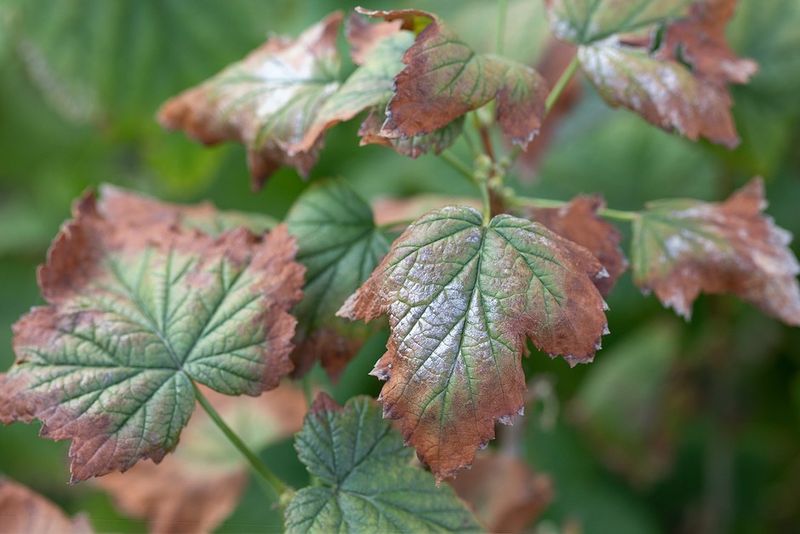
Verticillium wilt is a soil-borne fungal disease that affects chrysanthemum vascular systems. Symptoms include yellowing and wilting from the base upward, leading to plant collapse. This disease is incurable; infected plants must be removed to prevent soil contamination. Verticillium thrives in poorly-drained soils, so improving drainage is vital. Crop rotation and using resistant varieties can mitigate risk. Once present, the fungus remains in the soil, threatening future plantings. Vigilance and preventive measures are essential to safeguard chrysanthemums, ensuring they flourish without the shadow of Verticillium wilt.
13. Fusarium Wilt
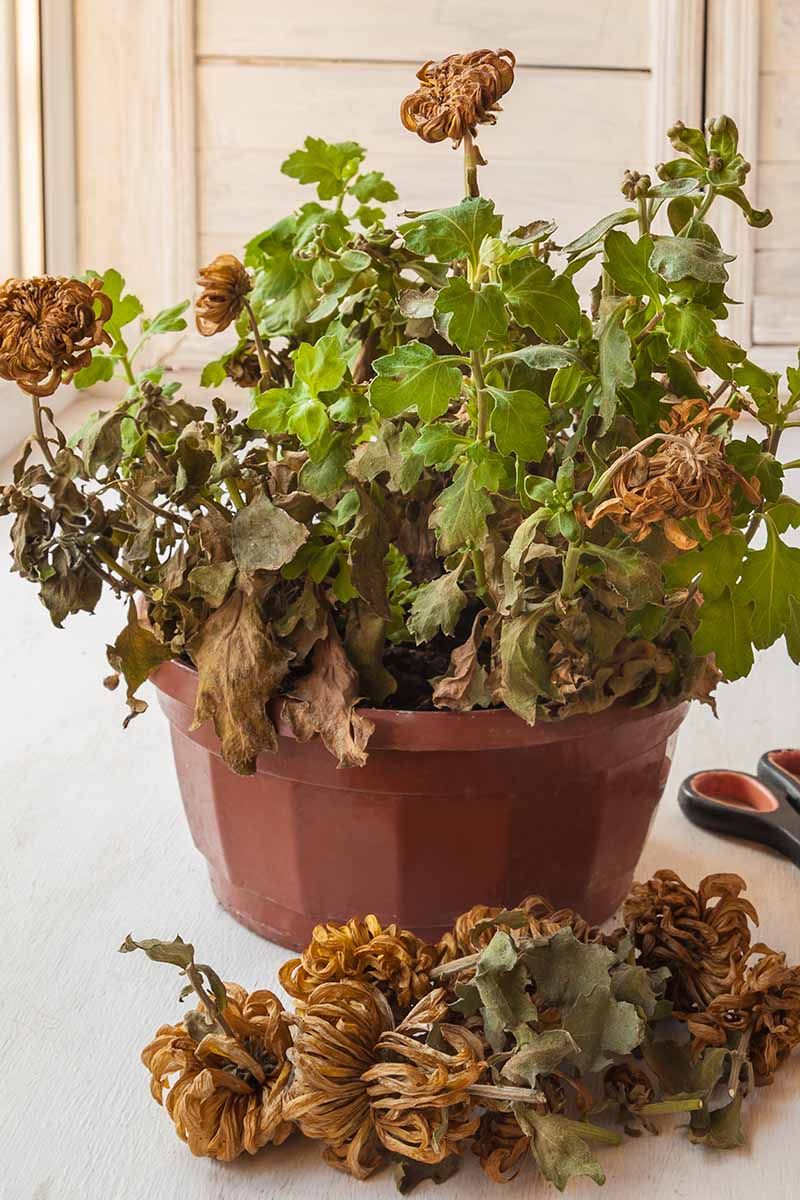
Fusarium wilt is another soil-borne threat to chrysanthemums, leading to drooping and yellowing leaves. The fungus infects the vascular tissue, causing it to turn brown. This disrupts water and nutrient flow, eventually killing the plant. Fusarium thrives in warm, moist conditions. Unfortunately, there is no cure, so prevention is key. Planting resistant varieties and improving soil drainage can reduce risk. Infected plants should be removed promptly to prevent spread. By maintaining a healthy growing environment and employing preventive practices, gardeners can protect their chrysanthemums from this insidious disease.
14. Root Rot (Pythium, Phytophthora)
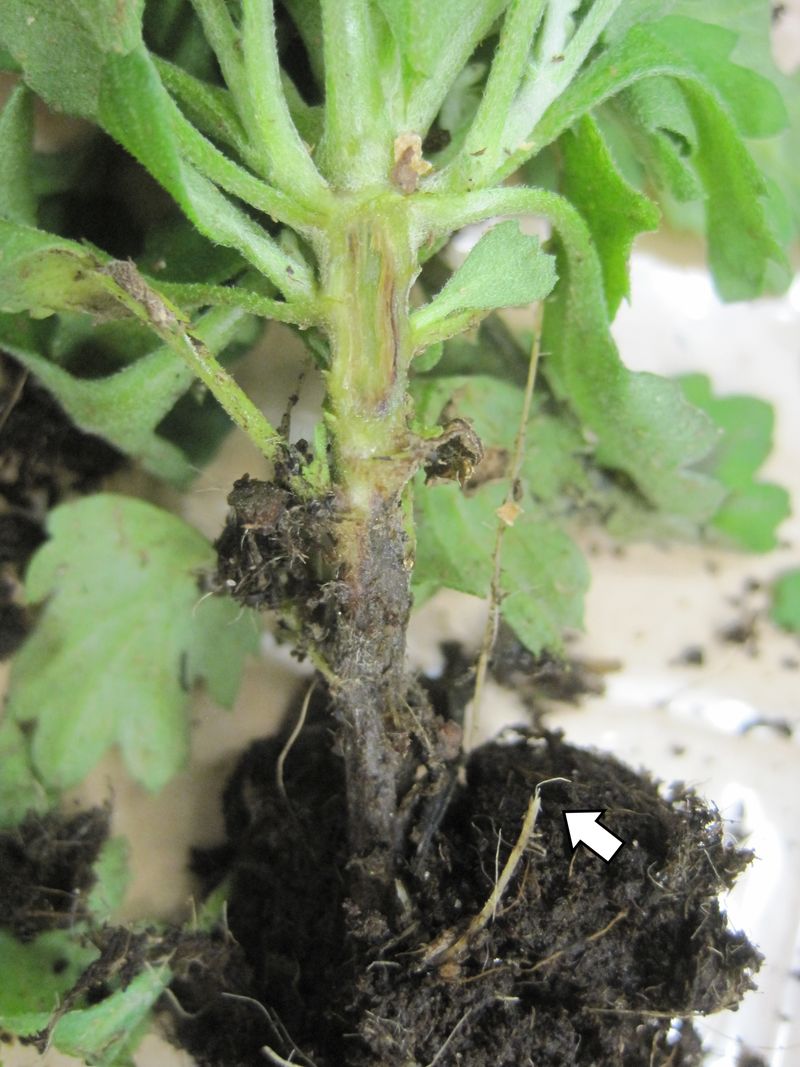
Root rot, caused by pathogens like Pythium and Phytophthora, poses a significant threat to chrysanthemum health. Overly wet soil leads to mushy, black roots, resulting in wilting and plant collapse. This disease thrives in poorly-drained environments, making proper watering crucial. To prevent root rot, improve soil drainage and avoid overwatering. Infected plants should be removed to prevent pathogen spread. Fungicide treatments may offer some protection. Ensuring chrysanthemums are planted in well-drained soil and monitoring moisture levels will help keep them healthy and thriving, free from the dangers of root rot.
15. Bacterial Blight
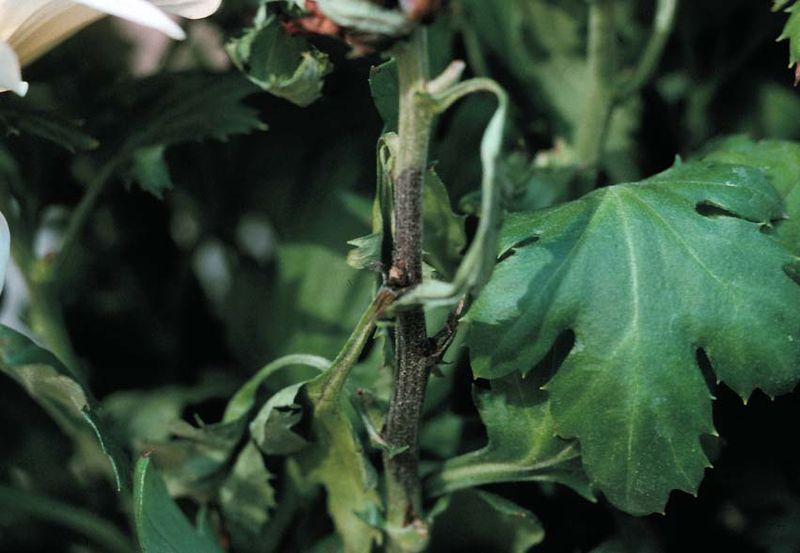
Bacterial blight is a relentless foe for chrysanthemums, characterized by water-soaked lesions that spread quickly. This disease thrives in crowded or wet environments, leading to rapid plant decline. To manage bacterial blight, improve air circulation and space plants properly. Removing and destroying infected parts can prevent the spread. Copper-based bactericides may be effective in controlling outbreaks. Maintaining a clean growing area and monitoring regularly are essential practices. By taking proactive steps, gardeners can protect their chrysanthemums from bacterial blight, ensuring they remain healthy and vibrant throughout the growing season.