
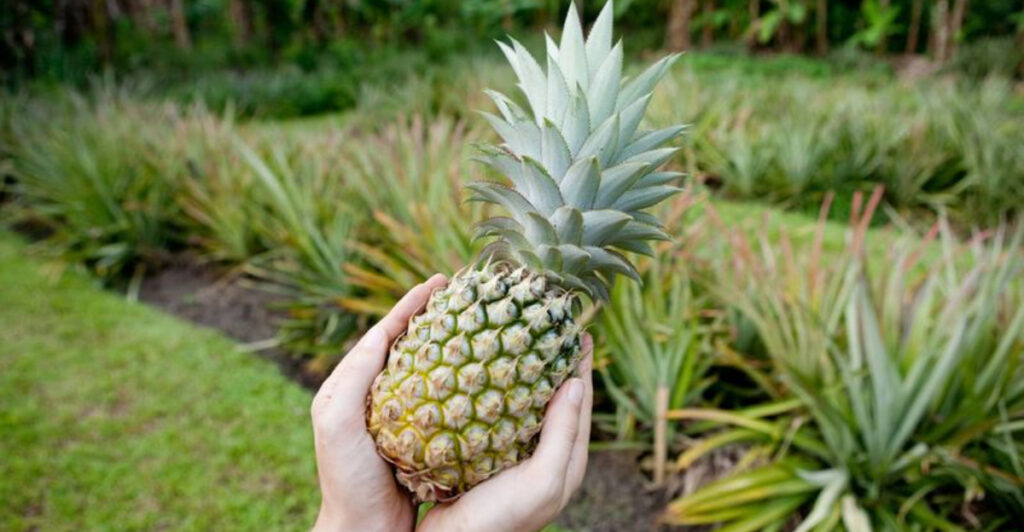
Selecting a ripe pineapple can transform your culinary experience with its juicy sweetness.
Knowing how to identify a ripe pineapple is essential for avoiding disappointment. Here are nine methods to ensure you pick the ripest pineapple.
1. Check the Color
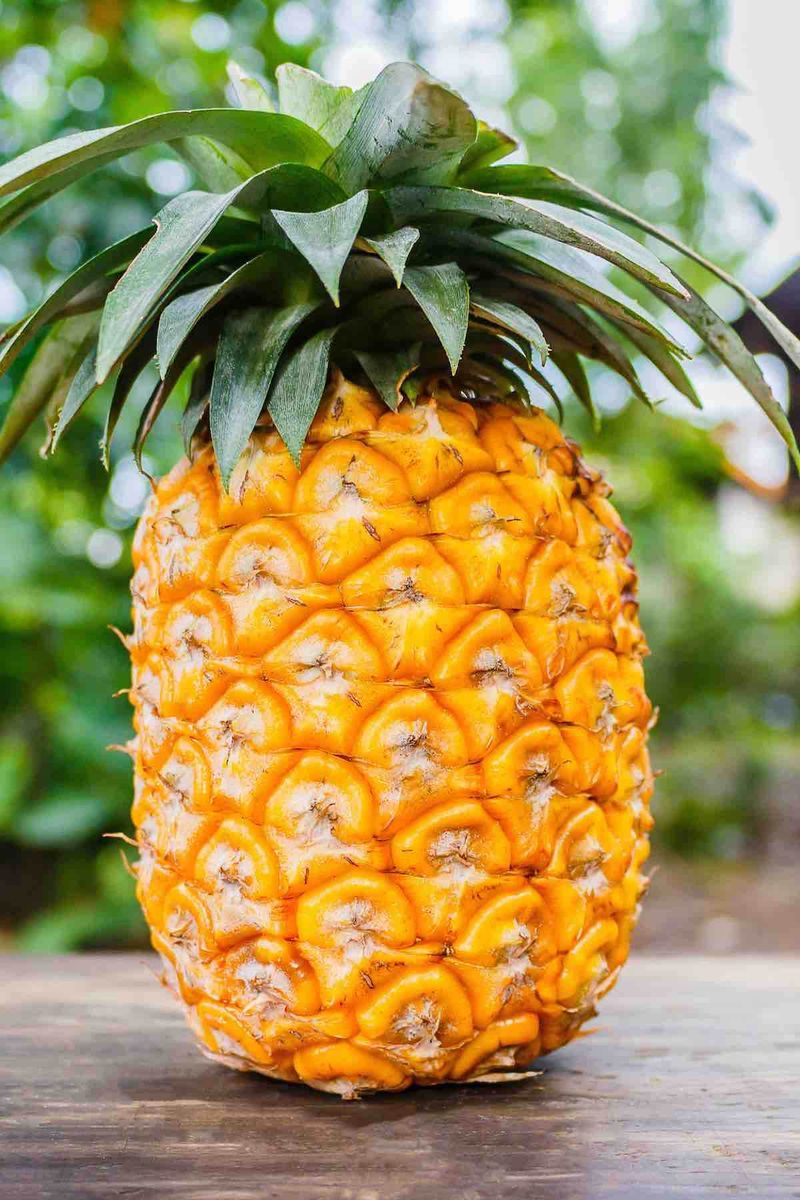
A pineapple’s color is a vital indicator of ripeness. Look for a golden-yellow hue starting from the base. This color symbolizes the sweetness within. The top may remain green, but the more golden the skin, the riper the fruit.
Imagine a sunset’s warm glow captured by the pineapple’s surface. Unlike an underripe pineapple’s firm green, a ripe one offers both visual appeal and flavor. The skin’s color can make or break your choice, turning a simple snack into a tropical delight.
2. Smell the Base
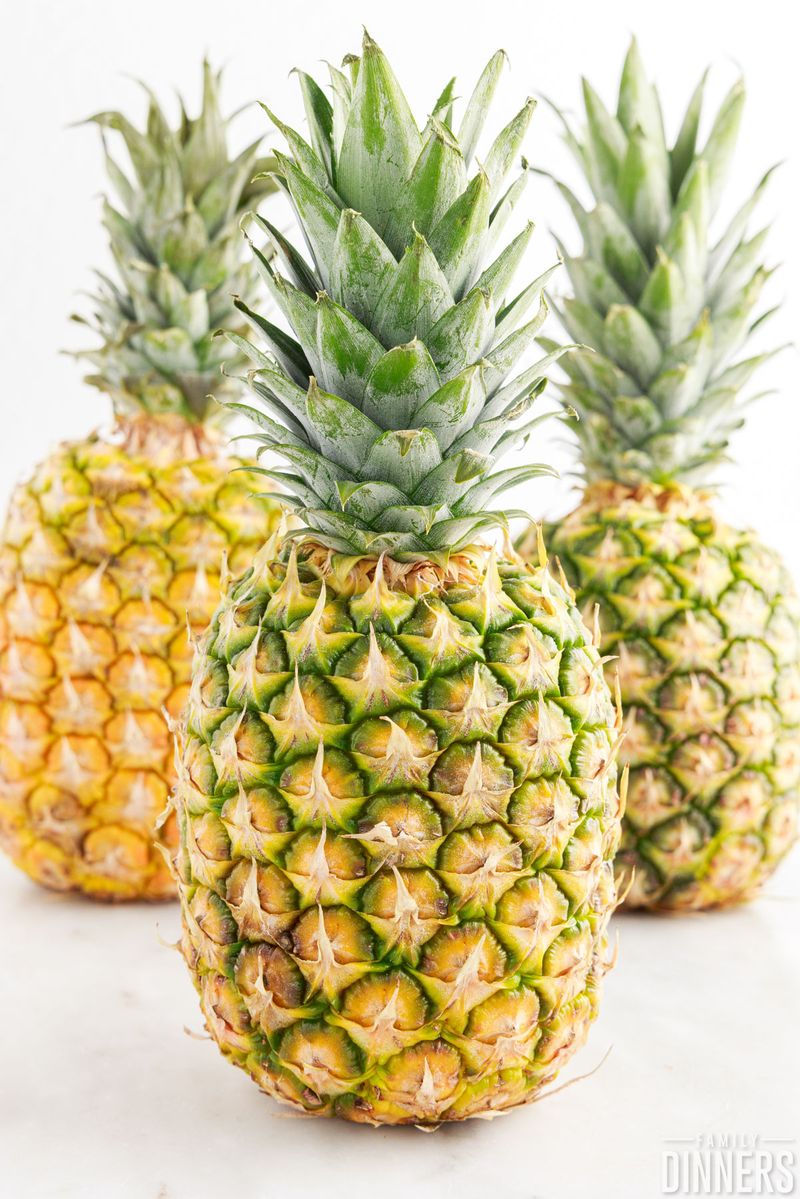
Engage your sense of smell by sniffing the pineapple’s base. A ripe pineapple emits a sweet, fruity aroma that hints at its deliciousness within. If there’s no scent, it might still need time.
Overripe pineapples release a fermented odor, warning you to stay away. The scent of a pineapple is an aromatic invitation, a promise of the juicy goodness beneath its skin. Trust your nose; it rarely lies in such matters.
3. Feel the Firmness
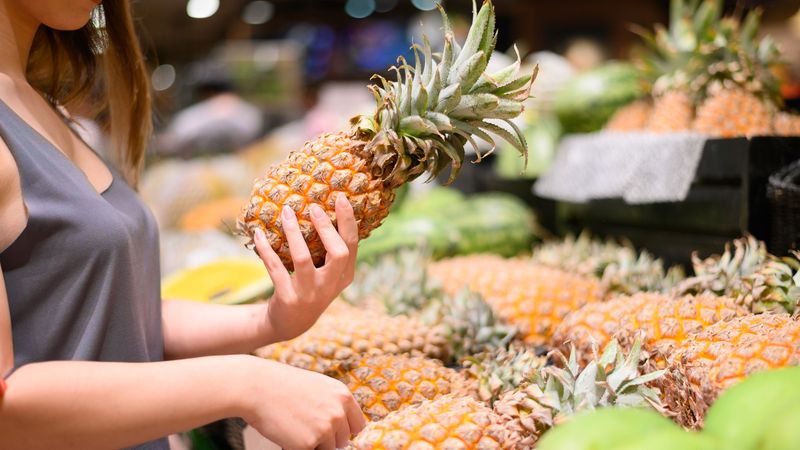
The art of selecting a ripe pineapple involves understanding its firmness. Gently squeeze the fruit; it should feel firm yet yield slightly under pressure. A rock-hard pineapple indicates immaturity.
Conversely, one that’s too soft is past its prime. This tactile test is your guide to discovering the perfect texture that complements the sweet flavor. Consider it a handshake with the pineapple, revealing its readiness to be enjoyed.
4. Examine the Eyes
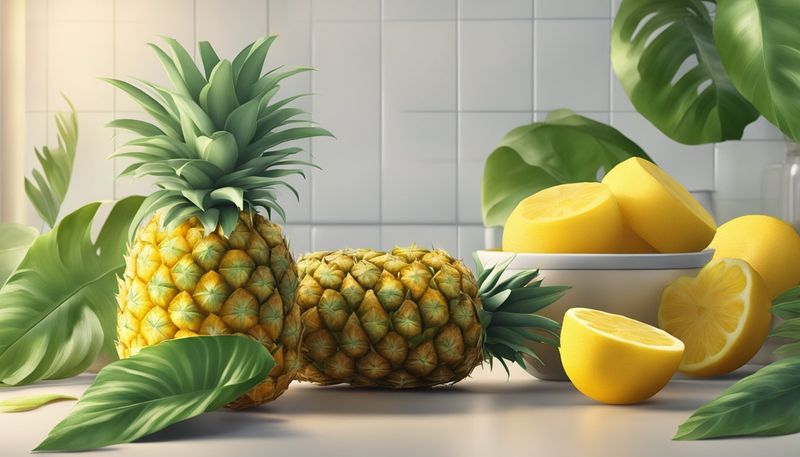
Pineapple eyes, the spiky hexagons on its skin, tell a story. They should be uniform, flat, and relatively large. This pattern is a sign of health and ripeness.
Deep or shriveled eyes suggest an underripe or overripe state, respectively. These textures provide a glimpse into the pineapple’s journey from field to table. The eyes offer an intricate map, guiding you to the ripest choice.
5. Tug a Leaf from the Crown
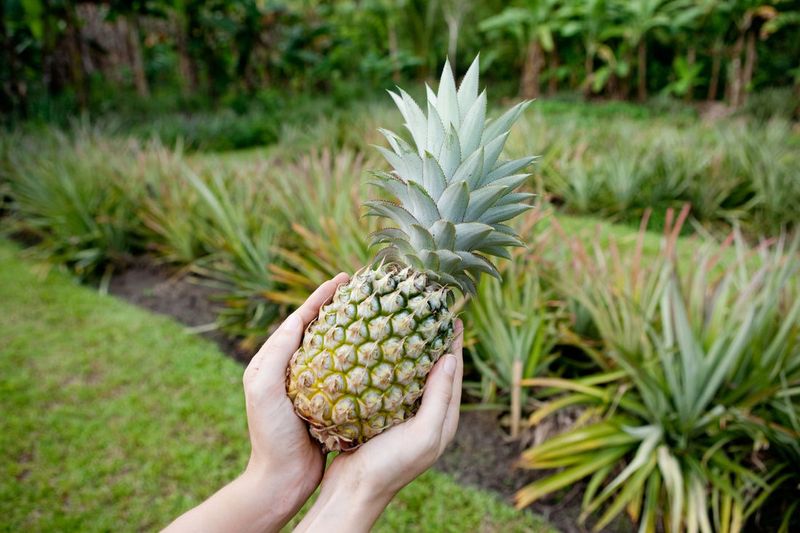
The leaves on a pineapple’s crown are nature’s ripeness tester. Gently tug at one of the center leaves. If it comes out with little effort, the pineapple is ripe.
A stubborn leaf suggests the fruit needs more time. This simple action offers a tactile confirmation of what the eyes and nose might already suggest. It’s a playful yet effective method to gauge your pineapple’s readiness.
6. Listen for a Hollow Sound
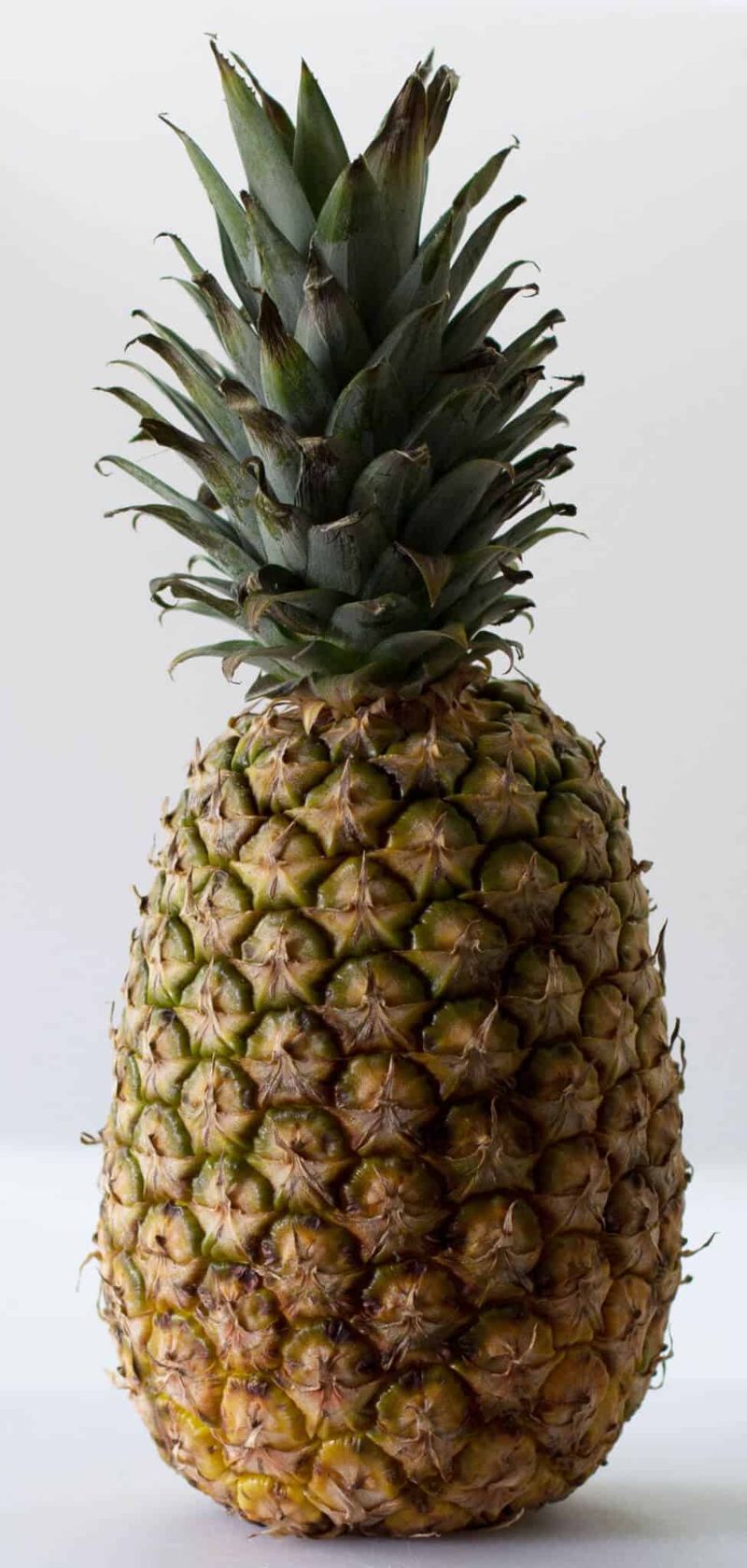
Listening to a pineapple might seem odd, but it works. Tap it with your knuckles; a ripe one often sounds hollow.
An underripe pineapple will sound dense. This sound test is subtle yet insightful, adding another layer to your selection process. It’s like listening to the heartbeat of the fruit, ensuring you’re picking a winner.
7. Check the Weight
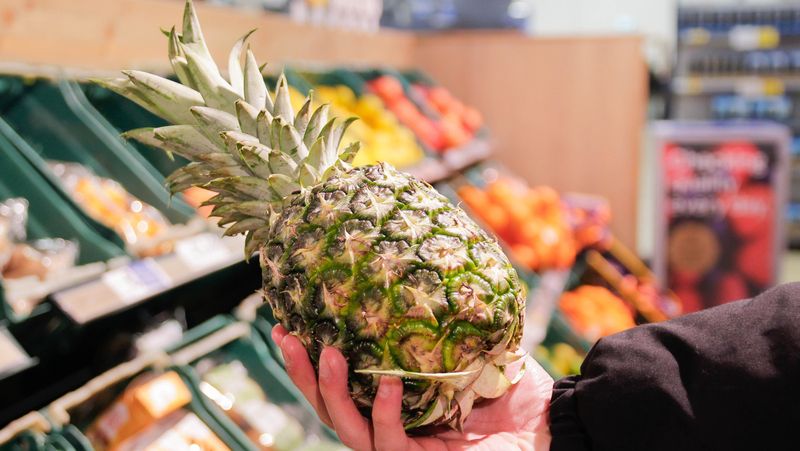
Weight offers another clue to a pineapple’s ripeness. Pick it up; a ripe one feels heavy for its size, indicating juiciness.
Heavier fruits tend to be sweeter, promising a succulent experience. This weighty decision is more than just heft; it’s a promise of flavor. Let the pineapple’s weight guide you to the juiciest option.
8. Look for a Glossy Sheen
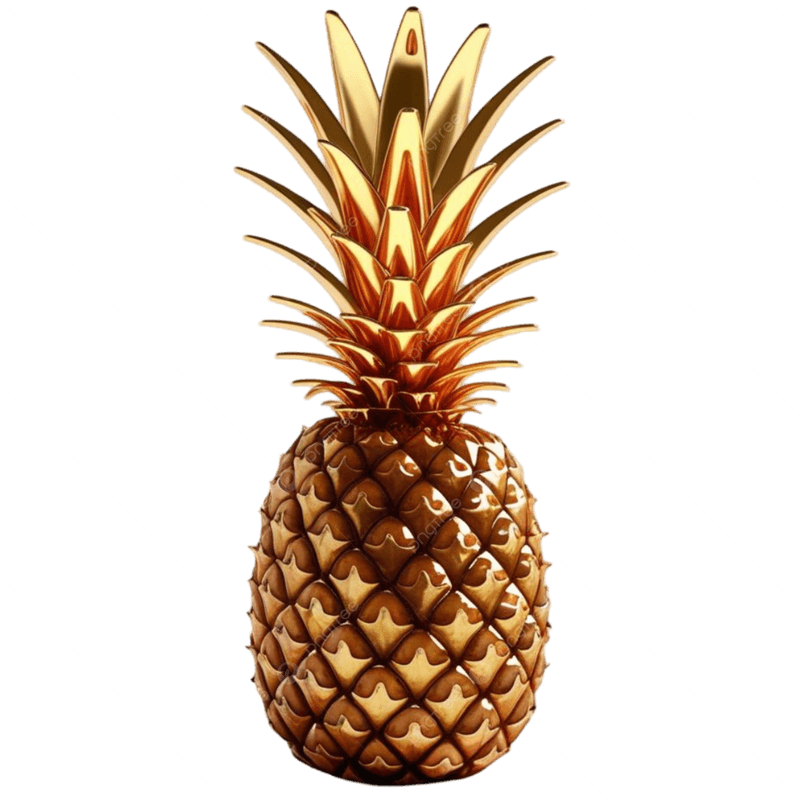
A ripe pineapple often boasts a slight sheen, signaling freshness. This glossy exterior is a visual cue, an indication of the pineapple’s prime condition.
Dull or wrinkled skin suggests the fruit is drying out. The sheen is like a spotlight, shining on the pineapple’s readiness to impress. It’s an often-overlooked aspect, but it speaks volumes about ripeness.
9. Beware of Mold or Soft Spots
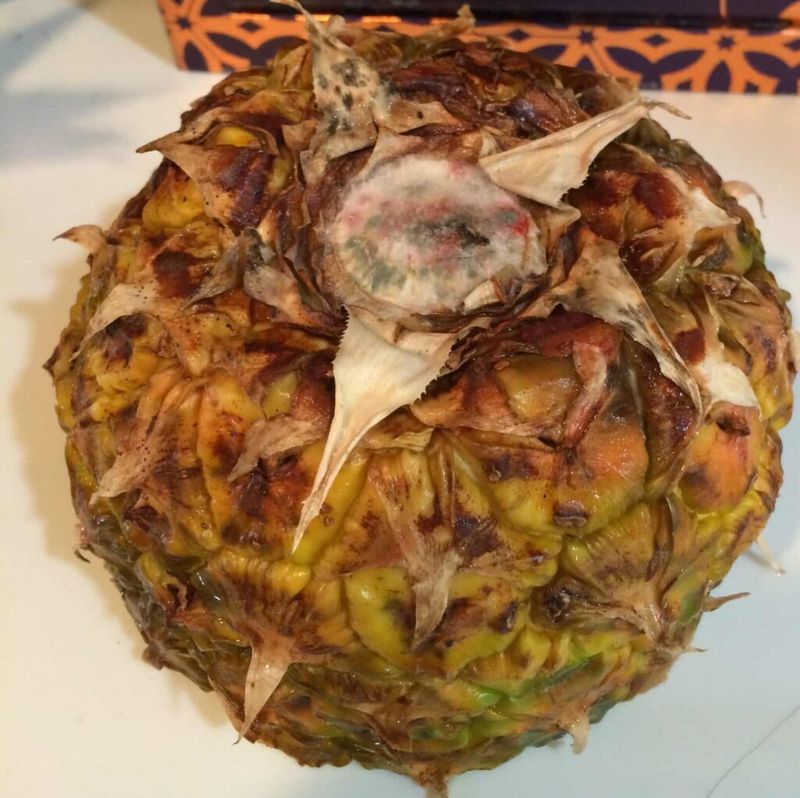
Turning a pineapple over can reveal secrets. Check the bottom for mold or soft spots, which are signs of deterioration.
A little browning is normal, but these red flags suggest the pineapple is going bad. This inspection is your last line of defense in choosing the perfect fruit. It’s about ensuring quality, so your pineapple experience is sweet, not sour.