
Growing tomatoes can be a rewarding experience until those sprawling vines take over your garden. Without proper support, tomato plants can suffer from disease, pest damage, and even broken stems from heavy fruit.
Supporting your tomato plants not only keeps your garden tidy but also improves air circulation, fruit quality, and makes harvesting much easier. Let’s explore nine practical methods to keep those tomato plants standing tall and productive.
1. The Single-Stake Method (Best for Determinate Tomatoes)
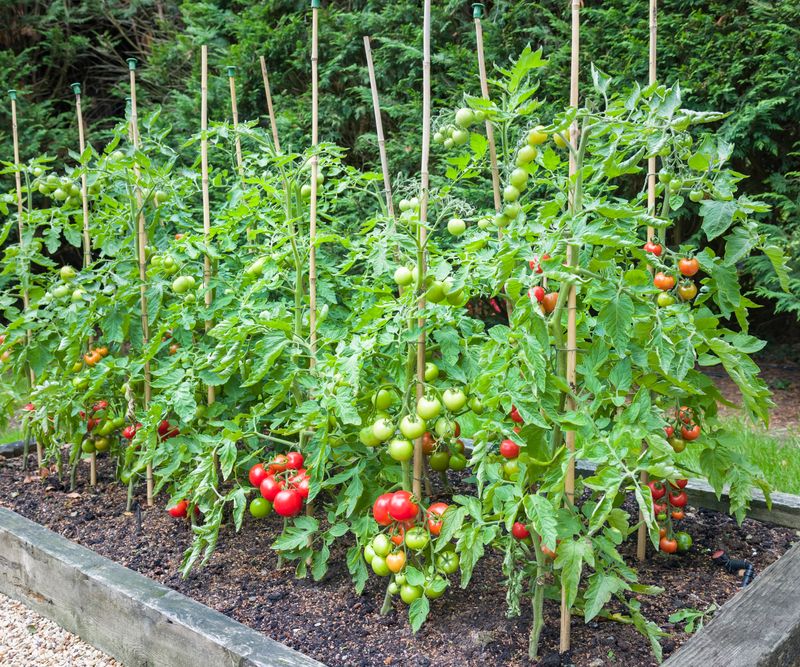
Simplicity makes this method a gardening classic. Just drive a sturdy wooden or metal stake about 1-2 feet into the ground next to each tomato plant when you first transplant them.
As your tomato grows, gently secure the main stem to the stake using soft garden twine, creating a figure-eight pattern that won’t cut into the stem. Tie every 6-8 inches up the stake.
Perfect for determinate varieties that grow to a fixed height, this approach requires minimal materials while providing good support. Remember to prune suckers regularly to maintain a single main stem for the cleanest results.
2. The Florida Weave (Perfect for Multiple Plants in Rows)
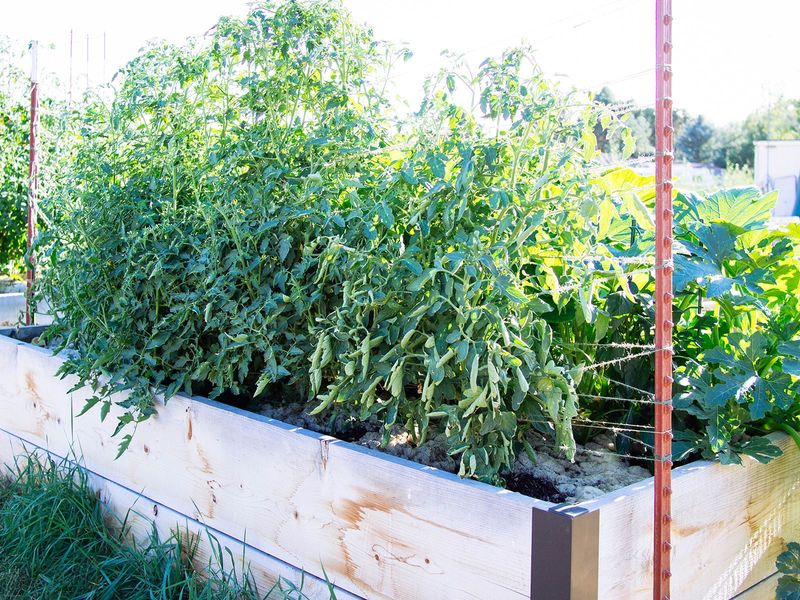
Commercial growers swear by this efficient technique for supporting multiple plants at once. Start by placing strong stakes at the ends of your tomato row and every 4-5 plants in between.
Run garden twine horizontally from one end stake to the other, weaving between plants in a figure-eight pattern around each stake. Add new horizontal lines as plants grow taller, usually every 8-10 inches.
The beauty of the Florida Weave lies in its economy – you’ll use less material than individual staking while still keeping dozens of plants upright. For best results, tighten the twine periodically as plants grow and fruit begins to form.
3. Tomato Cages (Classic and Convenient)
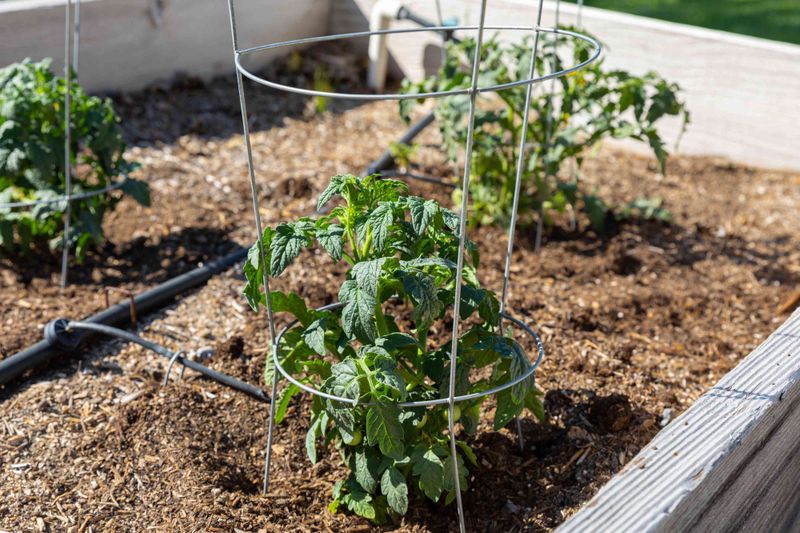
When gardeners want no-fuss support, tomato cages shine as the go-to solution. Simply place these wire structures over young plants before they get too big, allowing them to grow naturally within the framework.
Standard store-bought cages work well for determinate varieties, but consider making your own from concrete reinforcement wire for indeterminate types that grow taller. The circular design provides 360-degree support without daily maintenance.
While convenient, cages sometimes fail with especially vigorous plants. Don’t hesitate to add extra support by tying branches that escape the cage or staking the cage itself if it begins to tilt under the weight of a productive plant.
4. String and Trellis Method (Great for Greenhouses and Raised Beds)
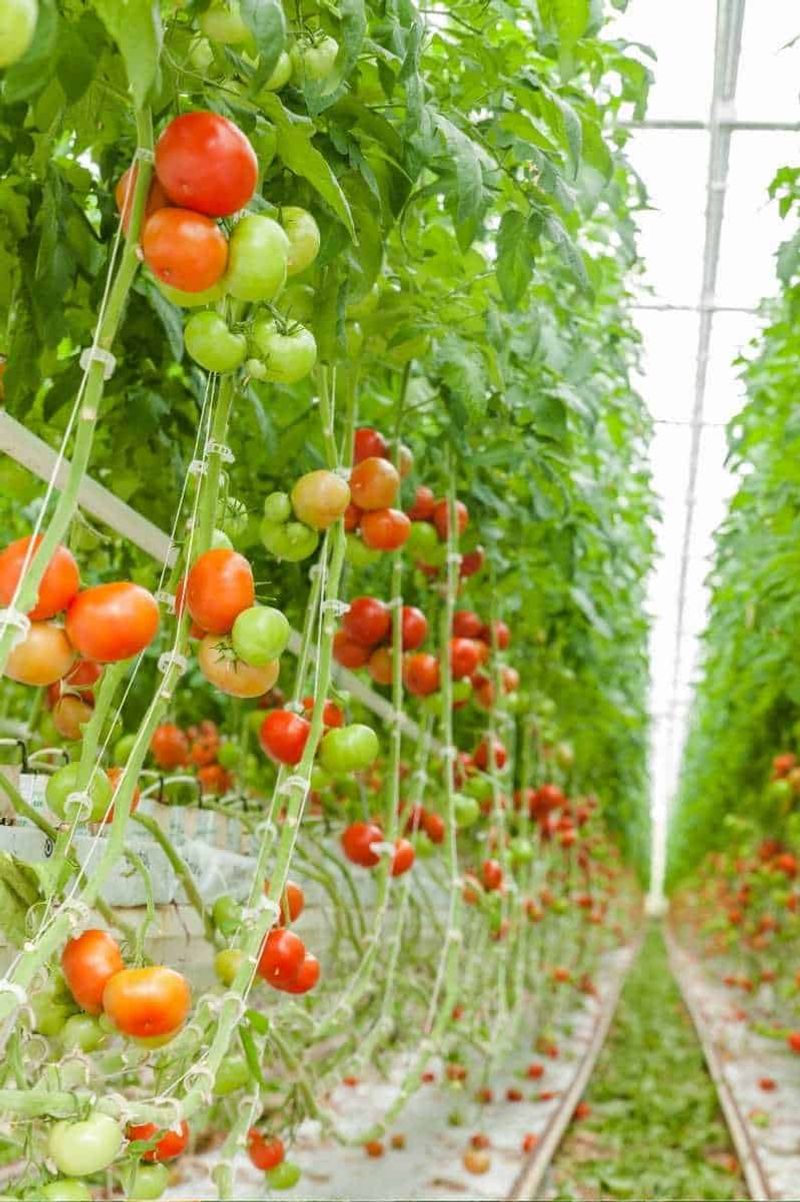
Greenhouse growers often utilize vertical space with this elegant solution. Install a sturdy horizontal support above your plants, then hang strong garden twine down to each tomato.
Twist the growing stem gently around the string as the plant grows upward, or use clips to secure it. This method encourages straight, upward growth and works wonders for indeterminate varieties that can reach impressive heights.
The real magic happens when you lower the strings periodically, allowing you to keep the fruiting portions at a comfortable harvesting height while the plant continues growing. For outdoor gardens, ensure your overhead support can withstand wind and weather.
5. Teepee Support (Decorative + Functional)
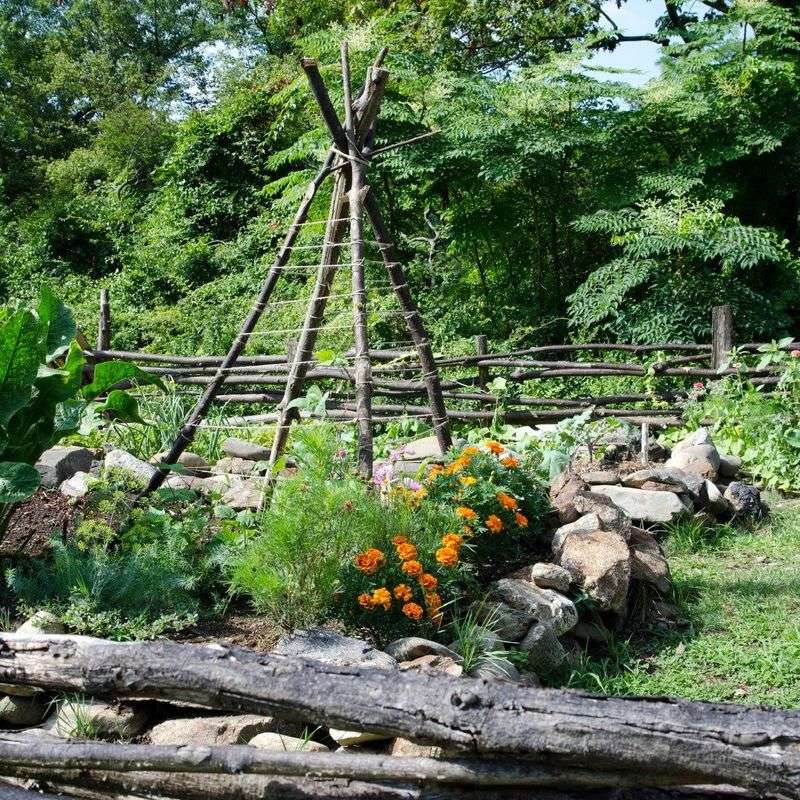
Bamboo poles transform from plain garden supplies into charming structures when arranged in a teepee formation. Gather 3-4 poles per plant, push them into the soil in a circle, and tie them together at the top to create a stable pyramid.
Train your tomato vines to climb by gently tying stems to the poles as they grow. The angled supports provide excellent stability against wind while the open design promotes air circulation.
Beyond practical benefits, teepees add visual interest to your garden with their architectural quality. They work particularly well for cherry tomatoes and other smaller-fruited varieties that won’t strain the structure with excessive weight.
6. Ladder or A-Frame Trellis (Maximum Stability)
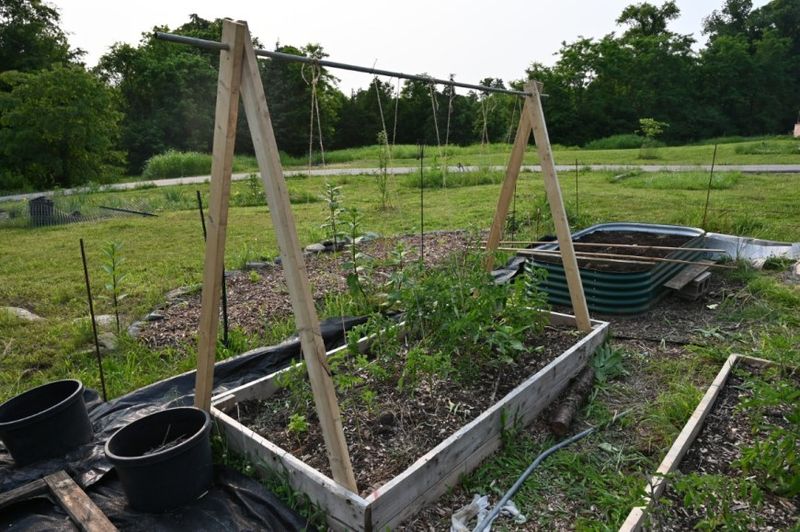
Heavy-fruiting heirloom varieties need serious support, and nothing delivers like an A-frame structure. Resembling a ladder leaning against an invisible wall, this design distributes weight evenly while maximizing growing space.
Construct your A-frame using wooden slats or metal pipes connected by horizontal rungs. Plant tomatoes along both sides and guide them upward using soft ties or clips attached to the framework.
The real advantage comes during harvest season when those massive beefsteak tomatoes don’t cause the entire support to topple. For gardeners with limited space, A-frames allow multiple plants to share the same footprint while growing vertically instead of sprawling outward.
7. Tomato Clips (No-Tie Solution)
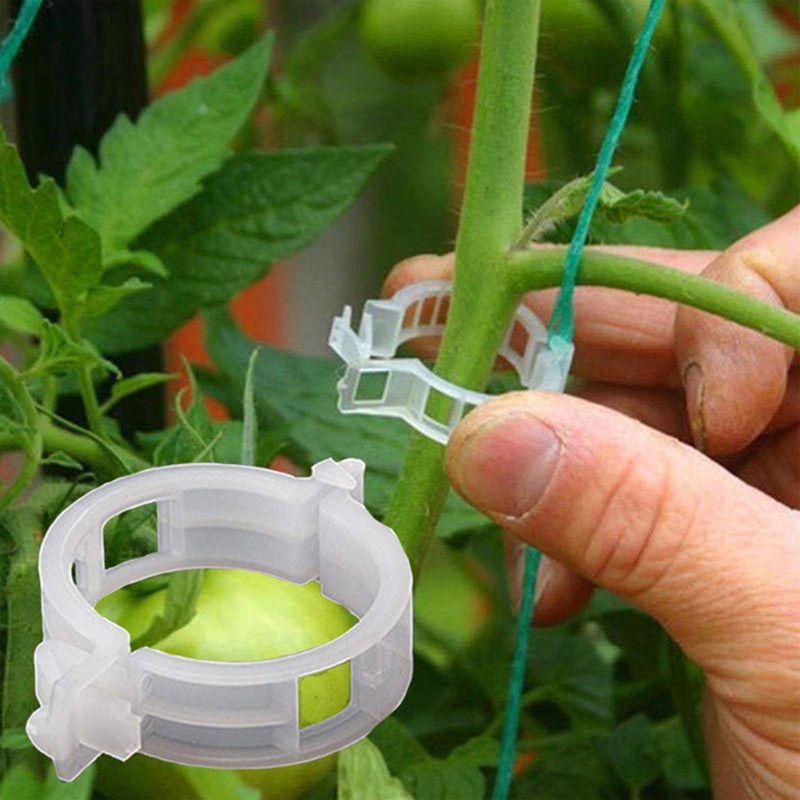
Modern gardening embraces efficiency with these clever plastic devices designed specifically for supporting tomato plants. Unlike traditional ties, these clips snap directly onto greenhouse strings or stakes while gently cradling the plant stem.
Their design allows the stem to expand as it grows without causing damage. Many commercial growers use these exclusively because they save tremendous time compared to tying each plant by hand.
For home gardeners, these reusable clips eliminate the frustration of knot-tying and reduce the risk of accidentally strangling stems with ties that are too tight. Look for UV-resistant versions if using outdoors, as they’ll withstand sun exposure throughout the growing season.
8. Stretchable Garden Tape (Gentle on Plants)
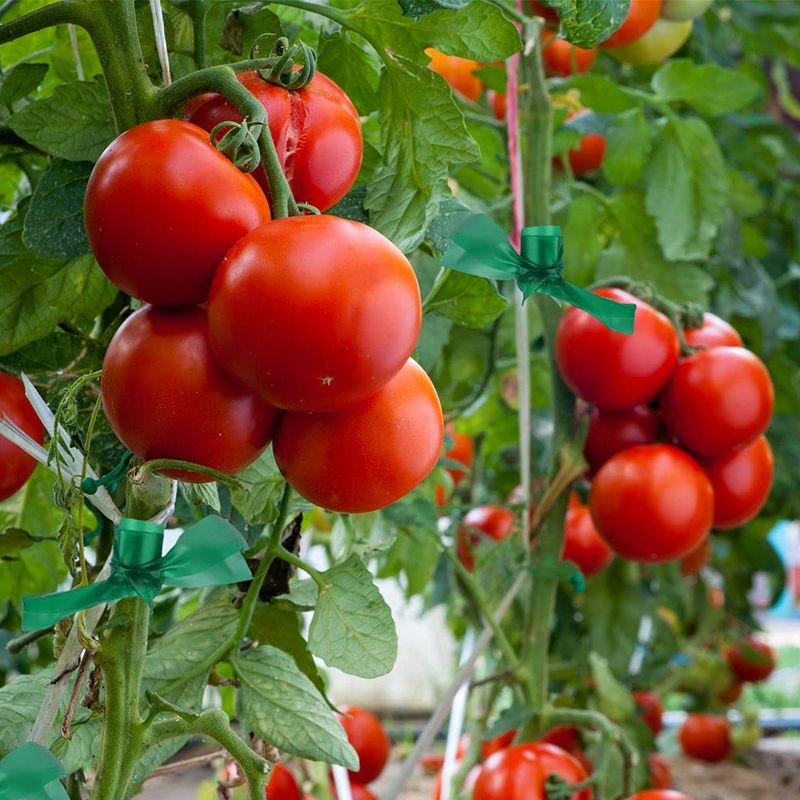
Young tomato stems bruise easily under rigid supports, making stretchable garden tape a game-changer for conscientious gardeners. This specialized material expands naturally as your plants grow, eliminating the need for constant adjustment.
Apply by wrapping loosely around both stem and support, allowing room for growth. The tape’s gentle pressure provides guidance without restriction, perfect for tender varieties or new gardeners worried about damaging their plants.
Available in green shades that blend with foliage, this tape offers aesthetic benefits alongside practical support. Unlike plastic or wire alternatives, stretchable tape degrades naturally over time, making it an environmentally friendly choice for organic gardening practices.
9. Soft Ties or Strips of Fabric (DIY & Budget-Friendly)
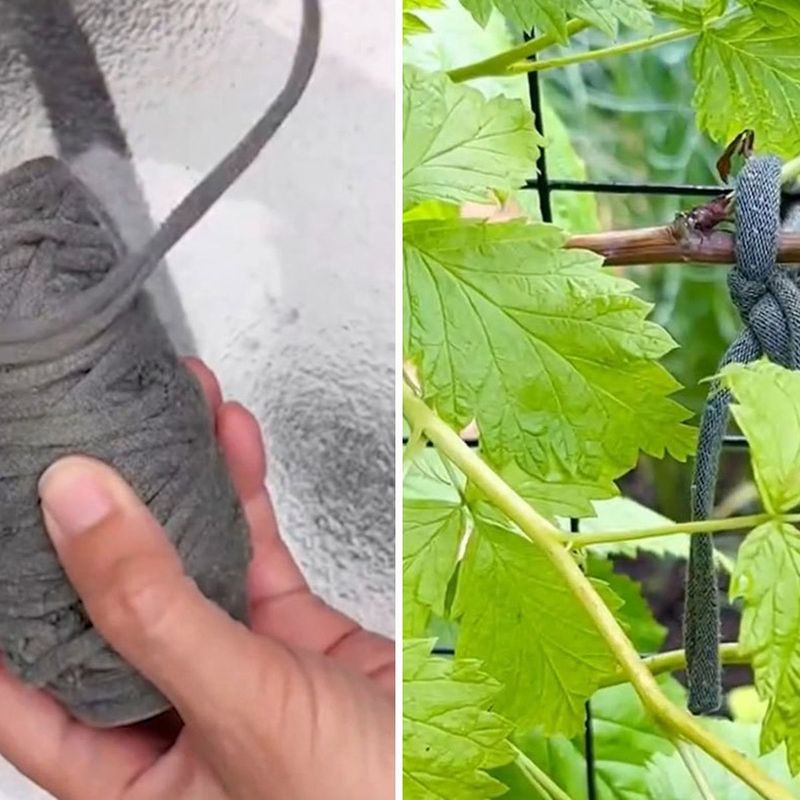
Repurposing old t-shirts transforms textile waste into perfect plant supports. Simply cut fabric into 1-inch strips, stretch slightly to create curl, then use these soft bands to secure tomato stems to whatever support system you prefer.
Unlike twine or wire, fabric strips distribute pressure across a wider area, preventing stem damage even with heavier fruit loads. Old pantyhose works exceptionally well due to its natural elasticity, expanding comfortably as stems thicken.
Beyond being kind to your wallet and plants, fabric ties add a touch of personality to your garden with bits of color peeking through the greenery. Keep a basket of pre-cut strips near the garden for quick fixes whenever you spot a branch needing support.