
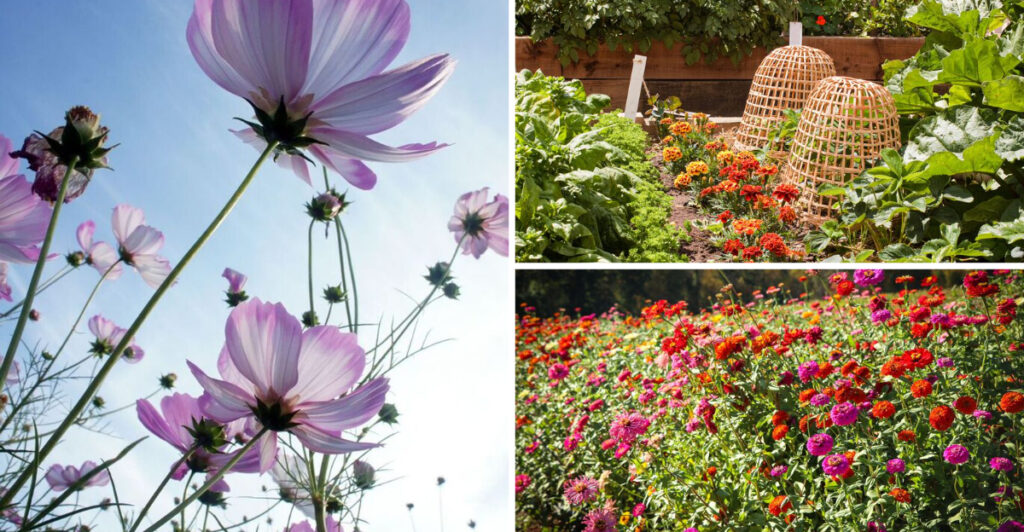
Embellishing your vegetable garden with vibrant summer flowers not only enhances its beauty but also supports a healthier ecosystem. These blooms attract beneficial insects, deter pests, and provide a refreshing splash of color amid the green. Whether you’re a seasoned gardener or a beginner, incorporating flowers with your vegetables can transform your garden into a lively habitat. Explore these 17 summer flowers that bring both aesthetic and functional benefits to your vegetable garden, making it a lively and productive sanctuary.
1. Marigold
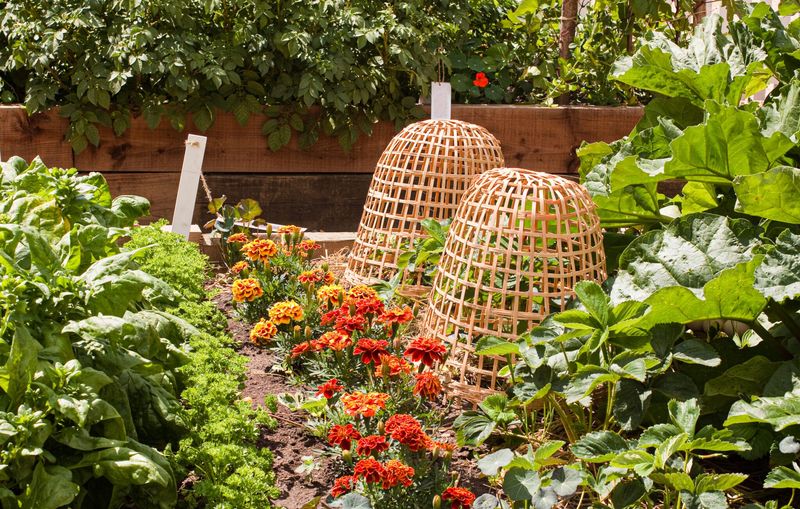
Marigolds are the cheerful heralds of summer, known for their striking oranges and yellows. Their bold colors not only brighten garden beds but also act as natural pest repellents, keeping nematodes and other unwelcome bugs at bay.
These hardy blooms have a long flowering season, ensuring your garden remains lively. Plant them alongside your tomatoes or peppers to enjoy their protective benefits. With roots tracing back to ancient Aztec gardens, marigolds are as historic as they are beneficial.
Incorporating these flowers will ensure a more colorful and healthy vegetable garden.
2. Zinnia
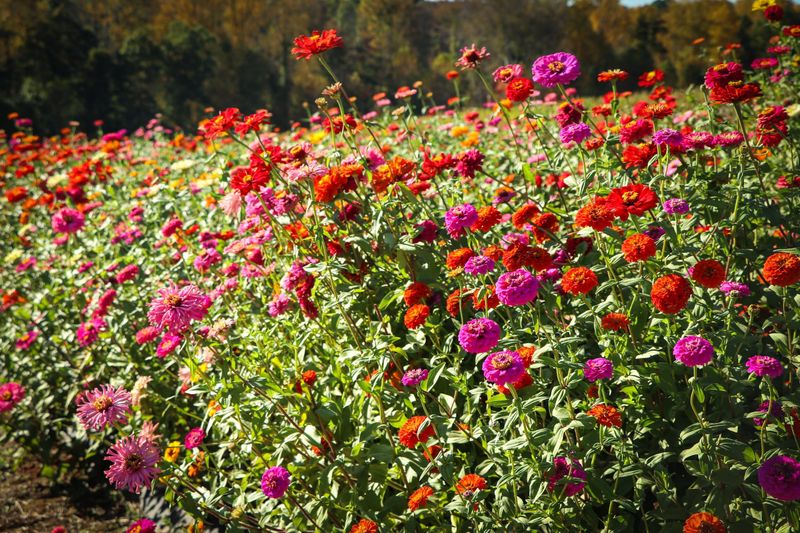
Zinnias are the kaleidoscopes of the flower world, offering a rainbow of colors that complement any garden. Their long-lasting blooms provide essential nectar for butterflies and bees, promoting pollination throughout the garden.
Plant zinnias in clusters for a bold, colorful display. These flowers thrive in sunny locations, making them perfect companions for sun-loving vegetables like corn or beans.
Zinnias are easy to grow from seeds, so they are ideal for gardeners of all levels. Add them to your garden for a vibrant and lively touch.
3. Sunflower
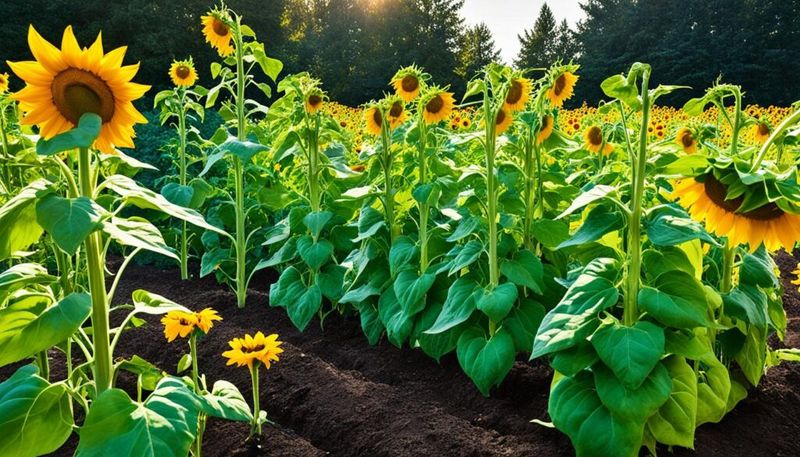
Sunflowers are the giants of the flower world, famed for their magnificent height and sunny disposition. Their towering stalks provide a natural trellis for climbing vegetables like beans or cucumbers.
These cheerful giants attract pollinators, providing food for bees and birds alike. Sunflowers are more than just beautiful; they have practical uses too.
Their seeds can be harvested for snacks or left to feed garden wildlife. With their cheerful demeanor, sunflowers are a must-have for any summer vegetable garden.
4. Nasturtium
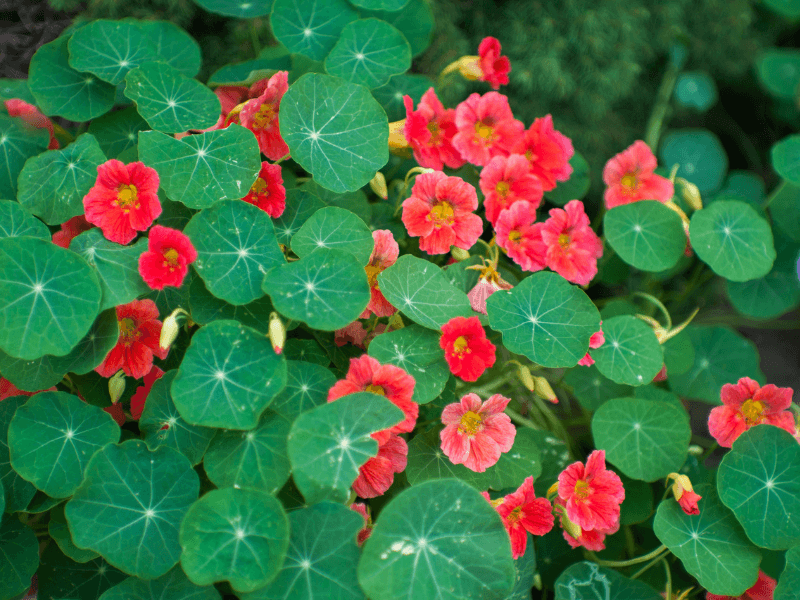
Nasturtiums are the whimsical wanderers of the garden, with their trailing vines and bright flowers. They are edible, adding a peppery kick to salads, and attract beneficial insects like bees and predatory beetles.
Plant nasturtiums to deter aphids and other pests from your vegetables. These flowers love poor soil, making them easy to care for and perfect for companion planting.
In the Victorian era, nasturtiums symbolized patriotism, adding a touch of history to their charm. They’re a delightful and functional addition to any garden.
5. Cosmos
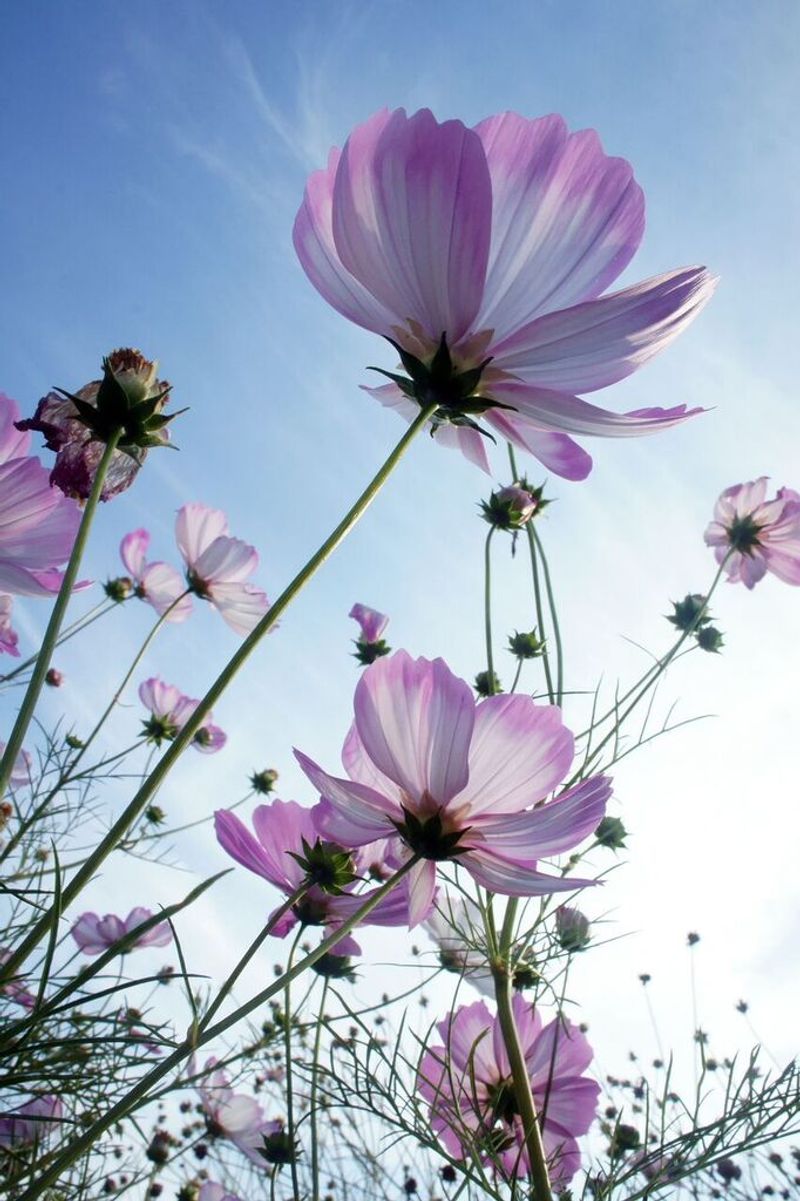
Cosmos are the gentle dancers of the summer, known for their delicate petals and feathery foliage. These flowers sway gracefully, attracting bees and butterflies to help pollinate your garden.
Their tall stems add a touch of elegance, standing out against shorter vegetable plants like carrots and tomatoes. Cosmos thrive in poor soil and require minimal care, making them perfect for busy gardeners.
With origins in Mexico, cosmos have a rich heritage, symbolizing harmony in the garden. Add them to your vegetable plots for a touch of grace.
6. Echinacea
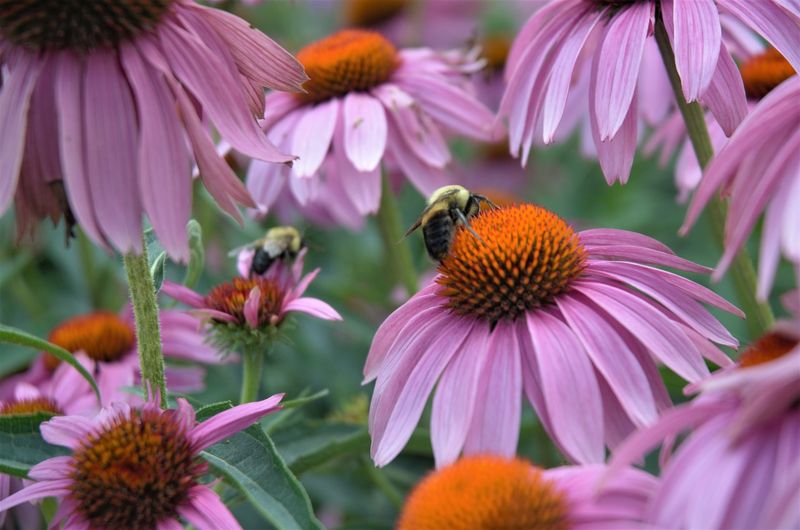
Echinacea, or coneflowers, are the resilient warriors of the garden, renowned for their medicinal properties and striking appearance. Their sturdy stems and purple blooms attract pollinators while adding vertical interest.
Known to enhance the immune systems of both humans and ecosystems, Echinacea is a perfect match for a health-conscious garden. Plant them near your vegetable beds to enjoy their beauty and benefits.
With a history rooted in Native American herbal practices, echinacea brings both beauty and history to your garden.
7. Lavender
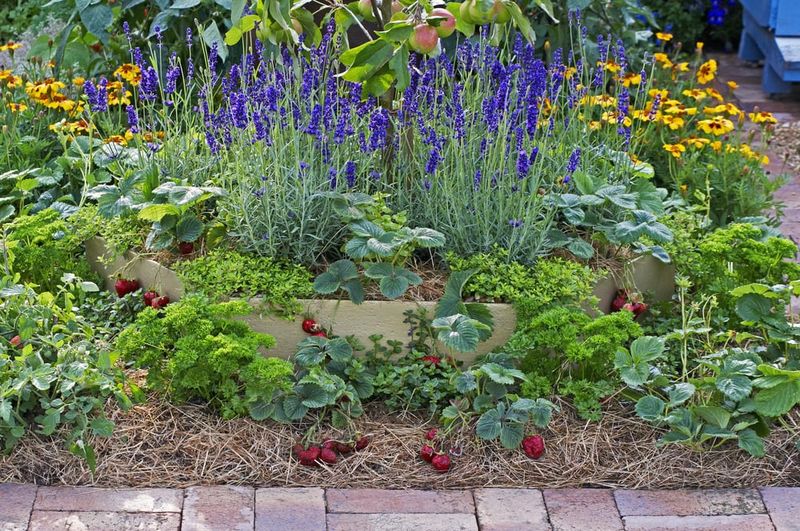
Lavender is the calming soul of the garden, renowned for its soothing fragrance and gentle presence. Its aromatic flowers attract pollinators and deter pests, making it a natural companion for vegetables.
Plant lavender near your leafy greens or beans to enjoy its many benefits. Its scent also repels mosquitoes and other nuisances.
Lavender has been celebrated for centuries, from ancient Rome to modern aromatherapy. Incorporate this timeless beauty into your garden to create a peaceful and productive space.
8. Calendula
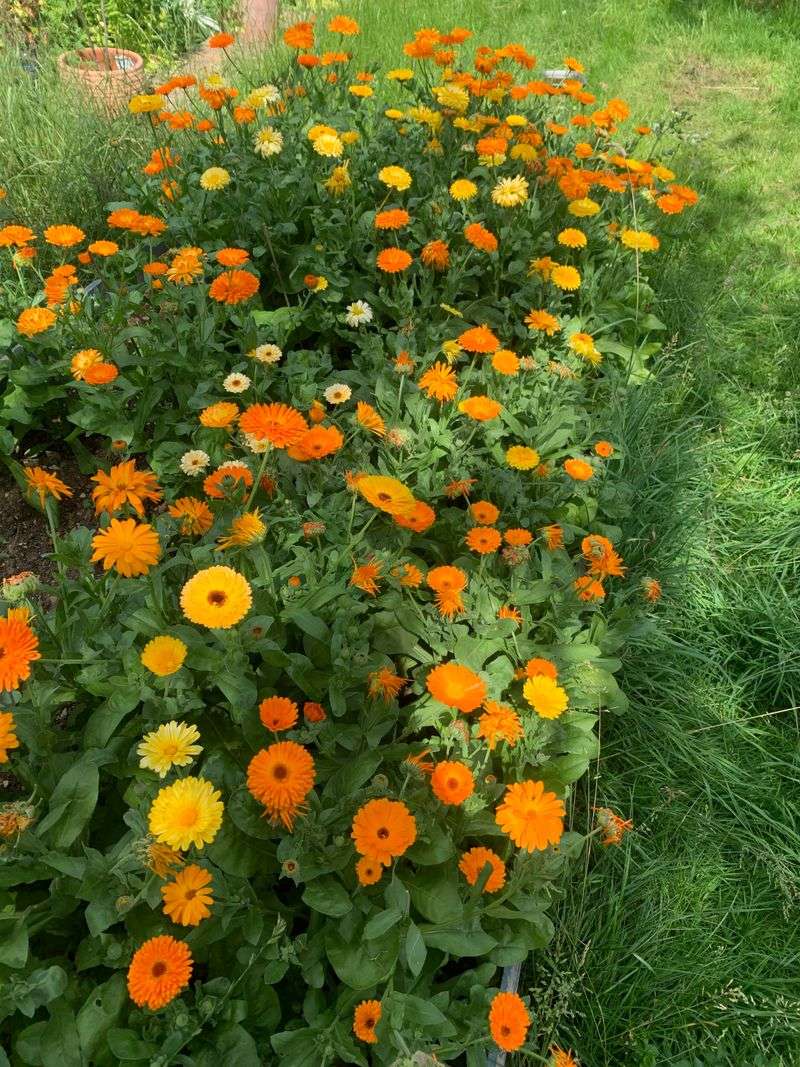
Calendula, often called pot marigold, is the sunlit healer of the garden. Its bright blooms are not only beautiful but also possess anti-inflammatory properties.
Used in creams and teas, calendula can soothe skin and promote healing, while attracting beneficial insects. Plant them near your leafy greens or cabbage for a stunning contrast.
Calendula has been used medicinally since ancient Egypt, offering both beauty and utility to modern gardens. Include these blooms for a touch of sunshine and well-being.
9. Borage
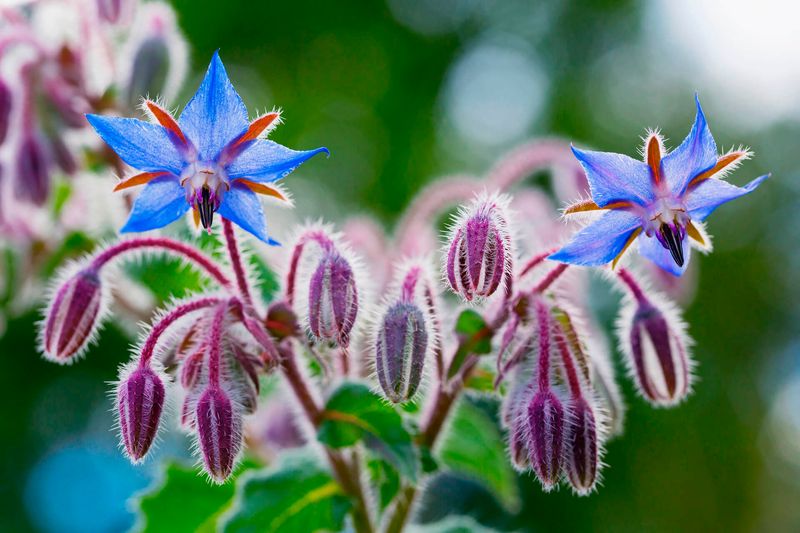
Borage is the starry delight of the garden, known for its unique, star-shaped blue flowers. These blooms attract bees and other pollinators, enhancing the productivity of your vegetable garden.
Borage leaves and flowers are edible, with a cucumber-like taste that adds freshness to salads. Plant them near tomatoes or squash to boost growth and flavor.
Historically, borage was used to inspire courage in warriors, adding a dash of valor to your garden. This charming bloom is a versatile and delightful addition.
10. Bee Balm
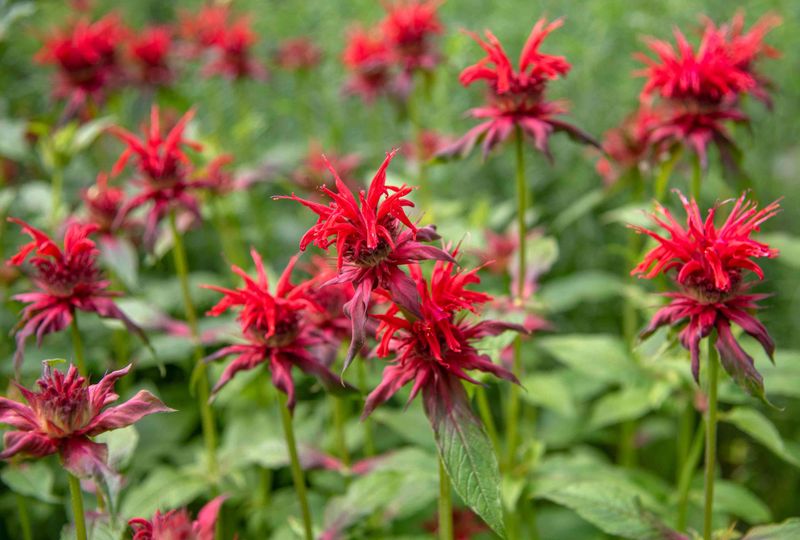
Bee balm is the buzzing hub of the garden, celebrated for its ability to attract bees, hummingbirds, and butterflies. Its vibrant blooms in reds and pinks create a lively atmosphere.
Plant bee balm alongside your vegetables to enhance pollination. Its aromatic leaves can be used in teas or as a seasoning, adding a herbal touch to your garden.
Originating from North America, it has a rich cultural history, revered by Native American tribes for its medicinal properties. Include bee balm for a vibrant and beneficial garden.
11. Snapdragon

Snapdragons are the playful architects of the garden, known for their unique, dragon-shaped blooms. These flowers add height and color, creating dynamic vertical interest.
Snapdragons attract pollinators and can be planted alongside vegetables like peppers or aubergines to enhance your garden’s beauty. Their sturdy stems make them ideal for cutting and floral arrangements.
With a history in European folklore as protectors of castles, snapdragons offer both charm and intrigue. Their captivating forms bring a touch of whimsy to any garden.
12. Petunia
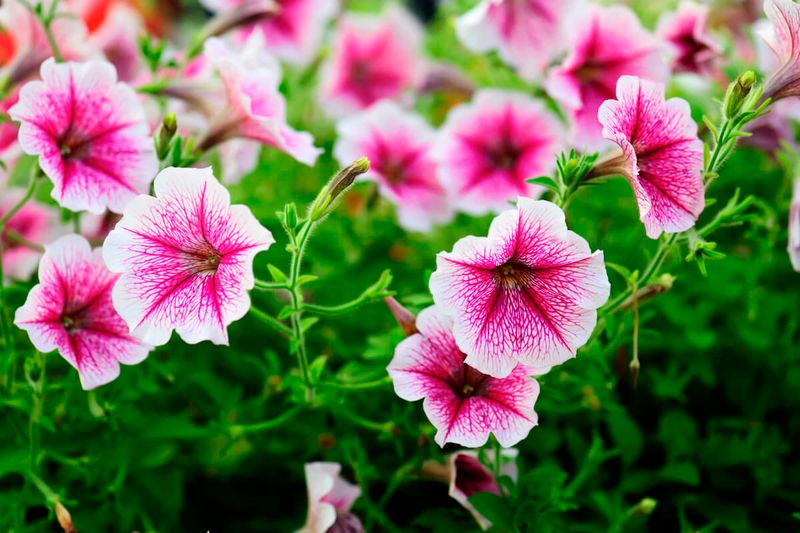
Petunias are the vibrant canvases of the garden, celebrated for their wide array of colors and patterns. Their blooms create a stunning contrast against the green backdrop of vegetables.
Plant petunias in borders or containers to deter aphids and other pests. Their cascading growth habit makes them perfect for hanging baskets or window boxes.
Since their discovery in South America, petunias have become a beloved flower worldwide. Bring them into your garden for a splash of color and natural pest control.
13. Verbena
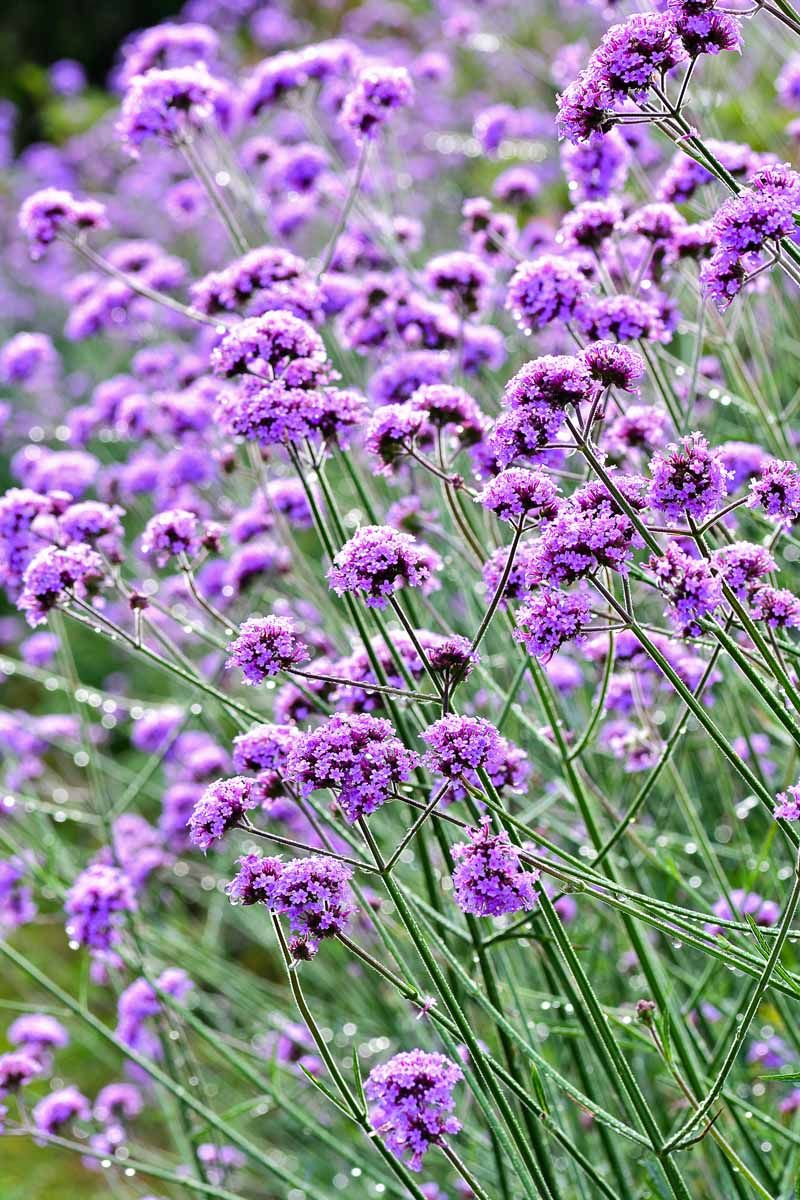
Verbena is the subtle charm of the garden, known for its delicate clusters of small flowers. These blooms are magnets for butterflies and other pollinators.
Verbena’s low-growing habit makes it ideal for edging vegetable beds or filling unsightly gaps. Its blooms continue throughout the summer, providing long-lasting color.
Historically, verbena was revered by ancient cultures for its purported magical properties. Add this enchanting flower to your garden for a touch of mystical allure and beauty.
14. Lantana
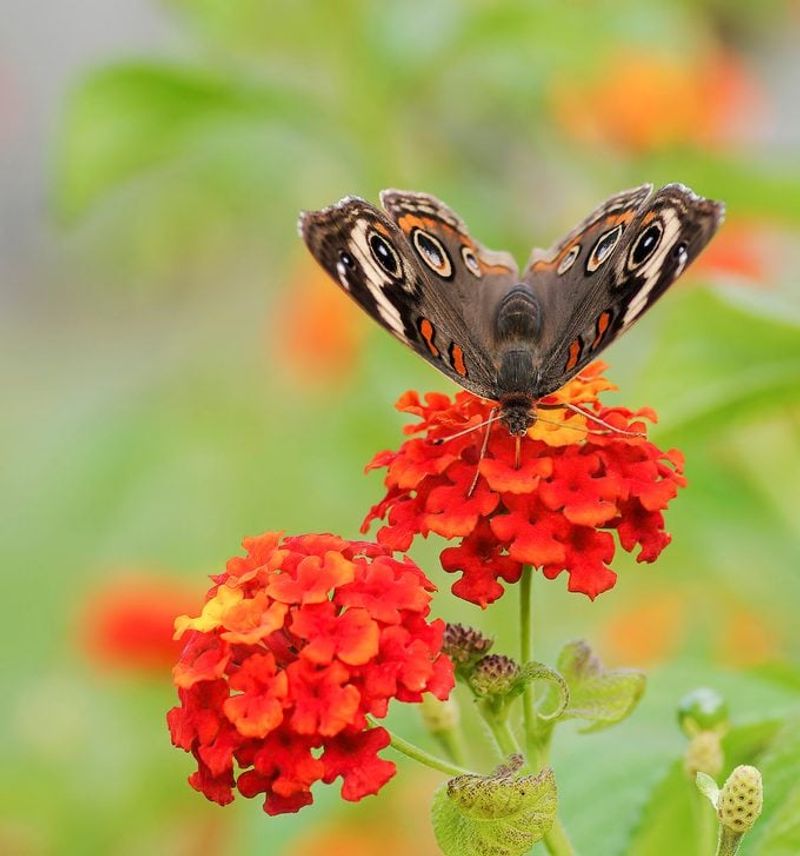
Lantana is the bold artist of the garden, famous for its vibrant, multicolored blossoms. These flowers change color as they age, adding dynamic interest.
Lantana attracts a variety of pollinators, making it a valuable addition to vegetable gardens. Its tough nature allows it to thrive in hot, dry conditions, complementing sun-loving vegetables.
Originally from the tropics, lantana brings a touch of exotic flair to any garden. Its resilience and beauty make it a standout choice for summer planting.
15. Salvia
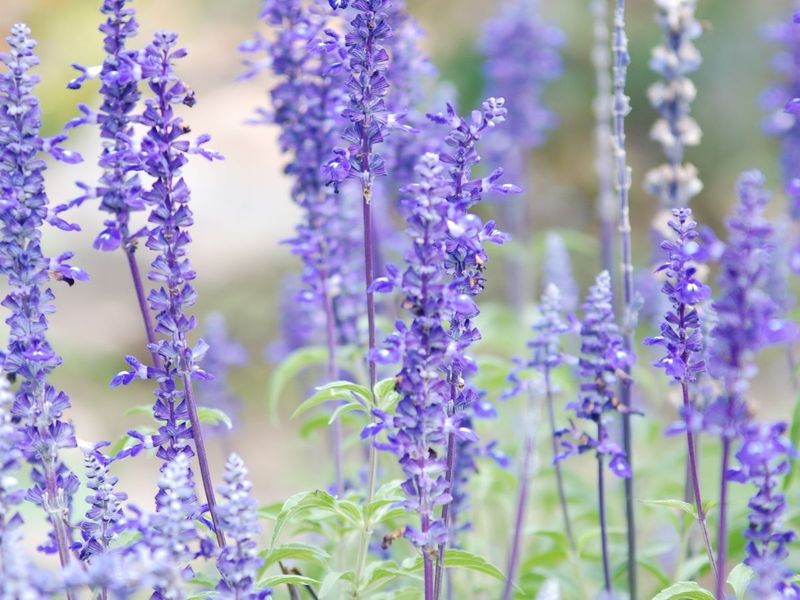
Salvia, or sage, is the wise companion of the garden, known for its striking spikes of blue and purple blooms. These flowers attract bees and hummingbirds, enhancing pollination.
Plant salvia near herbs or vegetables like tomatoes to enjoy their aromatic benefits. Their tall blooms add vertical interest and a touch of elegance.
Celebrated since ancient times for its medicinal and culinary uses, salvia enriches gardens with both beauty and history. Incorporate this plant for a harmonious and thriving garden.
16. Black-eyed Susan
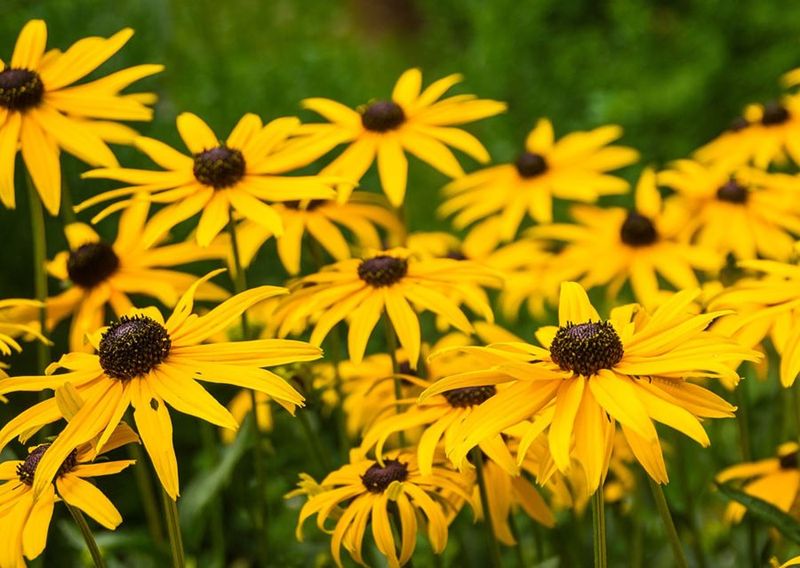
Black-eyed Susans are the golden beacons of summer, recognized for their radiant yellow petals and dark centers. These flowers cheer up any garden bed and attract beneficial insects.
Their hardy nature makes them an excellent choice for beginner gardeners. Plant them among your vegetables to enjoy both beauty and function.
Black-eyed Susans have a longstanding history in American gardens, symbolizing encouragement and motivation. Their sunny disposition and easy care make them a must-have for vibrant summer gardens.
17. Dahlia
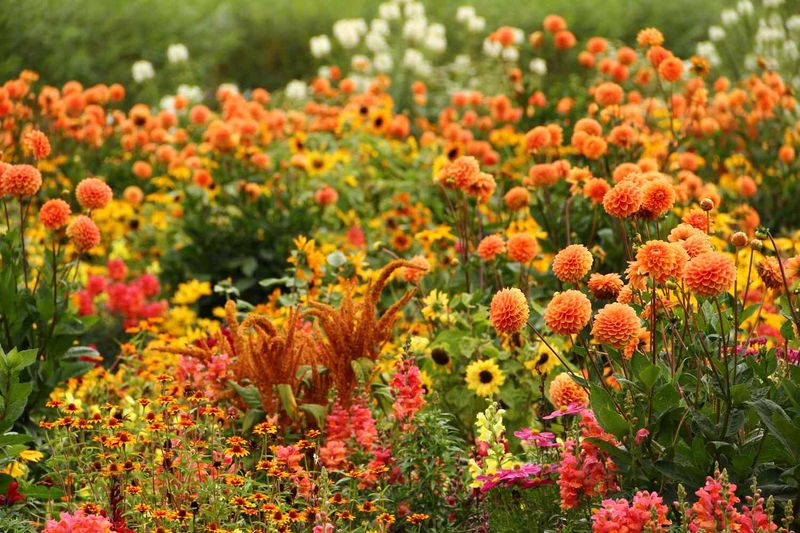
Dahlias are the showstoppers of the garden, known for their large, elaborate blooms in a myriad of colors. These flowers provide dramatic flair and attract pollinators like bees and butterflies.
Plant dahlias alongside vegetables for a stunning visual impact. Their blooms can be cut for striking floral arrangements, bringing garden beauty indoors.
Originating from Mexico, dahlias have a rich cultural heritage, celebrated for their diversity and beauty. Add them to your garden for a touch of drama and elegance.