 Complete Gardening
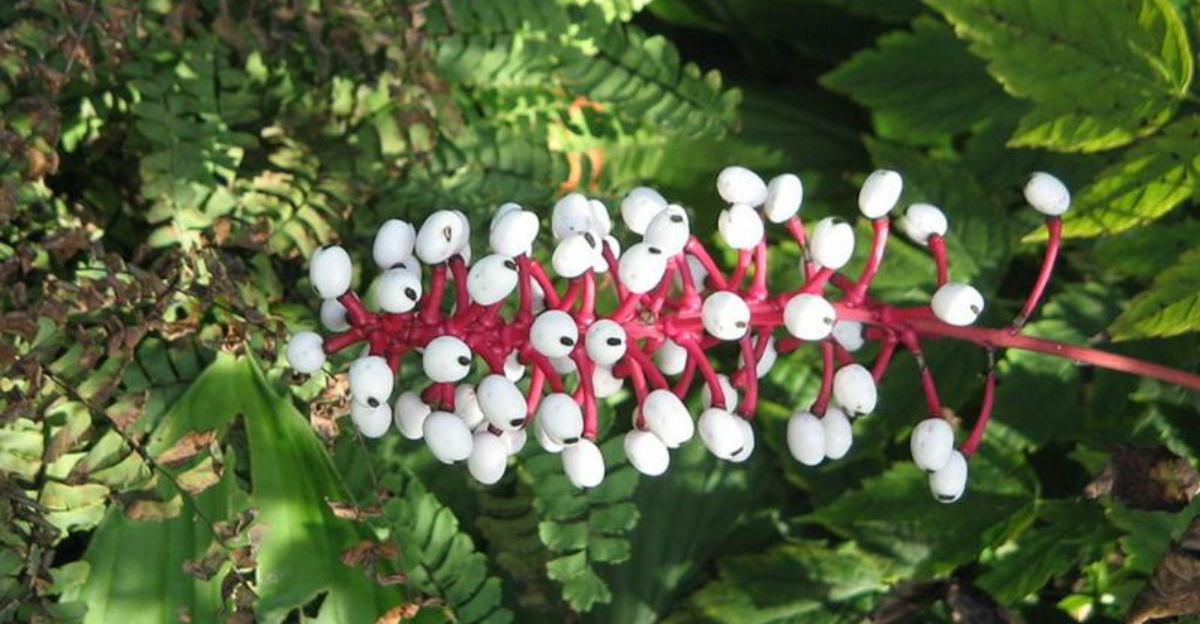
The White Baneberry, known scientifically as Actaea pachypoda, is a fascinating yet eerie plant. Its unique appearance and deadly nature make it both a captivating and dangerous subject for nature enthusiasts.
Often referred to as the “Doll’s Eyes” plant, this perennial herb is not just another woodland plant.
Its striking white berries with black dots resemble the eyes of porcelain dolls, lending it an unsettling beauty that masks its perilous qualities.
1. Those Aren’t Ordinary Berries – They’re Nature’s Warning Signs
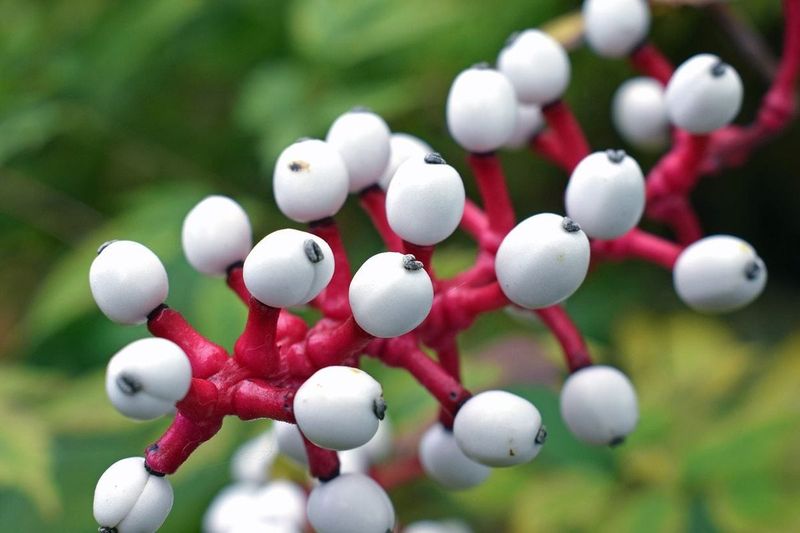
The White Baneberry boasts distinctive white berries with black dots that look like doll’s eyes. These berries grow on bright pink stems, loudly signaling danger. Known scientifically as Actaea pachypoda, meaning “thick-footed” due to its robust stalks, this plant is a chilling sight. Why exactly is it so creepy? These berries persist through the winter, starkly standing out like tiny skulls amid the snow. Their continuous presence, even as other plants wither, adds an eerie, haunting element to winter landscapes.
2. One Berry Could Hospitalize a Child (Yes, Really!)
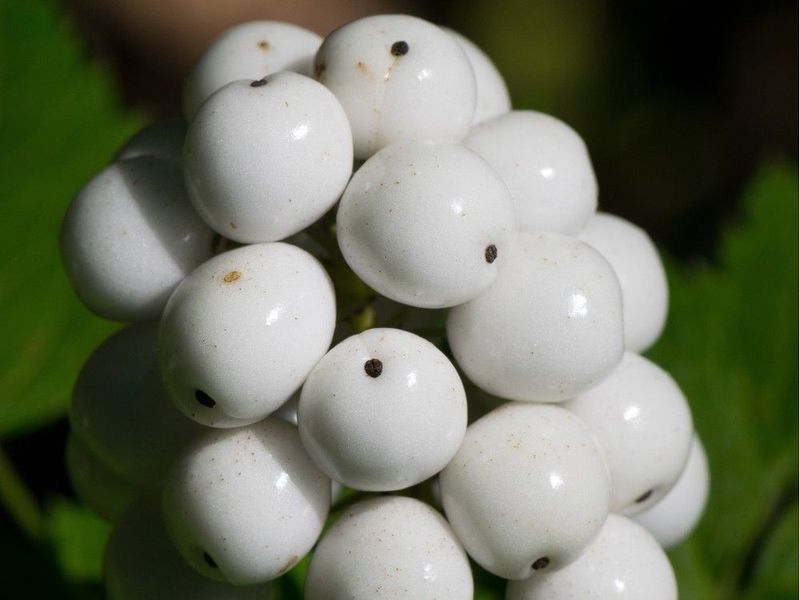
White Baneberry’s berries contain cardiac glycosides, potent compounds that can disrupt heart function. Just a single berry can be lethal to a child, and consuming about six can prove fatal to adults. Symptoms of ingestion manifest swiftly, within just half an hour, and include violent stomach cramps, a burning sensation in the mouth, dizziness, hallucinations, and possibly cardiac arrest. A chilling tale from 2014 tells of a forager who mistakenly consumed these berries, spending three harrowing days in ICU.
3. It Tricks Birds Into Spreading Its Seeds

A peculiar trait of the White Baneberry is its ability to deceive. While its berries are toxic to mammals, they are safe for birds. Birds consume these invitingly bright berries, later dispersing the seeds through their droppings. Evolution has painted these berries a stark white, making them irresistible to avian dispersers. Ironically, the very creatures the plant endangers—mammals—are the unintended victims, while birds, its allies in reproduction, thrive and aid its proliferation.
4. Native Americans Used It as… Poison Arrows?

In historical contexts, Native American tribes have utilized White Baneberry in intriguing ways. Some tribes concocted a hunting poison from the plant’s roots, while others employed tiny doses medicinally—an extremely risky endeavor. European settlers referred to it as “Herb Christopher,” in honor of the patron saint of travelers, reflecting its complex role in cultural narratives. However, modern herbalists avoid it, recognizing that the line between its medicinal use and poison is precariously thin.
5. Where This Silent Killer Hides (Would You Recognize It?)

The White Baneberry thrives in rich deciduous forests, often sheltering under maple trees. Its range stretches across Eastern North America, from Maine to Georgia. While it can be confused with the similar Red Baneberry or the innocuous Snowberries, the White Baneberry is unmistakable once you spot its thick, bright pink stems. Recognizing this plant is crucial, especially given its toxic nature, as it silently lurks in woodlands, a hidden danger among the foliage.
6. What to Do If You (or Your Dog) Accidentally Eat It

In the event of accidental ingestion of White Baneberry, immediate action is crucial. Do not induce vomiting, as it could exacerbate heart-related symptoms. Instead, rinse the mouth thoroughly with cold water and contact Poison Control without delay. It’s vital to keep a sample of the berry for precise identification. In the case of pets, particularly dogs, the symptoms can escalate quickly, necessitating a rapid trip to the veterinarian for urgent care.
7. Why You Should Grow It Anyway (Carefully!)

Despite its dangerous reputation, the White Baneberry can be a stunning addition to gardens. It features fluffy white flowers in spring, providing aesthetic appeal. As an important native species, it plays a crucial role in woodland ecosystems. Moreover, it is resistant to deer and rabbits, which instinctively avoid it. However, caution is advised: plant it away from pathways, particularly if children or pets are around. Always wear gloves when handling this intriguing, yet hazardous plant.