Complete Gardening
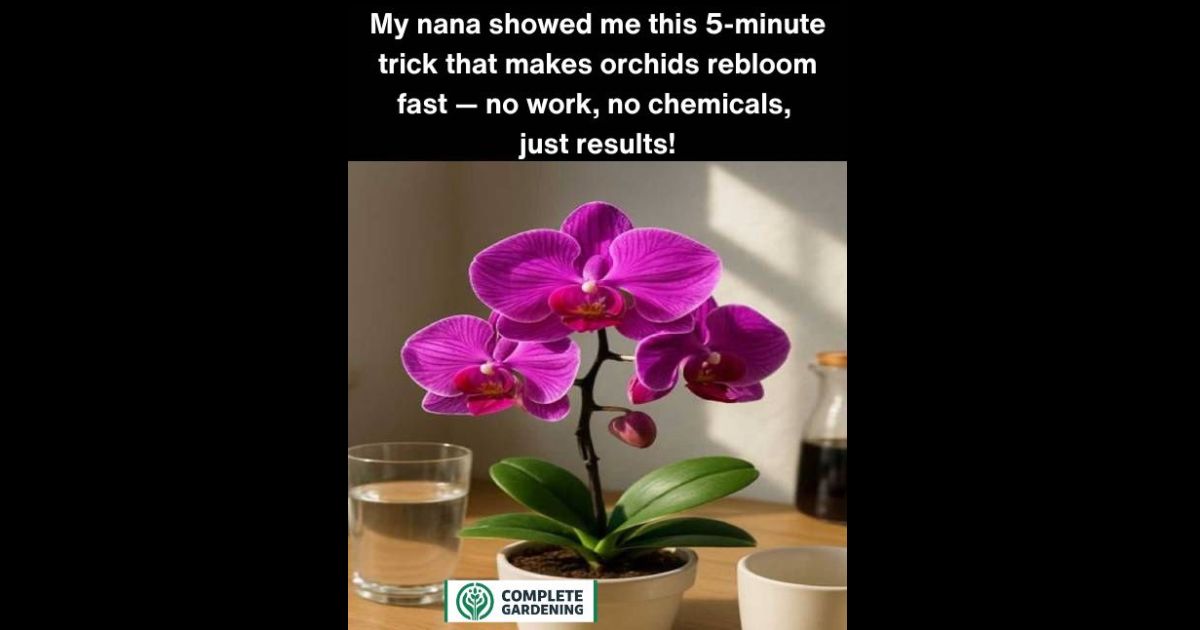
Orchids are often seen as the divas of the plant world — stunning, exotic, and sometimes a little demanding. Their elegant blooms can last for months, but once they fade, many plant lovers struggle to make them rebloom. If you’ve ever stared at your orchid wondering what went wrong, you’re not alone.
Luckily, my Nana — a lifelong gardener with an unmatched green thumb — shared a little secret with me that completely changed how I care for orchids. Her simple, five-minute hack helps them rebloom quickly with almost zero effort. Here’s how it works — and why it’s so effective.
Understanding Orchid Growth and Bloom Cycles
Orchids, particularly Phalaenopsis, don’t grow like most houseplants. They’re epiphytes, meaning they grow on trees in their natural habitats, absorbing moisture from the air instead of soil. Their life cycle has three phases: growth, dormancy, and bloom.
During dormancy, orchids rest and store energy before pushing out new flower spikes. To help them rebloom, you need to recreate the conditions of their natural environment — bright indirect light, stable temperatures (60–75°F / 15–24°C), and moderate humidity (50–70%).
Why Orchids Stop Blooming
When orchids don’t bloom again, it’s usually because their needs aren’t being met. Common causes include:
- Low light — They need at least 12–14 hours of soft, indirect sunlight per day.
- Overwatering — Constantly soggy roots suffocate the plant and lead to rot.
- Nutrient deficiency — Without enough phosphorus and potassium, orchids can’t form blooms.
Even when these issues are addressed, orchids can still take months to rebloom — unless you give them a little extra push with Nana’s hack.
Nana’s Ice Cube Hack for Fast Reblooming
My Nana’s trick is wonderfully simple: use an ice cube to water your orchid.
Once a week, place a single ice cube on the potting medium — away from the leaves and stem. As the ice melts slowly, it delivers a steady trickle of moisture right to the roots, mimicking the orchid’s natural rainforest environment. This gradual watering method prevents overwatering while keeping the roots hydrated enough to trigger new growth.
This method works best for Phalaenopsis orchids, which are forgiving and thrive in home conditions.
What You’ll Need
- A healthy orchid (Phalaenopsis is ideal)
- One to two standard-size ice cubes
- A pot with good drainage holes
- Orchid potting mix (bark, perlite, and sphagnum moss)
- Optional: a humidity tray (a shallow dish with pebbles and water)
The tray boosts humidity around your orchid — a key factor in helping it rebloom.
Step-by-Step: How to Use the Hack
- Find the right spot: Place your orchid in bright, indirect light — near a window, but not in direct sun.
- Check the potting mix: Make sure it’s airy and drains well. Orchids don’t like compact soil.
- Add the ice cube: Once a week, place one ice cube on the medium — never directly touching the plant.
- Let it melt naturally: The slow melt keeps moisture levels steady and prevents root rot.
- Monitor humidity: If the air feels dry, set your pot on a humidity tray to maintain moisture around the leaves.
That’s it — no timers, no special tools, no complicated watering schedule.
Why This Hack Works So Well
Orchids are easily overwatered, which is one of the top reasons they fail to rebloom. The ice cube method solves that problem by delivering just the right amount of water, slowly and evenly. It keeps the roots moist — but never soggy — while allowing air circulation.
The cool water also slightly shocks the roots, simulating a gentle “rainfall cue” from nature that signals the plant it’s time to grow and bloom again.
Common Mistakes to Avoid
- Never place the ice cube on the leaves or stem — it can cause frost damage.
- Don’t overdo it. One or two ice cubes a week is plenty.
- Avoid direct sunlight — orchids can burn easily.
- Don’t skip humidity. If your home is dry, your orchid might still struggle to rebloom.
How It Compares to Other Orchid Hacks
There are dozens of viral “orchid hacks” online — from banana peel fertilizers to misting schedules. While some of them can help, most require extra steps or risk attracting pests. Nana’s ice cube method, however, is simple, clean, and safe. It fits easily into a busy routine and works consistently when paired with good light and humidity.
Real Success Stories from Gardeners
Gardeners everywhere swear by this technique. One woman shared, “My orchids hadn’t bloomed in over a year. I tried the ice cube trick, and within a month, I saw new spikes forming!” Another grower said, “It’s the easiest plant care routine I’ve ever used — and now my orchids bloom twice a year.”
Expert Insights
Horticulturist Dr. Lisa Chen notes, “The ice cube method is a clever way to prevent overwatering — the most common orchid care mistake. As long as the plant isn’t exposed to extreme cold, this method can be highly effective for beginners.”
She adds that maintaining light and humidity levels is still crucial for consistent blooming, but the ice cube trick is a great foundation for a healthy watering habit.
Long-Term Orchid Care Tips
Once your orchid begins to rebloom, continue giving it the right environment to keep it healthy year-round:
- Fertilize every 2–4 weeks during the growing season with a balanced orchid fertilizer.
- Clean the leaves with a damp cloth to remove dust.
- Rotate the plant for even light exposure.
- Repot every 1–2 years to refresh the potting mix and prevent root congestion.
By pairing these simple habits with Nana’s 5-minute ice cube hack, you’ll keep your orchids blooming beautifully with almost no effort.
Conclusion — Effortless Blooms, Every Time
Orchids may have a reputation for being high-maintenance, but with Nana’s easy hack, they become one of the simplest houseplants to care for. A single ice cube a week is all it takes to trigger lush, vibrant blooms — no guessing, no stress.
So the next time your orchid stops flowering, don’t toss it — try this simple, natural trick. You’ll be amazed at how quickly it rewards you with a brand-new burst of blossoms.