 Complete Gardening
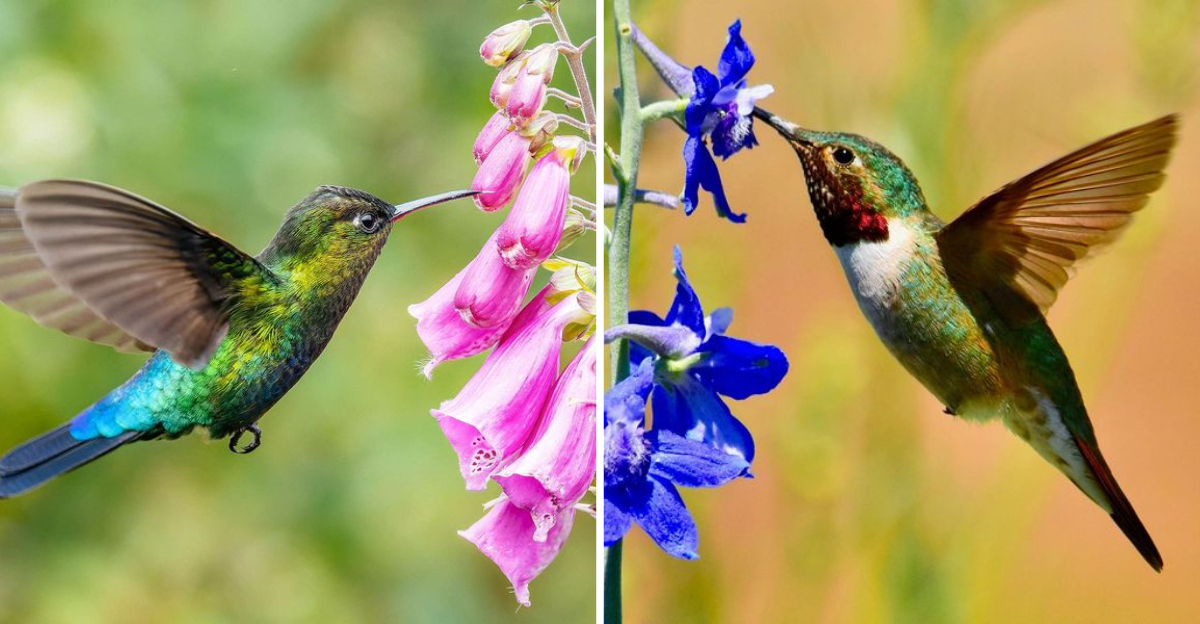
Discover the wonder of attracting hummingbirds to your garden with these 16 unique perennials. Each plant offers its own charm, ensuring your garden becomes a vibrant hub for these enchanting creatures. Create a lively, colorful space that not only pleases the eye but also provides essential nourishment for hummingbirds.
1. Delphinium
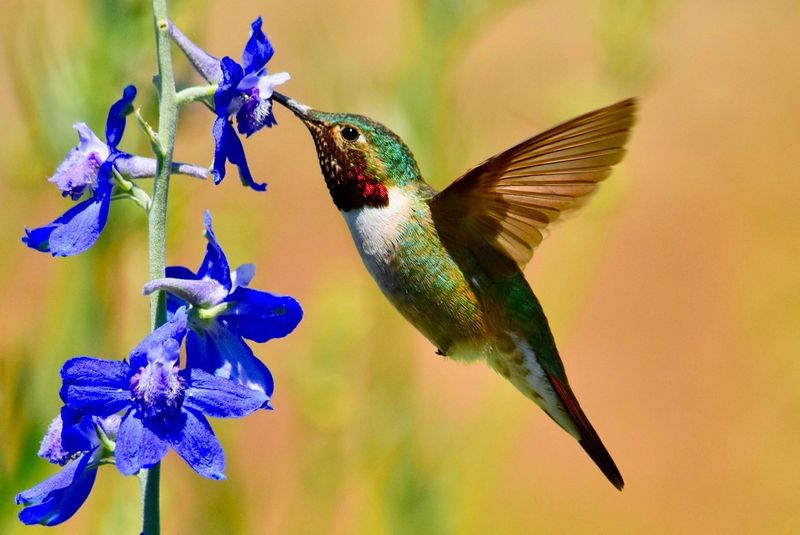
Known for its towering spikes of blue flowers, Delphinium is a majestic addition to any garden. Its vibrant blooms not only capture the eye but also attract hummingbirds with their rich nectar.
This perennial thrives in sunny locations, where it can reach impressive heights, making it a standout feature in flower beds. Its towering presence provides an excellent landing spot for hummingbirds, offering them both nectar and a perch.
Did you know? Delphiniums have been cultivated since ancient times for their striking appearance and are often used in traditional medicine.
2. Bee Balm
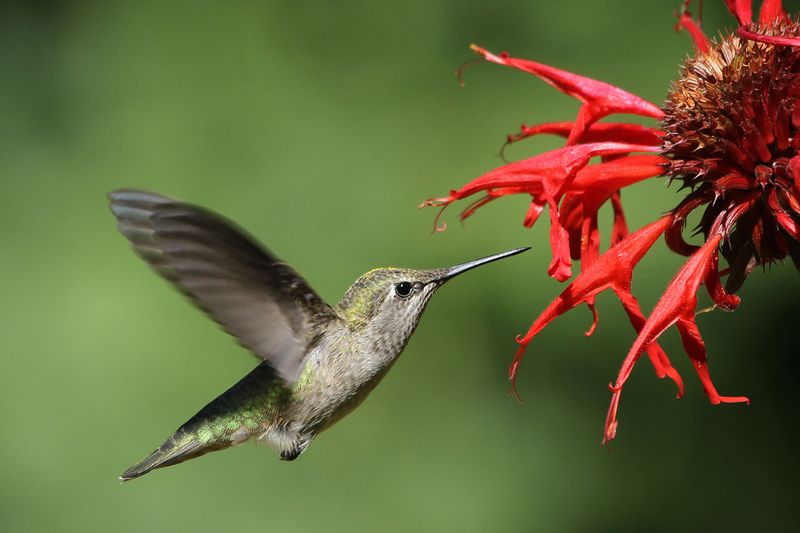
Bee Balm, with its fiery red blooms, is a magnet for hummingbirds. Its unique, tubular flowers are perfect for their long beaks, allowing easy access to the nectar within.
Not only does it attract hummingbirds, but Bee Balm is also a favorite among bees and butterflies, creating a buzzing garden ecosystem. Its aromatic leaves can be used to make a refreshing tea, adding to its appeal.
Historically, Bee Balm was used by Native Americans for its medicinal properties, known to help with colds and headaches.
3. Cardinal Flower
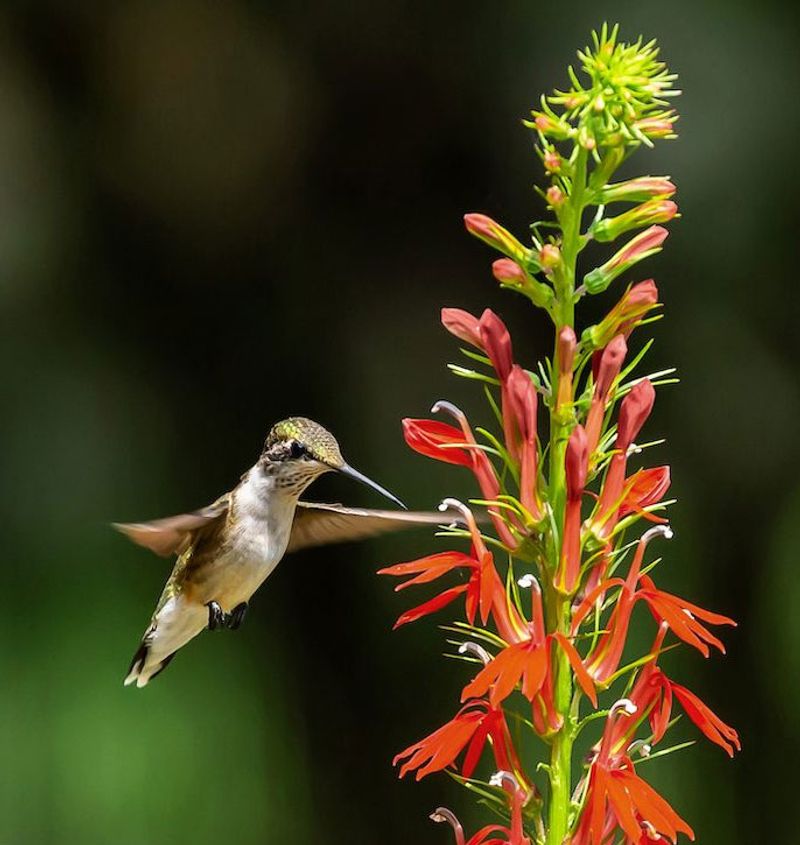
With its striking red color, the Cardinal Flower is hard to miss. Its tall spikes are covered in vibrant blossoms, making it a focal point in any garden.
This perennial prefers moist, shaded areas and is a favorite among hummingbirds due to its abundant nectar. Its vivid red hue is particularly attractive to these birds, who can spot the color from afar.
The Cardinal Flower is named after the red robes worn by Roman Catholic cardinals, a testament to its rich, deep color.
4. Columbine
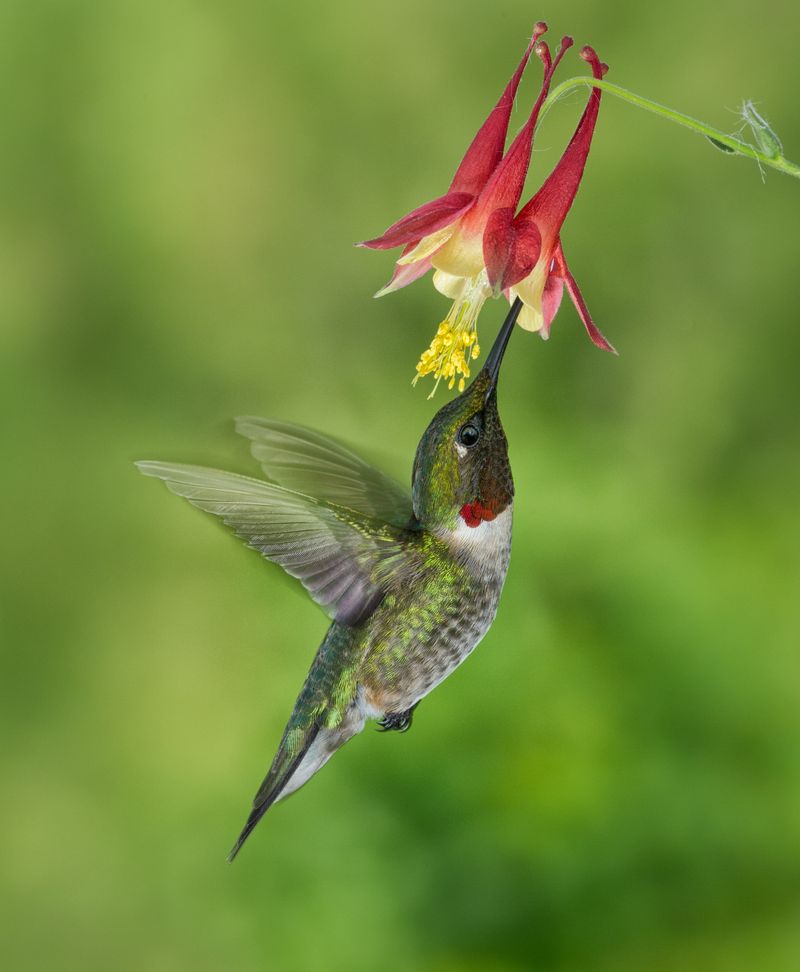
Columbines are known for their intricate, bell-shaped flowers that dangle gracefully from thin stems. Their unique structure makes them irresistible to hummingbirds.
These perennials thrive in well-drained soil and can handle partial shade, making them versatile garden additions. The flowers come in various colors, adding diversity to your garden.
A fun fact: Columbines are also referred to as “granny’s bonnet” due to their unique shape, which resembles an old-fashioned bonnet.
5. Foxglove
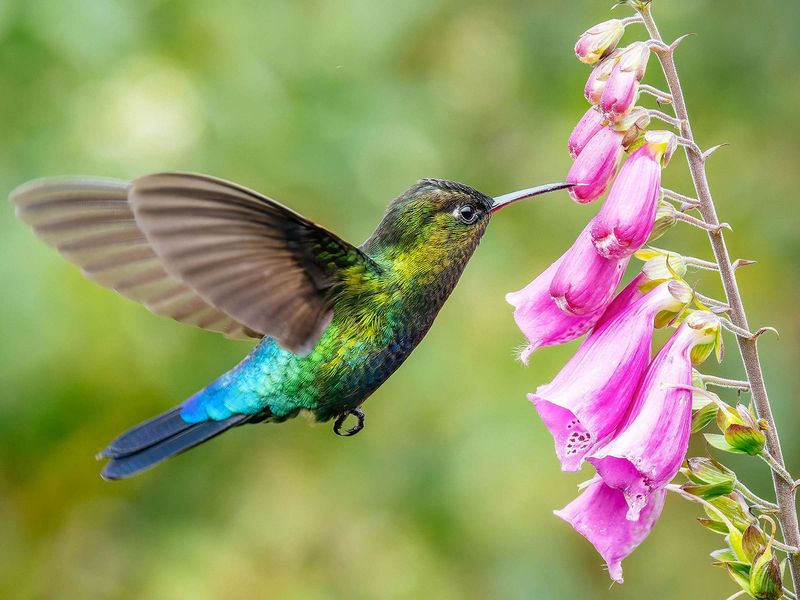
Foxglove, with its towering spikes of tubular flowers, is a natural attractant for hummingbirds. These flowers offer a deep reservoir of nectar, perfect for long-tongued feeders.
While they prefer full sun, foxgloves can tolerate partial shade, making them adaptable to different garden environments. Their tall spires add vertical interest and elegance to garden landscapes.
Be cautious, though: foxglove is highly toxic if ingested, a trait that has made it famous in literature and lore, often associated with witchcraft.
6. Penstemon
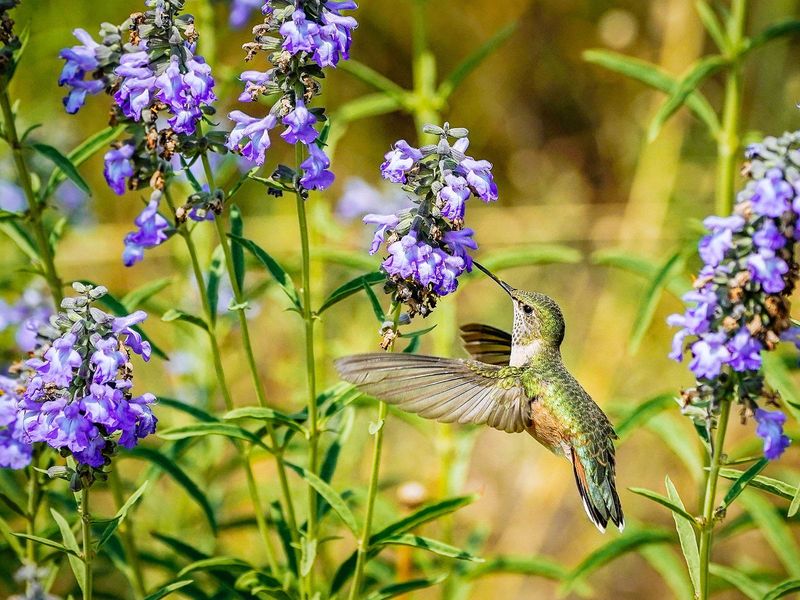
Penstemon, often known as “beardtongue,” boasts tubular flowers that come in a wide range of colors, perfect for attracting hummingbirds.
These perennials thrive in full sun and well-drained soil, making them ideal for rock gardens or xeriscaping. Their drought-tolerance makes them perfect for arid landscapes.
Interestingly, Penstemons are native to North America, and some species are adapted to high elevations, showcasing their versatility and resilience in various climates.
7. Salvia
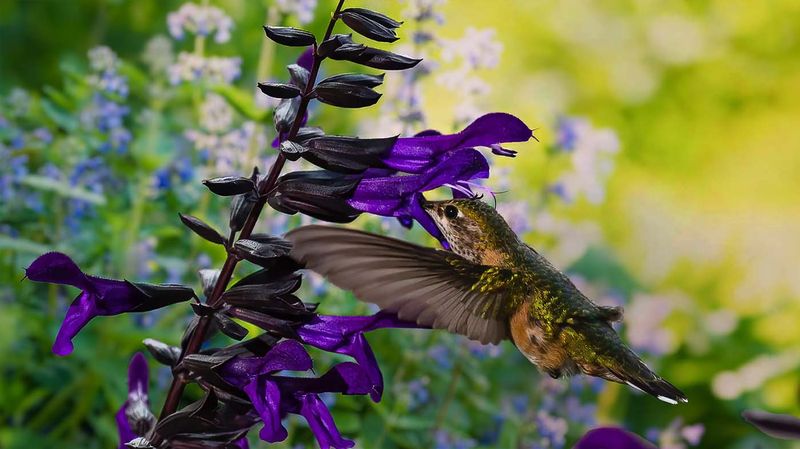
Salvias are a must-have for any hummingbird enthusiast. With their tall spikes of tubular flowers, they provide ample nectar.
These plants thrive in sunny locations and are drought-tolerant, making them easy to maintain in gardens. Salvia’s vibrant colors, ranging from deep purples to bright reds, add lively hues.
Did you know? Salvias belong to the mint family, and some varieties are even used in culinary dishes and teas for their aromatic leaves.
8. Lupine
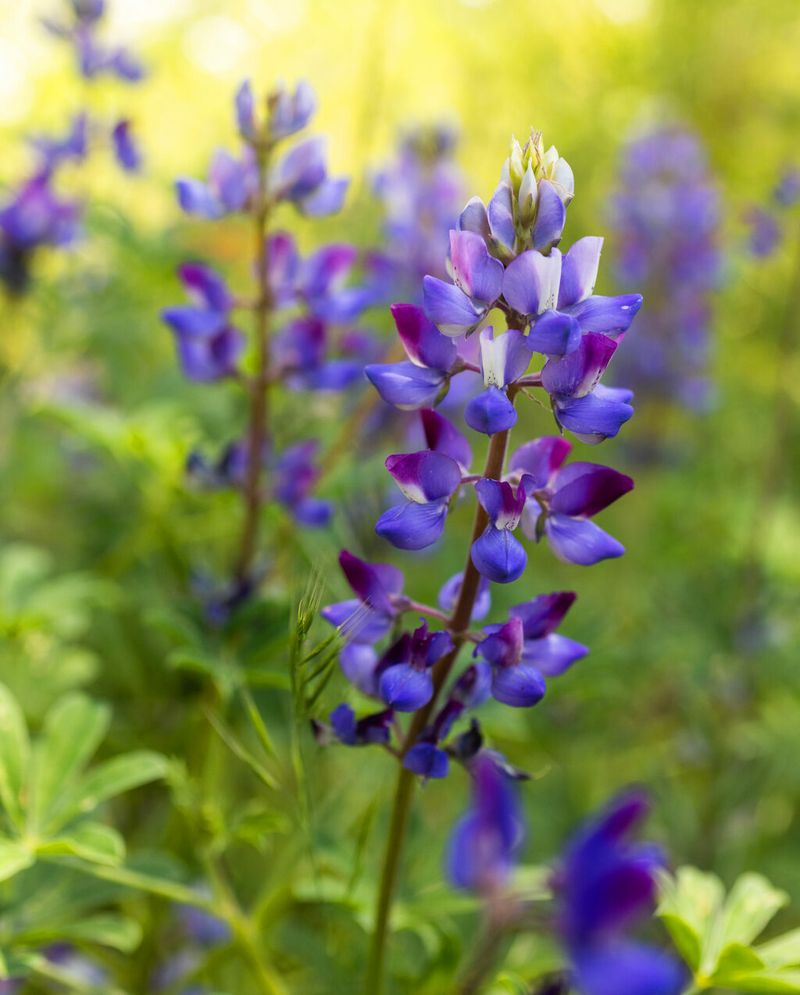
Lupine is not only a visual delight but also a favorite of hummingbirds. Its tall spikes of densely packed flowers offer a wealth of nectar.
These perennials are adaptable, thriving in sandy or rocky soils and prefer full sun to partial shade. Their vibrant blossoms range from blue and purple to pink and white.
Lupines have a symbiotic relationship with soil bacteria, allowing them to fix nitrogen and improve soil health, making them beneficial companions in the garden.
9. Red Hot Poker
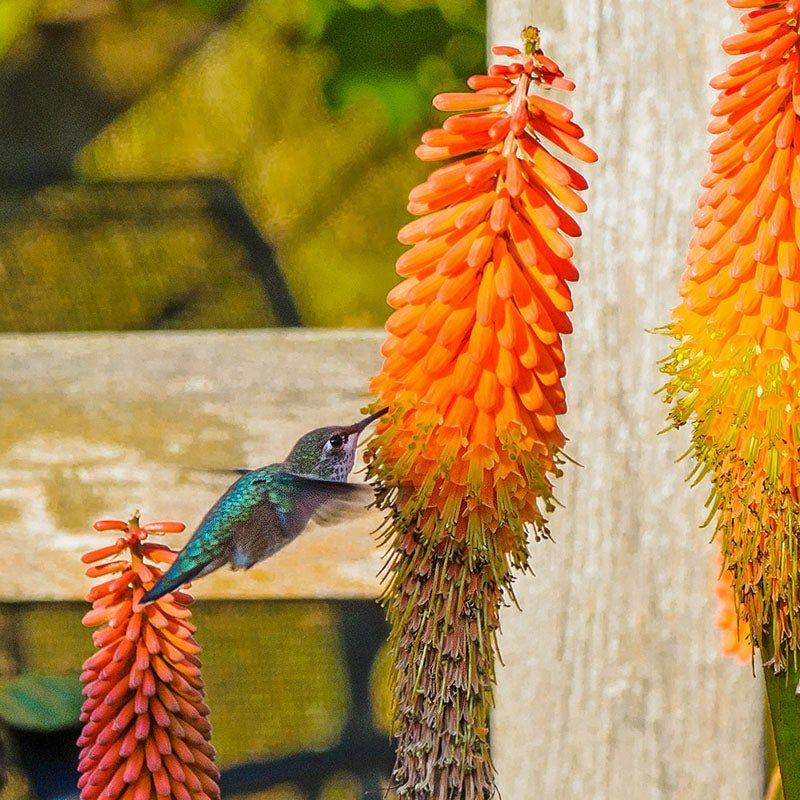
Red Hot Poker, aptly named for its fiery, torch-like blooms, is irresistible to hummingbirds. The tubular flowers come in shades of red, orange, and yellow, providing a vivid contrast against green foliage.
These perennials prefer sunny spots and are drought-tolerant, making them low-maintenance additions to gardens. Their unique shape and vibrant colors make them a visual spectacle.
Interestingly, Red Hot Pokers are native to South Africa, thriving in similar sun-drenched environments across the globe.
10. Trumpet Vine
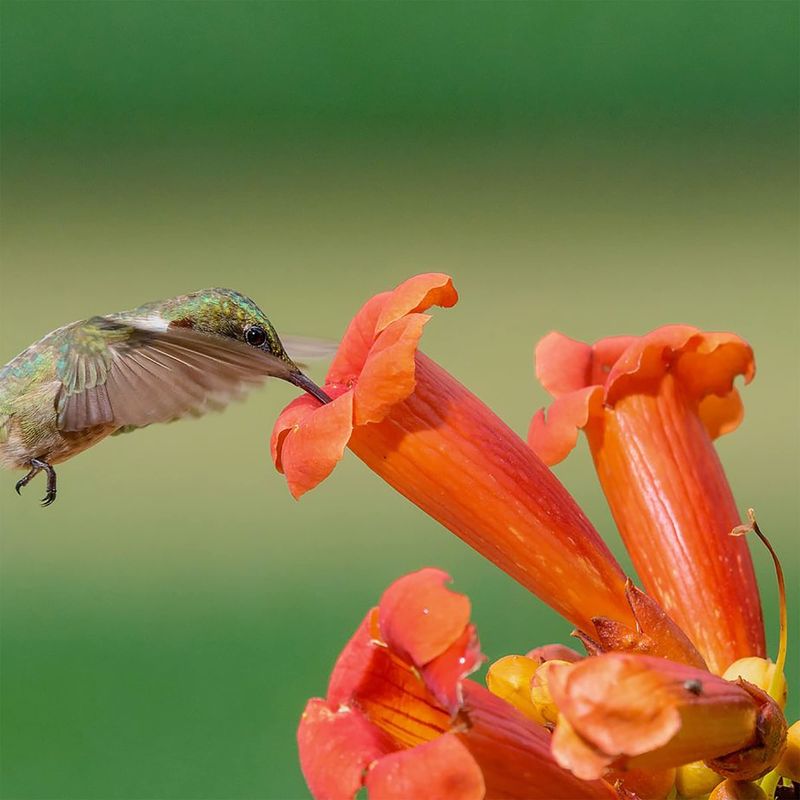
Trumpet Vine is a vigorous climber, known for its large, trumpet-shaped flowers that attract hummingbirds in droves. The vivid orange blooms stand out, creating a tropical feel.
This perennial thrives in sun or partial shade and can cover fences and trellises with ease, offering a lush backdrop for any garden. Its rapid growth rate makes it an excellent choice for quick coverage.
Caution is advised: Trumpet Vine can become invasive if not managed properly, though its beauty often outweighs this concern.
11. Coral Bells
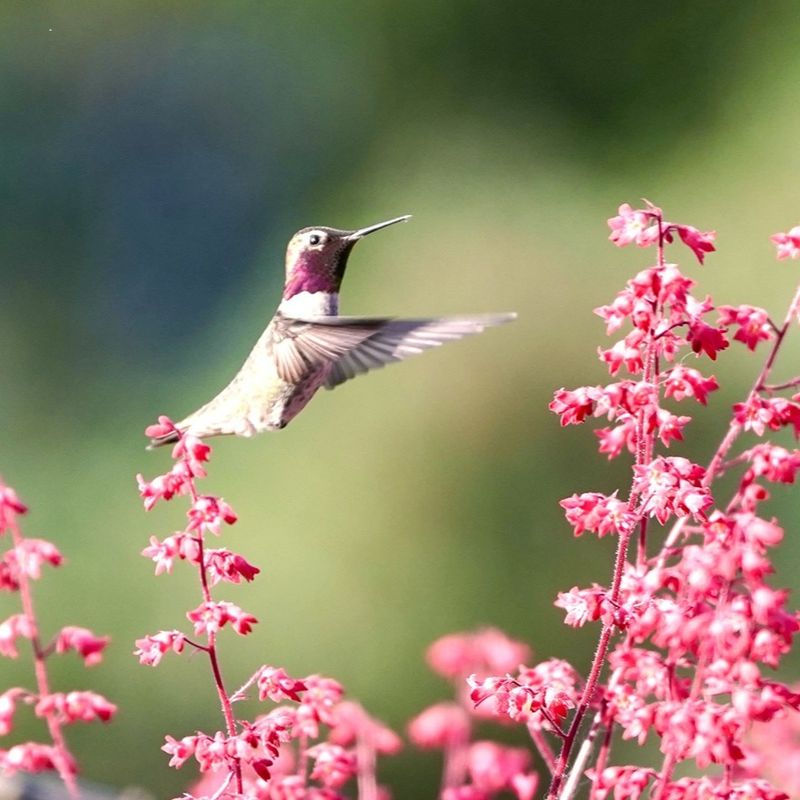
Coral Bells are beloved for their delicate, bell-shaped flowers that rise above mounds of attractive foliage. These blooms are a favorite of hummingbirds.
They thrive in partial shade, making them ideal for woodland gardens or shaded borders. The foliage comes in an array of colors, providing visual interest throughout the growing season.
A quirky fact: Coral Bells are named for their resemblance to the shape and color of coral found in the sea, adding a touch of oceanic charm to gardens.
12. Agastache
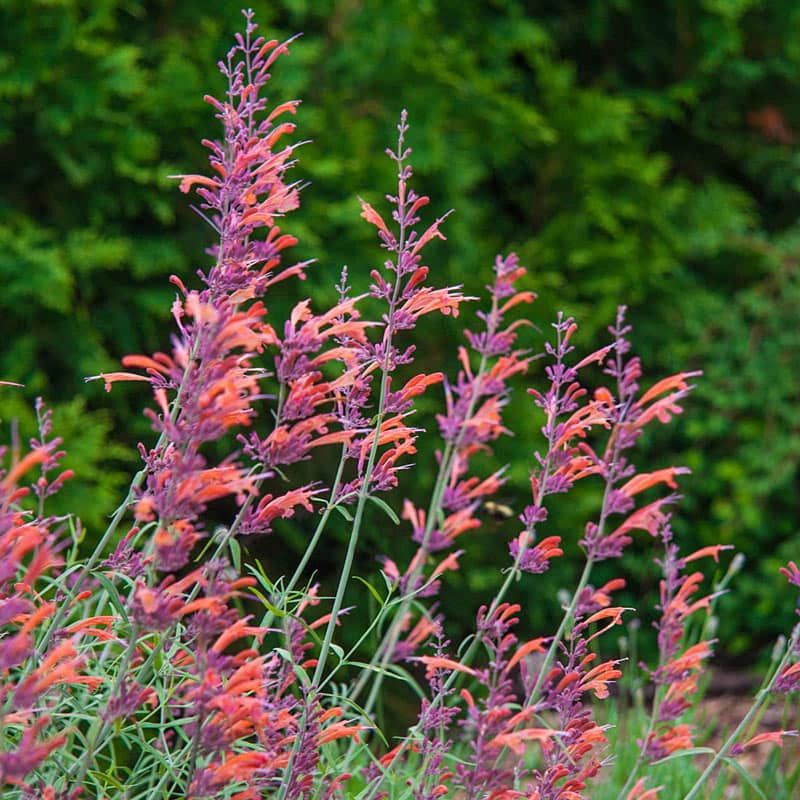
Agastache, or “Hummingbird Mint,” is known for its aromatic foliage and colorful spikes of tubular flowers. These blooms are a favorite for hummingbirds and bees alike.
These perennials prefer sunny locations and well-drained soil, thriving in dry conditions. Their fragrant leaves add an extra dimension to gardens, often used in teas and potpourris.
Interestingly, Agastache has a long history in herbal medicine, used for its soothing properties and pleasant aroma, enhancing any garden with its multipurpose appeal.
13. Fuchsia
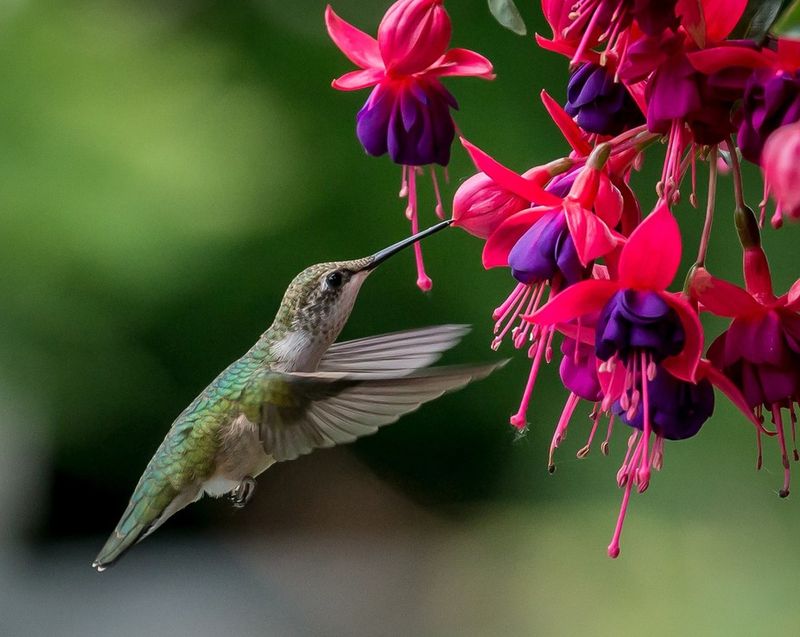
Fuchsias offer a cascade of color with their pendulous blooms. The pink and purple flowers attract hummingbirds, providing a feast of nectar.
Thriving in cool, shaded areas, Fuchsias add an elegant touch to gardens and patios, particularly when planted in hanging baskets. Their long flowering season ensures continuous interest.
Did you know? Fuchsias are named after 16th-century botanist Leonhart Fuchs, bringing a piece of botanical history into every garden they adorn.
14. Honeysuckle
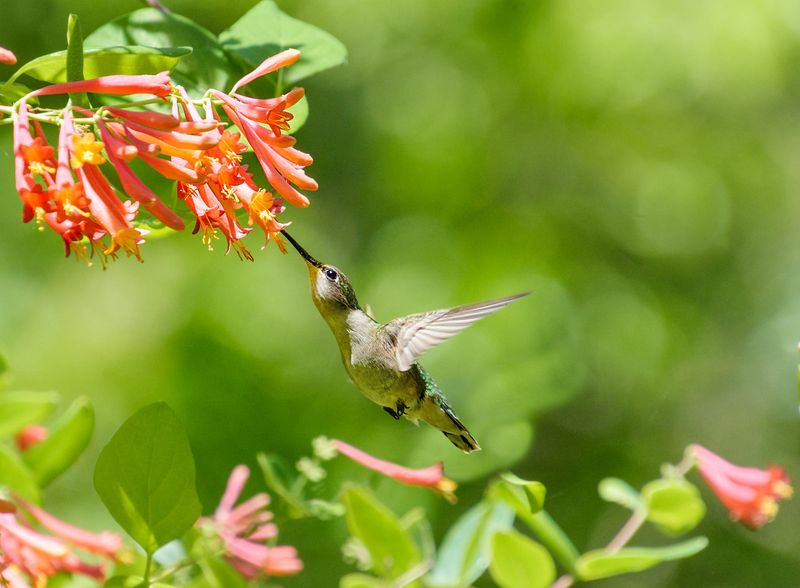
Honeysuckle vines are cherished for their sweet fragrance and tubular blooms, perfect for hummingbirds. The flowers come in a variety of colors, including red, yellow, and white.
These vigorous climbers thrive in sun to part shade, easily covering arbors and trellises with their lush foliage. Their intoxicating scent adds a sensory experience to gardens.
Fun fact: Honeysuckle has been a symbol of love and devotion in many cultures, often featured in literature and art for its romantic connotations.
15. Daylily
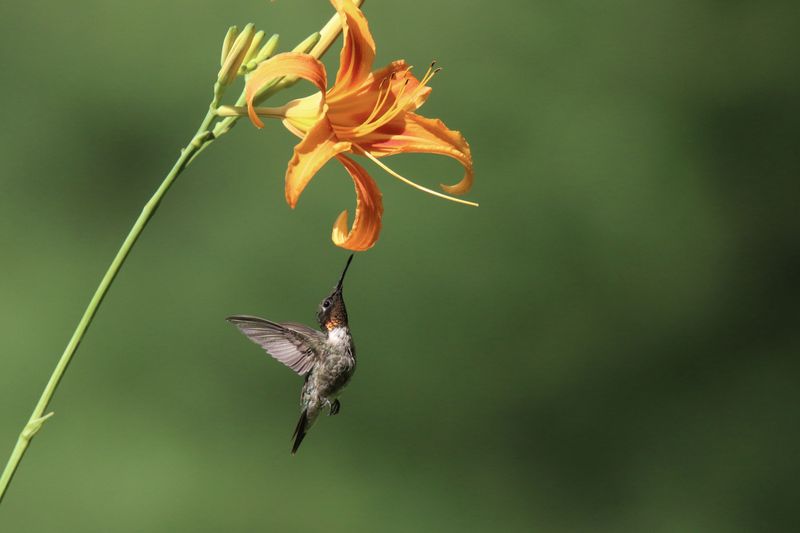
Daylilies, with their bright, trumpet-shaped flowers, are not only beautiful but also popular among hummingbirds. Each bloom lasts just one day, but the plants produce a continuous succession of flowers.
These perennials are hardy and adaptable, thriving in various soil types and light conditions. Their diverse color palette allows for creative garden designs.
Did you know? Despite their name, daylilies are not true lilies but belong to a different plant family, offering unique beauty and resilience to any garden.
16. Heliotrope
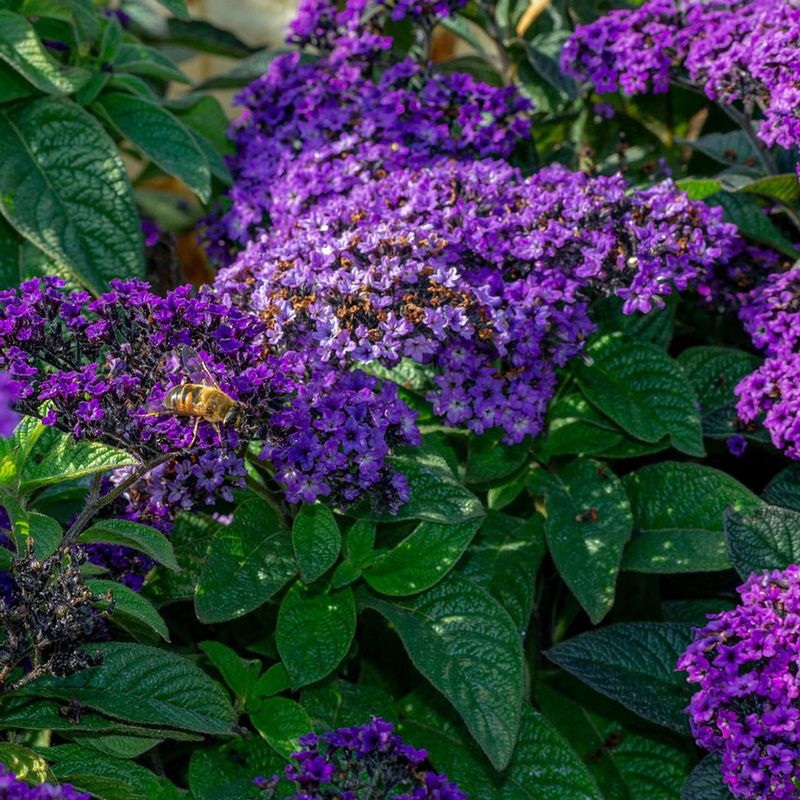
Heliotrope is known for its sweetly-scented clusters of purple flowers. Its fragrance and nectar-rich blooms attract hummingbirds and butterflies.
These perennials thrive in full sun and well-drained soil, making them a charming addition to sunny borders or containers. The deep purple hues add a touch of elegance.
Historically, heliotropes were associated with devotion and eternal love, often used in wedding bouquets and romantic gardens.