 Complete Gardening
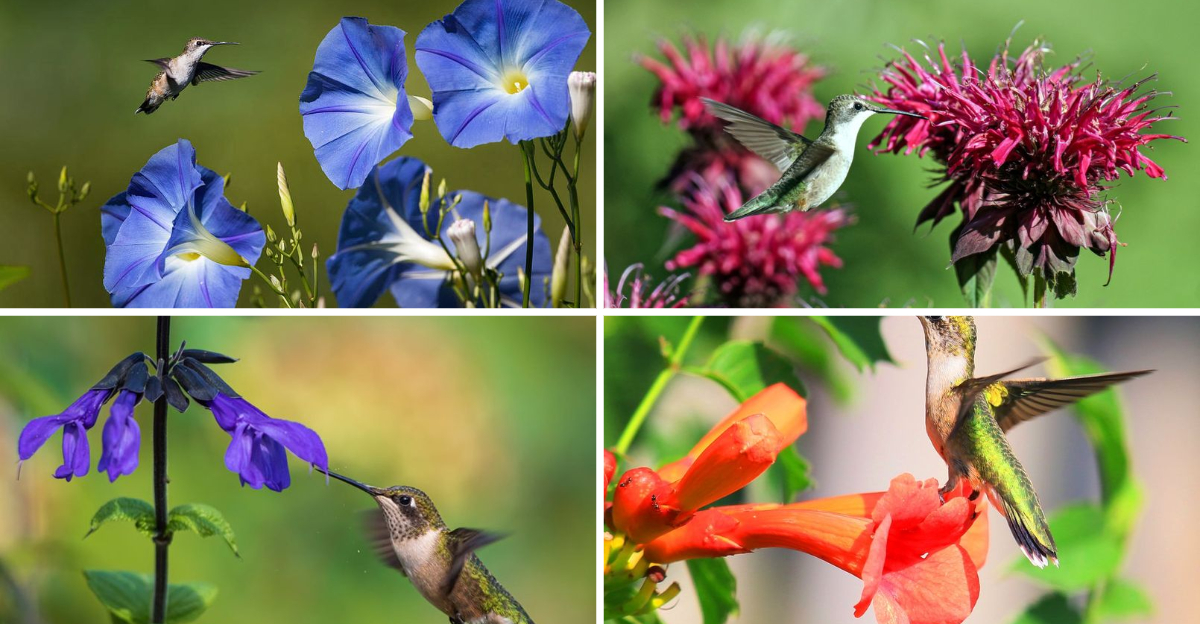
Hummingbirds are known for their incredible energy and grace, captivating bird enthusiasts and casual observers alike. While sugar water is a common go-to for feeding these tiny wonders, nature provides an array of delicious alternatives that are both healthier and more diverse. In this blog post, we delve into 17 natural foods that hummingbirds love even more than sugar water. From vibrant flowers to juicy fruits, these options not only cater to the birds’ dietary needs but also promote a flourishing garden ecosystem. Explore these delightful alternatives and transform your backyard into a hummingbird haven.
1. Hibiscus Flowers
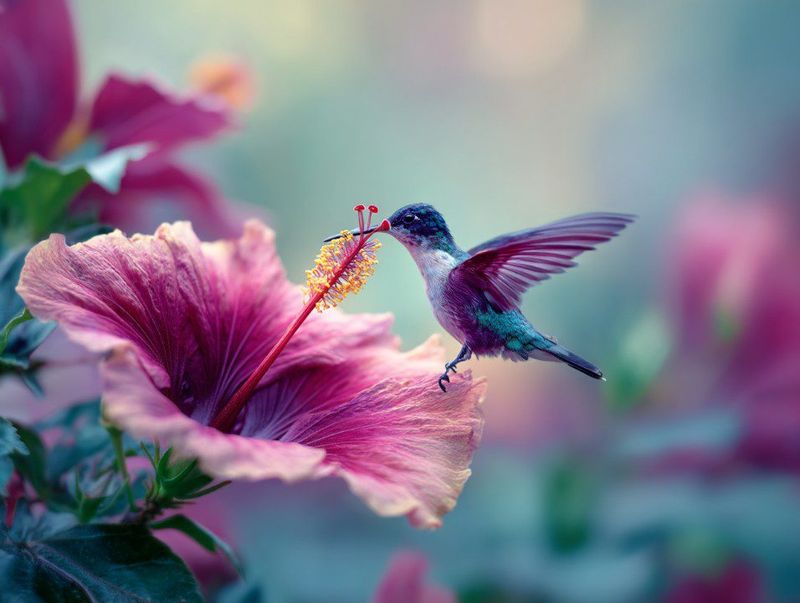
The hibiscus flower, with its radiant colors and exotic appeal, is a favorite among hummingbirds. Its large, trumpet-shaped blooms are not only captivating but also rich in nectar. These flowers provide an abundant and natural food source, ensuring that hummingbirds receive the energy they need to sustain their high metabolism. Planting hibiscus in your garden creates a tropical ambiance, attracting these avian jewels throughout the blooming season. Did you know? Hibiscus also symbolizes delicate beauty, mirroring the grace of hummingbirds themselves.
2. Trumpet Vine
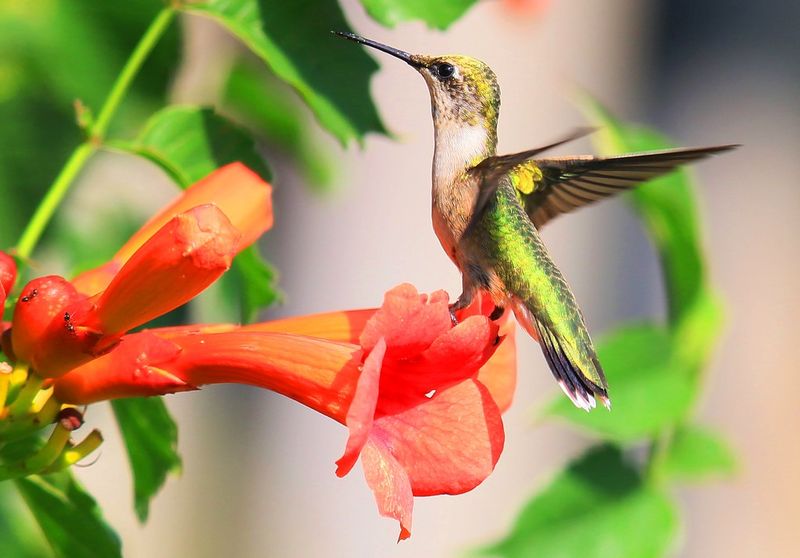
Trumpet vines are a magnet for hummingbirds, thanks to their tubular, nectar-rich flowers. These vibrant, fast-growing vines can transform any garden into a hummingbird paradise. The flowers’ shape perfectly accommodates a hummingbird’s long bill, making feeding a breeze. Aside from their appeal to birds, trumpet vines add vertical interest and a burst of color to landscapes. Known for their resilience, they thrive in various climates, making them a versatile addition to gardens. Fun fact: Trumpet vines can grow up to 40 feet, providing ample feeding ground.
3. Bee Balm
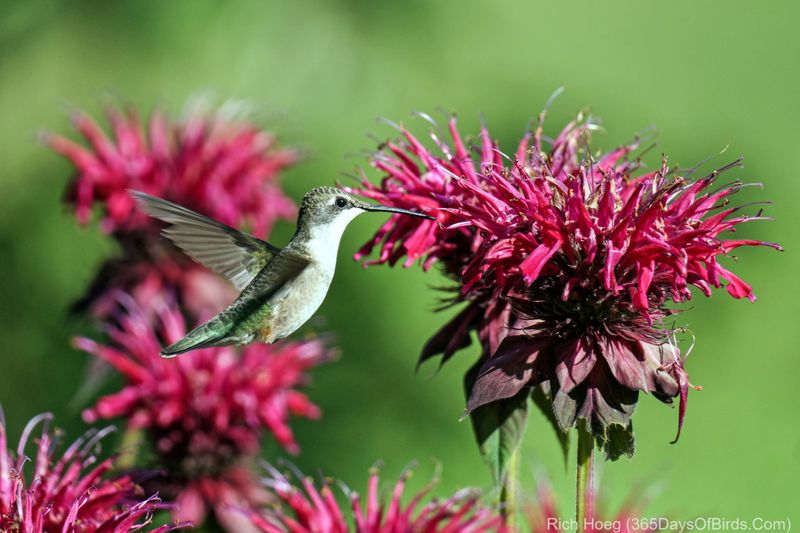
Bee balm, with its striking, spiky blooms, is a surefire way to attract hummingbirds to your garden. These flowers are rich in nectar and bloom throughout the summer, providing a consistent food source. The unique shape and vivid colors of bee balm make it an eye-catching addition to any garden. Besides feeding hummingbirds, bee balm is also known for its aromatic leaves, which can be used in teas. Historically, bee balm was used by Native Americans for its medicinal properties, adding a touch of history to your planting choices.
4. Salvia
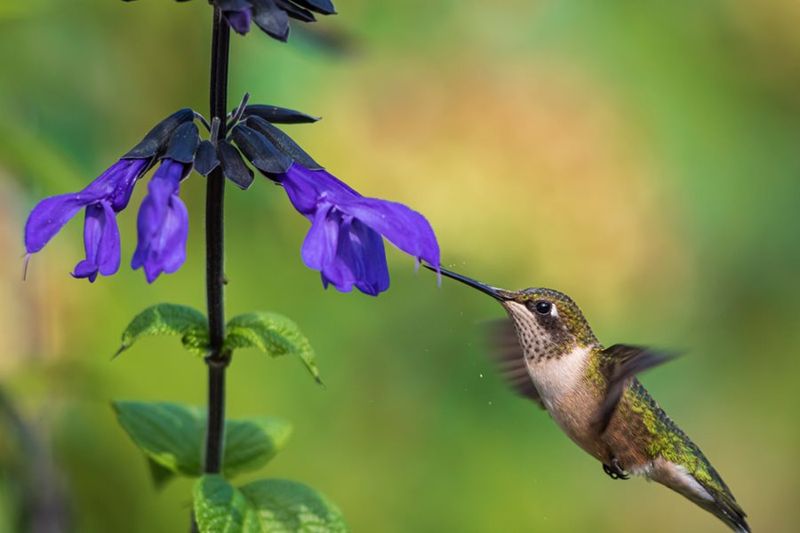
Salvia plants, part of the sage family, offer a delightful feeding experience for hummingbirds. Their elongated blooms are packed with nectar, and their vibrant colors range from blues to purples. Salvia is drought-resistant and easy to grow, making it a practical choice for gardeners. The continual blooms throughout the season ensure that hummingbirds have a reliable food source. Interesting tidbit: Salvia flowers are often associated with wisdom and longevity, qualities that resonate with the enduring flight patterns of hummingbirds.
5. Morning Glory
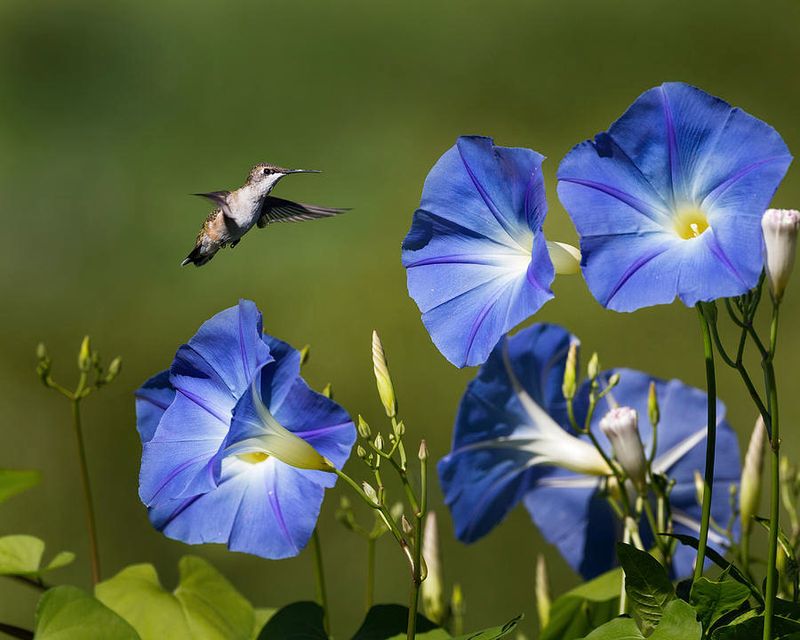
Morning glories bring a touch of elegance to any garden. Their delicate blooms open with the sunrise, offering fresh nectar to early-rising hummingbirds. The vines’ ability to climb quickly makes them perfect for covering fences or trellises, creating natural feeding stations. Morning glories thrive in sunny locations and are available in various colors, from deep purples to soft blues and pinks. Did you know? Morning glories have been used in traditional medicine and are often seen as symbols of affection and love.
6. Columbine
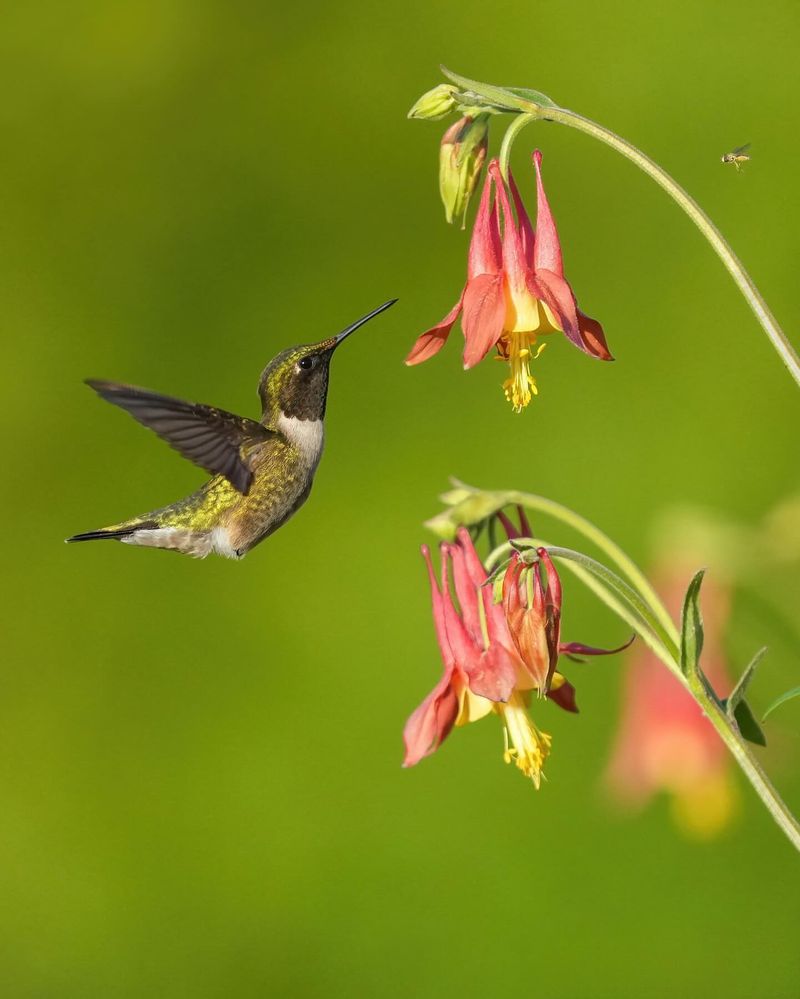
Columbine flowers, with their unique spurred petals, are not only visually stunning but also a favorite of hummingbirds. These perennials offer a rich supply of nectar and bloom in a variety of colors. Columbine’s delicate, nodding blooms bring charm to any garden setting, particularly in shaded areas. The flowers’ design allows easy access for hummingbirds, making them ideal for feeding. Fun fact: Columbines are often associated with courage and endurance, traits that hummingbirds certainly embody in their daily journeys.
7. Fuchsia
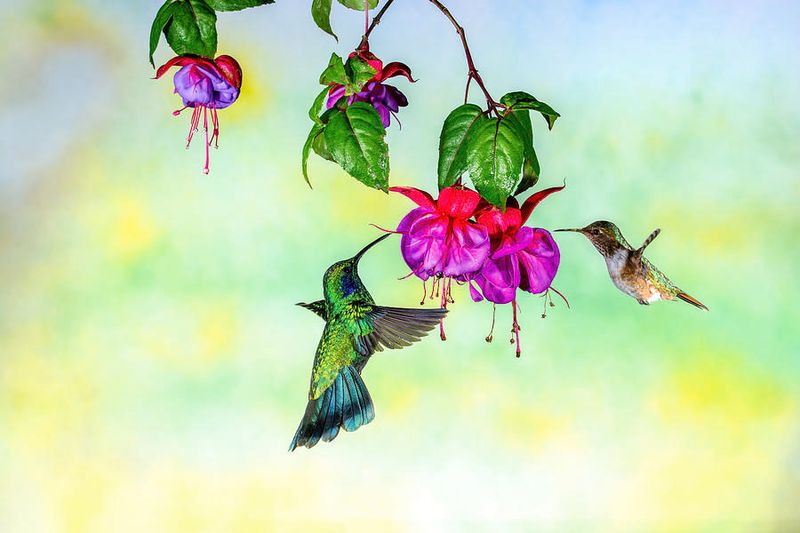
Fuchsia flowers, with their pendant-shaped blooms, create a visual spectacle that hummingbirds find irresistible. These shade-loving plants produce an abundance of nectar, perfect for feeding hungry hummingbirds. Fuchsia’s cascading blossoms enhance any garden or patio, adding a splash of color in hanging baskets or containers. The playful dance of hummingbirds among the fuchsia blooms adds dynamic charm to outdoor spaces. Interesting note: The resilient nature of fuchsias makes them suitable for a variety of climates, ensuring lasting beauty.
8. Cardinal Flower
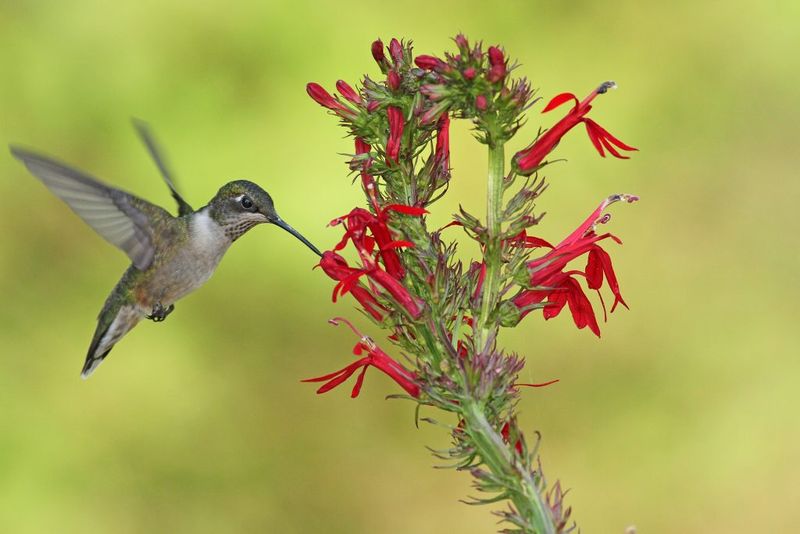
Cardinal flowers, with their bold red spikes, are a dramatic addition to any garden. Their striking color is especially attractive to hummingbirds, who are drawn to red hues. These moisture-loving plants thrive in wet areas, making them perfect for water features or pond edges. The towering blooms of cardinal flowers create a stunning visual that complements the vibrant energy of hummingbirds as they feed. Fun fact: The cardinal flower is named after the red robes worn by Roman Catholic cardinals, reflecting its vivid appearance.
9. Red Hot Poker
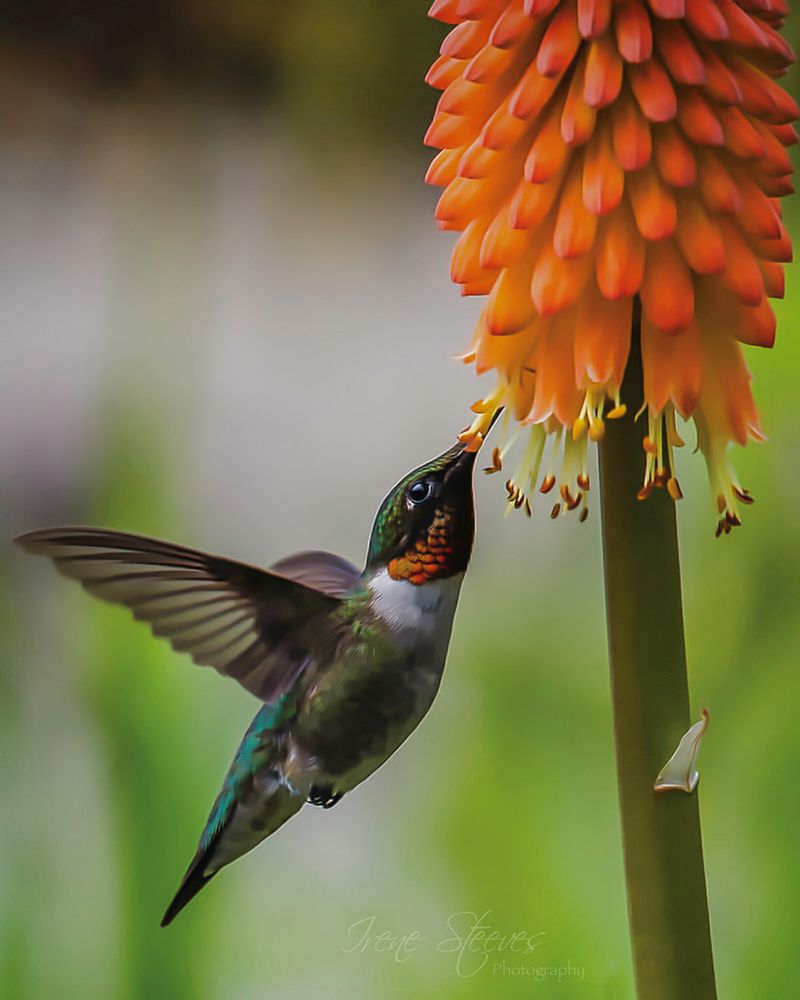
Red hot pokers, or torch lilies, with their fiery, spike-like blooms, add a bold statement to gardens while providing nectar for hummingbirds. These flowers can withstand heat, making them ideal for sunny, dry locations. Their vibrant colors create a striking contrast against lush greens, drawing both birds and human admirers alike. The architectural structure of red hot pokers adds height and interest to flowerbeds. Did you know? The unique appearance of these flowers has earned them the nickname “torch lilies,” due to their resemblance to burning torches.
10. Petunias
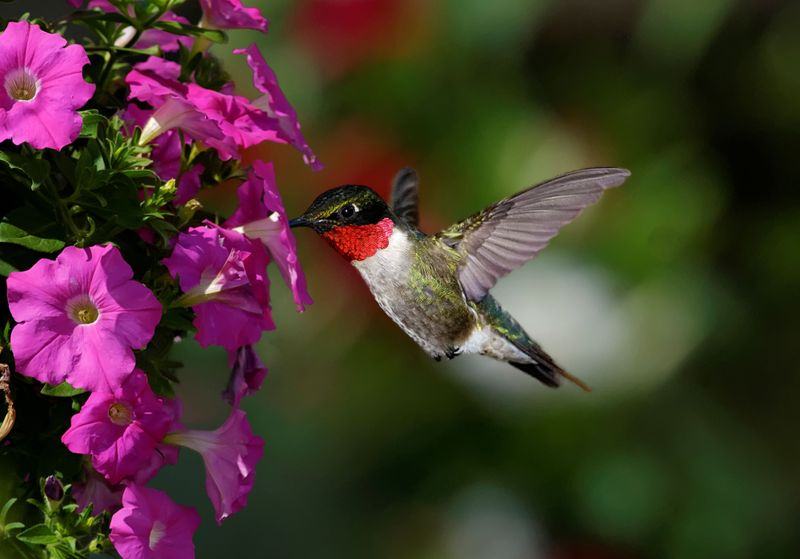
Petunias, with their wide array of colors and abundant blooms, are a staple in many gardens. These annuals offer a reliable source of nectar for hummingbirds and are easy to grow in containers or flower beds. The cheerful appearance of petunias brightens any outdoor space and encourages frequent visits from hummingbirds. Petunias can thrive in both sun and partial shade, making them a versatile choice for gardeners. Fun fact: Petunias are related to potatoes and tomatoes, belonging to the same family, Solanaceae.
11. Lantana
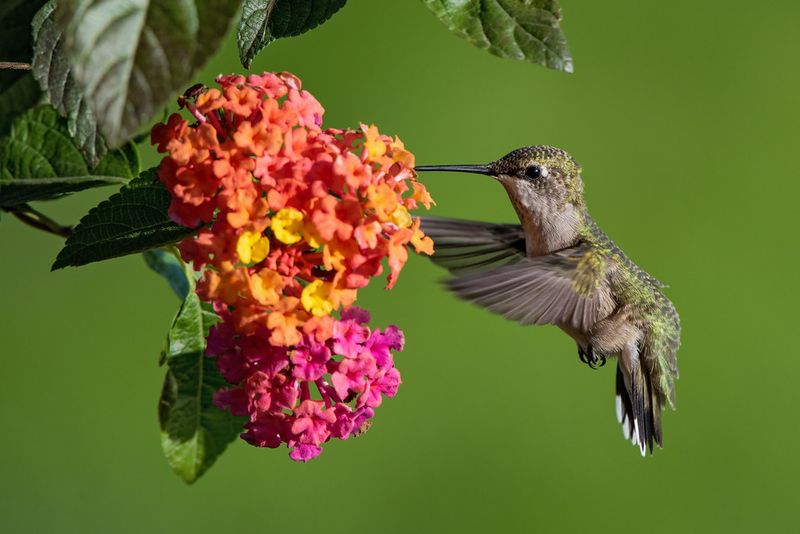
Lantanas are known for their vibrant, multi-colored blooms, which are highly attractive to hummingbirds. These hardy plants thrive in sunny locations and can withstand drought, making them an excellent choice for low-maintenance gardens. Lantanas’ continuous blooming ensures hummingbirds have a steady food source through the summer months. The vibrant blend of colors in lantana flowers adds a festive touch to landscapes. Did you know? Lantanas are often used in traditional medicine for their various healing properties, showcasing their versatility beyond garden aesthetics.
12. Butterfly Bush
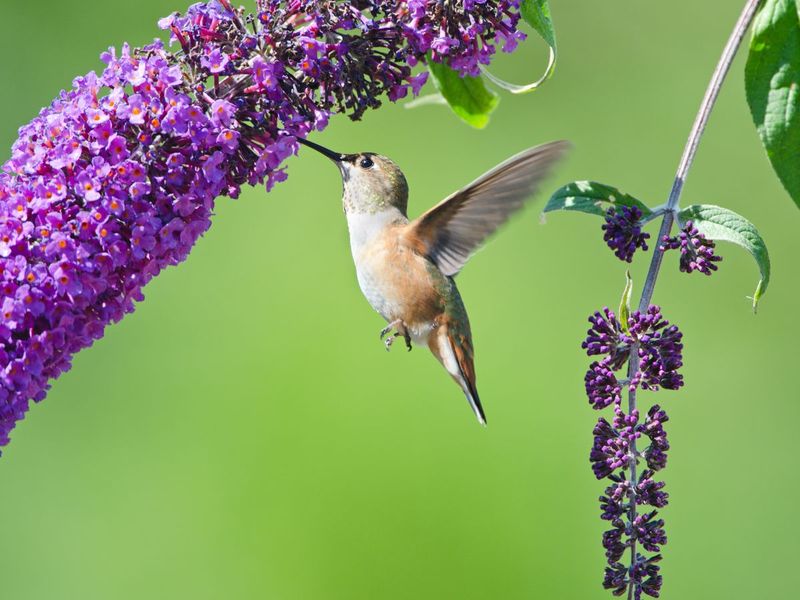
The butterfly bush, with its elongated flower spikes and sweet fragrance, is a magnet for not only butterflies but also hummingbirds. These fast-growing shrubs produce nectar-rich blooms throughout the summer, providing a reliable food source. The bush’s name reflects its ability to attract a wide variety of pollinators, making it a valuable addition to biodiversity-focused gardens. Besides its appeal to wildlife, the butterfly bush’s fragrant flowers add sensory delight to any garden. Fun fact: Despite its name, the butterfly bush is not related to true butterflies.
13. Agastache
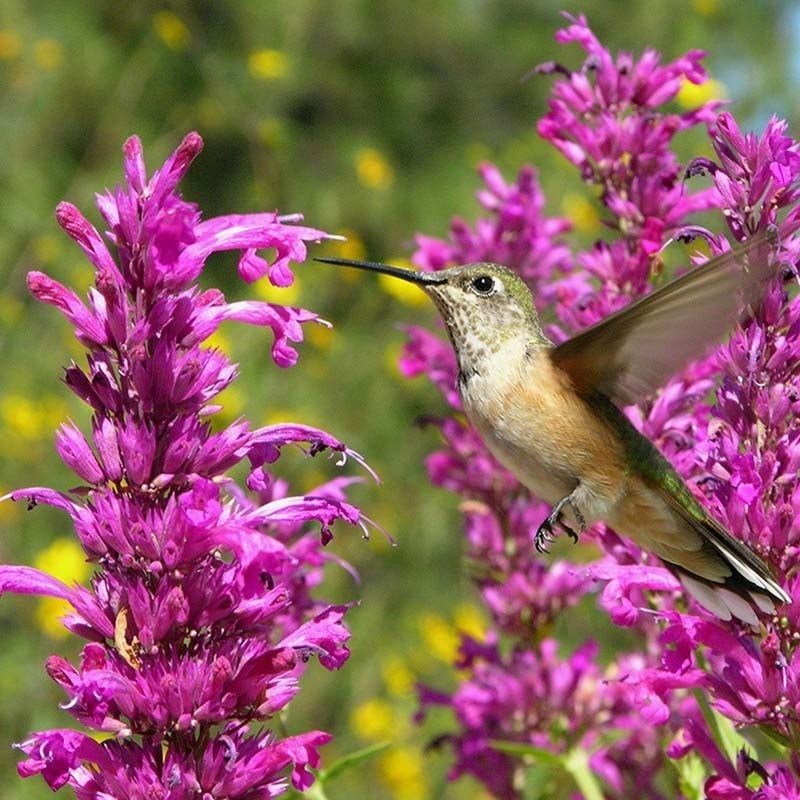
Agastache, also known as hummingbird mint or hyssop, offers aromatic blooms that draw hummingbirds in droves. These long-blooming perennials are drought-tolerant and available in a variety of colors, including pinks, oranges, and purples. Agastache plants add fragrance and color to gardens, making them a favorite among gardeners and birds alike. Their resilience in dry conditions makes them a practical choice for water-wise landscapes. Did you know? Agastache is part of the mint family and can also be used in culinary applications, adding flavor to dishes.
14. Zinnias
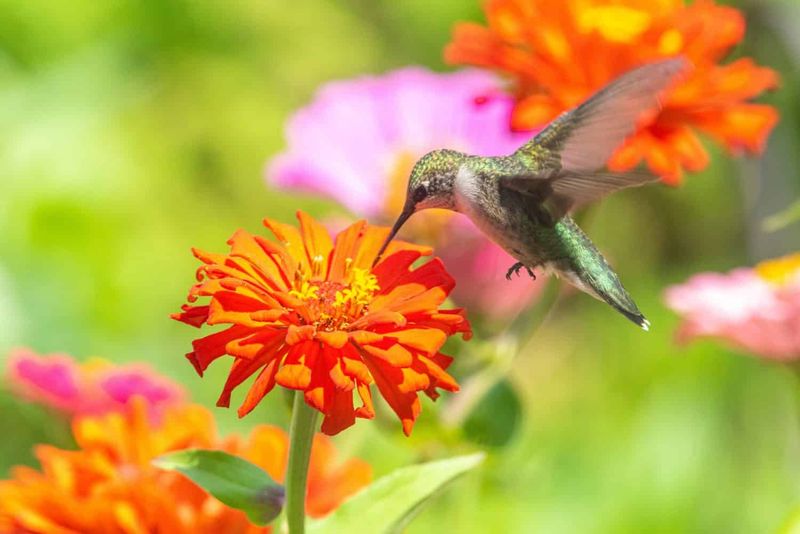
Zinnias, with their bold colors and easy growth, are a garden favorite for attracting hummingbirds. These annuals thrive in sunny spots and bloom prolifically throughout the summer, offering a constant food source. The vibrant petals of zinnias are not only appealing to birds but also to gardeners seeking a splash of color. Zinnias’ robustness makes them ideal for cut flowers, bringing their beauty indoors. Fun fact: Zinnias are native to Mexico and are named after the German botanist Johann Gottfried Zinn.
15. Cigar Plant
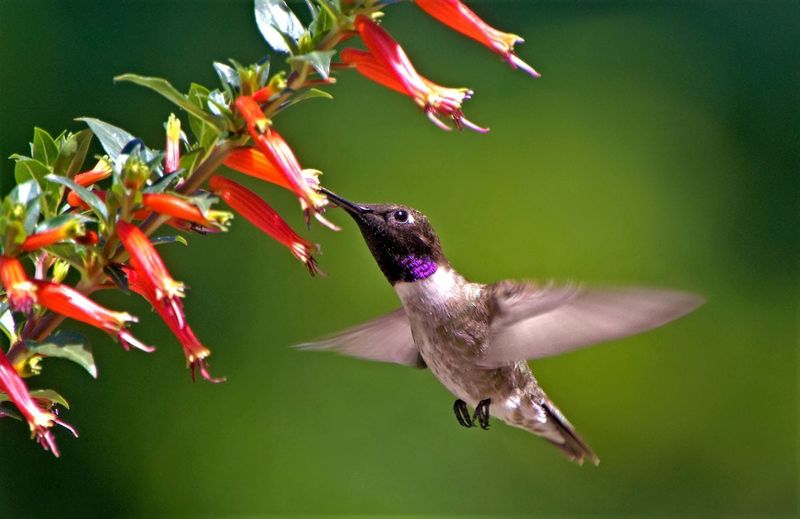
The cigar plant, with its tubular orange flowers, resembles small cigars, hence its name. This unique plant is a hummingbird magnet, offering nectar-rich blooms that these birds can’t resist. Cigar plants can be grown in containers or garden beds, thriving in sunny locations. Their compact size and vibrant blooms make them a charming addition to patios or balconies. Did you know? The cigar plant is also known as “firecracker plant” due to its explosive color and shape, adding a festive touch to any garden setting.
16. Honeysuckle
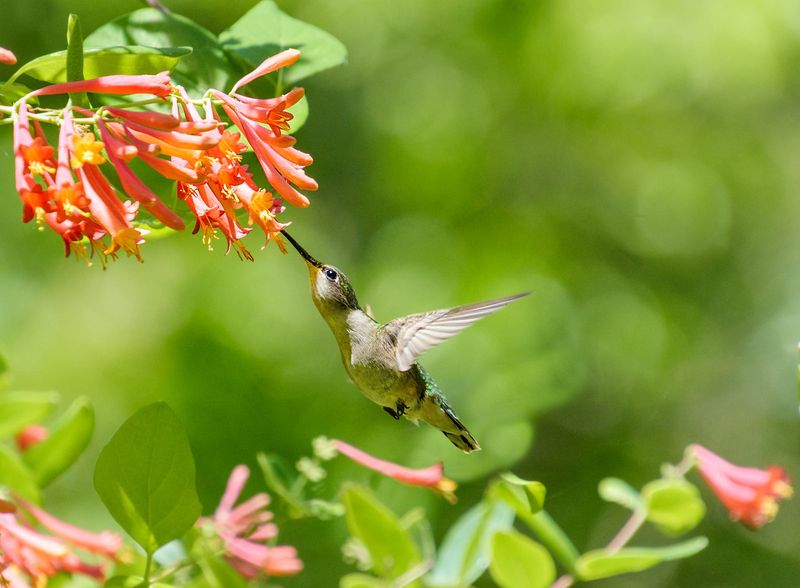
Honeysuckle vines, with their sweet fragrance and tubular flowers, are irresistible to hummingbirds. These vines can cover fences or trellises, creating natural feeding stations that birds frequent. Honeysuckle blooms from spring through summer, providing a long-lasting source of nectar. The delightful scent of honeysuckle enhances garden enjoyment for both humans and birds. Interesting tidbit: Honeysuckle is often associated with affection and devoted love, reflecting the bond between these flowers and hummingbirds.
17. Weigela
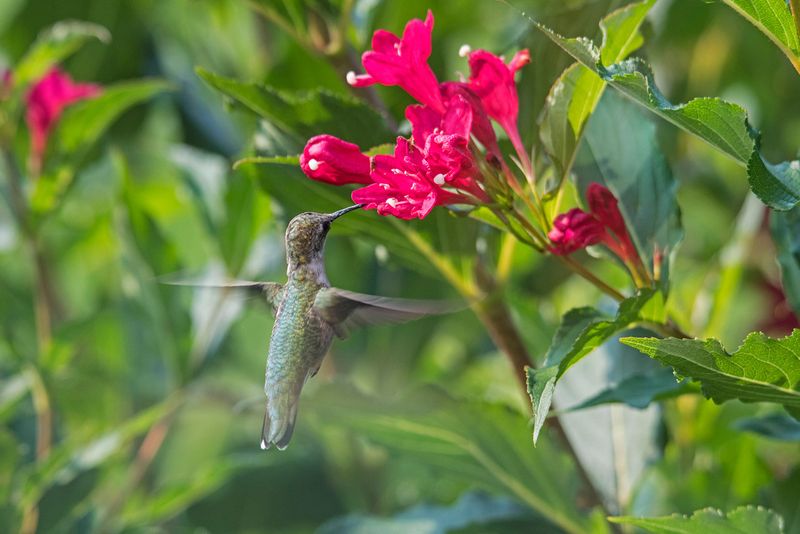
Weigela shrubs, with their trumpet-shaped blooms, are a springtime delight for hummingbirds. These deciduous shrubs produce a profusion of flowers that provide ample nectar. Weigela’s colorful blooms are not only attractive to birds but also add visual interest to gardens. The shrubs’ arching branches create a natural perch for hummingbirds, enhancing their appeal. Fun fact: Weigela is named after the German scientist Christian Ehrenfried Weigel, honoring his contributions to botany and horticulture.