Complete Gardening
Winter composting may seem impossible when the ground is frozen and temperatures plummet, but with a little creativity, you can keep your compost pile active even in the coldest months. The key lies in trapping heat, maintaining microbial activity, and using materials that continue to break down despite freezing weather. Here are 10 bizarre but effective tricks that can help you turn winter waste into rich, ready-to-use compost by spring.
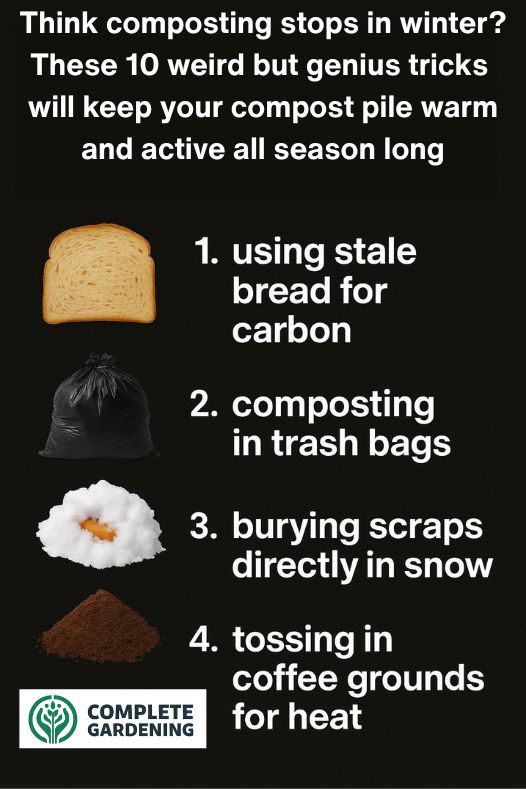
1. Old Bread as a Carbon Source
Running short on dry leaves or straw in winter? Stale bread can replace traditional carbon materials. Tear old bread into small pieces and mix it evenly with nitrogen-rich scraps like coffee grounds or vegetable peels. Aim for one part bread to two parts greens. Bread balances your compost’s carbon-nitrogen ratio while preventing mold and odors when mixed thoroughly.
2. Composting in Trash Bags
If outdoor piles are frozen solid, try trash bag composting. Fill a heavy-duty black trash bag with a balanced mix of greens and browns, add a splash of water, and poke small holes for air circulation. Place the bag in a sunny spot—the black plastic absorbs sunlight and warms the contents. This creates a mini composting environment that works even in subzero weather.
3. Burying Scraps in Snow
It sounds strange, but burying food scraps in snow actually helps them decompose. Snow acts as an insulator, keeping the soil beneath at a relatively stable temperature. Dig a 12-inch hole in the snow, drop in your kitchen scraps, and cover it back up. As the snow melts and refreezes, it slowly breaks down the materials, enriching the soil underneath by spring.
4. Coffee Grounds for Natural Heat
Coffee grounds do more than boost your morning—they also boost your compost’s temperature. Rich in nitrogen, they fuel microbial activity that generates heat. Sprinkle a thin layer of coffee grounds over your pile weekly to stimulate decomposition. As a bonus, coffee grounds improve aeration and help control odors.
5. Straw Bales for Insulation
Surround your compost pile with straw bales to keep it warm. The straw acts as a natural insulator, trapping the microbial heat produced within the pile. Stack the bales around your bin and leave a little space at the top for ventilation. You can also cover the pile loosely with a tarp to shield it from excess rain or snow.
6. Hot Water Bottles for Quick Warmth
On extremely cold nights, place a few hot water bottles deep inside your compost pile. The warmth helps prevent freezing and keeps bacteria active. Replace the bottles every couple of days to maintain consistent heat levels, especially when nighttime temperatures drop dramatically.
7. Indoor Worm Bin in Your Basement
If outdoor composting is too tough, move indoors with a worm bin. Red wigglers thrive at temperatures between 55–77°F, which makes your basement the perfect home for them. Use a ventilated bin filled with damp shredded newspaper, add your food scraps, and let the worms do their magic. You’ll get rich worm castings all winter long—ideal for spring planting.
8. Use a Compost Tumbler
A compost tumbler makes aerating easy, even in freezing conditions. Turn it once a week to mix materials and distribute heat evenly. Place it in a sunny location to capture warmth during the day. Regular turning keeps oxygen flowing, which prevents the pile from going dormant.
9. Black Plastic for Solar Heat
Cover your compost with black plastic to absorb and trap solar energy. This simple trick keeps the pile warmer and reduces heat loss from wind exposure. Secure the edges with rocks or stakes so it doesn’t blow away. It also keeps snow and excess rain off, maintaining ideal moisture levels.
10. Build a Mini Greenhouse Over the Pile
Turn your compost bin into a mini greenhouse. Construct a simple frame with PVC pipes or wooden stakes and cover it with clear plastic sheeting. This traps heat and moisture, creating a microclimate perfect for composting. Make sure to add small vents or holes for air circulation to prevent mold and overheating.
Bonus Tip: Add Animal Manure for Heat
For an extra heat boost, mix in animal manure from herbivores like cows, horses, or chickens. It’s rich in nitrogen and generates warmth as it decomposes. Combine one part manure with two parts carbon materials like straw or shredded leaves. The result is a hot, active compost pile that continues breaking down materials all winter long.
Conclusion: Compost All Year Long
With these unconventional methods, you don’t have to pause your composting just because it’s cold outside. Whether you insulate your pile with straw, compost in bags, or let worms handle the job indoors, winter composting is completely possible. Stay creative, stay consistent, and by spring, you’ll have nutrient-rich compost ready to feed your garden.