 Complete Gardening

Discovering a baby bird in your yard can be a touching experience, but knowing what to do—and what to avoid—is crucial for the bird’s well-being.
While your instincts might urge you to help, understanding the bird’s specific needs and situation is essential for making the right decisions.
Here’s a guide to ensure you’re prepared and informed.
1. Stay Calm and Observe From a Distance

Upon finding a baby bird, your first step should be to stay calm and observe it from a safe distance. This allows you to assess whether the bird is truly in distress or simply learning to fly. If the bird is fully feathered and hopping on the ground, it might be a fledgling in the midst of gaining independence. Parents are often nearby, keeping a watchful eye. By observing quietly from afar, you give nature a chance to take its course. Avoid immediate interference; instead, enjoy the moment as you learn about the bird’s behavior.
2. Don’t Immediately Pick It Up
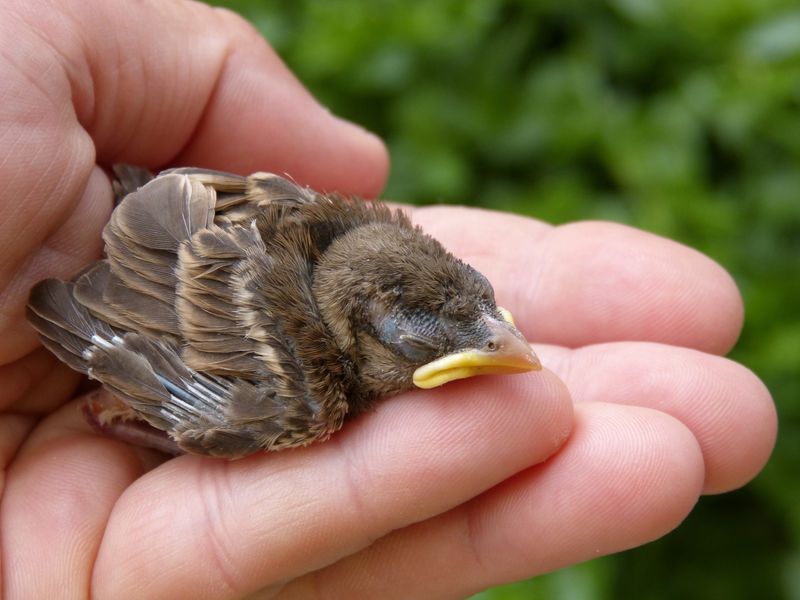
Resist the urge to pick up the baby bird right away. Handling a fledgling can cause unnecessary stress and may not be needed. Birds often look vulnerable, but not all need human assistance. Only pick it up if it’s clearly in harm’s way, such as near predators or busy roads. If the bird is flailing or seems confused, take a moment to ensure it’s not just resting or waiting for parents. Your gentle patience ensures the bird’s best chance at survival without human interference, unless absolutely necessary.
3. Look for the Nest
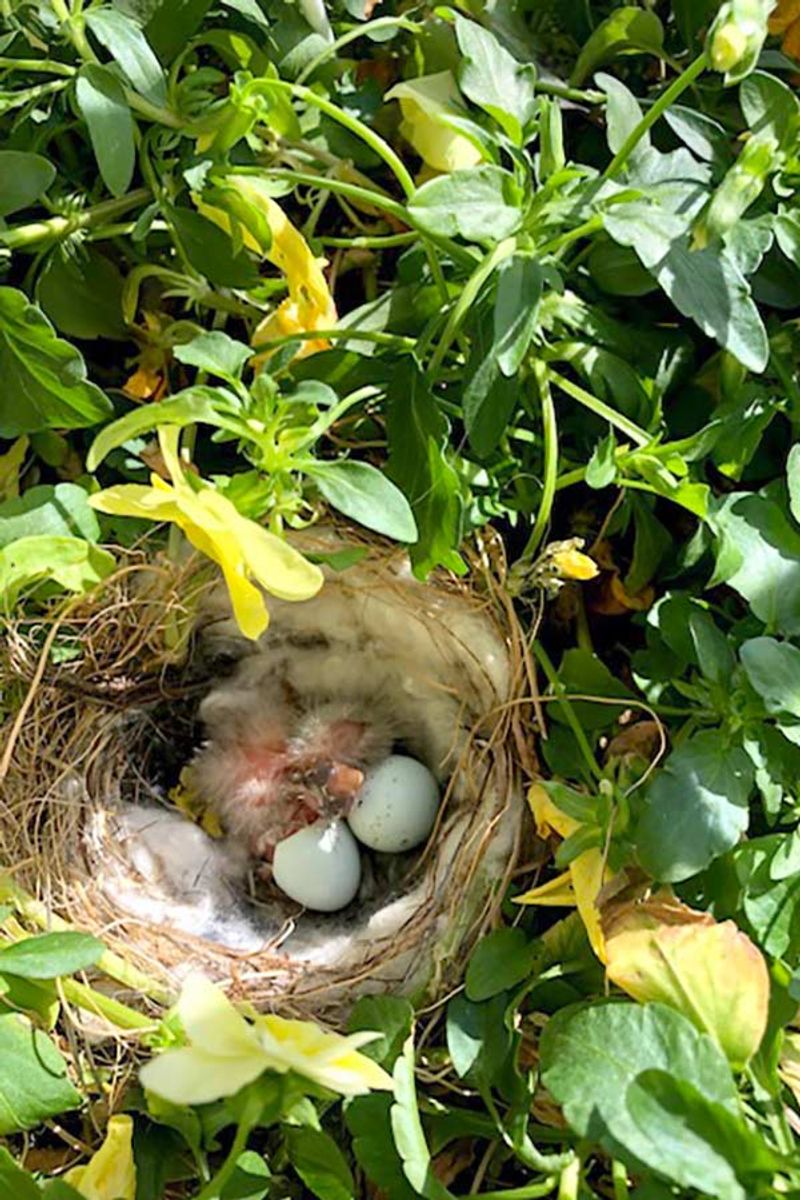
If the bird is a nestling, meaning it has little to no feathers, you should try to locate its nest. Returning it to its original home is often the best course of action. Contrary to popular belief, parental birds do not abandon their young due to human scent. By carefully placing the nestling back, you give it the best opportunity to thrive under its parents’ care. Ensure the nest is secure and intact, and observe from a distance to see if the parents return. Your intervention can be a gentle step towards reuniting the family.
4. Protect It From Immediate Danger
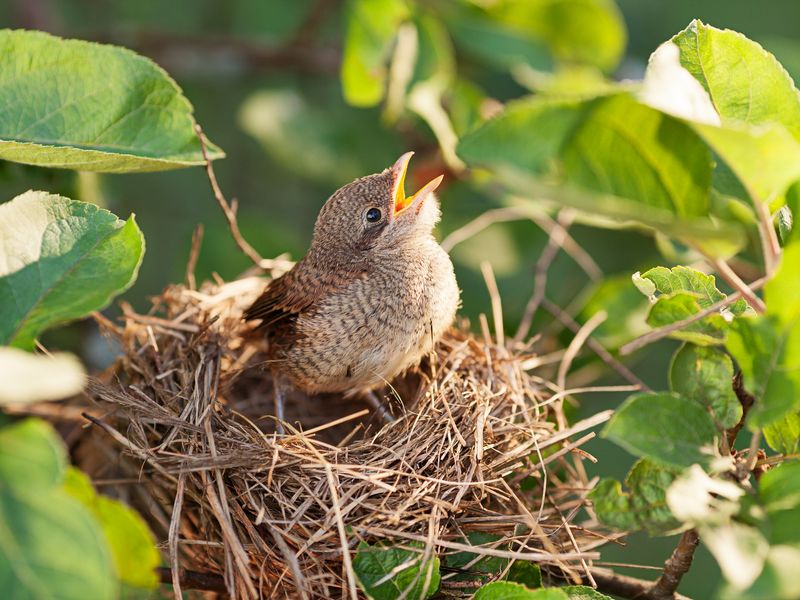
In situations where the baby bird is in immediate danger, such as on a busy street or in a predator’s path, you may need to intervene. Carefully move the bird to a nearby safe location like a bush or low branch, ensuring the parents can still locate their chick. This act is about balancing safety with minimal intervention. By doing so, you create a safer environment for the bird without disrupting its natural progression. Always check your surroundings to ensure no further harm comes its way once moved.
5. Leave It Alone If It’s a Fledgling
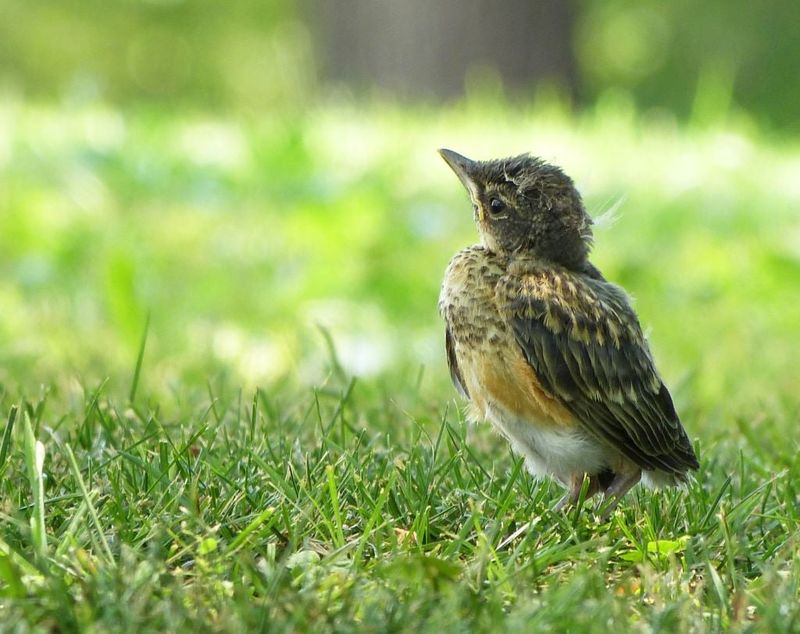
Fledglings often leave the nest before they can fully fly, which is a natural part of their development. These young birds usually have a few feathers and are learning crucial survival skills. Their parents continue to feed them and are typically not far away. Observing from a distance allows the fledgling to practice flying and exploring under the safe supervision of its parents. Intervening unnecessarily can disrupt this natural learning process, so sometimes, the best help is no help at all.
6. Keep Pets and Kids Away
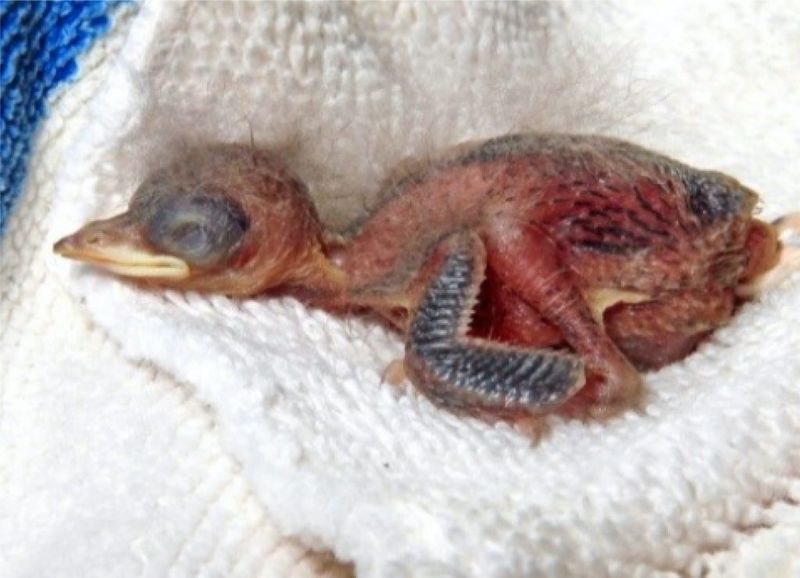
It’s important to ensure that any pets or children are kept away from the baby bird. Curious dogs and cats, or even playful kids, can unintentionally cause harm or stress to the bird. By keeping them indoors or closely supervised, you create a peaceful environment for the bird to regroup and for its parents to return. This simple act of vigilance can make a significant difference in the bird’s survival and its parents’ ability to care for it. Everyone can watch from a safe distance, fostering respect for nature.
7. Do Not Feed It
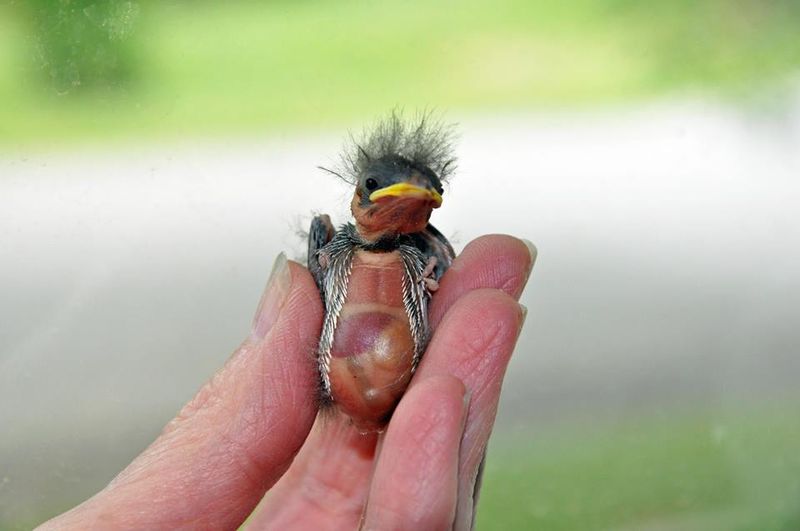
Feeding a baby bird can be more harmful than helpful, as they have highly specific dietary needs. Each species requires a different diet, and improper feeding could lead to malnutrition or even death. Despite the temptation to nurture, it’s crucial to let the parents handle feeding. They know precisely what nutrients their chick needs. If you’re concerned about the bird’s well-being, contacting a wildlife rehabilitator is a better option than attempting to feed it yourself. Nature has its own way of ensuring the young one’s survival.
8. Call a Wildlife Rehabilitator If Necessary
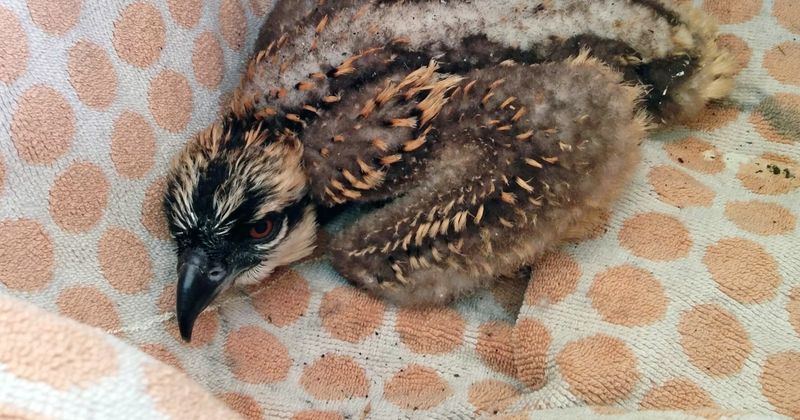
If the baby bird appears injured, weak, or clearly orphaned, don’t hesitate to contact a local wildlife rehabilitator. These experts are equipped with the knowledge and resources to care for distressed wildlife. By reaching out, you ensure the bird gets the professional help it requires. Make detailed observations about the bird’s condition before calling, as this information will assist the rehabilitator. Your prompt action can save the bird’s life, allowing it the chance to recover in capable hands. Sometimes expert intervention is the best solution.