Complete Gardening

Hydrangeas are the showstoppers of any garden – their lush clusters of pink, blue, or white blooms can transform an ordinary yard into a breathtaking floral display. But if your hydrangeas aren’t producing the big, vibrant flowers you dream of, the problem might be how you’re fertilizing them.
Fertilization mistakes are surprisingly common and can lead to lots of green leaves but very few blossoms. Here’s how to fertilize your hydrangeas the right way to get the healthiest plants and the biggest, brightest blooms possible.
1. Know Your Hydrangea Type Before You Start
Not all hydrangeas are the same – and each variety has its own needs. The most common types include:
- Bigleaf hydrangeas (Hydrangea macrophylla) – famous for their color-changing blooms that depend on soil pH.
- Panicle hydrangeas (Hydrangea paniculata) – tough and sun-loving, great for beginners.
- Smooth hydrangeas (Hydrangea arborescens) – reliable bloomers that prefer rich soil.
- Oakleaf hydrangeas (Hydrangea quercifolia) – known for their unique foliage and white blooms.
Understanding your hydrangea type helps you pick the right fertilizer and timing. Bigleaf varieties, for instance, respond strongly to soil pH adjustments, while panicles are less sensitive and more forgiving.
2. Test and Adjust Your Soil pH
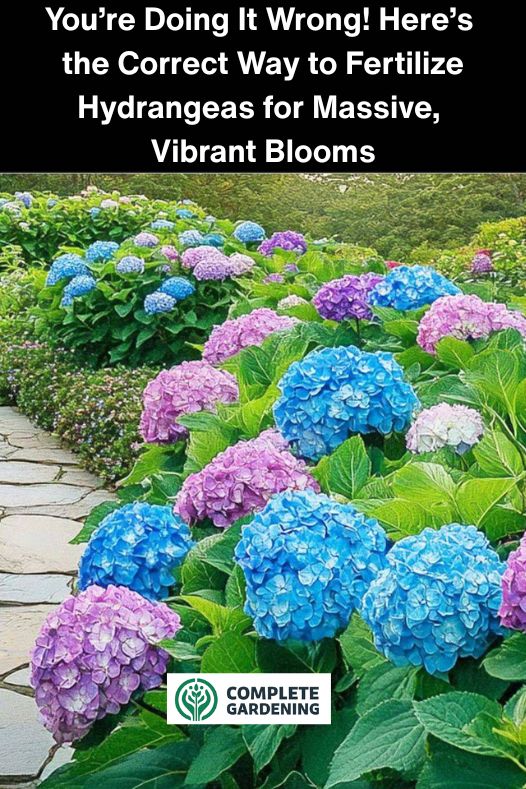
Soil pH not only affects hydrangea health – it controls bloom color.
- A pH below 5.5 gives you blue flowers.
- A pH above 6.0 creates pink blooms.
Use a pH testing kit to check your soil. To lower pH (for blue blooms), add aluminum sulfate. To raise pH (for pink blooms), use garden lime. Make adjustments gradually and test periodically to avoid stressing your plants.
3. Fertilize at the Right Time
Timing is everything. Fertilize in early spring when new leaves start to form. This jump-starts healthy growth and sets the stage for strong blooming.
A second, lighter feeding can be done in early summer, but stop fertilizing after August. Late feeding encourages new growth that won’t harden before winter, leaving your plant vulnerable to frost damage.
4. Choose a Balanced, Slow-Release Fertilizer
Hydrangeas thrive on balance. Look for a 10-10-10 or 12-4-8 fertilizer that slowly releases nutrients over time. This ensures steady growth without overwhelming the plant.
If your goal is vibrant color, use fertilizers with specific additives:
- For blue blooms, add aluminum sulfate.
- For pink blooms, use superphosphate or lime.
Organic options like compost and fish emulsion can also provide gentle, nutrient-rich feeding.
5. Apply Fertilizer Correctly
Spread fertilizer evenly around the base of the hydrangea, keeping it a few inches away from the stems to avoid burning. Water deeply after application so nutrients soak into the root zone.
Pro tip: Always follow package instructions for amounts. Overdoing it can cause leafy growth with very few flowers.
6. Fertilizer Myths and Home Hacks – What Actually Works?
You may have heard about using coffee grounds or eggshells to fertilize hydrangeas. While these can add trace nutrients, they’re not miracle fixes. Coffee grounds can slightly acidify soil, but too much may attract pests. Eggshells add calcium, though they decompose slowly.
Stick with proven fertilizers for the best, most reliable results.
7. Don’t Forget Organic Matter
Adding organic matter like compost, leaf mold, or aged manure improves soil texture and feeds your plants naturally. It also boosts moisture retention and microbial activity.
A 2–3 inch layer of mulch around your hydrangeas helps lock in moisture, regulate soil temperature, and slowly add nutrients as it breaks down.
8. Water Deeply to Maximize Fertilizer Benefits
Hydrangeas love water – but they hate soggy soil. For best results, water deeply about once a week, giving roughly 1 inch of water.
Water at the base of the plant instead of overhead to prevent fungal problems. Consistent moisture helps the roots absorb fertilizer efficiently and supports bigger, longer-lasting blooms.
9. Avoid These Fertilization Mistakes
- Over-fertilizing: Leads to leafy plants with few flowers.
- Fertilizing too late: Causes weak, frost-sensitive growth.
- Ignoring soil tests: You might be adding nutrients your soil doesn’t need.
Keep an eye on how your hydrangeas respond. If leaves turn yellow or edges brown, adjust your routine — it’s your plant’s way of communicating what it needs.
10. Seasonal Care for Stunning Blooms
Each season plays a role in your hydrangea’s bloom cycle:
- Spring: Fertilize, prune lightly, and add compost.
- Summer: Water deeply and maintain mulch.
- Fall: Stop fertilizing and let the plant prepare for dormancy.
- Winter: Protect the roots with mulch or burlap if you live in a cold region.
By syncing your care routine with the seasons, you’ll give your hydrangeas everything they need for long-lasting, spectacular blooms year after year.
Final Thought
When fertilized the right way, hydrangeas reward you with breathtaking color, lush growth, and blooms so large they’ll stop people in their tracks. Remember: success comes down to timing, balance, and attention to your soil’s needs.
Do it right, and your garden will soon be overflowing with the biggest, boldest hydrangeas you’ve ever grown.