Complete Gardening
Companion planting isn’t a new trend, it’s ancient wisdom that still works wonders today. The idea is simple: some plants help each other grow, while others secretly compete, stunt growth, or attract the same pests. By learning which plants make good neighbors (and which don’t), you can create a garden that’s healthier, more productive, and easier to manage without chemicals.
Let’s break down the science behind it, the biggest mistakes gardeners make, and the best plant pairings for your flower and vegetable beds.
The Science Behind Companion Planting
Plants interact with each other more than most gardeners realize. Some release natural chemicals that help nearby plants grow, while others release substances that inhibit growth or steal nutrients, a process called allelopathy.
Other plant pairs thrive together because they:
- Attract beneficial insects like pollinators or pest-eating ladybugs
- Improve soil health by fixing nitrogen or loosening compact soil
- Provide shade or support for their neighbors
Understanding these relationships lets you build a garden that works with nature, not against it.
Why Companion Planting Works Wonders
The benefits go far beyond saving space.
- Natural pest control – Certain plants repel insects that attack their neighbors
- Better soil – Some plants, like beans and peas, enrich the soil for others
- Higher yields – The right pairings help plants grow faster and stronger
- Less disease – Good airflow and root diversity prevent fungus and pests from spreading
This method creates a mini-ecosystem that thrives naturally without pesticides or synthetic fertilizers.
Common Mistakes Gardeners Make
Even the most experienced gardeners slip up with companion planting. Avoid these classic errors.
- Mixing sun-lovers and shade-lovers – One will thrive while the other struggles
- Ignoring water needs – Pairing a drought-tolerant herb with a thirsty vegetable spells disaster
- Overcrowding – Plants need space and airflow to prevent disease
- Overlooking allelopathy – Some plants, like fennel, release compounds that harm others nearby
By paying attention to compatibility, you can save yourself from frustration and wasted effort.
Top 10 Flowers and the Right (and Wrong) Companions
1. Roses
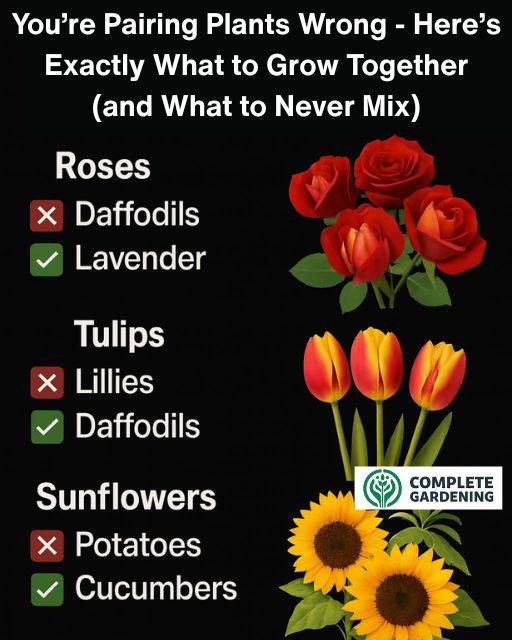
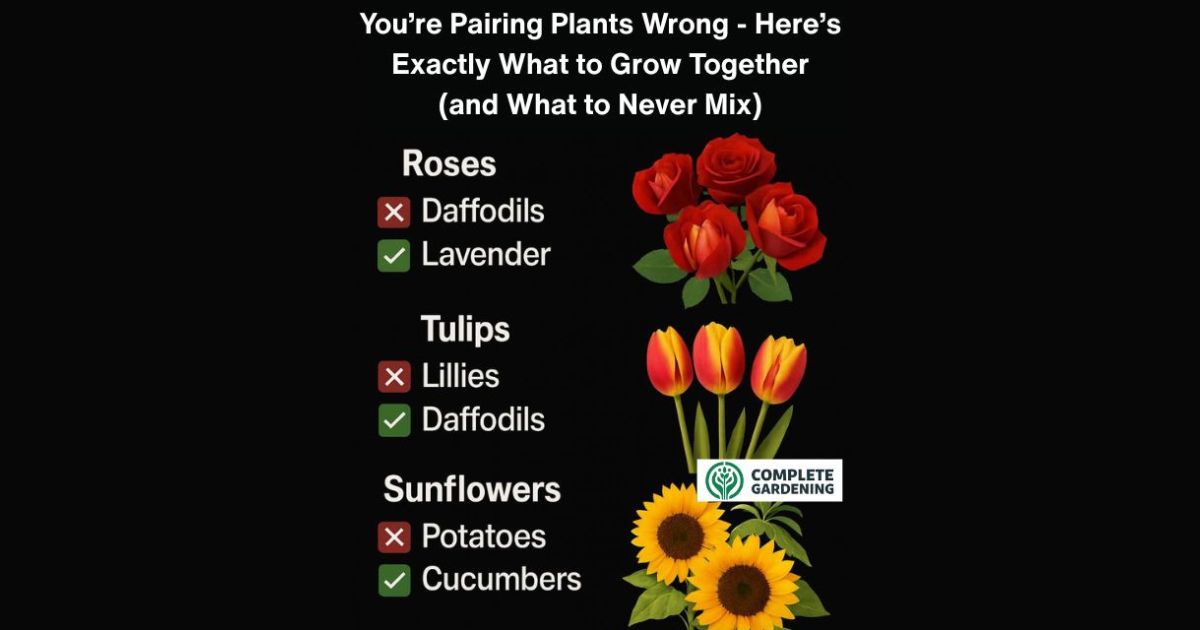
Best companions: Garlic, chives, and marigolds – they repel aphids and other pests naturally.
Avoid: Fennel and boxwood – they compete for nutrients and limit rose growth.
2. Tulips
Best companions: Daffodils and alliums – they keep rodents away and bloom in harmony.
Avoid: Lilies – they compete for nutrients and space.
3. Daffodils
Best companions: Tulips and daylilies – they balance bloom times and don’t compete underground.
Avoid: Roses – they can inhibit each other’s growth.
4. Sunflowers
Best companions: Cucumbers and corn – they enjoy the partial shade and natural trellis support.
Avoid: Potatoes – they attract similar pests and diseases.
5. Marigolds
Best companions: Tomatoes and peppers – marigolds repel nematodes and aphids naturally.
Avoid: Beans – both plants can stunt each other’s growth.
6. Lilies
Best companions: Hostas and ferns – they keep the soil moist and cool.
Avoid: Tulips – they compete for the same nutrients and root space.
7. Lavender
Best companions: Rosemary and sage – they love dry soil and full sun, thriving side by side.
Avoid: Mint – it spreads aggressively and chokes out lavender.
8. Peonies
Best companions: Irises and foxgloves – they share similar needs and bloom beautifully together.
Avoid: Trees or large shrubs – they steal sunlight and nutrients.
9. Hydrangeas
Best companions: Hostas and ferns – both love partial shade and consistent moisture.
Avoid: Ivy and aggressive groundcovers – they compete and overrun the hydrangea’s roots.
10. Geraniums
Best companions: Roses – they repel common rose pests and look gorgeous together.
Avoid: Cabbage – both attract the same harmful insects.
Extra Tips for Successful Companion Planting
- Rotate crops every year to prevent nutrient depletion and pest buildup
- Group by water and light needs – it keeps care simple and plants happier
- Observe your garden – sometimes local conditions affect compatibility more than general rules
- Encourage biodiversity – mixing flowers, herbs, and vegetables keeps the ecosystem balanced
Conclusion – Garden Smarter, Not Harder
Companion planting isn’t guesswork, it’s smart, science-backed gardening. Once you know which plants love and hate each other, your garden becomes more self-sufficient, productive, and beautiful.
By planting the right combinations, you’ll spend less time fighting pests and more time enjoying lush blooms and healthy harvests, all thanks to nature’s own system of balance and teamwork.