Complete Gardening
As the cold season approaches, many gardeners rush to prune their plants – but what most don’t realize is that timing and technique matter more than ever when frost is As the cold season approaches, many gardeners rush to prune their plants – but what most don’t realize is that timing and technique matter more than ever when frost is on the horizon. Done wrong, pruning can actually weaken your plants, making them more vulnerable to winter damage. Done right, it can help your garden bounce back stronger and greener when spring arrives.
Understanding when and how to prune before frost is the key to keeping your garden healthy, disease-free, and ready to thrive once the temperatures rise again. Let’s take a closer look at how to do it correctly.
Understanding Dormancy – Why Timing Is Everything
Before you even pick up your shears, it’s essential to understand plant dormancy. As daylight shortens and temperatures drop, plants naturally slow their growth to conserve energy. This resting phase helps them survive the cold.
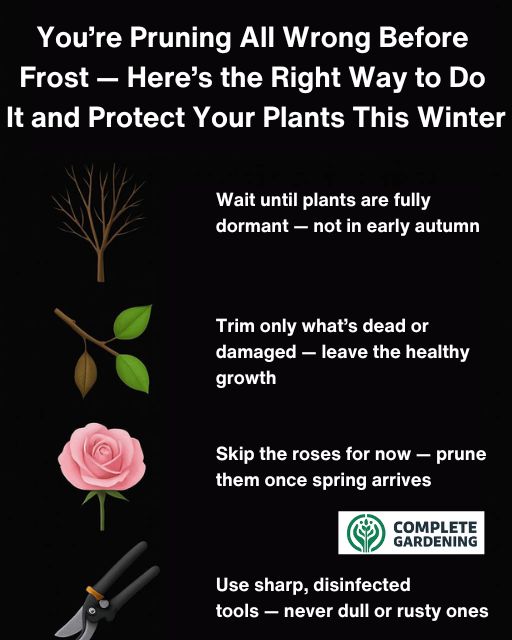
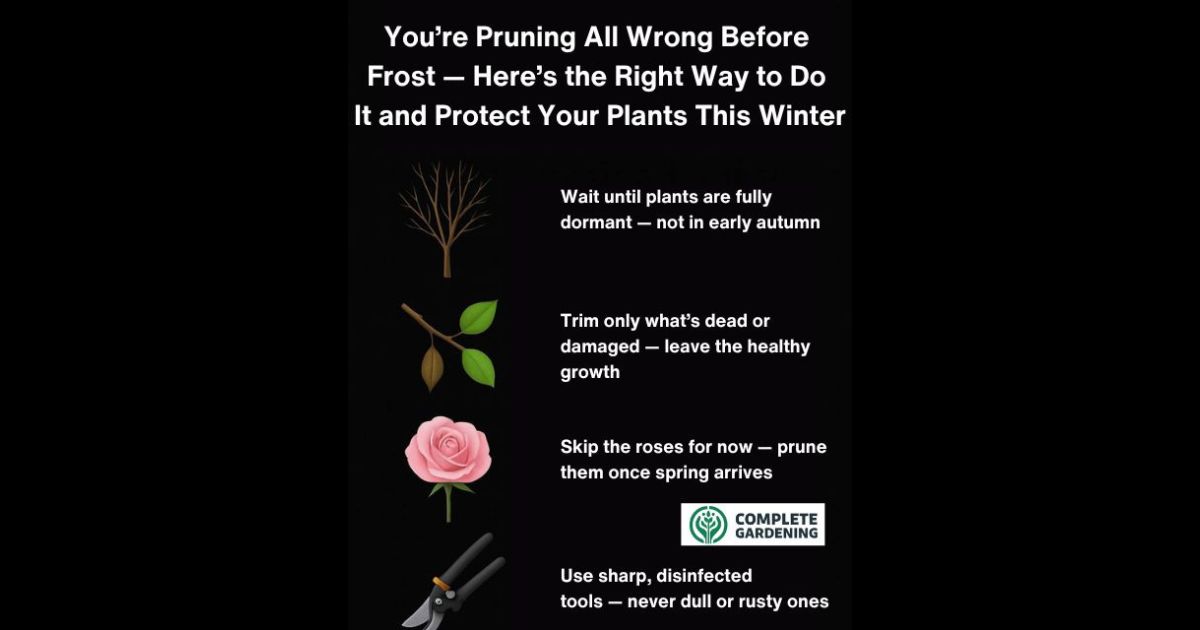
Pruning during dormancy – or worse, before the plant fully enters it – can backfire. Cutting too early often triggers new growth that’s too tender to survive frost, leaving the plant exposed to cold damage. Always wait until the plant’s leaves have dropped and growth has completely stopped before pruning.
When to Prune – Late Fall Is the Sweet Spot
For most plants, the best time to prune is after the first frost but before the ground freezes. At this point, plants are fully dormant, meaning they won’t push out vulnerable new shoots. Pruning now helps shape your garden, remove dead wood, and prevent disease without shocking the plant.
Avoid pruning too early in autumn – the mild temperatures and remaining sunlight can stimulate unwanted new growth that won’t withstand the coming chill.
How to Tell What’s Dead and What’s Alive
A big part of proper pruning is knowing what to remove. Dead branches are brittle, brown, and break easily, while live branches have a green core if you gently scratch them with your fingernail.
If you’re unsure, do the “scratch test.” If the tissue under the bark is green and moist, it’s still alive – leave it. Removing only dead or diseased wood helps your plants heal faster and stay healthy through winter.
Use Clean, Sharp Tools – It Matters
Nothing harms a plant faster than jagged cuts made with dull, dirty tools. Always sterilize your pruners before use with rubbing alcohol or a bleach-water solution (1 part bleach to 9 parts water). Sharp blades make clean cuts that heal quickly and reduce the risk of infection or rot.
A good set of pruning shears, loppers, and a saw will cover almost every task. Keep them clean, dry, and well-oiled to extend their lifespan and improve performance.
Different Plants, Different Rules
Not all plants should be pruned the same way:
- Deciduous trees and shrubs: Use thinning cuts to remove entire branches at their base, improving airflow and sunlight exposure.
- Evergreens: Perform light “heading cuts” to control size and shape – avoid heavy pruning, as evergreens recover slowly.
- Fruit trees: Remove crossing, dead, or damaged branches. Opening up the canopy allows sunlight to reach the inner branches and encourages next season’s fruit production.
Research the needs of your specific plant species before pruning – each has its own preferred timing and technique.
Don’t Prune Roses Before Frost
This is one of the most common – and most damaging – mistakes. Never prune roses before winter. Cutting them too soon encourages tender new growth that will freeze at the first frost.
Instead, wait until late winter or early spring to prune your roses. Once frost risk passes, you can safely remove dead wood and shape your plant for beautiful blooms in the coming season.
The Dangers of Over-Pruning
Even when done at the right time, pruning too aggressively can stress your plants. Removing too much foliage at once disrupts the balance between roots and shoots, leaving your plant struggling to absorb nutrients and water.
A good rule: never remove more than one-third of the plant’s total growth at one time. Less is more – focus on strategic cuts that improve airflow, remove disease, or shape the plant naturally.
Viral Garden Hacks That Actually Work
Social media is full of gardening tricks, but only a few stand up to real-world testing. Two worth trying:
- Cinnamon as a natural antifungal: Dust pruning cuts with cinnamon powder to prevent fungal infections.
- Coffee grounds for acid-lovers: Sprinkle used coffee grounds around azaleas, hydrangeas, and blueberries to enrich the soil and slightly lower pH.
These small, natural solutions can protect your plants without the need for chemicals – just don’t overdo them.
Avoid These Common Pruning Mistakes
- Cutting too close to the trunk – it damages the branch collar and slows healing.
- Leaving long stubs – they can rot and attract disease.
- Cutting flat instead of at a slight angle – water won’t drain off, leading to decay.
Always make clean, angled cuts just above a node or branch collar to promote fast, healthy regrowth.
Other Ways to Prepare Your Garden for Frost
Pruning is only part of the winter prep routine. Before the deep cold sets in:
- Add mulch (2–4 inches thick) around the base of plants to protect roots from freezing temperatures.
- Water deeply before the ground freezes so roots stay hydrated through dry winter winds.
- Clear debris and fallen leaves to reduce the risk of pests and disease.
- Wrap tender plants like shrubs or young trees in burlap or frost cloth for extra protection.
These steps work together to shield your garden from frost damage and ensure an easier start come spring.
The Right Tools Make All the Difference
Every gardener should have a reliable pruning toolkit:
- Hand pruners for small stems and flowers.
- Loppers for medium branches up to 2 inches thick.
- Pruning saw for larger limbs.
Invest in quality tools with ergonomic handles to protect your hands during longer pruning sessions. Keep a sharpening stone handy, and clean your blades after each use – sharp tools make precise cuts and healthier plants.
Conclusion – Prune Smart, Not Hard
Pruning before frost isn’t about cutting more – it’s about cutting wisely. With the right timing, clean tools, and targeted techniques, you can help your plants rest safely through winter and burst back to life when spring returns.
So, before you grab those shears, remember: patience, precision, and preparation are the gardener’s best tools against frost damage. Follow these steps, and your plants will thank you with healthy growth and vibrant blooms next year.