Complete Gardening

As the chill of winter sets in, most gardeners turn their attention to protecting their plants and preparing for spring. One powerful but often misunderstood tool in winter garden care is something many of us already have at home — used coffee grounds.
While coffee grounds can enrich your soil and support plant health, using them incorrectly can do more harm than good. Here’s the right way to make coffee grounds work wonders for your winter garden — from soil improvement to compost balance.
1. Why Coffee Grounds Are Great for the Winter Garden
Coffee grounds are packed with nutrients like nitrogen, potassium, and phosphorus, which help nourish the soil even when plants are dormant. They act as a slow-release fertilizer, feeding microorganisms that keep the soil active and healthy through winter.
With roughly 2% nitrogen, 0.6% potassium, and 0.6% phosphorus, coffee grounds provide a balanced nutrient boost that preps your soil for vigorous spring growth.
2. Always Mix Coffee Grounds into Compost First
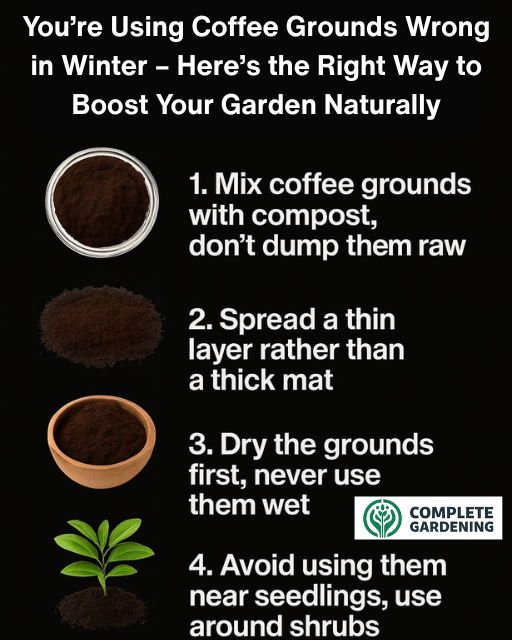
Never dump coffee grounds straight onto your garden in large amounts. Instead, mix them into compost to balance the carbon-to-nitrogen ratio. Coffee grounds count as “green” compost (nitrogen-rich), so pair them with “browns” like dried leaves, straw, or shredded cardboard.
A good rule of thumb: 1 part coffee grounds to 4 parts brown materials. This ensures healthy decomposition and a nutrient-rich compost mix ready for spring planting.
3. Apply Coffee Grounds in Thin Layers Only
When adding coffee grounds directly to your soil, spread them in thin layers no thicker than half an inch. Thick layers can form a dense mat that blocks water and air from reaching plant roots.
Thin, even layers improve aeration, moisture retention, and drainage, creating a healthy soil texture that helps roots thrive during cold months.
4. Dry Your Coffee Grounds Before Using Them
Wet coffee grounds can clump together and grow mold. To prevent this, air dry them for a few days or bake them at a low temperature (around 200°F / 93°C) for a couple of hours.
Once dry, they’re easier to mix into compost or soil and will break down more evenly.
5. Avoid Using Coffee Grounds Around Seedlings
Young plants and seedlings can be sensitive to the slight acidity of coffee grounds. Stick to using them around established shrubs and mature perennials instead.
Sprinkle the grounds around the base of the plants, avoiding direct contact with stems, to gently enrich the soil without burning delicate roots.
6. Understand and Balance Soil Acidity
While coffee grounds are often labeled “acidic,” their pH is usually between 6.5 and 6.8, which is nearly neutral. They can slightly acidify alkaline soils, but they won’t make a dramatic difference on their own.
If you’re unsure, perform a soil test first. Mix grounds thoroughly into the soil rather than leaving them on top — this helps prevent acidity imbalances and improves nutrient distribution.
7. Coffee Grounds and Pests – The Real Story
There’s a popular belief that coffee grounds repel pests like slugs and snails due to their rough texture and caffeine content. While some gardeners swear by this, research shows mixed results.
They might deter a few pests, but don’t rely on them as your only defense. Think of them as a mild supplement to your regular pest control strategy.
8. Improve Soil Structure with Coffee Grounds
Adding coffee grounds boosts organic matter in the soil, making it looser and better aerated — especially helpful for heavy clay soils that tend to compact over winter.
This improved structure enhances water flow, root health, and microbial activity, creating ideal conditions for spring planting.
9. Support Microbial Life in the Soil
Soil microbes are the unsung heroes of garden health, breaking down organic matter into plant-available nutrients. Coffee grounds serve as a food source for these beneficial microorganisms, helping maintain an active, living soil through the colder months.
Healthy microbial activity means your garden soil will “wake up” faster in spring with plenty of available nutrients.
10. Avoid These Common Mistakes
- Applying too much at once: Thick layers can suffocate soil and promote mold.
- Using coffee grounds alone: Always mix with other compost materials.
- Applying to seedlings or acid-sensitive plants: Stick to mature or neutral-soil plants.
- Skipping the drying step: Wet grounds can clump and turn slimy fast.
Proper use ensures that your coffee grounds improve soil health rather than cause drainage or pH issues.
11. Creative Ways to Reuse Coffee Grounds
Even if your garden doesn’t need them all, coffee grounds have plenty of other eco-friendly uses:
- Natural fridge deodorizer
- Gentle abrasive cleaner for pans
- DIY skin exfoliant
- Natural fabric dye or ink
- Add them to candles or compostable crafts for texture and scent
Conclusion – Turning Waste into Garden Gold
When used the right way, coffee grounds can become one of your garden’s best winter allies. They enrich the soil, feed beneficial microbes, and prepare your garden for a strong spring comeback.
So before you toss those used grounds, give them a second life — your garden (and the planet) will thank you.