Complete Gardening
When the last leaves of autumn hit the ground, most gardeners see a mess that needs cleaning up. But what many don’t realize is that those leaves are one of the most valuable natural resources your garden can get before winter sets in. Instead of tossing them out, you can turn them into free mulch, fertilizer, insulation, and even wildlife habitat – all while improving your soil for next spring.
Here’s the right way to use leaves in your winter garden so they work for you, not against you.
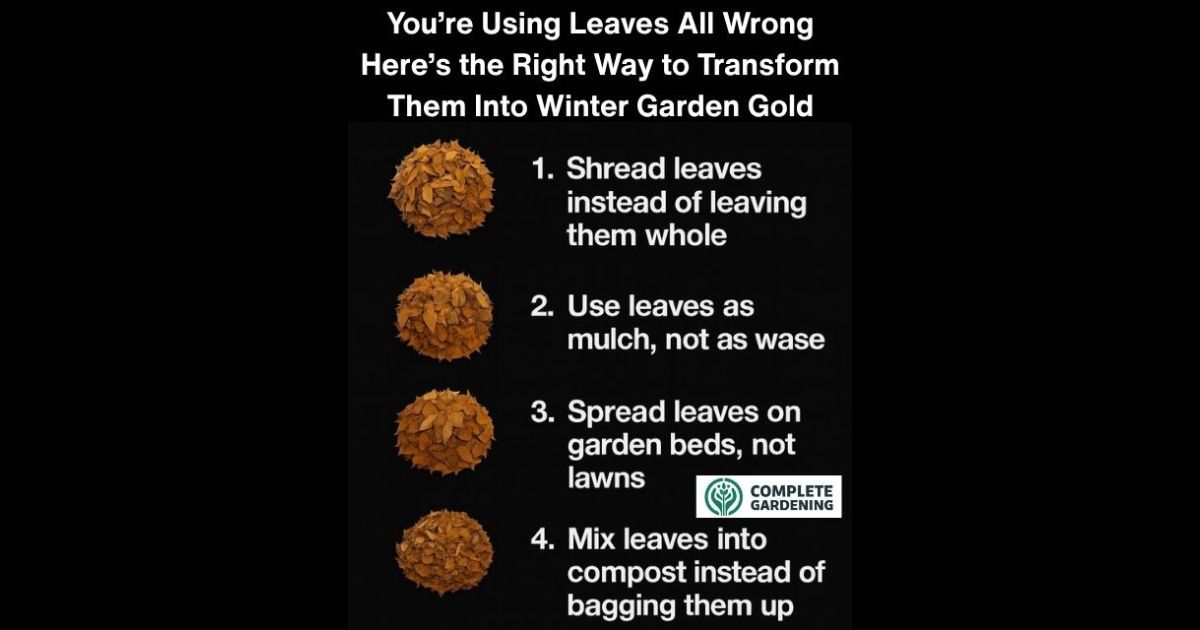
1. Shred Leaves – Never Use Them Whole
The number one mistake gardeners make is dumping whole leaves on their beds. Whole leaves tend to mat together, blocking air and water from reaching the soil. This suffocates plants and slows decomposition.
Instead, shred your leaves with a lawn mower or leaf shredder. Shredded leaves break down faster, allow moisture and oxygen through, and make perfect mulch. A 2–3 inch layer of shredded leaves helps retain moisture, suppress weeds, and enrich the soil naturally.
2. Treat Leaves as Mulch, Not Waste
Forget the trash bags – your fallen leaves are free mulch. Spread a layer of shredded leaves around your garden beds, trees, and shrubs about 2–4 inches thick. This acts as a natural insulator, keeping soil warm and moist during the cold months.
As they break down, leaves release essential nutrients like potassium, calcium, and phosphorus, restoring soil fertility without store-bought fertilizers.
3. Use Leaves in Garden Beds, Not on the Lawn
Leaving thick layers of leaves on your lawn can smother the grass and invite mold. Instead, collect them for use in flower or vegetable beds, where they’ll actually do good.
If you’d rather recycle them on the spot, use a mulching mower to chop the leaves into tiny pieces and leave them on the grass. The fine bits will decompose quickly, feeding your lawn instead of harming it.
4. Mix Leaves Into Compost – Don’t Bag Them Up
Bagging leaves sends valuable nutrients to the landfill. Instead, mix them into your compost pile. Leaves provide carbon (browns), while grass clippings and kitchen scraps provide nitrogen (greens) – both are essential for healthy compost.
Aim for a ratio of three parts leaves to one part green material and turn the pile regularly to speed up decomposition. The result will be a dark, crumbly compost full of nutrients your garden will love.
5. Create Leaf Mold for Rich, Moist Soil
If you’ve never made leaf mold, you’re missing out on one of nature’s best soil conditioners. Simply pile up shredded leaves in a shady corner, keep them damp, and let them decompose for 6–12 months.
The result is a soft, earthy material that dramatically improves soil texture, water retention, and microbial life. It’s the perfect organic boost for raised beds and flower gardens.
6. Protect Delicate Plants with Leaf Insulation
Use shredded leaves to insulate sensitive plants from frost. Spread a thick layer around the base of perennials, young shrubs, or root crops to stabilize soil temperature and prevent freeze damage.
Just be sure not to pile leaves directly against plant stems or trunks – this traps moisture and can lead to rot.
7. Use Leaves to Soften Garden Paths
Shredded leaves make great temporary ground cover for garden paths and walkways. They keep your shoes clean, prevent soil erosion, and break down over time to improve the earth underneath.
Top up the layer occasionally through winter for a natural, rustic look that benefits your soil as it decomposes.
8. Build Winter Habitats for Wildlife
Leaves provide shelter for beneficial insects and small wildlife during winter. Create small leaf piles in a quiet corner of your garden to support creatures like ladybugs, ground beetles, and hedgehogs.
These insects will reward you by controlling garden pests naturally when spring arrives. A thriving garden ecosystem starts with something as simple as a pile of leaves.
9. Make a Natural Leaf Fertilizer (“Leaf Tea”)
You can also use leaves to create your own liquid fertilizer. Fill a large bucket or burlap sack with leaves, add water, and let it steep for a few weeks. The resulting brown liquid – often called leaf tea – is rich in nutrients and can be diluted with water to feed your plants.
It’s an easy, zero-cost way to give your winter garden a nutrient boost.
10. Use Leaves for Water Retention
Leaves are excellent at retaining moisture in the soil, making them ideal for drought protection and winter hydration. Use them as mulch to reduce evaporation, or stack them in trenches to create swales that capture rainwater.
These simple methods help conserve water while keeping your soil rich and alive through winter.
11. Get Creative with Leaf-Based Projects
Leaves aren’t just practical – they’re great for creative garden projects too. Use them to make leaf-shaped stepping stones, natural art prints, or eco-friendly dyes for crafts.
Boiling leaves in water extracts natural pigments that can be used for coloring paper or fabric. It’s a fun way to celebrate nature’s beauty while reusing what your garden gives you.
Conclusion – Turn Fall Leaves into Winter Garden Gold
Bagging leaves is throwing away one of the best natural resources your garden could ask for. With a little effort, those fallen leaves can become mulch, compost, insulation, and even habitat – all vital for a thriving winter garden.
So this year, skip the leaf bags. Shred them, spread them, and let nature work its magic. Come spring, your plants will thank you with stronger roots, richer soil, and a garden bursting with life.