
A border of liriope can look neat, but it is not the only way to frame a Florida walkway. Native plants can bring flowers, softer textures, and more wildlife to that same strip of ground.
These seven choices offer lower-water options when matched to the right light and soil, though some need more room than liriope. Water them through establishment, then let their natural strengths do more of the work.
1. Coontie
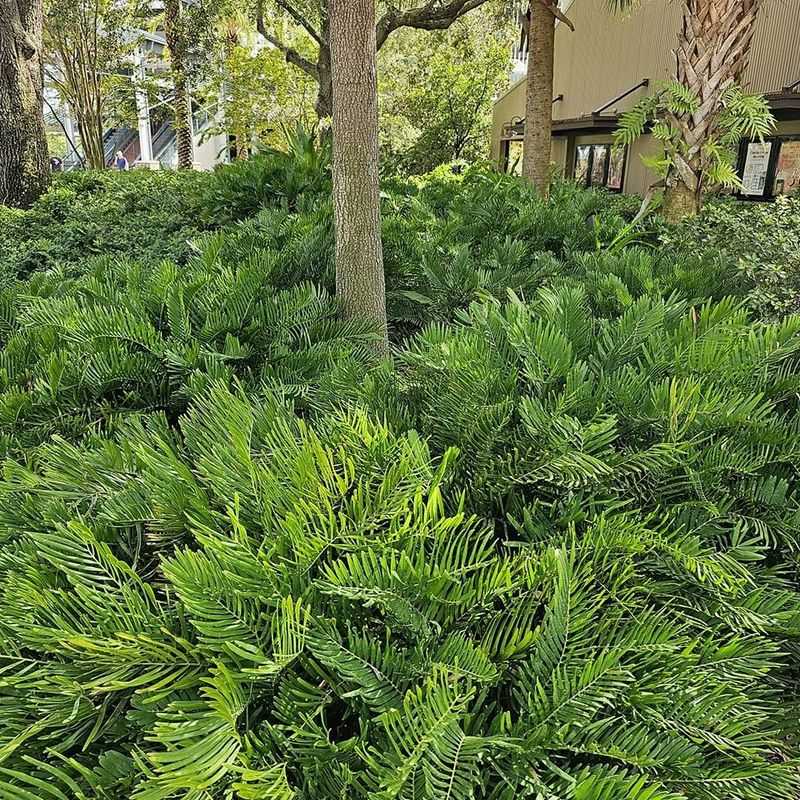
For a front walk that needs structure rather than flowers, few native plants look as polished as coontie. Its stiff, featherlike leaves form rounded evergreen clumps that give an entrance a tidy, finished look without weekly clipping.
Coontie, Zamia integrifolia, suits well-drained Florida sand in sun or partial shade. Established plants tolerate dry periods, but soggy soil and frequent lawn irrigation can cause trouble.
Allow roughly 3 to 5 feet of width per mature plant, depending on growing conditions. That makes it a replacement for a broad liriope border, not a narrow ribbon squeezed against pavement.
Set plants far enough back that their leaves will not brush passing legs. Keep mulch away from the crown, and water the root zone during establishment rather than giving it constant shallow sprinkles.
There is a wildlife bonus: coontie is the larval host for the rare atala butterfly where that butterfly occurs. However, all parts are poisonous if eaten, so choose another option where children or pets might chew plants or seeds.
2. Sunshine Mimosa
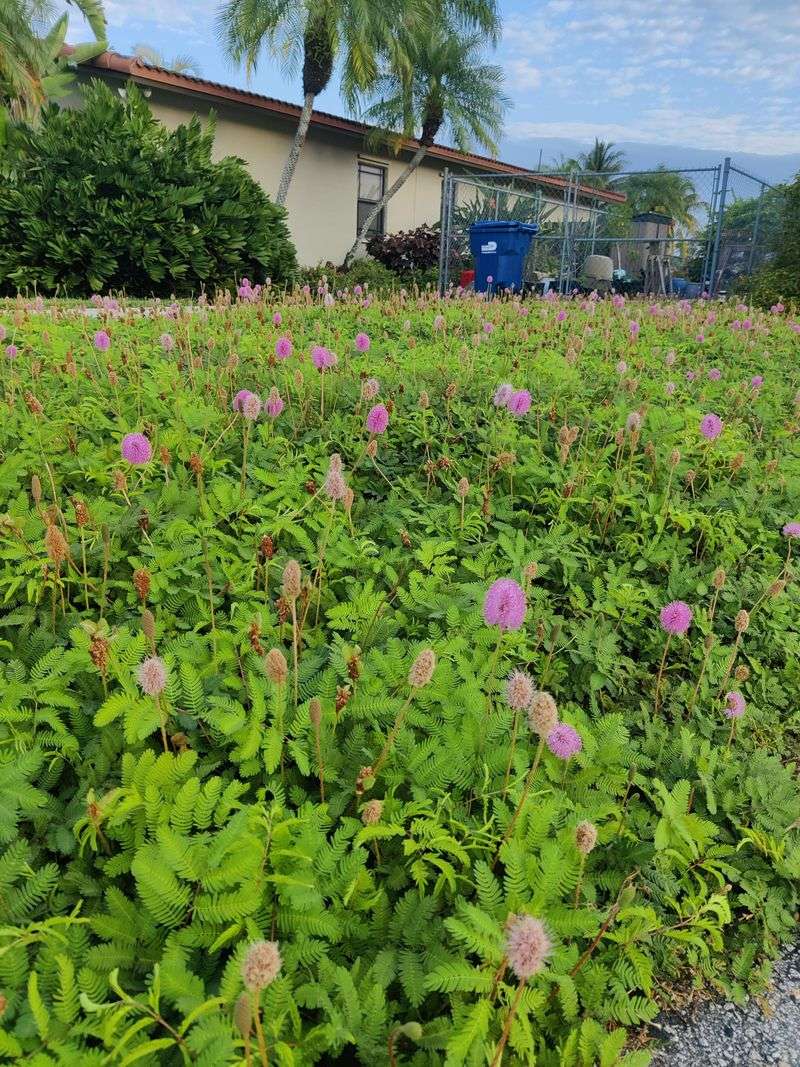
Pink powder-puff flowers make an ordinary path edge feel a little more playful. Sunshine mimosa stays close to the ground, trading liriope’s upright blades for a soft carpet of tiny, fernlike leaves.
Look for Mimosa strigillosa, a Florida native groundcover, rather than the nonnative mimosa tree. It flowers best in sunny spots and handles well-drained sandy soil, making it useful along open walkways and sunny bed fronts.
Expect spreading, not separate permanent clumps. Space starter plants about 2 to 3 feet apart for gradual coverage, and plan to trim runners that cross pavement or enter neighboring beds.
Once rooted in, sunshine mimosa can get through dry spells with less supplemental watering than a regularly irrigated border. Leaves may thin during drought or cool weather, so it will not always deliver the same appearance year-round.
Its flowers attract bees, and the foliage supports little sulphur butterfly caterpillars. Place it beside a path rather than directly under busy feet, since occasional foot traffic is easier on it than constant walking.
3. Twinflower
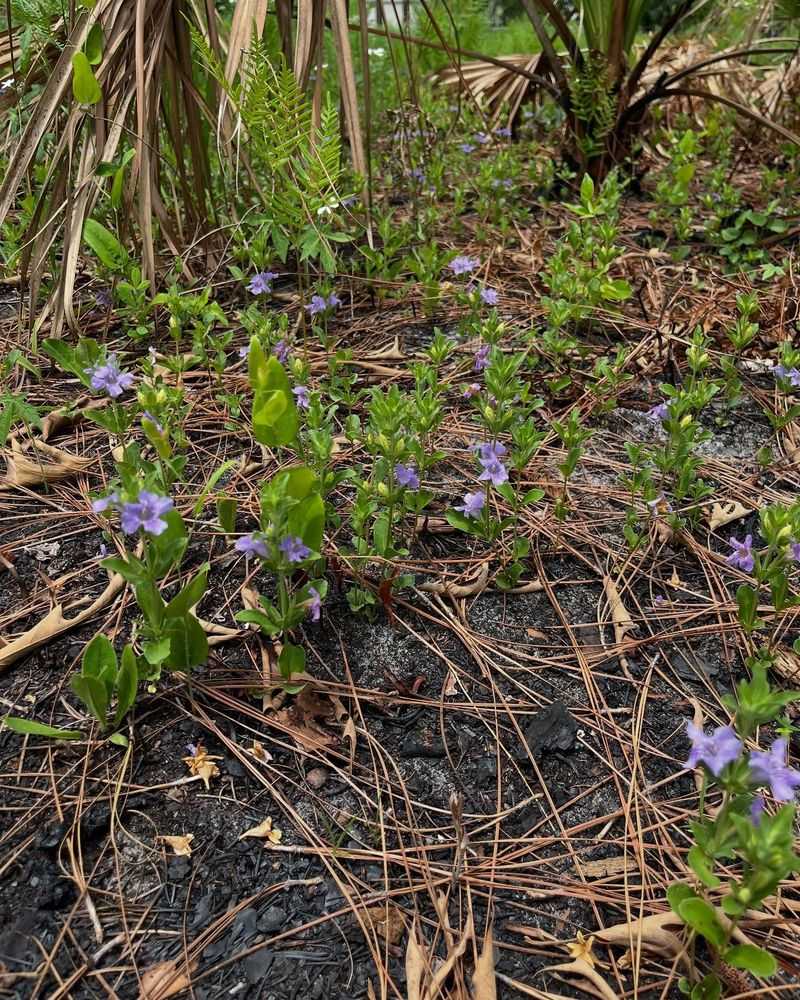
A lightly shaded border does not have to be a solid strip of green. Twinflower adds small lavender blooms while keeping the relaxed, low profile that works beside a porch or garden path.
Dyschoriste oblongifolia is the species to request at a Florida native nursery. Common names can overlap, so checking the botanical name helps you avoid taking home a different plant with different needs.
Give it sun to partial shade and well-drained soil. It spreads into a loose groundcover, generally around 6 to 12 inches tall, rather than forming the sharply defined clumps you get with liriope.
Plant small groups about 12 to 18 inches apart, then let them knit together. A paver edge makes it easier to keep wandering stems out of the walkway without repeated shearing.
Twinflower is especially useful where you want flowers and butterfly value without a tall planting. It is a host plant for common buckeye caterpillars, so some chewed leaves are part of the benefit.
Water new plants while roots spread into surrounding soil. Established patches tolerate dry periods, but prolonged drought can reduce their fullness and bloom.
4. Silkgrass
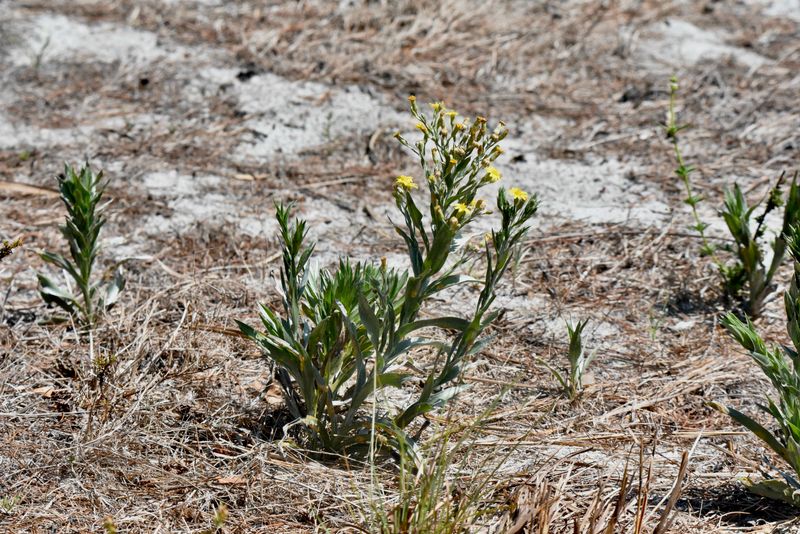
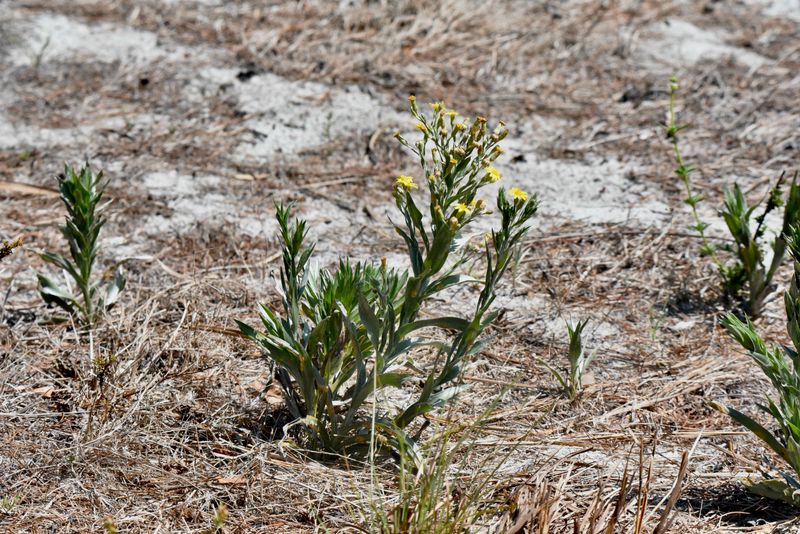
Silver leaves can brighten a border even when nothing is blooming. Silkgrass offers that contrast, followed by yellow daisy-like flowers that rise above its low foliage.
Despite the name, Pityopsis graminifolia is not a true grass. Its narrow, silky leaves create a grasslike effect, making it a useful visual bridge for gardeners who like liriope’s texture but want a native flowering option.
Choose a sunny, dry site with freely draining soil. Sandy beds away from downspouts and low spots are better choices than rich, constantly watered planting pockets.
The leaves stay relatively low, while flower stalks can reach about 1 to 3 feet. Keep that seasonal height in mind near low windows or tight paths, and place the plants slightly behind the pavement edge.
Use clusters spaced roughly 12 to 18 inches apart for a repeated silver accent. Growth and flowering vary among local forms, so ask the nursery about the mature size of its stock.
Avoid heavy fertilizer and excessive irrigation. After flowering, trim spent stalks if a crisp appearance matters, leaving the foliage intact rather than mowing the whole planting.
5. Muhly Grass
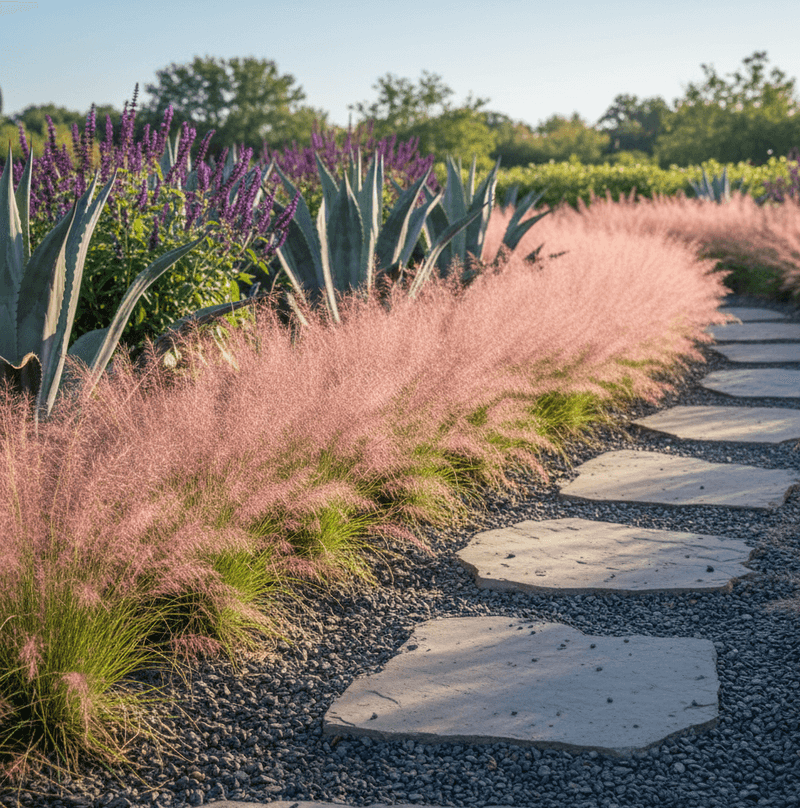
Come fall, a ribbon of pink flower plumes can turn a plain driveway into the best-looking part of the yard. Muhly grass delivers that seasonal show with fine green foliage the rest of the year.
Native Muhlenbergia capillaris belongs in a wider border than liriope. Mature clumps commonly reach about 2 to 3 feet tall and wide, with flowering stems extending higher.
Use it along a driveway, broad walk, or open bed where sunlight can shine through the plumes. Full sun gives the strongest flowering, and well-drained sandy soil suits it well once roots are established.
Space plants around 3 feet apart, adjusting for the nursery’s listed mature spread. Crowding them into a narrow strip hides their shape and can leave foliage hanging across the pavement.
Maintenance is simple, but timing matters. If plants need a cleanup, cut them back in late winter before fresh growth begins, rather than repeatedly shearing them like a hedge.
Muhly is the pick for height, movement, and fall color, not a miniature edging effect. Avoid using it where taller foliage would block a driver’s view at a street corner.
6. Gopher Apple
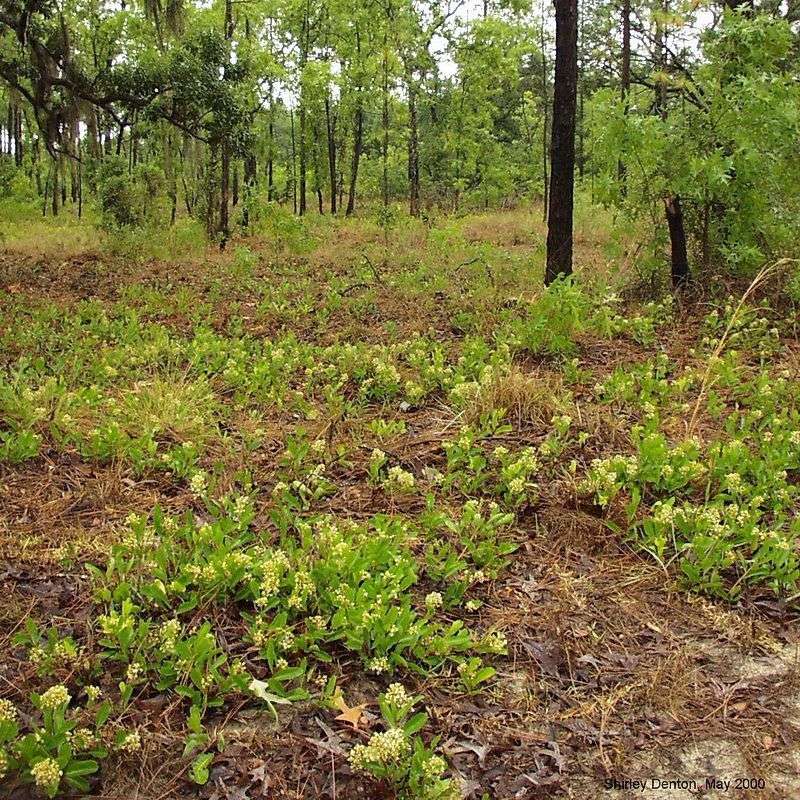
Hot sand beside a walkway can defeat plants that look effortless at the nursery. Gopher apple is built for that kind of lean, sunny setting, provided water drains away quickly.
Licania michauxii is a low native shrub that spreads through underground stems. Its leathery leaves give a border a sturdier, broader texture than liriope, usually staying around 1 foot tall.
Small pale flowers and later fruits add interest without turning the planting into a bright floral display. Wildlife may use the fruit, while homeowners get a durable groundcover suited to Florida’s sandy landscapes.
Patience is the main requirement. Nursery plants can take time to settle in and spread, so buy enough to create a believable planting rather than expecting a few tiny pots to fill a long border quickly.
Follow the grower’s spacing guidance, and keep nearby weeds down while the patch develops. Avoid disturbing established roots or moving plants unnecessarily.
Choose nursery-grown stock, never plants dug from wild scrub. Gopher apple makes the most sense along an informal, dry border where its spreading habit has room, not inside a tiny decorative pocket surrounded by thirsty plants.
7. Dune Sunflower
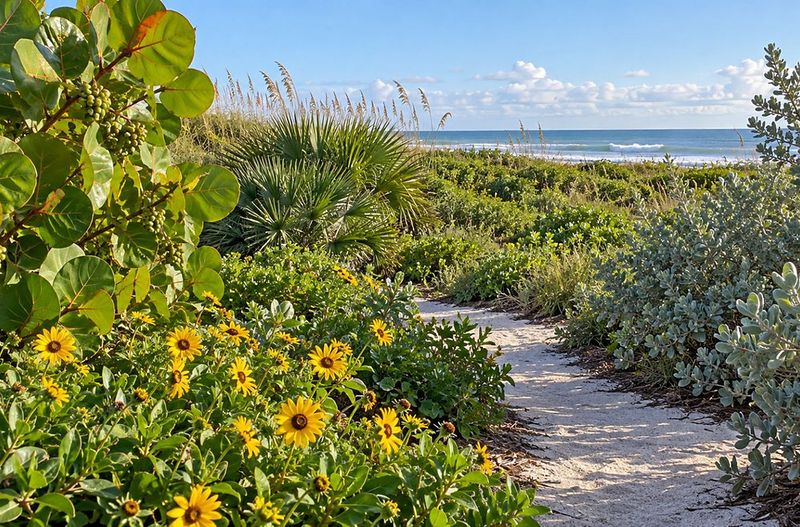
If your idea of a better border includes plenty of yellow flowers, dune sunflower earns its space quickly. Its cheerful blooms and spreading stems turn a bare sunny edge into a lively planting that draws visiting pollinators.
Helianthus debilis thrives in sandy, well-drained soil and tolerates coastal conditions. It needs strong sunlight, so skip the shaded side of the house and choose an open bed instead.
This is a broad, casual replacement for liriope, not a tidy look-alike. Plants often grow 1 to 3 feet tall and several feet wide, so leave generous space between their centers and the walking surface.
Ask a native nursery for the subspecies or local form appropriate to your part of Florida. Regional forms differ, and a locally suitable selection is a better choice than buying by flower color alone.
Trim wandering stems as needed, and renew plants when they become woody or sparse. In colder parts of Florida, freezes can interrupt the display.
Before planting, remove liriope crowns and lingering roots, then water the replacements until established. Keep this sunny border on a separate irrigation schedule from thirsty lawn grass so its lower-water potential is not wasted.