
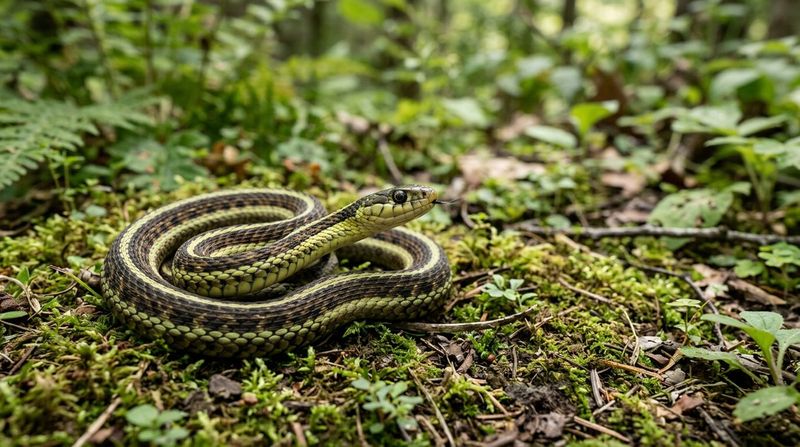
A fresh layer of mulch can hide more than weeds when Florida nights start cooling down. Snakes may use garden beds, leaf litter, and loose piles of yard debris for shelter and access to prey.
Not every species heads into mulch each fall, and activity depends on your part of the state and the weather. Knowing these seven snakes can help you work more safely while leaving useful wildlife alone.
1. Ring-necked Snake
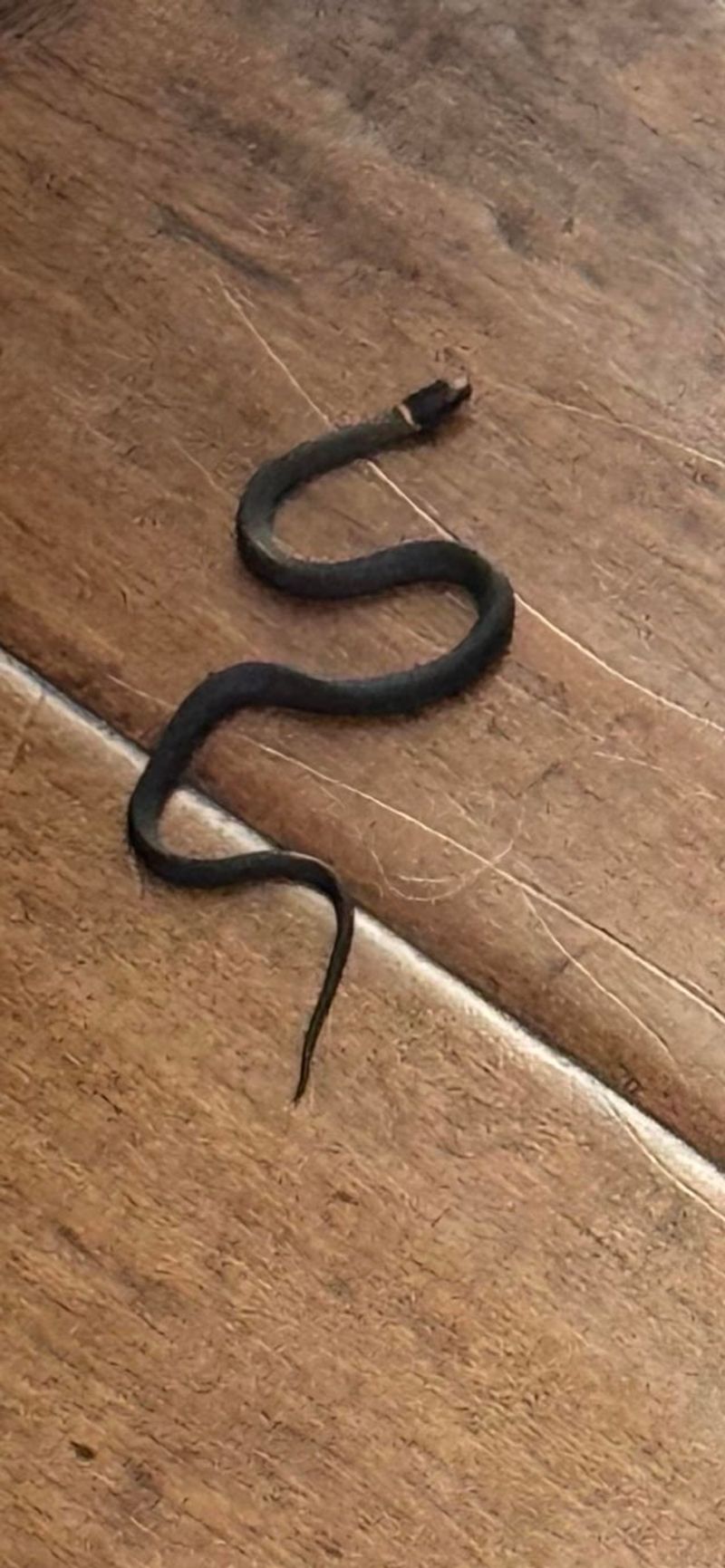
A snake no thicker than a pencil can disappear beneath a single curled oak leaf. That is the kind of cover a ring-necked snake uses, making it easy to overlook in a shaded Florida planting bed.
Look for a dark gray or nearly black back with a pale yellow or orange collar behind the head. The underside is much brighter, although you should never turn a snake over to check its identity.
Ring-necked snakes spend much of their time beneath logs, bark, and leaf litter, where they hunt small animals such as earthworms, slugs, and salamanders. Mulch can offer similar hiding places, especially where the lower layers stay slightly damp.
As nights cool, sheltered spots can help buffer temperature changes, but finding one does not mean a seasonal invasion is underway. These small snakes may already have been living quietly in the bed for months.
When refreshing mulch, use a long-handled tool rather than scooping blindly with your fingers. If a ring-necked snake appears, pause and let it slip into cover without picking it up.
2. Florida Brownsnake
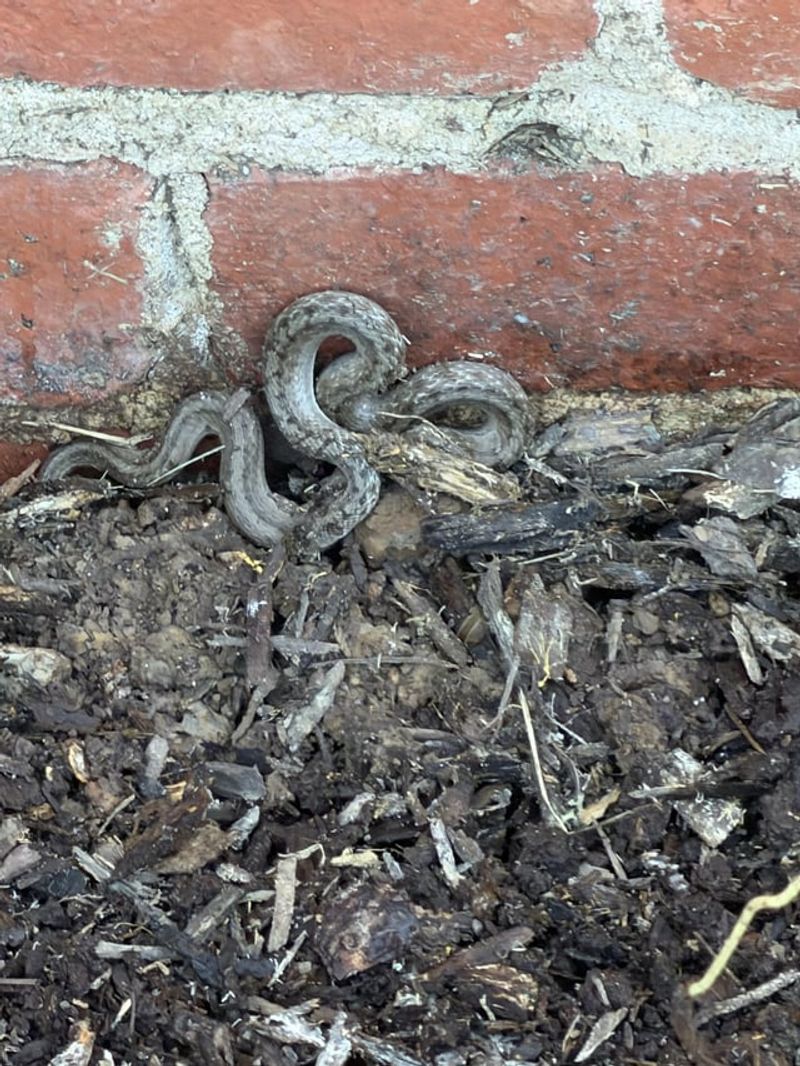
That little brown shape beside the watering hose might be one of the garden’s quiet slug hunters. The Florida brownsnake is small, secretive, and easily mistaken for a root until it moves.
Its back is usually brown or grayish brown, often with a faint lighter stripe bordered by small dark spots. Markings vary, so color alone is not enough to identify a snake you uncover.
This nonvenomous species feeds on soft-bodied prey, including earthworms and slugs. Moist beds with loose soil, fallen leaves, and low cover provide both food and places to hide.
A sheltered mulch layer can remain more stable than exposed soil during cooler weather. However, these snakes need suitable moisture too, so a dry, bare border is quite different from a shaded bed that receives regular irrigation.
Keep mulch at the depth recommended for your plants rather than building deep heaps against edging or walls. Before moving a pot or garden ornament, check the surrounding ground and lift it without placing your fingers underneath.
If you find a brownsnake, leaving it undisturbed is usually the simplest response. There is no need to remove a harmless resident just because it lives close to your flowers.
3. Red-bellied Snake
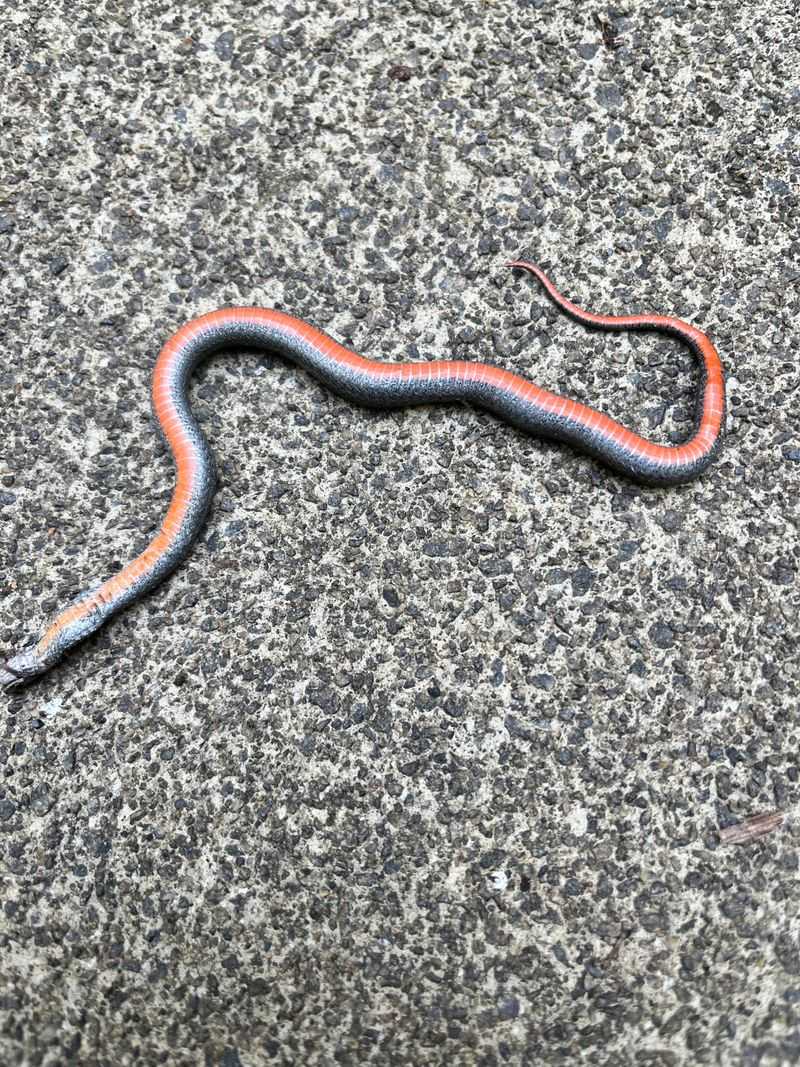
North Florida gardeners near wooded lots have a tiny neighbor that many residents farther south will never encounter. The red-bellied snake favors sheltered, moist ground and is most relevant to the northern part of the state.
Despite its name, the red belly may not be visible during an ordinary sighting. From above, it can look brown or gray, sometimes with faint stripes and small pale spots behind the head.
Slugs make up an important part of its diet, giving this nonvenomous snake a useful role around damp planting areas. Leaf litter, rotting wood, and loose mulch can put shelter close to its food supply.
Cooler nights may make protected ground cover valuable, especially along a garden’s wooded edge. Still, this is not a snake to expect in every Florida yard, and a sunny coastal bed may offer little suitable habitat.
Keep an orderly working strip beside paths while leaving some natural leaf cover in less-used habitat areas. That gives you better visibility without stripping the entire property bare.
When clearing storm debris, inspect each piece before moving it. Never handle a small snake just to see whether its belly matches a field guide photograph.
4. Eastern Gartersnake
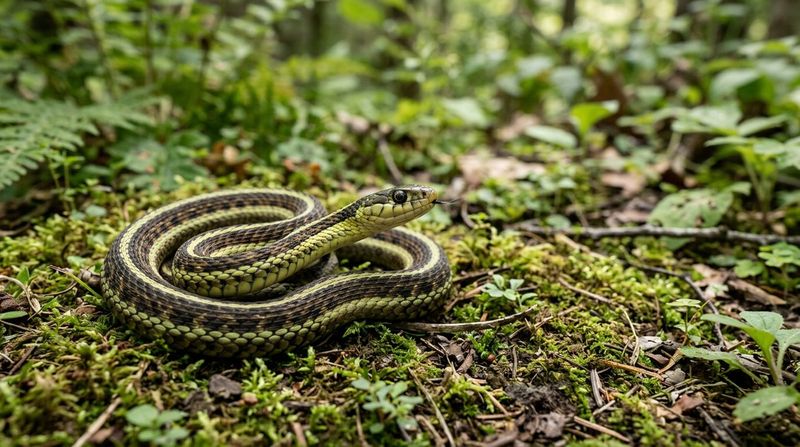
A striped visitor near a rain garden is often following food rather than searching for trouble. Eastern gartersnakes hunt animals such as earthworms, frogs, and toads, so damp garden edges can be productive hunting grounds.
They usually have pale lengthwise stripes on a darker body, sometimes with a checkered pattern between them. Florida snakes vary in color, and several species have stripes, so treat that pattern as a clue rather than proof.
Unlike the tiny snakes that spend much of their time hidden underground or beneath leaves, a gartersnake may be visible traveling through low plants. Nearby mulch, brush, or gaps beneath landscape materials can offer a quick retreat.
During Florida’s cooler spells, activity may shift toward warmer daytime hours. A snake seen beside a sunny border could simply be warming up before returning to shelter.
For fewer surprise encounters, keep stepping-stones visible and trim plants that completely cover narrow walkways. Repair irrigation leaks instead of allowing a constantly soggy patch to develop beside the house.
Leave a clear escape route if you spot one. Gartersnakes are not considered dangerous to people, but grabbing one can lead to a defensive bite and an unpleasant musky smell.
5. Southern Black Racer
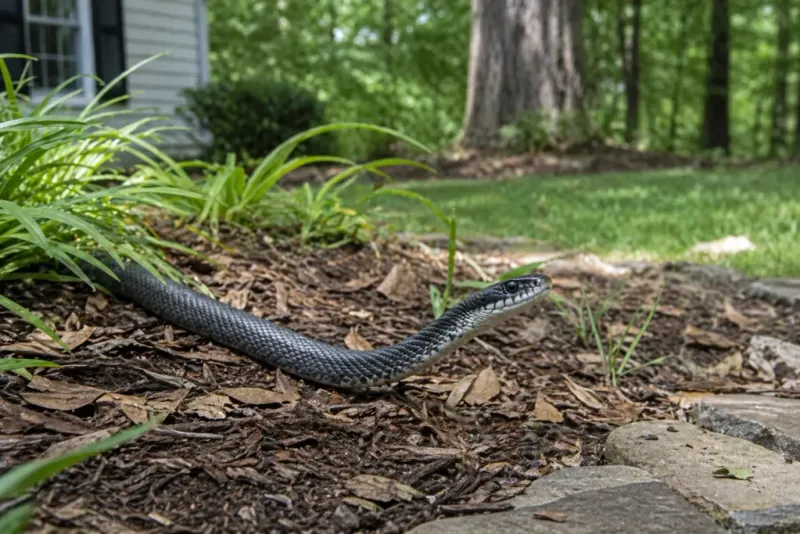
A long black snake racing across the path can turn a routine weeding session into a memorable morning. Adult southern black racers are fast, alert hunters, and they usually want to put distance between themselves and you.
Adults are mostly black with a pale chin, while young racers have blotched patterns that look quite different. Their appearance changes enough with age that identifying a youngster from an adult photograph can be misleading.
Racers eat varied prey, including lizards, frogs, rodents, and other snakes. Garden beds may serve as hunting routes, while nearby debris, dense ground cover, or sheltered spaces provide places to rest.
They are not mulch specialists, and a passing racer does not prove one is settling into your pile for the season. On mild Florida days, it may remain active even after a run of cooler nights.
Reduce clutter beside sheds and store unused pots where you can see around them. Keeping birdseed and pet food away from rodents also removes one possible food attraction.
Do not chase a racer with a rake or try to corner it for a photograph. Step back, keep pets away, and let its speed work in everyone’s favor.
6. Corn Snake
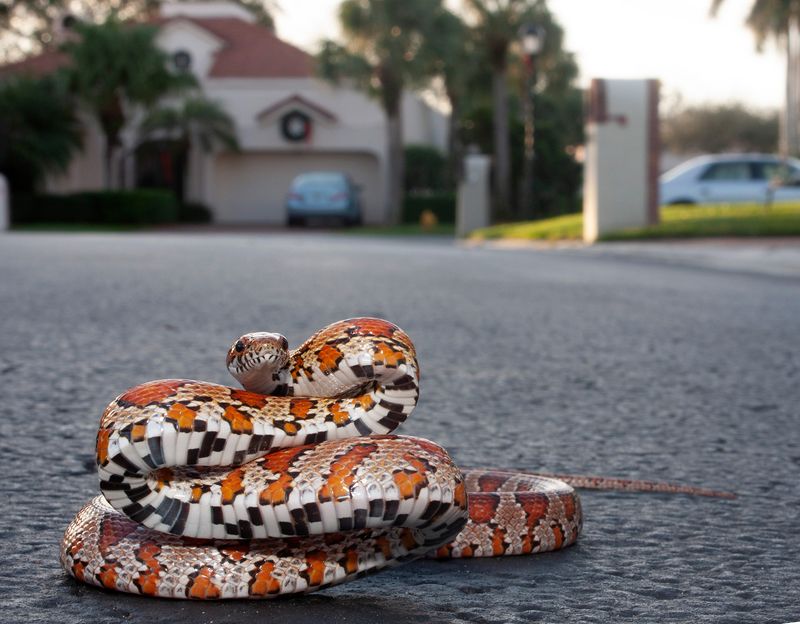
Orange and rust-colored blotches can blend surprisingly well with pine bark and fallen leaves. A corn snake tucked beside a garden shed may remain unnoticed until you begin moving bags or cleaning a border.
Often called a red ratsnake, this nonvenomous Florida native feeds mainly on small mammals, along with other prey. A yard with mice around stored seed, cluttered outbuildings, or nearby cover can offer more than a comfortable hiding spot.
Corn snakes use many kinds of shelter, including logs, stumps, and protected spaces around structures. A loose debris pile or sheltered bed edge may provide temporary cover as temperatures change, but ordinary shallow mulch is not a guaranteed winter refuge.
The practical fix starts with food storage rather than snake repellent. Put birdseed in sturdy, tightly closed containers, clean up spills, and remove unused materials that create hidden gaps.
Corn snakes can be confused with other patterned snakes, including venomous species. Do not rely on red coloring, head shape, or a quick glance to decide an unfamiliar snake is safe to touch.
Watch from a distance and allow it to leave. If identification is needed, take a zoomed photograph without approaching and consult a reliable Florida snake guide or qualified local expert.
7. Dusky Pygmy Rattlesnake
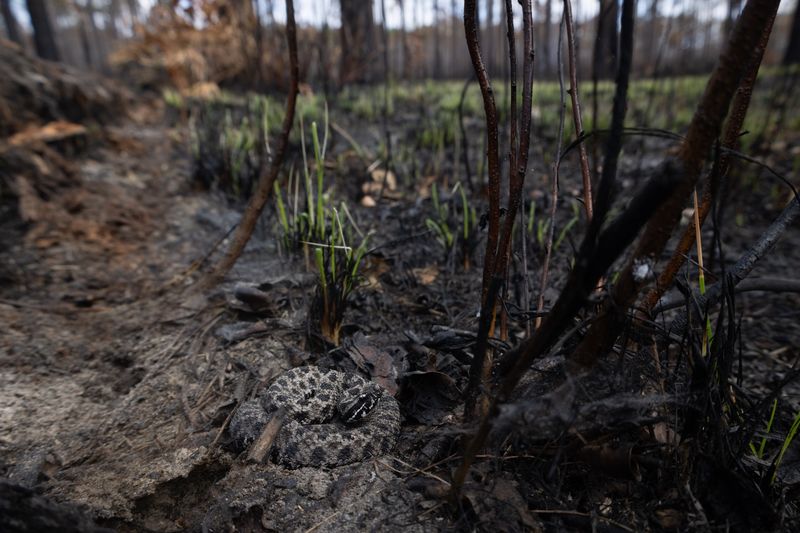
The snake most worth slowing down for may be small enough to blend into a handful of fallen leaves. Dusky pygmy rattlesnakes are venomous, and their muted gray pattern can be difficult to spot against bark mulch.
Dark blotches, sometimes paired with rusty markings along the back, help break up the outline of their short, stout bodies. Their tiny rattle can be faint or go unheard, so silence never proves a hidden snake is harmless.
These snakes occur across much of Florida and use varied habitats, including areas near wetlands and pine flatwoods. Gardens beside suitable natural habitat may offer cover and prey, although a mulch pile alone does not mean rattlesnakes are present.
Before fall cleanup, put on closed-toe shoes and check the work area in good light. Use long-handled tools, and never reach blindly beneath shrubs, landscape timbers, or stored materials.
If you see a suspected pygmy rattlesnake, stop and back away. Keep children and pets clear, and contact a qualified wildlife professional if it remains where people cannot safely avoid it.
Do not attempt to catch, kill, or relocate it yourself. If a bite occurs, call 911 promptly, limit movement, and do not use ice, a tourniquet, cutting, or suction.