
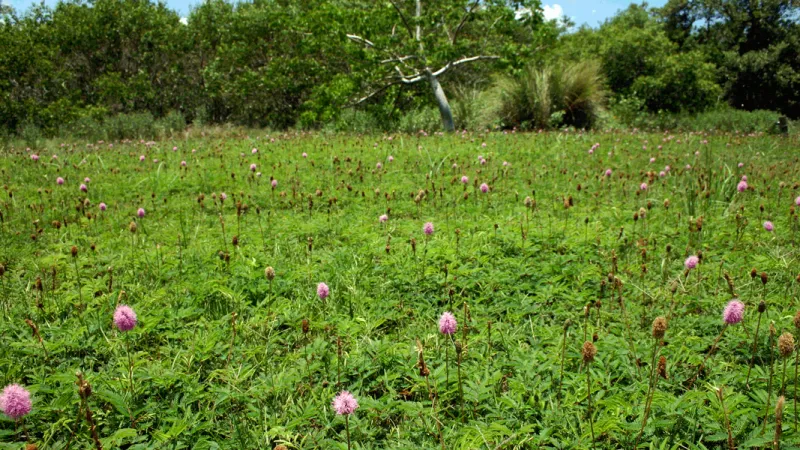
Fighting weeds in Florida can feel like a losing battle, especially when your sandy soil bakes under the July sun. The good news is that certain groundcovers spread fast enough to crowd out weeds before they even get a foothold. Instead of spraying and pulling every weekend, you can let the right plants do the hard work for you. Here are nine Florida-friendly groundcovers that shade out weeds naturally while shrugging off heat, storms, and pests.
1. Sunshine Mimosa (Mimosa strigillosa)
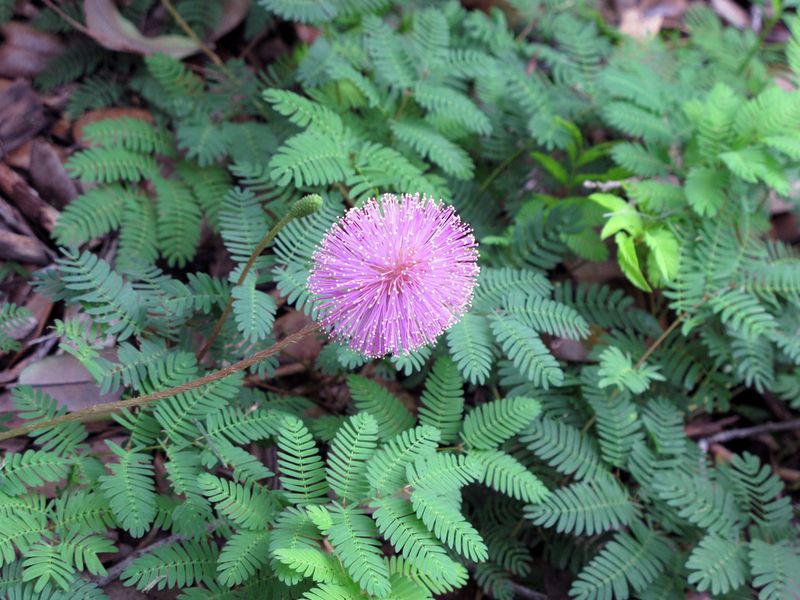
Touch a leaf and it folds up shyly, which is why kids across Florida love this native creeper. Sunshine Mimosa hugs the ground with feathery green foliage and pops out puffball pink flowers that pollinators can’t resist.
What makes it a weed-fighter is its dense, mat-forming habit. Once established, the runners knit together so tightly that seedlings of unwanted weeds simply can’t find room or light to grow.
UF-IFAS often recommends it as a lawn alternative because it handles foot traffic, drought, and Florida’s fast-draining sandy soil without complaint. It stays low, rarely needs mowing, and greens up fast after a summer storm. If you want a set-and-forget native that also feeds bees and butterflies, this one earns its spot.
2. Perennial Peanut (Arachis glabrata)
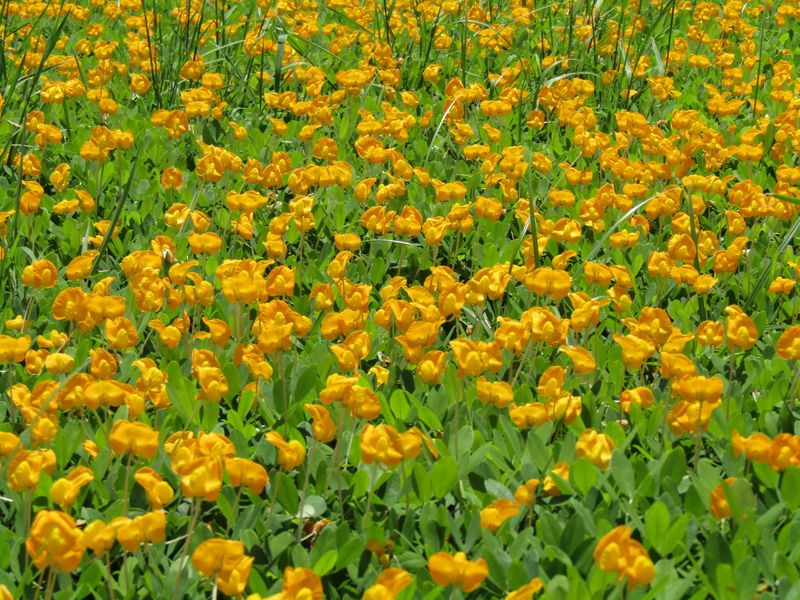
Golden yellow flowers that look like tiny buttons dot this groundcover from spring straight through fall, giving your yard a cheerful glow with almost zero effort. Perennial peanut has earned a loyal following among Florida homeowners who want a green carpet without the water bill.
Being a legume, it pulls nitrogen from the air and feeds itself, so you skip fertilizing entirely. That same vigor is what smothers weeds, forming a thick blanket that leaves no bare ground for invaders to claim.
It laughs at drought once rooted and bounces back quickly after heavy rain or flooding. Mow it a couple of times a year if you like a tidy look, or let it sprawl naturally. For sandy yards that fry in July, few groundcovers stay this green with this little fuss.
3. Frogfruit (Phyla nodiflora)
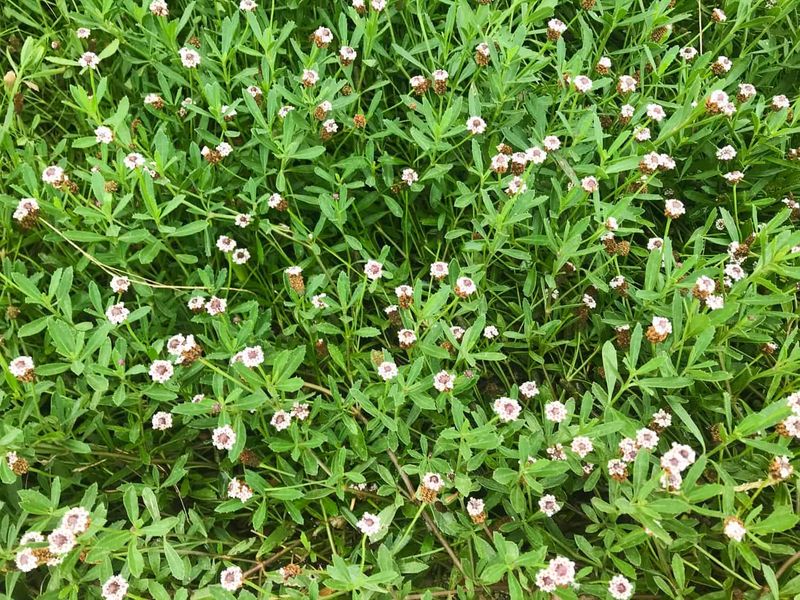
Butterflies treat this humble native like a roadside diner, flocking to its tiny white-and-lavender blooms all season long. Frogfruit may look delicate, but it is one of the toughest low creepers you can plant in Florida.
Its magic lies in how it roots at every node as it spreads, weaving a dense living mat that leaves weeds nowhere to sprout. The tight coverage does the crowding for you, so pulling and spraying become things of the past.
Wet spots, dry spots, salty coastal edges, and heavy foot traffic barely faze it. When a summer downpour floods part of the yard, frogfruit simply keeps growing. It works beautifully as a lawn replacement in tricky zones where turfgrass sulks and gives up.
4. Asiatic Jasmine (Trachelospermum asiaticum)
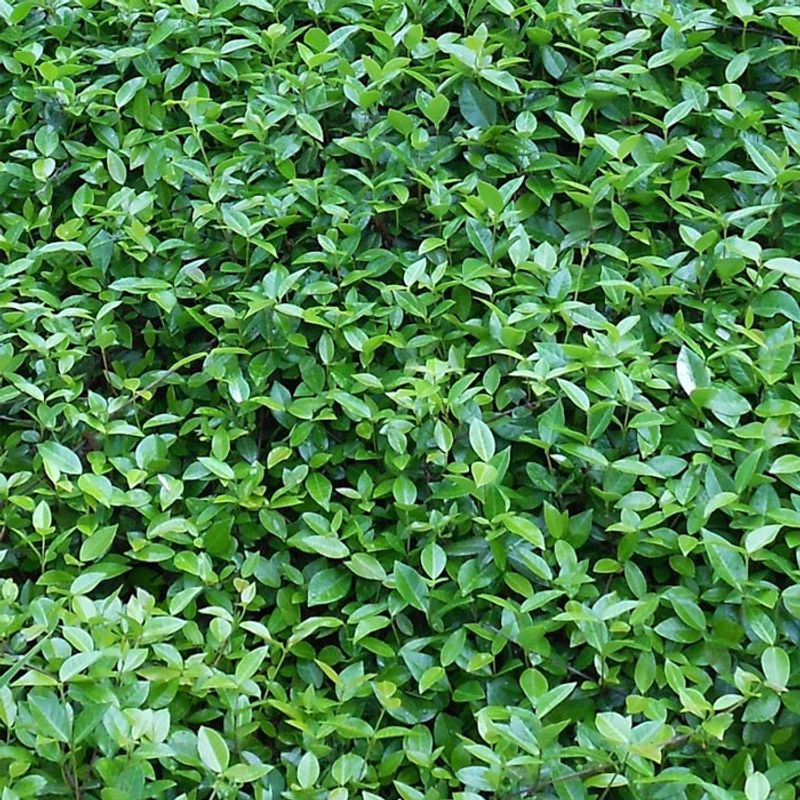
Landscapers reach for Asiatic jasmine when they need a bulletproof green carpet, and Florida yards are full of it for good reason. The small, glossy leaves form a mat so thick you could lose a garden hose in it.
That density is exactly what stops weeds cold. Sunlight can’t reach the soil beneath the tangle of vines, so weed seeds stay dormant and starved.
It thrives in both sun and shade, tolerates our sandy soil, and shrugs off drought once settled in. A single shearing a year keeps it neat. While it isn’t a Florida native, it stays put in beds and slopes and rarely causes trouble when contained. For shady spots under oaks where grass refuses to grow, this evergreen creeper is a dependable fix.
5. Beach Sunflower (Helianthus debilis)
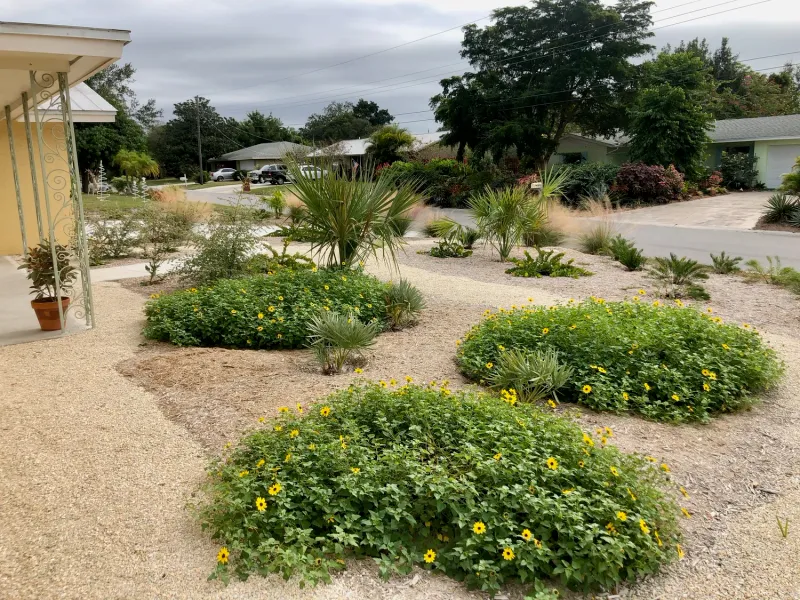
Picture a splash of little yellow sunflowers tumbling over a hot, sandy bank where nothing else wants to live. Beach sunflower is a Florida native built for exactly those brutal conditions.
It sprawls outward in a hurry, and that speed is its weed-control superpower. The rambling stems and leafy cover shade the ground so completely that weeds lose the sunlight race before it starts.
Salt spray, blazing heat, and drought are all in a day’s work for this coastal survivor. It reseeds itself freely, filling gaps so you rarely see bare dirt. Pollinators love the daisy-like flowers, which keep coming through the hottest months. For beachy yards and sun-scorched slopes, it delivers cheerful color and low-maintenance coverage in one package.
6. Mondo Grass (Ophiopogon japonicus)
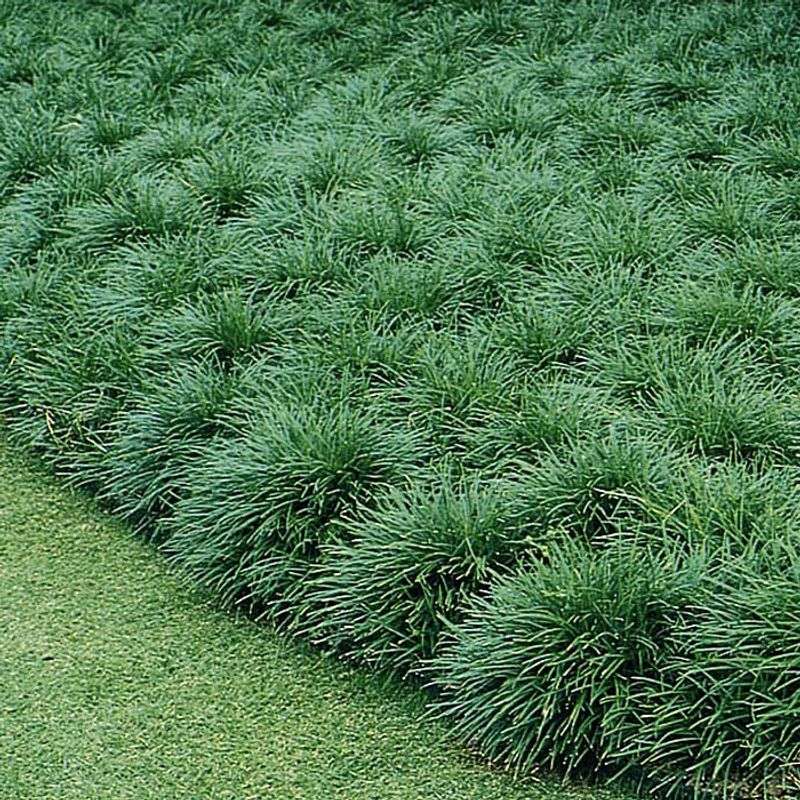
Grass-like but tougher than turf, mondo grass gives you that lush green look without the mowing marathon. Its slim, arching blades pack together into clumps that slowly merge into a solid stand.
Weeds struggle against it because the fibrous root system and tight foliage leave little open ground. Give it a season or two and the coverage becomes seamless, choking out anything trying to muscle in.
It handles shade like a champ, making it ideal for those dim spots under Florida oaks and eaves. Sandy soil and drought don’t bother it once it settles. There’s a dwarf version for edging and pathways too, so you can match it to almost any bed. Slow to spread but nearly indestructible, it rewards patience with years of tidy, no-fuss greenery.
7. Railroad Vine (Ipomoea pes-caprae)
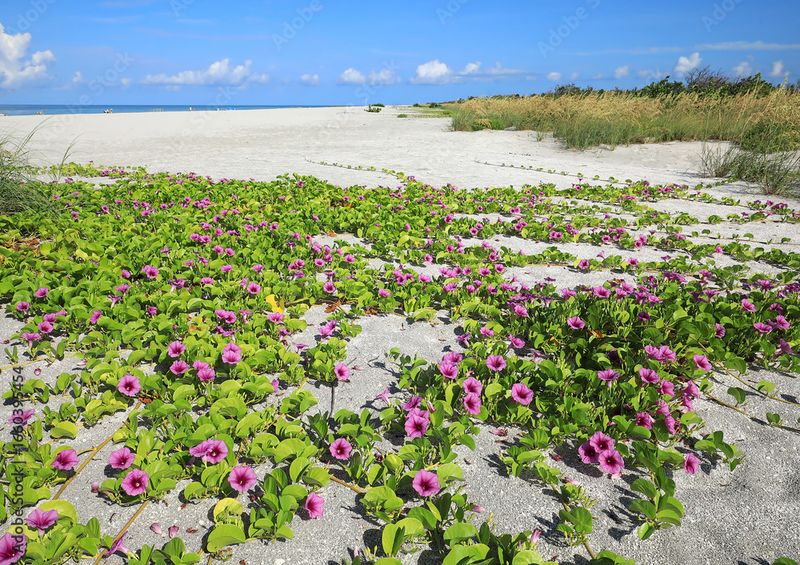
Named for the way its long runners shoot out in straight lines like railroad tracks, this coastal vine covers ground faster than almost anything else on the list. Railroad vine is a Florida native that thrives where the soil is pure sand and the sun is merciless.
Those far-reaching stems and thick, rounded leaves blanket dunes and bare patches quickly, leaving weeds without a square inch to grow. Pink morning-glory blooms add a pop of color along the way.
Salt, wind, drought, and searing heat are no match for it, which is why it helps hold dune sand in place after storms. Give it room, because it does not stay small. In a big, sunny, sandy yard near the coast, it fills space and blocks weeds with impressive speed.
8. Creeping Fig (Ficus pumila)
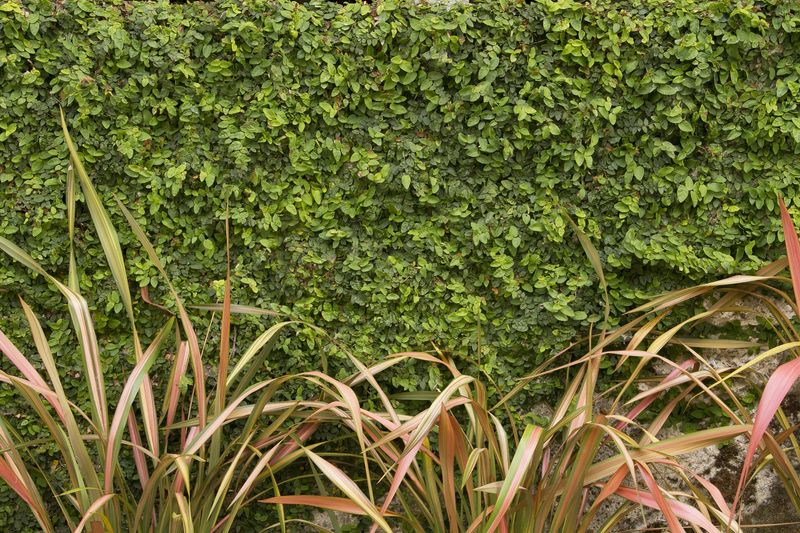
Most gardeners know creeping fig as the vine that turns walls into living green tapestries, but it doubles as a surprisingly effective ground carpet too. The tiny, heart-shaped leaves overlap into a dense sheet that hugs whatever it grows across.
Down low, that overlapping habit blocks sunlight from the soil and keeps weeds from ever gaining a foothold. It clings and roots as it goes, so coverage stays thick and continuous.
Florida’s humidity and warmth suit it perfectly, and it handles shade with ease. Keep an eye on it near structures, since it climbs eagerly and needs occasional trimming to stay in bounds. For shaded courtyards, north-facing beds, and spots where you want a smooth green look, it delivers with very little effort once it takes hold.
9. Twinflower (Dyschoriste oblongifolia)
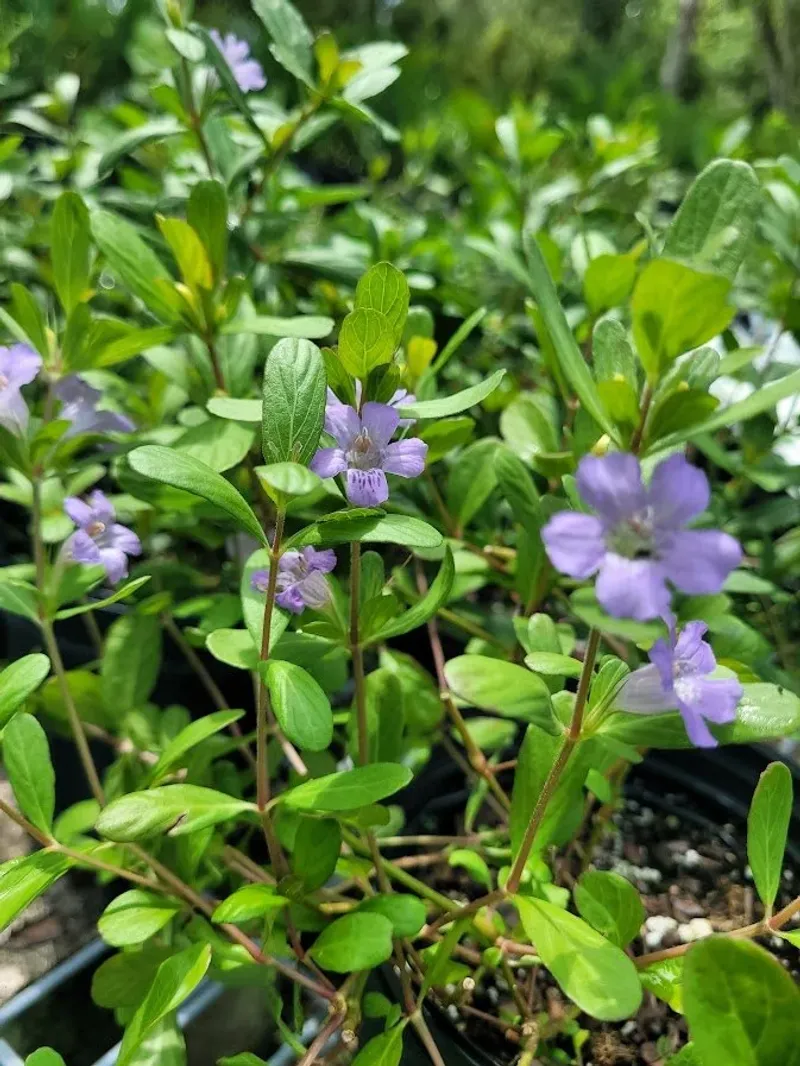
Quiet and unassuming, twinflower is the kind of native that seasoned Florida gardeners quietly swear by. Its soft lavender blooms show up in pairs along low, spreading stems, giving it both charm and purpose.
The plant spreads by underground runners, slowly filling in to form a low mat that leaves weeds little breathing room. Over time that steady march creates coverage dense enough to keep bare soil, and the weeds it invites, out of the picture.
Native to Florida’s pine flatwoods, it is right at home in dry, sandy ground and full sun. Drought barely registers once it’s established, and it feeds the caterpillars of the common buckeye butterfly as a bonus. For a naturalistic, low-water bed that supports wildlife while smothering weeds, twinflower quietly gets the job done.