
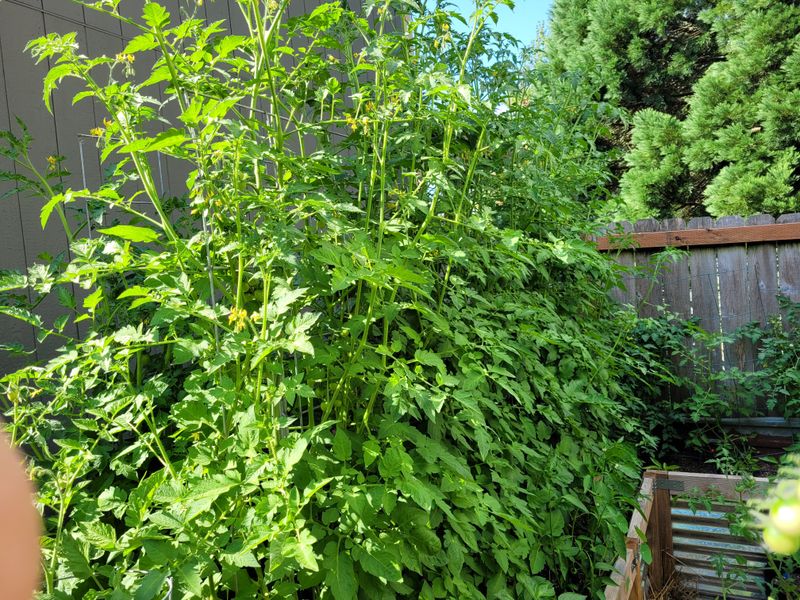
Your tomato plants can look huge, green, and healthy, yet still refuse to set fruit when it matters most. That usually means the plant is putting energy in the wrong place, and the fix is often simpler than people think. A few common mistakes with fertilizer, watering, spacing, or temperature can quietly stop flowers from turning into tomatoes. Here are seven fast, practical fixes that can get your plants back on track before the season slips away.
1. Too Much Nitrogen Fertilizer

If your tomato plant is all leaves and no tomatoes, too much nitrogen is one of the first things to check. Nitrogen pushes fast leafy growth, so the plant looks impressive while flower production slows down. This often happens after using lawn fertilizer nearby or feeding with high-nitrogen plant food too often.
Stop nitrogen-heavy products right away and switch to a tomato fertilizer with a lower first number and more phosphorus and potassium. Water deeply after feeding so nutrients move into the root zone evenly. If mulch is thick with fresh grass clippings, pull some back because it can add extra nitrogen as it breaks down.
Within a couple of weeks, you should start seeing better flowering and a more balanced plant.
2. Not Enough Sunlight

Tomatoes need real sun, not just bright light, to make flowers and ripen fruit well. If they get less than six to eight hours of direct sunlight, they often grow tall, soft, and leafy instead of productive. Even a nearby tree, fence, or porch shadow can reduce fruit set more than you expect.
Watch your garden for a full day and note exactly where shade falls in morning, noon, and late afternoon. Prune back overhanging branches if possible, or move container tomatoes to the brightest spot you have. For next season, plant them where they get strong midday and afternoon sun, especially in cooler climates.
More direct sun usually means more flowers, sturdier stems, and faster fruit development.
3. Poor Pollination

Tomato flowers are self-pollinating, but they still need a little movement to release pollen inside each bloom. When the air is still, humidity is high, or pollinators are scarce, flowers may dry up and fall off without making fruit. This is especially common in covered patios, greenhouses, or calm weather.
You can help by gently shaking the plant or tapping flower clusters around midday when pollen is driest. A small electric toothbrush held behind the flower stem also works surprisingly well for vibrating pollen loose. Avoid spraying water on blooms during this time because wet pollen clumps and sticks instead of moving where it should.
With a little hand help, many plants start setting fruit within days.
4. Extreme Heat or Cool Nights

Tomatoes can look healthy and still refuse to set fruit when temperatures swing outside their comfort zone. Daytime heat above about 90 F or nighttime temperatures below 55 F can damage pollen and stop flowers from developing fruit. The plant keeps growing leaves, which tricks you into thinking everything is fine.
During heat waves, water early, mulch the soil, and use light shade cloth in late afternoon to reduce stress. In cool spells, row covers can protect blooms and keep nighttime temperatures a little steadier. Choose heat-tolerant or early-setting varieties if your summers run hot or your spring nights stay chilly longer than expected.
Once temperatures moderate, fruit set often resumes without any other major changes.
5. Inconsistent Watering

Tomatoes hate wild swings between bone dry soil and heavy soaking. Inconsistent watering stresses the plant, causing blossom drop and poor fruit set even when leaves stay green. It also weakens roots, which makes nutrient uptake less reliable right when flowers need steady support.
Check soil moisture two inches down instead of watering by habit or on a random schedule. Give plants a deep soak so water reaches the full root zone, then let the top inch dry slightly before watering again. Add two to three inches of straw, shredded leaves, or compost mulch to slow evaporation and keep soil temperatures more even.
Once moisture stays steady, flowers hold better and the plant can shift energy into making tomatoes.
6. Overcrowded Plants and Heavy Pruning Mistakes

When tomato plants are packed too closely, they compete for light, airflow, water, and nutrients. The result is lots of leafy growth, slow flowering, and a humid canopy that encourages disease and weak blossoms. Heavy pruning can also backfire if too many productive stems or flower trusses are removed by mistake.
Give indeterminate plants enough space, usually at least 24 to 36 inches, depending on variety and support method. Remove only the suckers you truly want to control, and keep enough foliage to protect fruit and power the plant. Tie stems neatly to stakes or cages so sunlight reaches the interior and air moves freely after rain or watering.
Better spacing often boosts flowering faster than extra fertilizer ever will.
7. Low Phosphorus or Poor Soil Balance

Sometimes the problem is not too much nitrogen but too little support from the rest of the soil. Tomatoes need balanced nutrition, especially phosphorus and potassium, to build flowers, roots, and fruit instead of endless green growth. In poor or compacted soil, those nutrients may be missing or unavailable even if you fertilized.
Start with a simple soil test if possible, because guessing can waste time and make the imbalance worse. Work in finished compost, avoid overfeeding, and use a fertilizer labeled for tomatoes or fruiting vegetables. If soil is compacted, loosen it gently around the root zone and top-dress with compost so roots can breathe and absorb nutrients more efficiently.
Healthier soil usually means stronger blooms and steadier fruit set.