
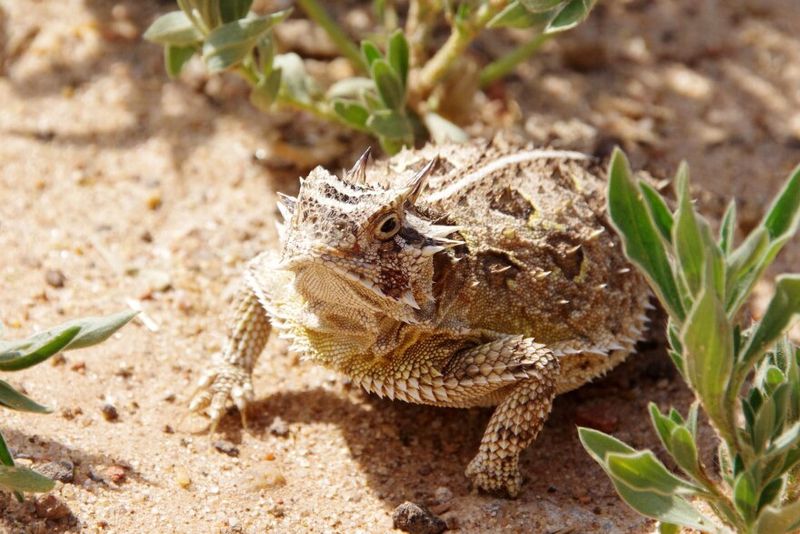
If you grew up in Texas, you probably remember spotting horned lizards, often called “horny toads,” all over the place. These days they are much harder to find, so seeing one pop up in your yard after years feels like a small miracle. Their return can tell you a lot about your land, your local ecosystem, and even a bit about Texas history. Here are seven meaningful things this surprise visitor might be telling you.
1. A Sign Your Yard Is Getting Healthier

Nothing says your land is bouncing back quite like a horned lizard strolling through the grass. These little reptiles are picky about where they live, so their arrival is a genuine compliment to your yard.
They avoid places soaked in chemicals or stripped of native plants. When one shows up, it usually means the soil, insects, and cover have all reached a healthy balance.
Consider it nature quietly giving your backyard a passing grade.
2. Harvester Ants Have Moved Back In

Here’s a fun secret: horned lizards are basically obsessed with red harvester ants, which make up most of their diet. A lizard in your yard means those ants are thriving nearby.
Harvester ants disappeared from many neighborhoods after fire ants and pesticides took over. Their comeback creates a full food chain that draws the lizards home.
So if you spot ant mounds you once cursed, you might want to thank them instead.
3. You’ve Cut Back On Harsh Pesticides

Whether you planned it or not, a returning horned lizard hints that fewer chemicals are floating around your property. These reptiles are extremely sensitive to sprays that wipe out their ant buffet.
Insecticides meant for fire ants often kill the good bugs too, leaving lizards with nothing to eat.
Backing off the strong stuff lets insects rebuild their numbers. The lizard’s presence is proof your gentler approach is quietly paying off around the whole yard.
4. A Living Piece Of Texas History Returns

Older Texans light up talking about horny toads because these creatures shaped countless childhood memories. The Texas horned lizard even became the official state reptile in 1993.
Seeing one again links your yard to generations who once caught them barefoot in the summer heat.
Fun fact: cowboys nicknamed them horny toads even though they are lizards, not toads at all. Their reappearance carries a warm slice of Lone Star heritage right to your doorstep.
5. Native Plants Are Doing Their Job

Picture a yard full of native grasses, wildflowers, and open sandy patches. That’s the exact setup horned lizards adore, and their visit suggests you’ve got some of it going.
These reptiles need loose soil for burrowing and plants that shelter their insect meals.
Thick, thirsty lawns of foreign grass rarely support them. Their appearance rewards anyone who let bluebonnets, buffalograss, or bare ground share space with the tidy turf many neighbors chase.
6. A Rare Treat You Should Cherish

Don’t shrug this moment off, because horned lizards have vanished from huge stretches of Texas. Populations dropped so sharply that they are now a protected species you cannot legally collect.
Spotting one is far less common than it was decades ago.
Snap a respectful photo from a distance, but leave it be. Handling stresses them out and rubs off protective oils. Simply enjoying the sighting keeps this fragile visitor safe and free.
7. An Invitation To Help Them Thrive

Think of this lizard as a friendly nudge to keep improving your little corner of Texas. Small choices can turn a one-time visit into a lasting home for these spiky guests.
Skip broad pesticides, tolerate harvester ants, and plant native species whenever you can.
You might also leave a few bare, sunny patches for basking and digging. Every welcoming yard becomes a stepping stone helping horned lizards spread back across the state.