
Spotting a flash of red at your feeder is one of those small moments that can stop you in your tracks, especially when it keeps happening. For Florida homeowners, a Northern Cardinal showing up again and again feels like more than coincidence. Whether you read it as a sign from someone you have lost or simply enjoy the color against your green yard, understanding what actually draws these birds back can help you see them clearly. Both the biology and the meaning are worth knowing.
Florida cardinals are year-round neighbors
Plenty of birds drift through Florida seasonally, but the Northern Cardinal is not one of them. UF/IFAS research on Florida backyard birds confirms that the Northern Cardinal lives here year-round, using suburban neighborhoods, dense shrubbery, and woodland edges across the state. That permanence matters: when a cardinal keeps appearing in your yard, you are not witnessing a rare stopover. You are watching a resident.
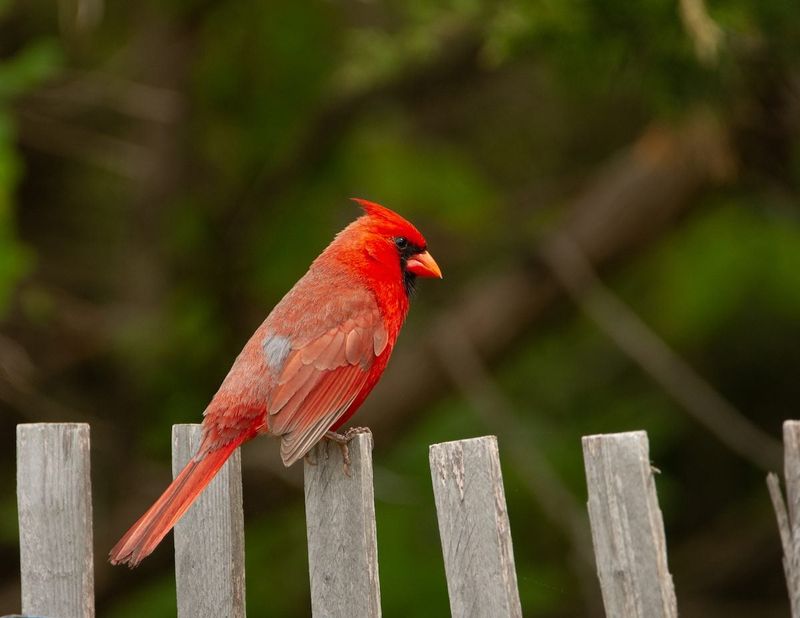
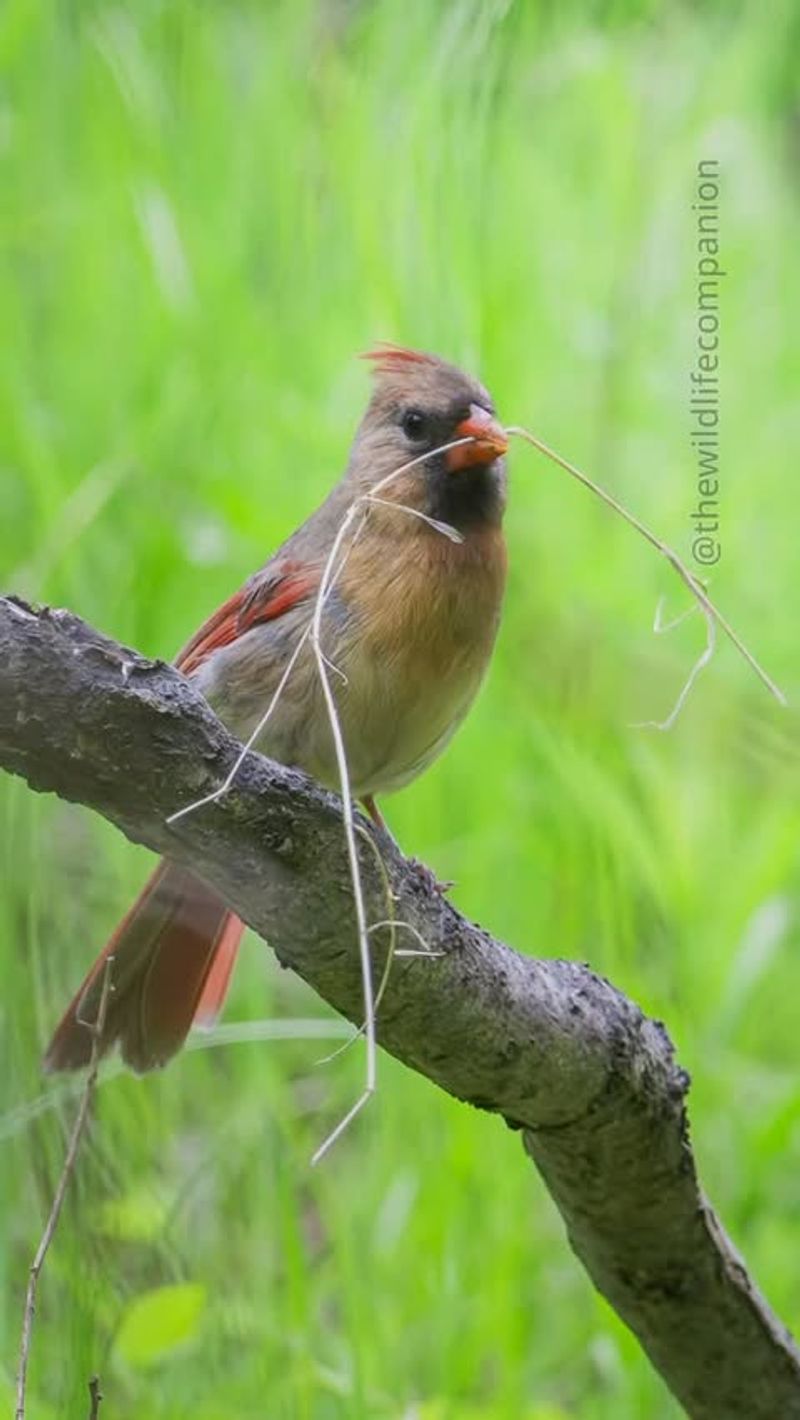
The male is hard to miss. His all-red plumage and prominent crest make him one of the most recognizable birds in Florida backyards. Females wear a warm buffy-brown with red highlights on the crest, wings, and tail, and they are equally capable of holding their own in a yard. Cornell Lab of Ornithology’s Northern Cardinal profile notes that both sexes visit feeders readily and use dense vegetation for cover throughout the year.
Because cardinals are common and conspicuous, repeated sightings are not surprising from a biological standpoint. A yard with the right mix of food sources, water, and cover sits squarely inside the kind of habitat this species uses regularly. Before reaching for a spiritual explanation or assuming something unusual is happening, it helps to start with that baseline: cardinals are simply here, all year, and your yard may suit them well.
Framing repeated sightings as a habitat question rather than a mystery is not meant to dismiss what the visits mean to you personally. It just gives you a clearer starting point for understanding the bird on the other side of the glass.
Several ordinary features can keep a cardinal nearby
A cardinal does not return to a yard out of loyalty or recognition of the person inside. The more grounded explanation involves resources: food, water, cover, insects, and familiar routes through a home territory can all pull a bird back to the same spot repeatedly. These explanations are not ranked by importance because they often overlap, and no outside observer can determine which one is driving a particular sighting.
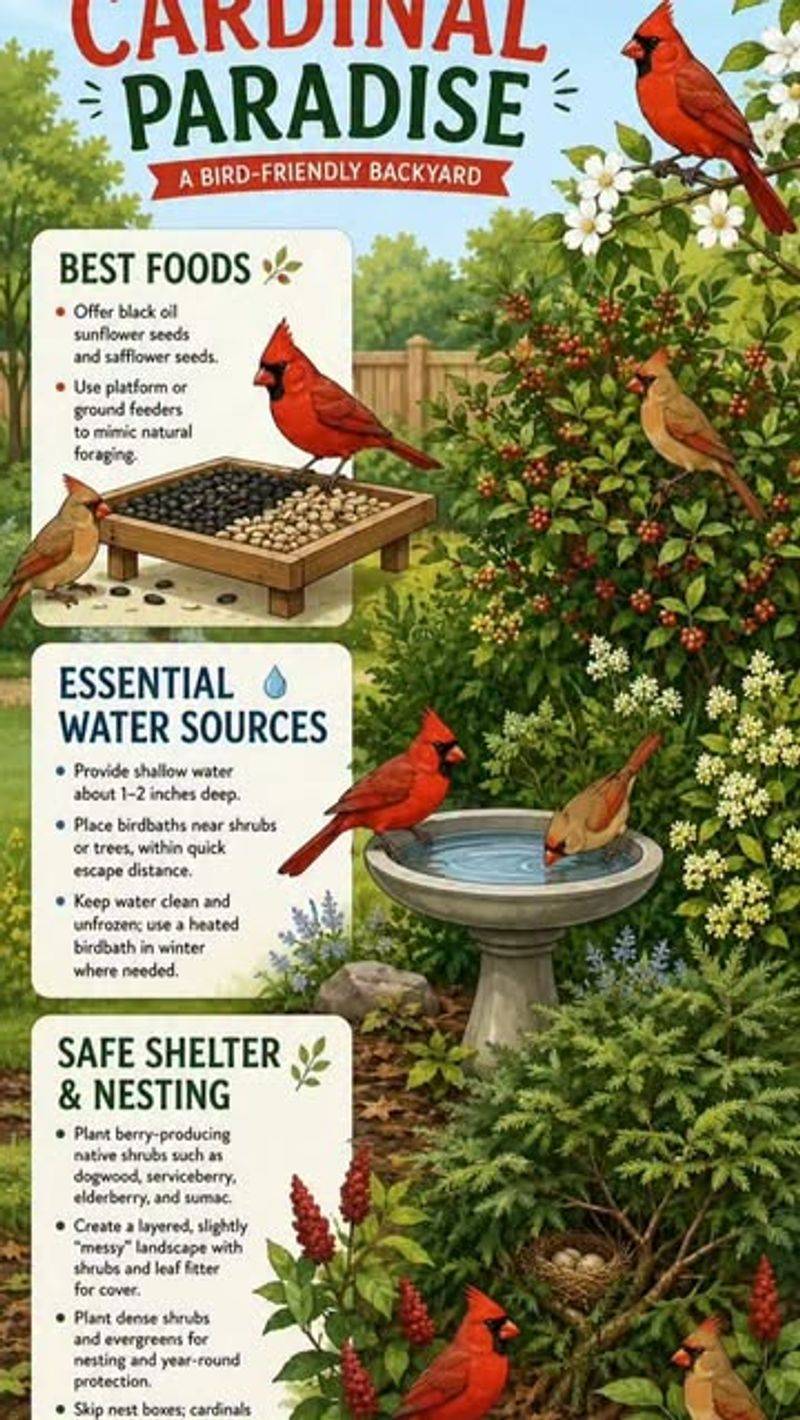
Cornell Lab’s species account describes cardinals as seed, fruit, and insect eaters that are especially drawn to sunflower seeds and dense shrubbery. A feeder stocked with sunflower or safflower seed is an obvious draw, but so is a yard that holds fallen fruit, fruiting shrubs, or a healthy insect population during nesting season. Water matters too: a shallow birdbath cleaned regularly can be just as attractive as the feeder beside it.
Territory is another piece of the picture. Research published in The Auk documents that cardinal pairs may remain in the same general area across multiple breeding seasons, which means a bird using your yard this spring may have used it last year as well. That said, this is an inference from documented behavior, not a method for identifying a particular individual. What looks like the same cardinal returning could be one bird with a familiar route, or it could be different birds that find the same resources appealing.
One explanation worth setting aside: the idea that a cardinal comes back because it recognizes the homeowner. No published source supports personal recognition as a general reason for repeat visits. Habitat, food, territory, and seasonal behavior are the plausible factors, and even those cannot be confirmed from a single observation.
A window visitor may be defending its reflection
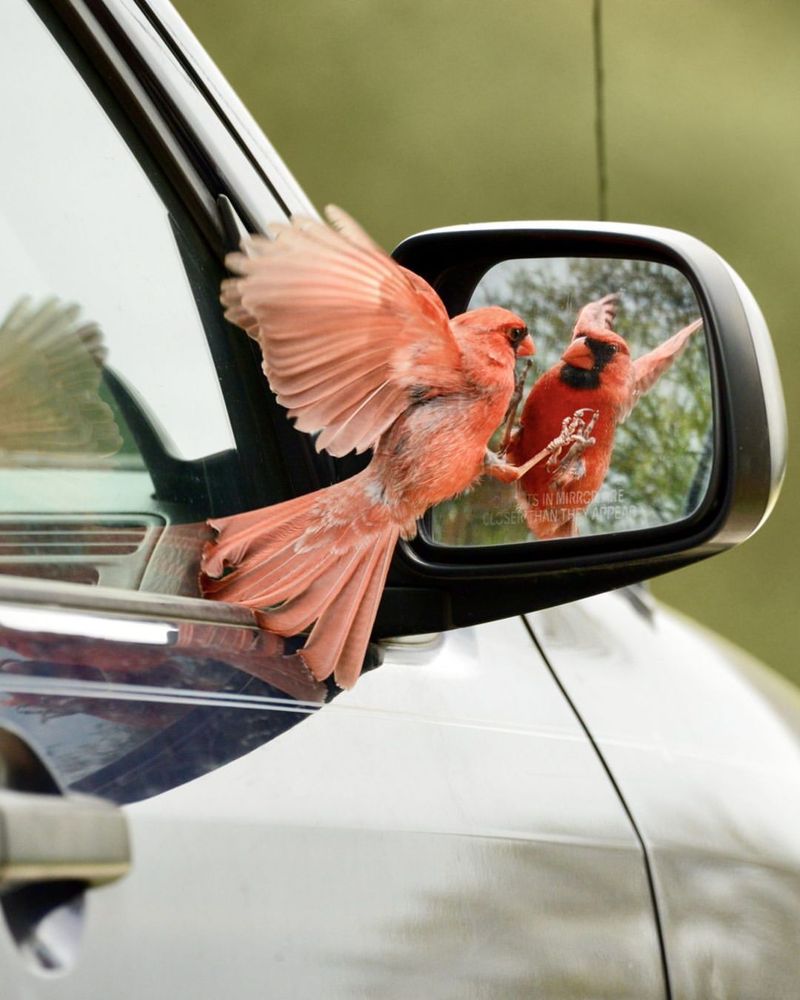
When a cardinal keeps flying at a window, mirror, car bumper, or any other shiny surface, the behavior usually has a specific cause that has nothing to do with food or water. Cornell Lab’s guide to Northern Cardinals explains that cardinals defending territory will attack their own reflection, treating the image as a rival bird that refuses to back down. The more the real bird displays aggression, the more the reflection mirrors it, and the cycle continues.
Spring and early summer bring the strongest territorial drive, so reflection attacks tend to peak during those months when breeding behavior is at its height. Both males and females can show this behavior, though the male’s bright plumage makes him the more visible offender. A female repeatedly striking a car mirror in April is following the same territorial logic as a male hammering a sliding glass door in May.
Distinguishing a reflection attack from a resource visit is fairly straightforward. A bird defending its reflection will focus on one specific surface, often striking it repeatedly and returning within minutes. A bird seeking food or water moves between a feeder, a birdbath, or nearby shrubs and does not fixate on a single glassy spot.
If the behavior is disrupting your mornings or risking the bird’s safety, covering the outside of the window or mirror temporarily with paper, fabric, or non-reflective film can break the cycle. Once the bird no longer sees a rival in that spot, the drive to attack typically fades. Seasonal changes in hormone levels also mean the behavior often resolves on its own as breeding season winds down.
Personal meaning can coexist with biological uncertainty
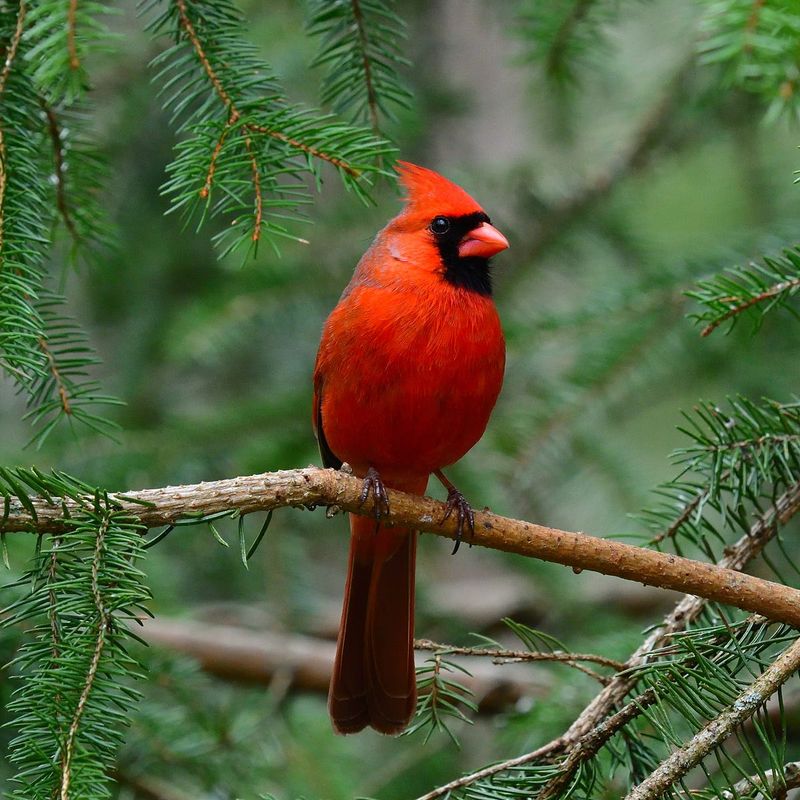
For many people, a cardinal’s repeated appearance carries weight that goes beyond habitat and territory. Grief communities, family traditions, and personal spiritual practices often treat a cardinal sighting as a sign of connection with someone who has died, or as a token of hope, protection, or reassurance. World Birds’ overview of cardinal symbolism documents these interpretations as contemporary folklore and personal belief rather than established historical doctrine.
Holding those meanings matters, and there is nothing wrong with finding comfort in a bird that arrives at the right moment. A cardinal landing on the fence the morning after a loss can feel like more than coincidence, and for the person experiencing it, that feeling is real and worth honoring. The distinction worth keeping clear is between what the experience means to you and what science can demonstrate about the bird’s behavior.
No published research establishes that a cardinal visit carries a message from a deceased loved one, signals an approaching event, or confirms that an angel is present. The phrase “when cardinals appear, angels are near” circulates widely in modern grief and memorial culture, but it does not trace back to a single authoritative religious or historical source. Presenting it as a biblical teaching, a universal Native American belief, or an ancient tradition would overstate what the record actually shows.
Some people interpret the same bird as a cheerful, common resident. Others read it as a quiet hello from someone they have lost. Both can be true at once, in the sense that the biological explanation and the personal meaning do not have to cancel each other out. Science describes the bird’s behavior.
What the visit means to the person watching is a separate question, and one that belongs to the watcher.
Build habitat instead of relying on unlimited seed
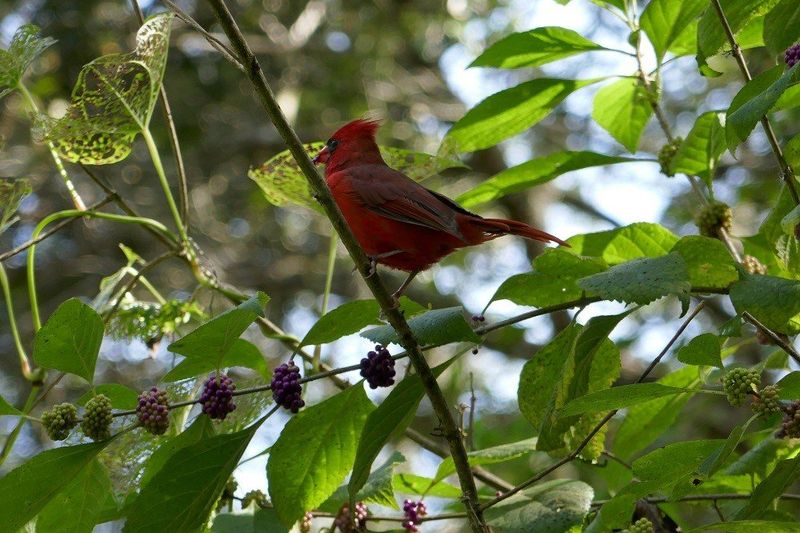
Pouring more seed into a feeder is the most obvious way to encourage birds, but it is not the most effective or the safest approach for a Florida yard. Habitat improvements, including dense native shrubs, clean water, reduced pesticide use, and a cat-free environment, do more to support cardinals across seasons than a feeder alone can manage.
UF/IFAS guidance on Florida backyard birds specifically names wax myrtle and American holly as useful protective and nesting vegetation for cardinals. Both plants offer dense cover that cardinals use for shelter and nesting, and wax myrtle produces fruit that wildlife values through the colder months. Retaining or planting these species where your yard’s sun exposure, drainage, and space allow is a concrete step toward a more cardinal-friendly environment.
American beautyberry is another Florida-native option worth considering. UF/IFAS’s beautyberry profile describes it as relatively low-maintenance, tolerant of both drought and wet soil, and attractive to birds through its clusters of bright purple fall fruit. It can grow large, so it needs room, and its performance will vary by yard conditions. UF/IFAS also notes that wax myrtle fruit is an important food source for birds and wildlife across Florida’s varied regions.
No single plant guarantees that cardinals will show up or stay. Plant performance depends on your specific region of Florida, soil moisture, drainage, available sunlight, and how much space you can dedicate. The goal is to build a layered yard that offers food, cover, nesting sites, and insects together, because cardinals rely on all of those resources at different points in the year. Reducing or eliminating pesticide use protects the insect populations that cardinals feed to their nestlings, which is a contribution that a bag of sunflower seed cannot replicate.
Feed birds with Florida conditions in mind
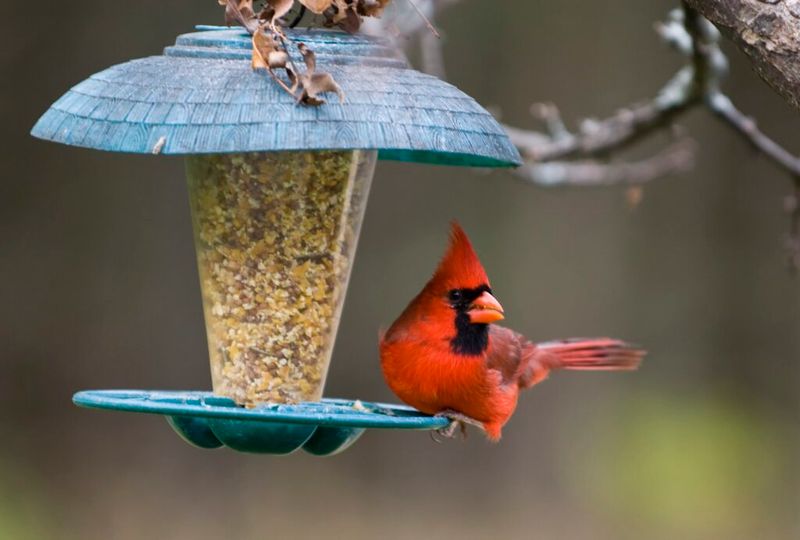
Florida’s heat and humidity make bird feeding a more demanding task than most generic guides suggest. A feeder that works fine through a mild northern spring can become a mold trap within days during a Florida summer, and spoiled seed is a genuine health risk for birds and a magnet for the wildlife you do not want in your yard.
For cardinals, a platform or hopper feeder stocked with sunflower or safflower seed is the practical starting point. Placement matters more than many people realize. UF/IFAS guidance on feeder selection and placement recommends positioning feeders near dense vegetation but not directly inside it, roughly 10 to 15 feet from bushes. That distance gives birds a clear escape route while avoiding the close ambush cover that cats and other predators use.
For window safety, the same guidance cites research favoring placement within about 3 feet of a window or more than about 10 feet away. The intermediate zone lets birds build enough speed to cause serious injury if they strike the glass. Exterior decals, netting, or other visual markers on the outside of the window can reduce strike risk further.
Cleaning frequency is non-negotiable in Florida. UF/IFAS recommends cleaning seed feeders at least every two to three weeks, and more often during hot or wet weather. A 10 percent bleach solution works for glass, ceramic, and plastic feeders; rinse and dry thoroughly before refilling. Remove spoiled seed and accumulated hulls from the ground beneath the feeder, because moldy debris can harm birds and pets while drawing rodents and raccoons.
Florida Fish and Wildlife Conservation Commission’s guidance on feeding wildlife warns that feeders can attract bears, coyotes, foxes, raccoons, and other regulated species when food is left accessible. Targeted, hygienic bird feeding is very different from scattering seed broadly or leaving food out overnight.
If sick or dead birds appear near your feeder, current FWC guidance on bird illness advises temporarily removing feeders until more is known, cleaning them thoroughly, avoiding contact with sick or dead birds, and keeping pets away from the area.
Observe the pattern without turning it into a prophecy
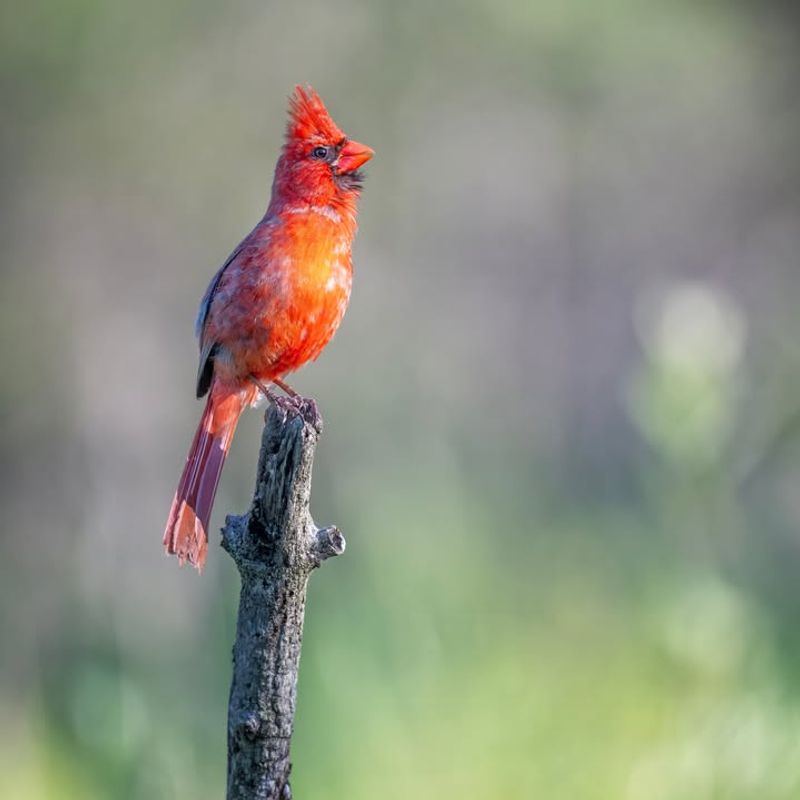
Paying attention to where and when a cardinal appears is genuinely useful, and it does not require settling the question of what the visit means. Note whether the bird arrives at the feeder, at a fruiting shrub, near a window, or at the birdbath. Note the time of day and the season. That pattern can tell you something real about what your yard is offering, which is more actionable than any single interpretation.
UF/IFAS’s Florida cardinal research and Cornell Lab’s behavioral documentation both support the idea that repeated appearances in the same yard reflect available resources and territorial familiarity rather than a single identifiable cause. Improving habitat, maintaining feeders carefully, and reducing hazards like outdoor cats and window-strike risks are practical responses that hold up regardless of what draws the bird in the first place.
The personal meaning a cardinal carries for you, whether that is grief, hope, or simply the pleasure of watching a striking bird, belongs to you. Cardinal symbolism as documented across folk traditions is real in the sense that it reflects something genuine about human experience, even if it cannot be confirmed by tracking the bird’s behavior. Observation alone cannot identify whether the same individual keeps returning, determine one definitive cause, or verify a message beyond the yard itself. What it can do is connect you more closely to the living world just outside your window, which may be meaning enough.