
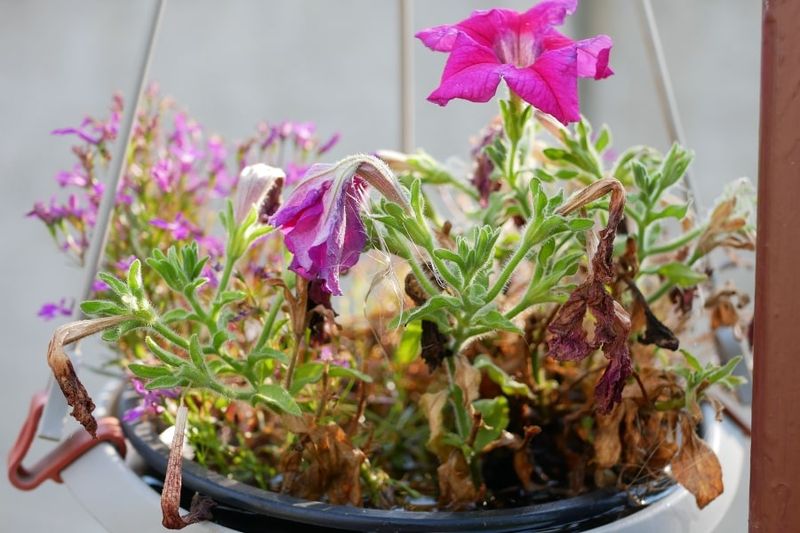
Watching your hanging petunias droop every afternoon can feel alarming, but the wilt itself is a symptom, not a diagnosis. Before reaching for the hose or backing off water entirely, a quick check of the root zone will tell you far more than the leaves will. Afternoon timing narrows down the possibilities, and knowing the five most likely causes puts you in a much better position to give your basket exactly what it needs.
Start with the root zone, not the wilt
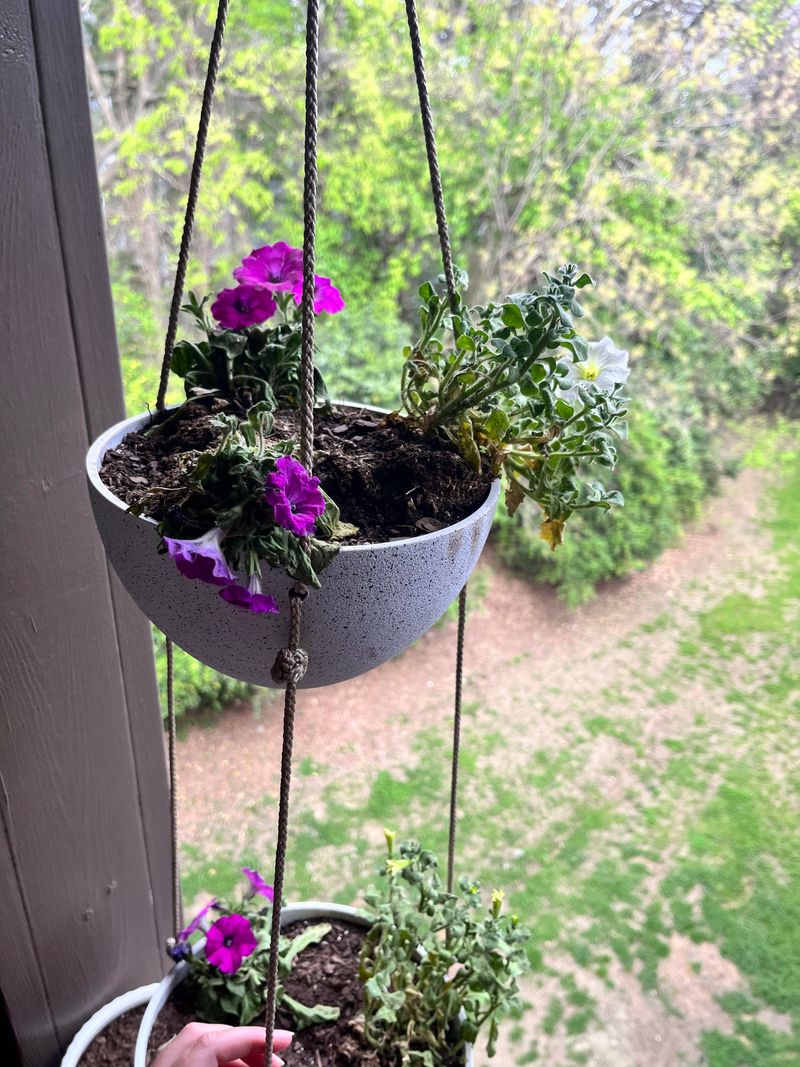
Afternoon timing is a useful clue, but it does not tell you why your petunia is drooping. A plant that wilts during the hottest hours and bounces back by evening is behaving differently from one that stays limp overnight or develops yellowing, soft stems, or browning at the base. Those two patterns point in very different directions, and treating them the same way can make things worse.
Before doing anything else, push a finger an inch or two into the potting mix. Feel whether the root zone is dry, moist, or soggy. Then look underneath the basket: is water draining freely when you water, or does it pool? Illinois Extension guidance on container watering recommends checking the root zone directly rather than relying on how the leaves look, because wilt alone does not confirm whether the mix is too dry or too wet.
A reversible midday droop that clears up in the evening is more consistent with temporary heat or water-demand stress. Persistent wilt that does not recover, combined with yellowing, stem-base damage, or decline limited to one part of the plant, calls for closer inspection before any watering decision. University of Minnesota Extension notes that heat alone can cause temporary wilt even when soil is adequately moist. Use the root zone check as your decision point every time.
The basket may be drying faster than the roots can keep up
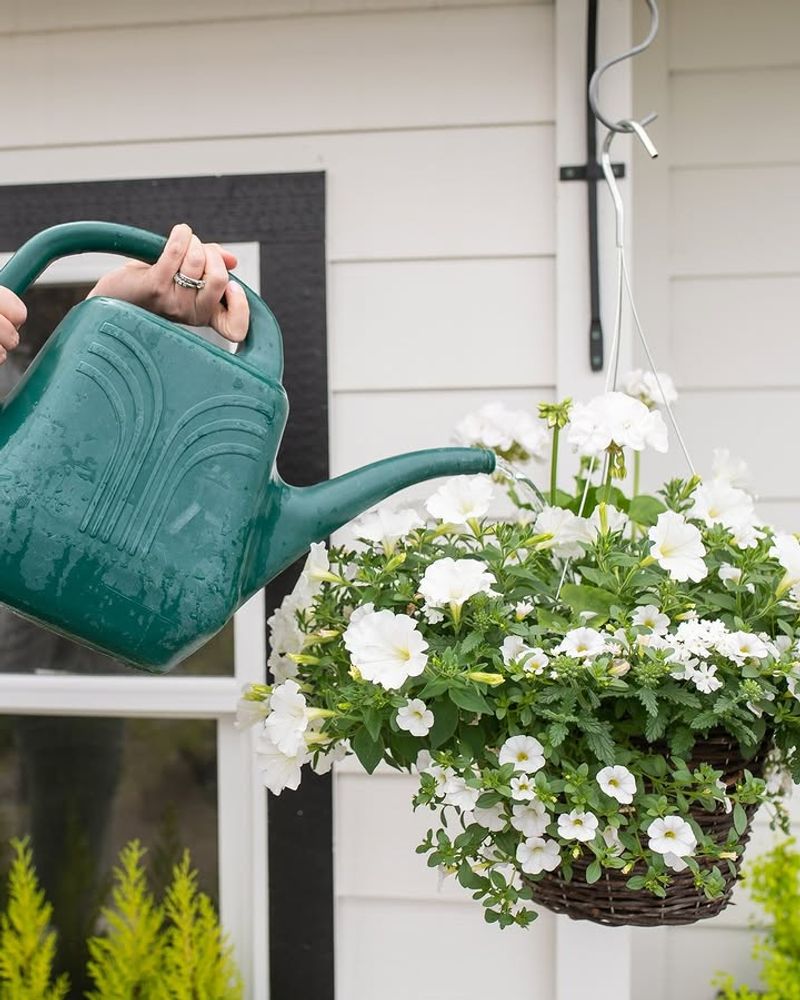
A hanging basket sits exposed to sun, moving air, and heat on all sides, and its potting mix volume is small compared to a garden bed. That combination means moisture can disappear surprisingly fast. University of Minnesota Extension notes that petunias in baskets may need watering as often as daily, depending on basket size, weather, and how densely the plant is growing.
To confirm genuine dryness, press a finger into the mix rather than relying on wilt or a watering schedule. If the upper inch or more feels dry, water directly onto the mix, not primarily onto the foliage. Soak the entire root ball until water runs freely from the drainage holes, which confirms that moisture has reached the full depth of the basket. Penn State Extension guidance on summer watering advises watering promptly when a plant shows drought stress rather than waiting for an ideal time of day.
During a hot, dry, or windy stretch, check the basket at least once a day. A small or densely planted basket may genuinely need water more than once in a single day, but only when the mix has actually dried out again. Illinois Extension’s hanging basket guidance reinforces that repeated severe wilting can reduce root health and flower quality even when the plant appears to recover each time.
Heat, afternoon sun, and wind can trigger temporary droop
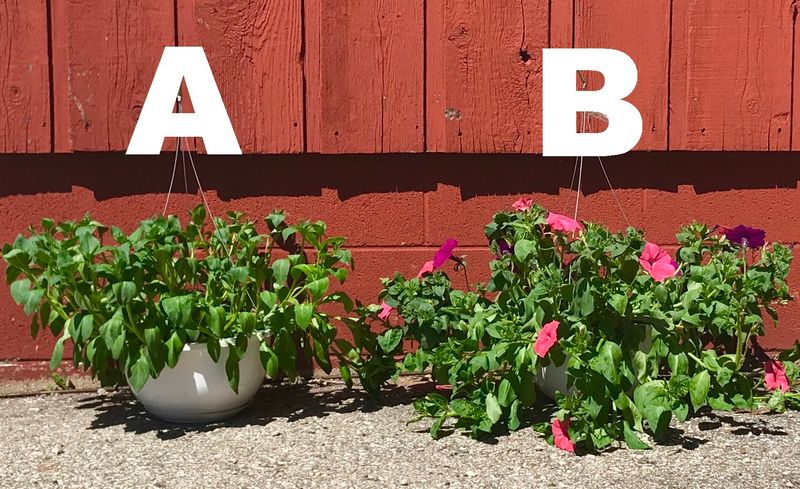
Hot or windy conditions can pull moisture out of leaves faster than roots can replace it, even when the potting mix still feels adequately damp. That mismatch between water loss and water uptake causes temporary wilt that has nothing to do with how much you watered. University of Minnesota Extension’s heat-stress guidance identifies leaf curl, crisping at the edges, and bleached or faded patches as signs that heat demand is outpacing root supply.
To test whether heat is the culprit, check the mix with your finger. If it feels moist and the plant perks up once the afternoon cools, try moving the basket to a spot with morning sun and some afternoon shelter, or add a simple windbreak. Reflected heat from walls, fences, or pavement can make a basket’s environment significantly hotter than the air temperature alone suggests.
The goal is targeted relief, not permanent deep shade. University of Minnesota Extension’s petunia growing guide describes petunias as heat-tolerant plants that need at least five to six hours of good sunlight for strong flowering. Afternoon droop on a moist basket does not mean the plant is in the wrong spot permanently; it means the heat load at that moment is exceeding what the roots can manage. A partial shade cloth, a slightly more sheltered hook location, or even a temporary repositioning on the hottest days can reduce stress without sacrificing the light petunias need.
A shrunken mix can stay dry even after watering
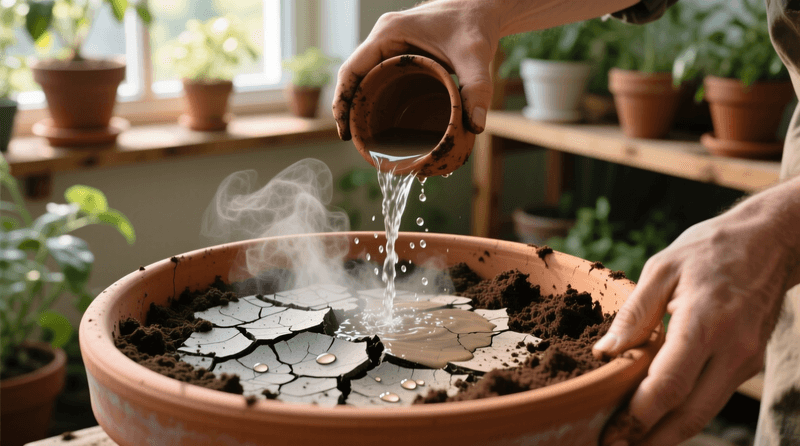
Soilless potting mixes can shrink noticeably when they dry out too much. Once the mix contracts away from the container wall, water poured onto the surface tends to find the path of least resistance, running down the gap between the mix and the basket edge and draining out the bottom before the central root ball absorbs much of anything. The plant stays thirsty even though water appeared to pass through.
You can recognize this problem when water exits the drainage holes almost immediately while the mix in the center still feels dry or barely damp. Illinois Extension’s container watering page explains that a dry root ball may need more than one pass to rehydrate fully rather than a single quick pour. The fix is to water slowly, pause long enough for the mix to begin swelling and absorbing, then water again and confirm the root ball itself is damp, not just the surface or the edge near the pot wall.
When the shrinkage is severe, removing the basket from its hook and rehydrating it gradually on a stable surface can make the process easier to manage. Illinois Extension’s hanging pot watering article reinforces that the goal is to wet the entire root zone, not just moisten the top layer. Always allow excess water to drain fully before rehooking the basket, so you are not trading a dry root ball for a waterlogged one.
Wet soil can wilt a petunia when roots cannot breathe
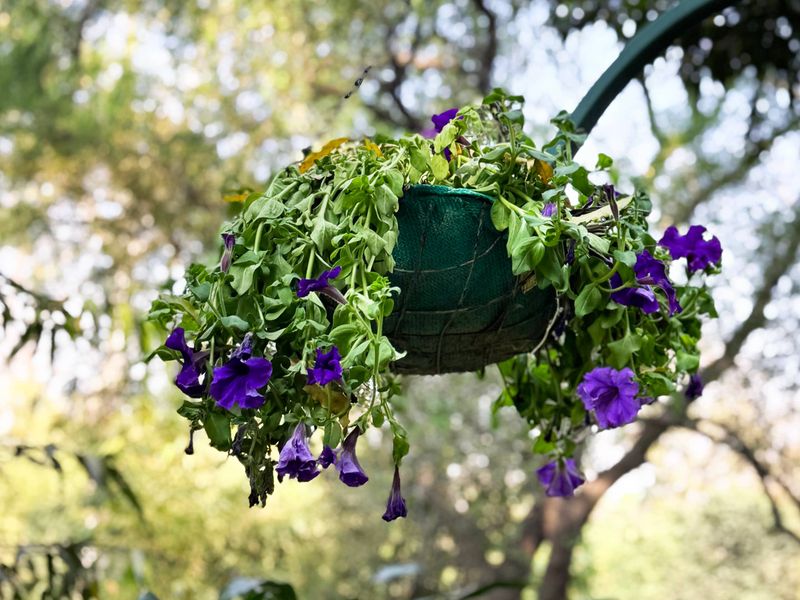
One of the more counterintuitive things a hanging basket can do is wilt while the soil feels wet. Roots need oxygen as well as water, and when the potting mix stays waterlogged for extended periods, roots are deprived of the air they need to function. The result is a plant that cannot move water to its leaves even though moisture surrounds the roots. Penn State Extension’s container gardening guide identifies poor drainage and oxygen deprivation as causes of root decline and eventual wilt.
Start by checking the drainage holes. If they are blocked or the basket is sitting inside a decorative outer pot that traps water, remove the standing water and clear any obstruction. Penn State Extension’s repotting guidance emphasizes that containers must drain freely and that water should not be allowed to collect around roots. Stop automatic watering until you understand what is happening.
If the mix has been soggy for a while, gently inspect the roots. Illinois Extension notes that healthy roots are generally firm and light-colored, while dark, soft, or decaying roots are a concerning sign. Root appearance alone is not a definitive diagnosis; combine it with drainage history, crown or stem symptoms, and whether the plant is declining overall. Penn State Extension’s petunia disease page describes Phytophthora crown rot as capable of causing rapid branch wilt and collapse, particularly in young plants.
If the crown shows soft, dark, or collapsed tissue, adding more water is unsafe; remove badly diseased material and consider replacing the plant when recovery looks unlikely.
Pests and disease leave clues beyond the afternoon wilt
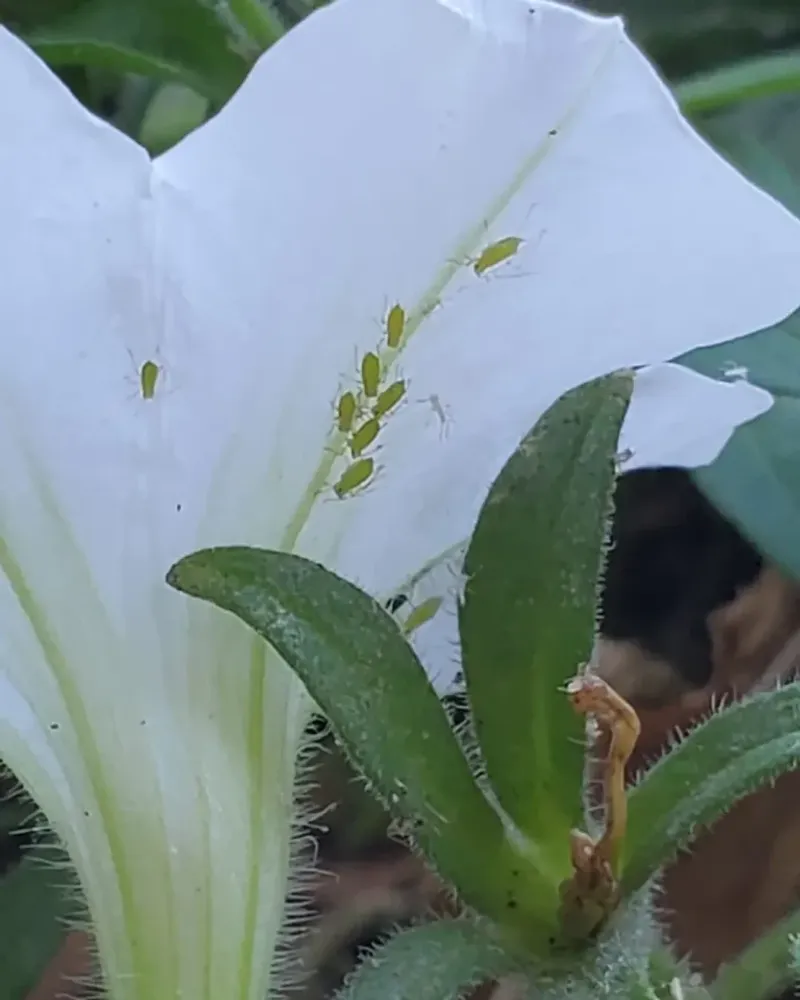
When soil moisture and drainage check out but the plant keeps struggling, pests or disease become worth investigating. The wilt pattern itself offers a starting clue: a petunia that droops predictably in the afternoon and recovers in the evening is behaving differently from one that declines steadily, collapses quickly, or shows symptoms on only one branch or section. Penn State Extension’s petunia disease resource notes that disease-driven wilt typically comes with additional signs such as rapid whole-plant decline, crown or stem-base damage, leaf spots, or symptoms that do not follow a predictable daily pattern.
Work through a systematic visual check. Look at new growth tips, the undersides of leaves, flower buds, stems, and the soil line. University of Minnesota Extension’s aphid guide identifies heavy infestations as capable of causing wilting, distorted new growth, yellowing, and stunting, with aphids most commonly clustered on new growth and leaf undersides. Sticky honeydew residue on leaves or the basket itself, clusters of tiny soft-bodied insects, distorted or cupped new leaves, leaf spots, or damage at the crown all make a pest or disease explanation more plausible than heat stress alone.
For a light aphid infestation, a firm but plant-safe stream of water directed at the affected areas may dislodge many insects. If the problem persists, Colorado State University Extension’s aphid management guidance supports using insecticidal soap or another labeled product when needed, following the label carefully. Products containing imidacloprid should not be applied casually to outdoor flowering plants because of documented risks to bees and other beneficial insects. Stick to targeted, label-compliant treatments, and avoid home remedies that have not been tested for plant safety.
Match the response to the evidence you find
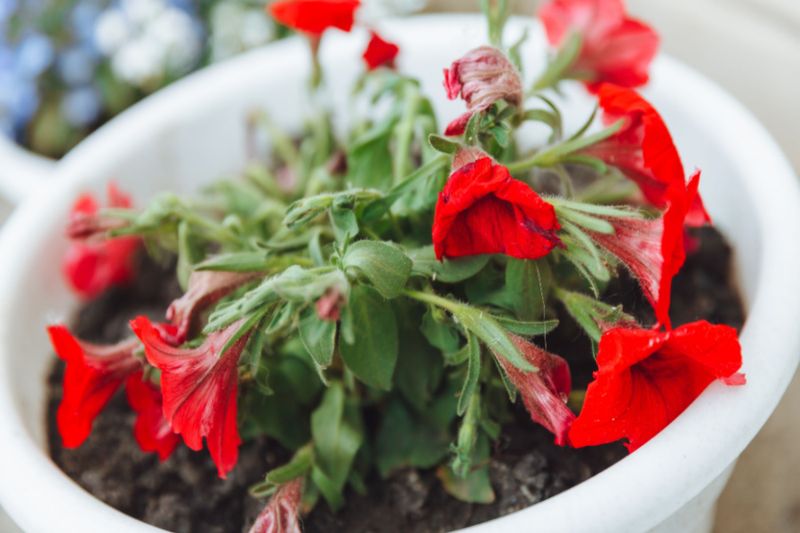
Each of the five causes calls for a different response, and applying the wrong one can set the plant back further. When the root zone is dry, soak the full soil ball until water drains freely from the basket. When water is bypassing a shrunken mix, rewet gradually with multiple passes and confirm the root ball is actually absorbing moisture. University of Minnesota Extension’s petunia guide frames daily checks as standard practice for hanging baskets, with frequency adjusted to actual soil conditions rather than a fixed schedule.
When the mix feels moist and the plant revives once the afternoon cools, focus on reducing heat and wind exposure rather than adding more water. When the basket stays soggy or roots show dark, soft, or decaying tissue, stop watering automatically, improve drainage, and assess whether recovery is realistic. Fertilizer is not a first-line response to any of these causes; University of Minnesota Extension’s container fertilizing guidance recommends diagnosing moisture, drainage, and root health before adjusting a feeding program.
Escalation signs that warrant closer attention include wilt that does not clear overnight, rapid decline, crown damage, extensive root loss, or persistent symptoms that do not fit any of the five causes clearly. Penn State Extension and the University of Minnesota plant diagnostic tool are practical starting points when the problem remains unclear. Not every wilted petunia can be turned around, but the ones that can are almost always helped most by an accurate diagnosis first.