
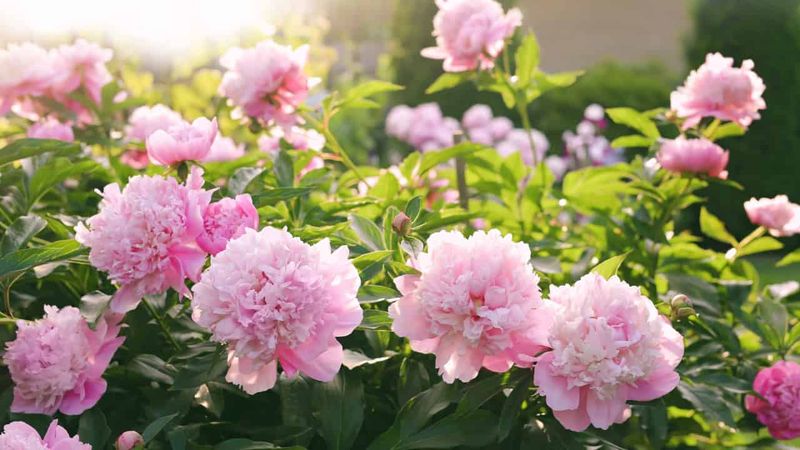
If you love pink flowers but hate replanting every spring, perennials are about to become your best friend in the garden. Once these plants settle into the soil, they rest through winter and pop back up on their own year after year, saving you money and effort. The trick is choosing tough varieties that handle common backyard problems like heat, thirsty soil, and hungry deer. Below you will find 17 reliable pink bloomers, plus tips to keep each one healthy and coming back strong.
1. Coneflower (Echinacea)
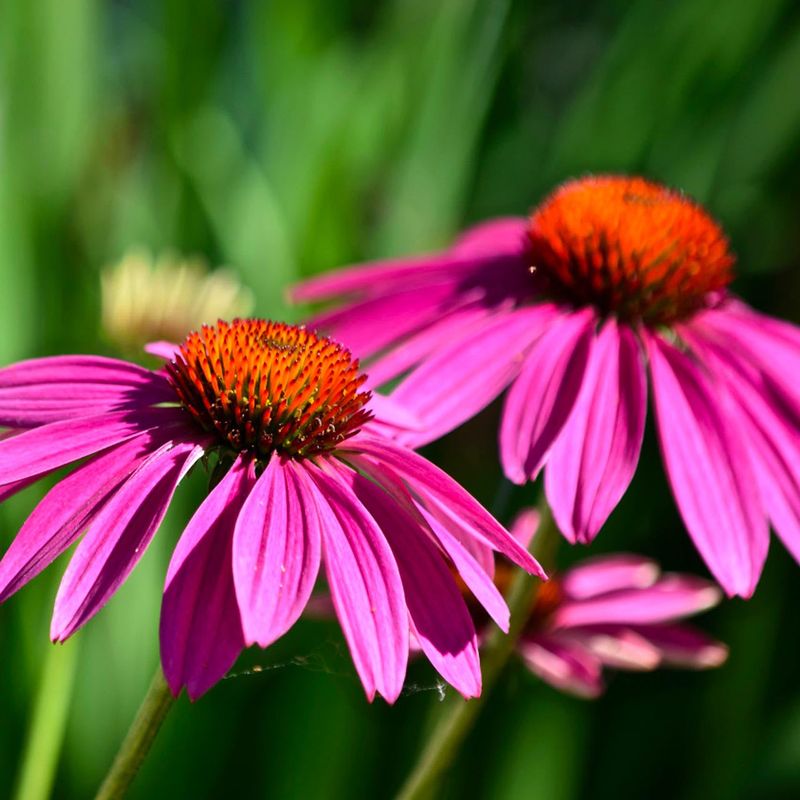
Butterflies seem to line up for these daisy-shaped blooms, which is one reason gardeners keep planting them. The soft pink petals droop gently around a spiky orange center, giving each flower a slightly unruly charm.
Coneflowers shrug off summer heat better than almost anything else on this list, so if your petunias wilt by July, these are a smart swap. They prefer full sun and dry, well-drained soil, and they actually bloom worse when you pamper them with too much water or fertilizer.
Leave the seed heads standing through fall and winter. Goldfinches will pick at them, and the plant may reseed itself, giving you free new plants nearby.
If your coneflowers flop over or stop flowering, crowding and shade are usually to blame. Divide clumps every three or four years to keep them vigorous.
Fun fact: Native Americans used echinacea root long before it became a garden staple, which is why you still see it in cold-remedy teas today. Deer tend to leave the bristly centers alone, though hungry ones may nibble young shoots.
2. Peony
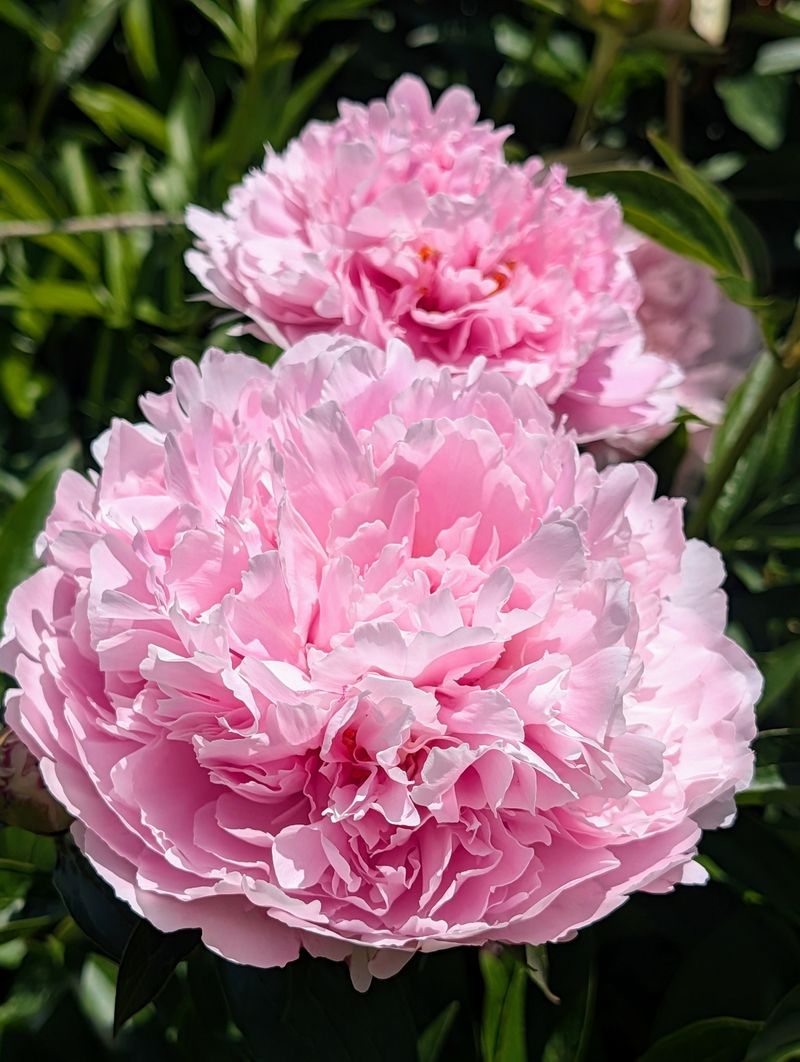
Few flowers earn as many gasps as a peony in full bloom, its fluffy pink petals packed so tightly they look almost fake. Grandmothers across America have grown these for generations, and the same plant can outlive the gardener who planted it.
Peonies reward patience. The first year or two may bring few flowers, but once established they can bloom for decades with almost no fuss.
Plant the tubers shallow, no more than two inches deep, because burying them too deep is the number one reason peonies refuse to flower. Give them full sun and room to breathe.
If your buds turn brown and never open, blame damp weather and a fungus called botrytis. Cutting stems back in fall and clearing away old foliage can reduce the problem next spring.
Those ants crawling on the buds are not pests, so resist the urge to spray. They simply feed on the sweet coating and may even help the buds open.
Support heavy blooms with a hoop so rain does not flatten them to the ground.
3. Garden Phlox
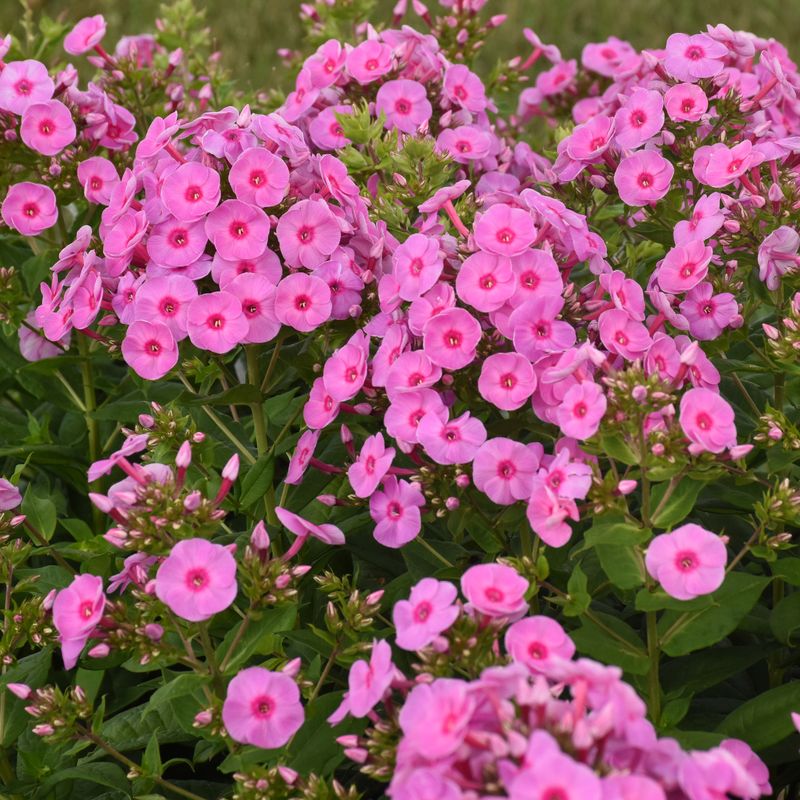
Come late summer, when many flowers have given up, garden phlox sends up tall clusters of pink blooms that smell faintly sweet in the evening air. Hummingbirds and moths treat it like a diner that never closes.
Reaching three to four feet tall, phlox fills the back of a border nicely and keeps color going long after spring flowers fade.
The biggest headache with phlox is powdery mildew, that dusty white film on the leaves. Choosing mildew-resistant varieties and spacing plants so air moves between them can greatly reduce the problem.
Water at the base rather than overhead, since wet leaves invite disease. Morning sun helps the foliage dry quickly.
Deadhead the spent flower heads and you may coax a second flush of blooms before frost.
Every three years or so, dig up crowded clumps and split them. This keeps the plants healthy and gives you extras to spread around the yard or share with a neighbor.
Cut the stems back after the first hard freeze to tidy the bed and remove any lingering mildew spores.
4. Coral Bells (Heuchera)
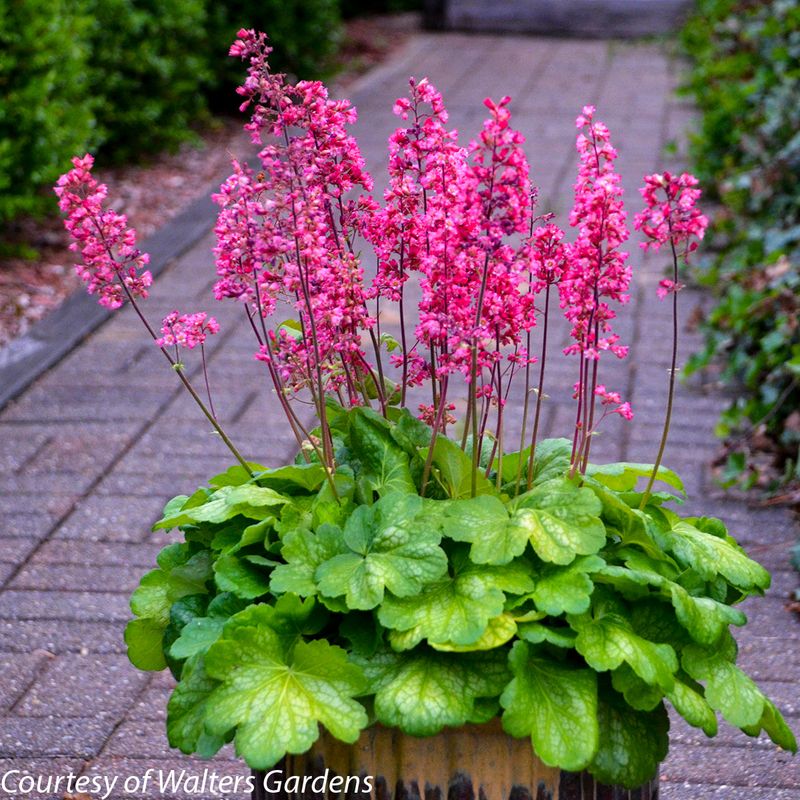
Grown as much for its ruffled, colorful leaves as its flowers, coral bells sends up wiry stems dotted with tiny pink bells in late spring. The blooms are small, but bees and hummingbirds find them easily.
What sets this plant apart is its shade tolerance. If you have a spot that gets too little sun for most bloomers, heuchera may thrive there where others sulk.
The mounded foliage stays attractive from spring through fall, and in mild regions it lingers through winter, giving the bed structure when little else is showing.
Heaving is a common problem in cold climates. Frost pushes the shallow roots up out of the soil, so press plants back down in early spring and add a layer of mulch to hold them.
Avoid soggy soil, which can rot the crown. Well-drained ground and dappled light keep coral bells happy for years.
Divide clumps every three or four years when the centers start looking woody. Deer generally pass them by, making heuchera a solid choice for browsed yards.
5. Bleeding Heart (Dicentra)
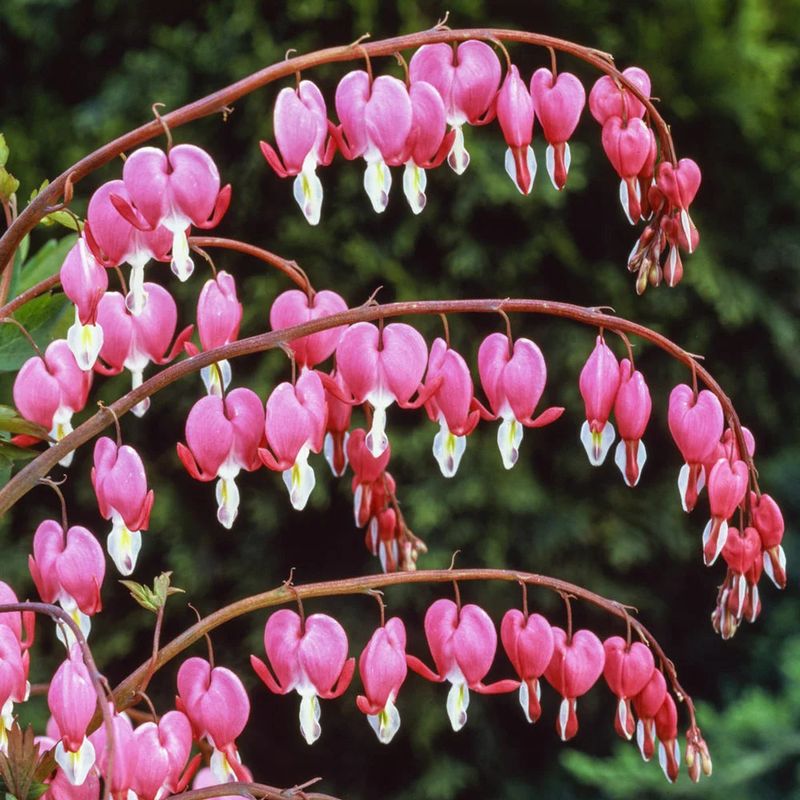
Dangling in a row like tiny lockets, the heart-shaped pink blooms of bleeding heart look almost too whimsical to be real. Children love spotting the little drop at the bottom of each flower.
A shade lover at heart, this old-fashioned favorite lights up woodland corners and north-facing beds in spring when the yard is still waking up.
Do not panic when the plant yellows and disappears by midsummer. That is normal dormancy, not death, and it will return faithfully next spring from the same roots.
Because the gap it leaves can look bare, plant hostas or ferns nearby to fill in once the bleeding heart fades back.
Keep the soil evenly moist but never waterlogged, and give it rich, loose earth full of compost. Hot afternoon sun scorches the delicate leaves, so lean toward morning light.
The plant almost never needs dividing and resents being disturbed, so pick its spot carefully.
A bit of trivia: the flowers were a Victorian symbol of romance, which explains their sentimental name and their popularity in cottage gardens.
6. Astilbe
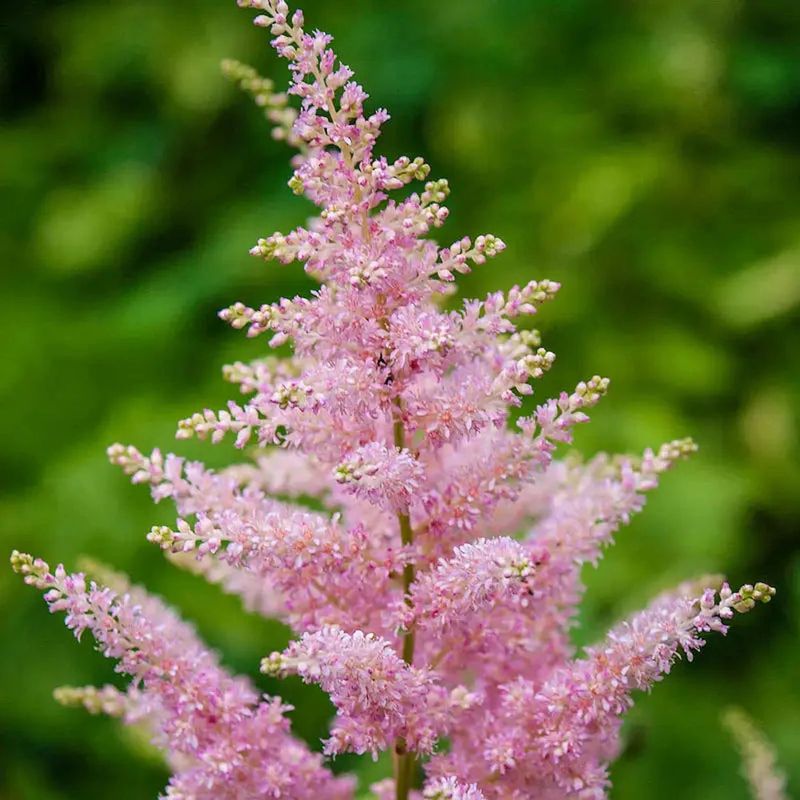
Feathery plumes that look like pink cotton candy rise above fern-like leaves, making astilbe one of the few showy bloomers that actually prefers the shade. Damp, gloomy corners suddenly get a splash of color.
Most flowers demand sun, but astilbe struggles in it. Too much direct light combined with dry soil leads to crispy, brown-edged foliage, the most common complaint gardeners have.
The fix is simple: keep the roots consistently moist and tuck the plant where trees or a fence block harsh afternoon rays. A layer of mulch helps lock in that moisture.
Plumes hold their color for weeks, and even after they fade to tan they add texture to the bed well into fall.
Divide the clumps every three or four years in early spring to keep them blooming strongly. Astilbe is a heavy feeder, so work compost into the soil each season.
Deer and rabbits usually skip it, which is a bonus for anyone battling backyard browsers. Pair it with hostas for a lush, shade-loving combination that fills tricky spots beautifully.
7. Dianthus (Pinks)
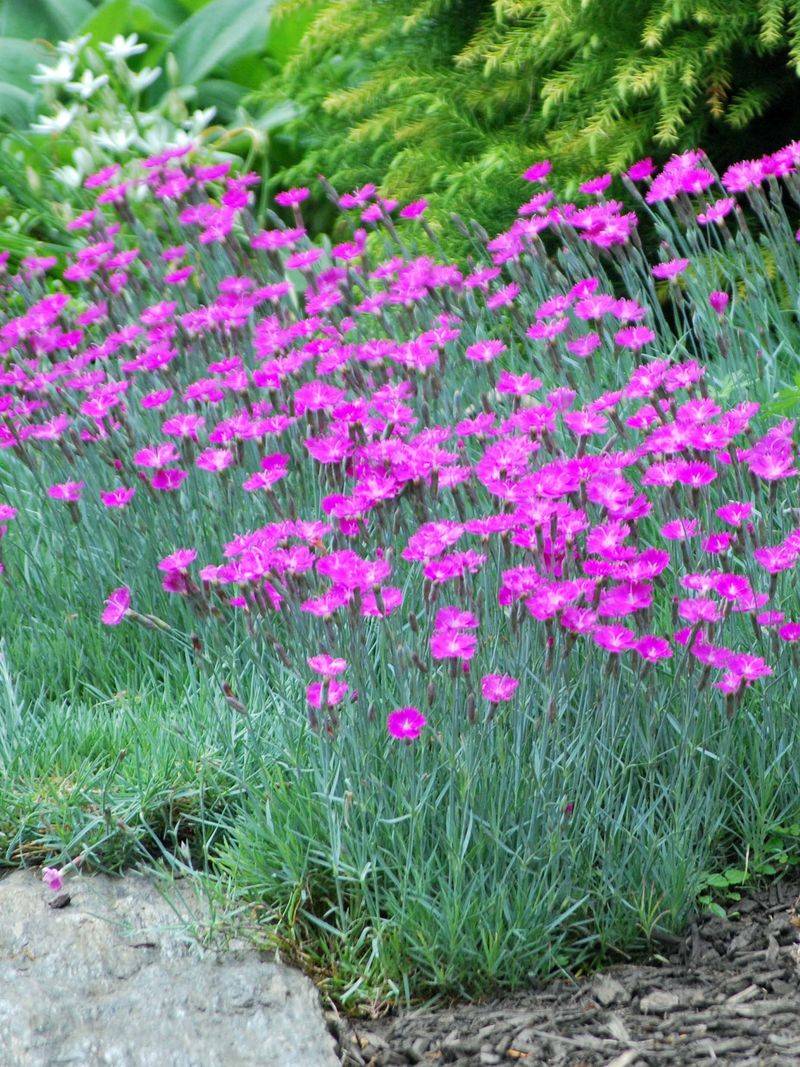
Sniff a dianthus flower and you might catch a whiff of cloves, a spicy scent that has charmed gardeners for centuries. The fringed petals look like they were trimmed with pinking shears, which is actually where the name pinks comes from.
Low and mounding, this plant forms neat cushions of blue-green foliage topped with pink blooms, perfect for edging paths or tucking into rock gardens.
Good drainage matters more than almost anything. Dianthus hates wet feet, and soggy winter soil is what usually kills it, so plant it in gritty, well-drained ground.
Snip off spent flowers regularly and the plant will often rebloom, stretching its show across much of the season.
Full sun keeps the cushions tight and flowering. In too much shade the plant gets leggy and blooms poorly.
A light shearing after the first big flush tidies things up and encourages fresh growth.
Deer tend to avoid the spicy, tough foliage, making dianthus a dependable pick for gardens where browsing is a constant battle. Divide crowded clumps every few years.
8. Coreopsis ‘Sweet Dreams’
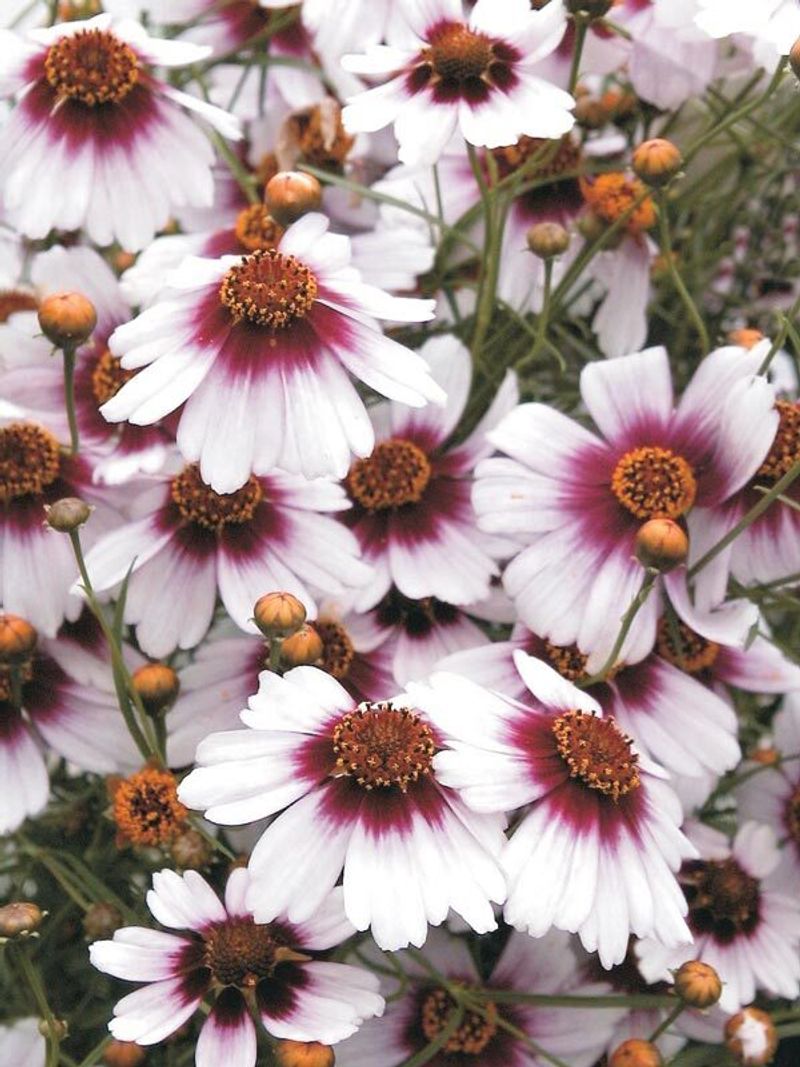
Most coreopsis blooms yellow, so a pink one feels like a happy surprise. The ‘Sweet Dreams’ variety opens creamy white with a raspberry-pink center that fades softly toward the edges, and it keeps churning out flowers for months.
Long bloom time is its superpower. From early summer into fall, the plant is rarely without a flower, especially if you snip off the faded ones.
Tough and drought-tolerant once established, coreopsis handles poor soil and hot, dry spots that would fry fussier plants. It asks for little beyond full sun.
If flowering slows in midsummer, give the whole plant a light haircut. That shearing often triggers a fresh wave of blooms within a couple of weeks.
Good drainage keeps it alive through winter, since heavy, wet clay can rot the crown during cold months.
Butterflies and bees flock to the cheerful daisy faces, turning a single plant into a busy little pollinator stop.
Divide clumps every two or three years in spring to keep them dense and productive, and you will have extras to plant elsewhere.
9. Hardy Geranium (Cranesbill)
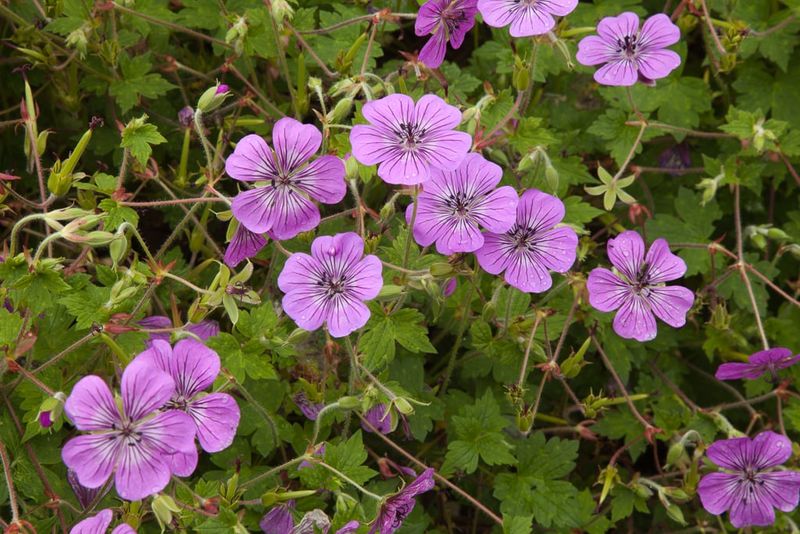
Not to be confused with the potted annuals sold every spring, hardy geranium is a true perennial that spreads into a low, weed-smothering carpet of pink flowers. Once it settles in, it practically takes care of itself.
Its knack for filling gaps makes it a favorite for covering bare ground between shrubs or along a border edge where weeds like to sneak in.
The five-petaled blooms appear in late spring and early summer, and many types repeat if you shear them back after the first flush fades.
Adaptable to sun or part shade, cranesbill tolerates a range of soils as long as they are not constantly soggy. That easygoing streak is why beginners love it.
When the plant looks tired and floppy by midsummer, cut it back hard. Fresh, tidy foliage and often a new round of flowers follow quickly.
Deer and rabbits usually leave it alone, and it rarely suffers from serious pests or diseases.
Divide the clumps in spring or fall every few years to control the spread and multiply your plants for free.
10. Bee Balm (Monarda)
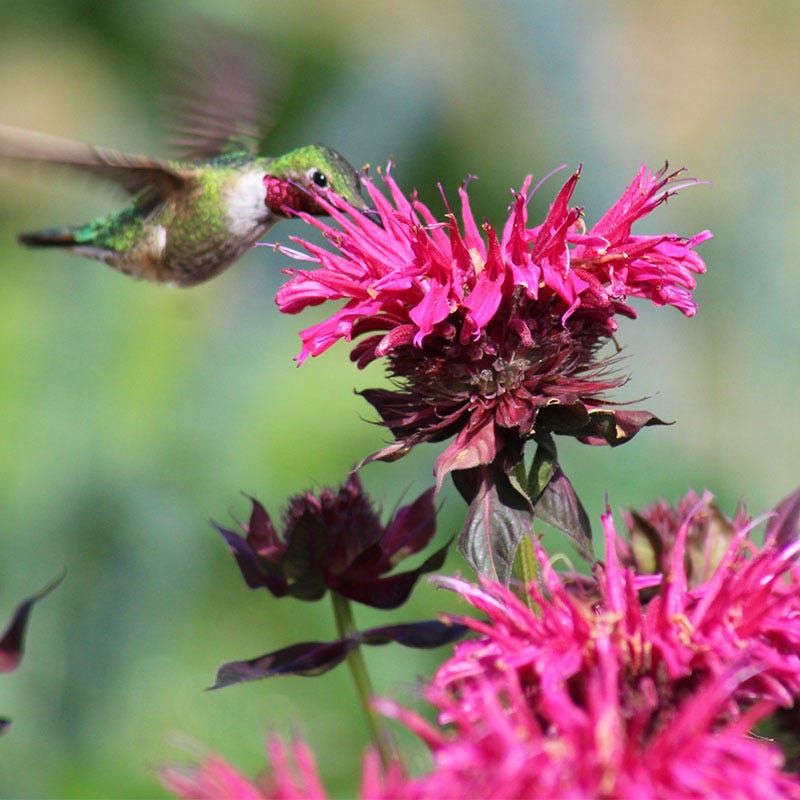
Shaggy, almost fireworks-like pink blooms make bee balm impossible to ignore, and the hummingbirds agree, zipping in all summer long. Crush a leaf and you will smell a minty, herbal aroma that gives the plant its other name, wild bergamot.
This native wildflower stands out for how strongly it draws pollinators. If you want a buzzing, fluttering garden, few plants deliver like monarda.
Powdery mildew is the recurring problem here, coating leaves in white by late summer. Planting mildew-resistant varieties, thinning the stems for airflow, and watering at the base can noticeably reduce it.
Bee balm spreads by underground runners and can get pushy, so divide it every couple of years to keep it in bounds and share the extras.
Full sun and evenly moist soil suit it best, though it tolerates a bit of shade.
Cut the plants down after frost to remove any diseased leaves and reduce spore buildup for next year.
A historical note: colonists brewed the leaves into tea after the Boston Tea Party, which is why some call it Oswego tea.
11. Hollyhock
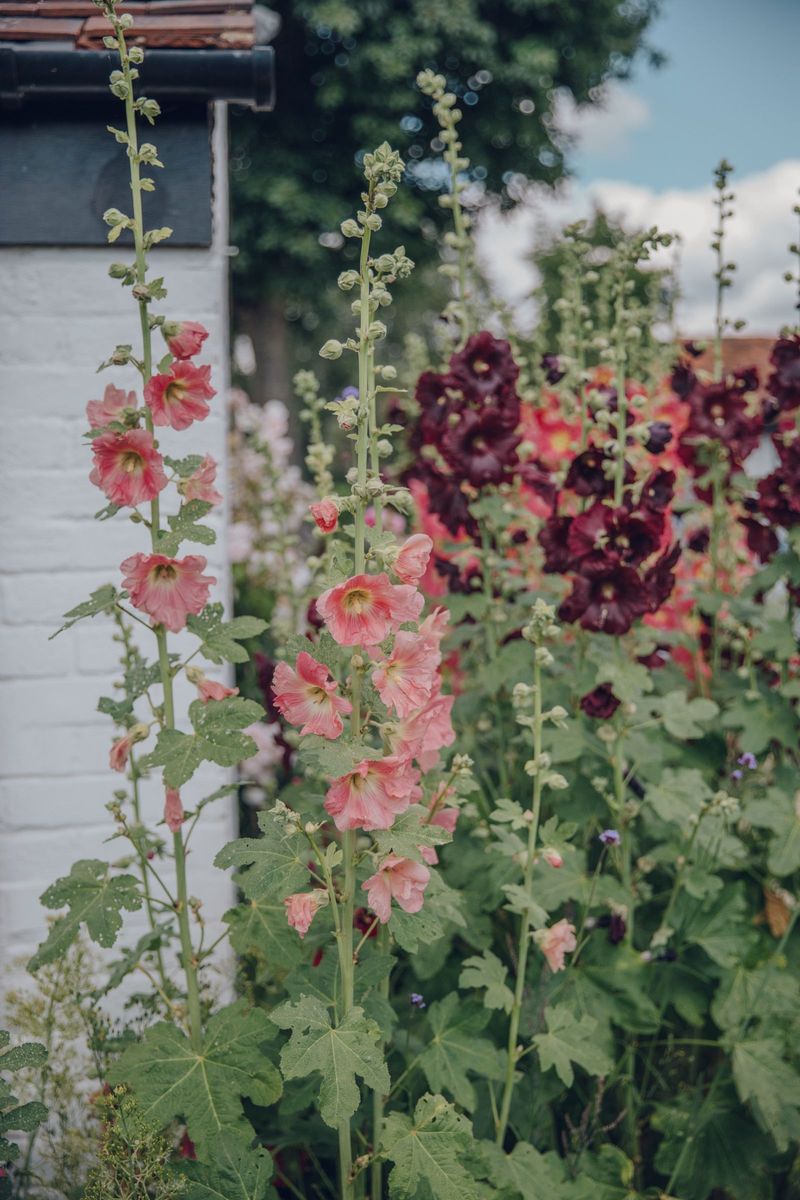
Towering along fences and cottage walls, hollyhocks lift their pink saucer-shaped flowers five feet or more into the air, giving gardens an old-world, storybook feel. Bees practically disappear inside the wide open blooms.
Technically a short-lived perennial or biennial, hollyhock keeps coming back mainly because it reseeds so freely. Let a few seed pods drop and you will have new plants for years.
Their height is the draw, but it also means they need a wall or stake for support, since strong wind can topple the tall spikes.
Rust is the classic hollyhock trouble, showing up as orange spots on the underside of leaves. Removing infected foliage, spacing plants for airflow, and watering low can help keep it in check.
Give them full sun and rich soil, and they will bloom from the bottom of the stalk upward over several weeks.
Plant them at the back of a bed where their long, bare lower stems can hide behind shorter flowers.
Deer sometimes nibble the tender tops, so a hollyhock near the house may fare better than one at the yard’s edge.
12. Sedum ‘Autumn Joy’
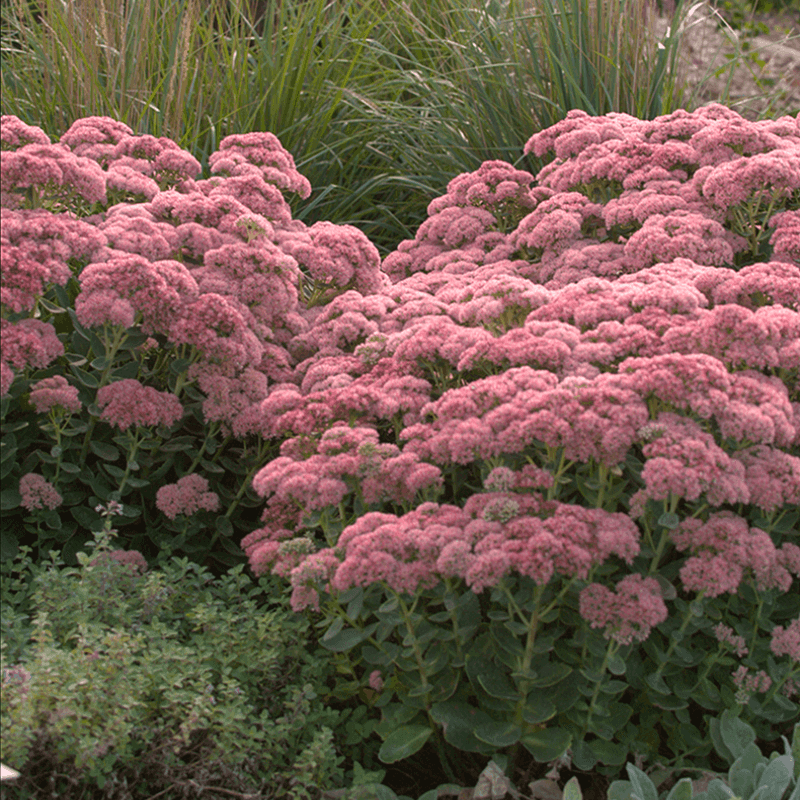
When the rest of the garden starts winding down, sedum ‘Autumn Joy’ just gets going, its broccoli-like flower heads shifting from soft pink to deep rose as fall arrives. Bees crowd the blooms during a season when nectar runs scarce.
Late-season color is what earns this succulent a spot on the list. Very few perennials save their best show for autumn the way this one does.
Thick, fleshy leaves store water, so sedum shrugs off drought and thrives in the hot, dry, neglected corners where other plants fail.
Too much richness works against it. Overly fertile or wet soil makes the stems flop open in the middle, so lean, well-drained ground actually keeps it standing tall.
If your plant splays outward every year, try pinching it back by half in early summer to create sturdier, more compact growth.
Leave the dried flower heads up through winter for texture and a little food for birds.
Nearly pest-free and largely ignored by deer, sedum is about as low-maintenance as a flowering perennial gets. Divide it every few years in spring.
13. Lupine
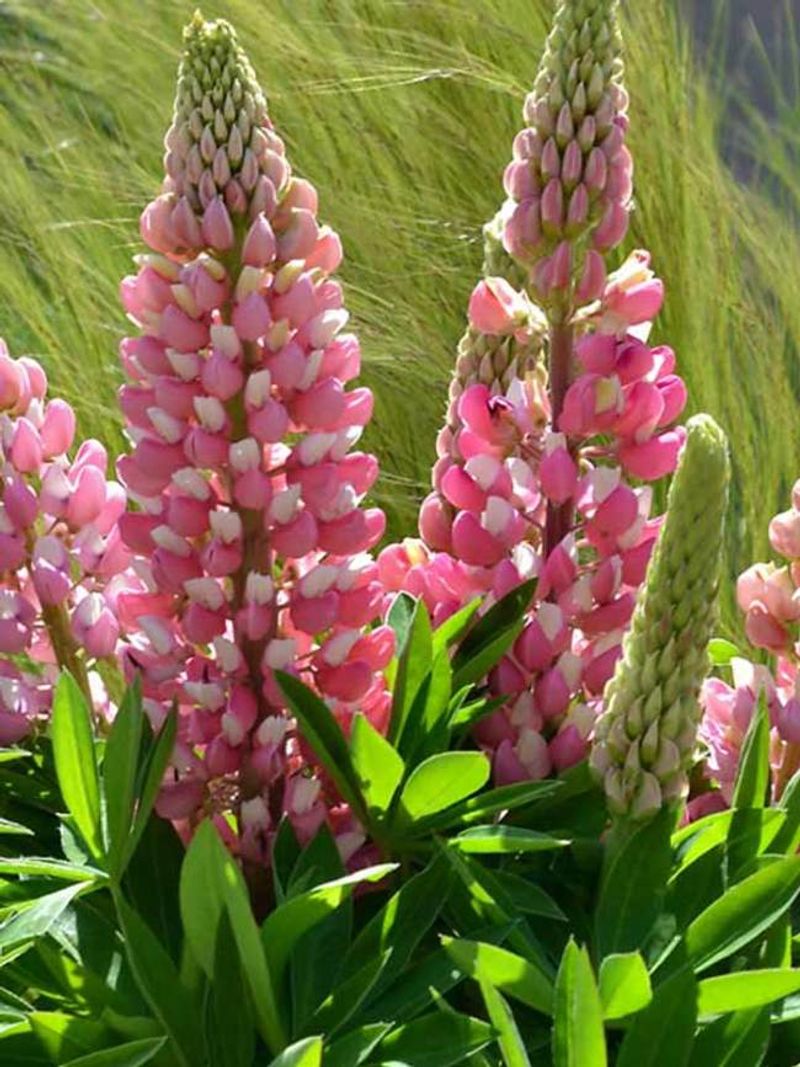
Standing like colorful spires, lupines stack dozens of pink pea-shaped flowers up a single tall stem, creating a dramatic vertical splash that stops people in their tracks. A whole patch in bloom looks almost painted.
Their architectural shape sets them apart from the rounded, daisy-type flowers that fill most gardens, adding welcome height and drama to a border.
As legumes, lupines actually pull nitrogen from the air and enrich the soil around them, quietly feeding their neighbors.
They prefer cool climates and can be short-lived in hot regions, but they reseed readily, so new plants keep the show going. Sandy, slightly acidic, well-drained soil suits them best.
Aphids love lupines and can cluster thickly on the stems. A strong spray of water or a little insecticidal soap can knock them back before they weaken the plant.
Cut off spent flower spikes to encourage a smaller second bloom and to control self-seeding.
Slugs may chew young seedlings, so protect fresh sprouts in spring. Plant lupines where their tall spikes rise behind lower, mounding flowers for the best effect.
14. Japanese Anemone
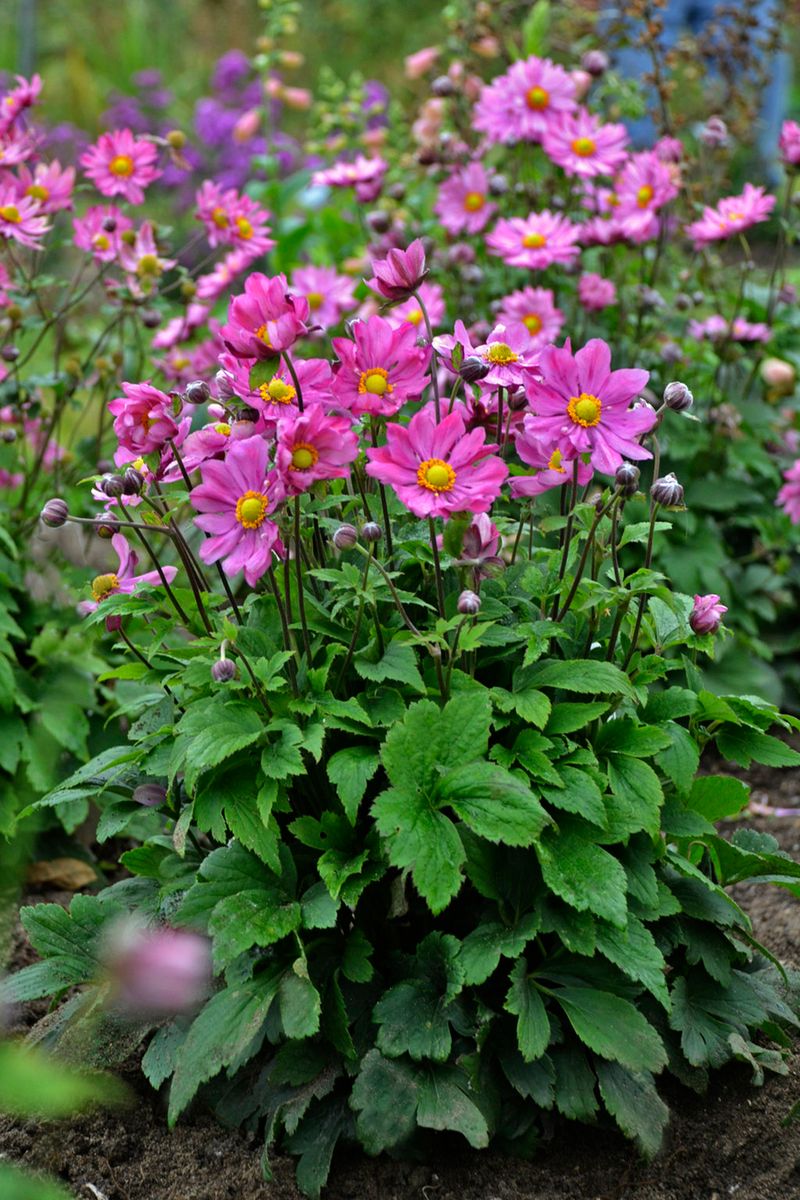
Floating on thin, wiry stems above tidy foliage, Japanese anemone blooms look like they are dancing in the slightest breeze. The clear pink flowers arrive in late summer and fall, right when the garden needs a lift.
Fall flowering is the standout trait here. While most perennials have finished, anemones open fresh, elegant blooms that carry color toward frost.
Partial shade and consistently moist, rich soil bring out the best in them. Harsh afternoon sun can scorch the leaves and stress the plant.
Be warned that established plants spread by runners and can wander farther than you intended. Pull up stray shoots or plant where roaming is welcome.
Patience helps, since anemones often sulk their first year and only hit their stride in the second or third season.
The tall, swaying stems rarely need staking, but a sheltered spot protects them from strong wind.
Deer and rabbits usually pass them by, another point in their favor for browsed yards.
Cut the foliage back after frost and mulch the crown in colder zones to help them return reliably each spring.
15. Rose Campion (Lychnis)
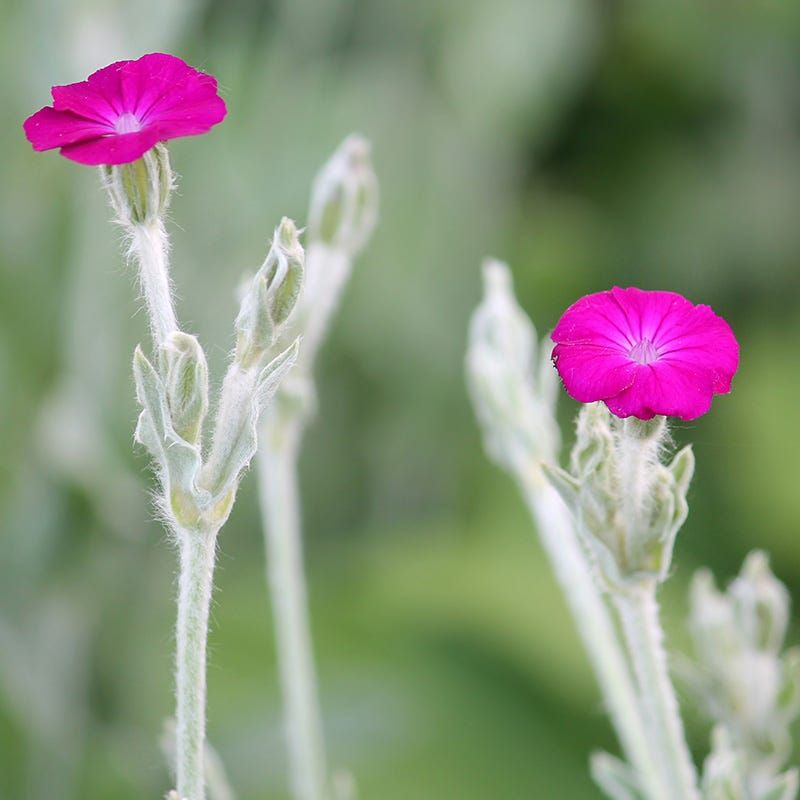
Silvery, felt-like leaves make rose campion easy to spot even before its shocking magenta-pink flowers open on tall gray stems. The contrast between fuzzy foliage and vivid bloom is downright striking.
Drought toughness is where this plant shines. The woolly leaves reflect sun and hold moisture, so it laughs off the hot, dry conditions that flatten thirstier flowers.
Like hollyhock, it is short-lived but reseeds so generously that it feels permanent once you have it. Let a few seeds scatter and new plants appear each spring.
Full sun and lean, well-drained soil are all it wants. Rich, damp ground actually shortens its life and makes it floppy.
Snip off faded blooms if you want to slow the self-seeding, or leave them to guarantee next year’s plants.
Pests and diseases rarely bother it, and deer tend to avoid the fuzzy leaves, making it a carefree pick for tough spots.
The silver foliage looks good even when the plant is not flowering, so it earns its keep all season long in a sunny bed.
16. Turtlehead (Chelone)
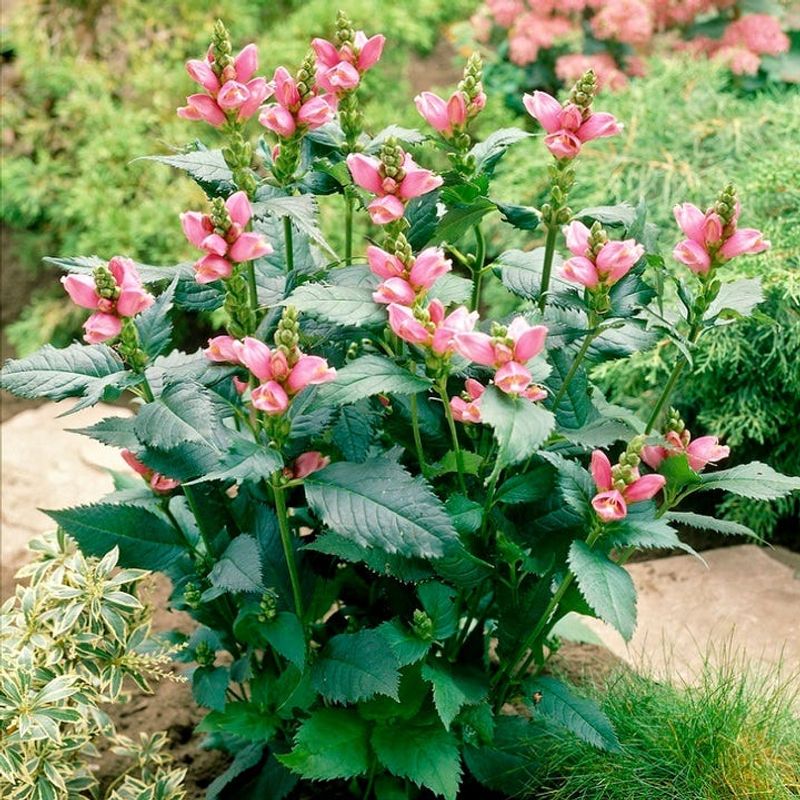
Peer closely at a turtlehead flower and you will see why it earned the name, since each pink bloom really does resemble a turtle’s open mouth. Bumblebees pry them open to reach the nectar inside.
What makes this native special is its love of wet ground. If you have a soggy low spot or a rain garden where most plants rot, turtlehead may finally give that trouble area some color.
Blooming in late summer and fall, it extends the season and feeds pollinators when other nectar sources dry up.
Give it moist, rich soil and part shade, though it handles full sun as long as the roots stay damp.
Dry conditions are its enemy. If the leaves brown and curl, the soil is too dry, so add mulch and water more often.
The plant is pleasingly upright and rarely needs staking, forming neat clumps over time.
Deer generally leave it alone, and it hosts caterpillars of the Baltimore checkerspot butterfly.
Divide clumps in spring every few years to keep them vigorous and to spread the plant to other damp corners.
17. Hardy Hibiscus (Rose Mallow)
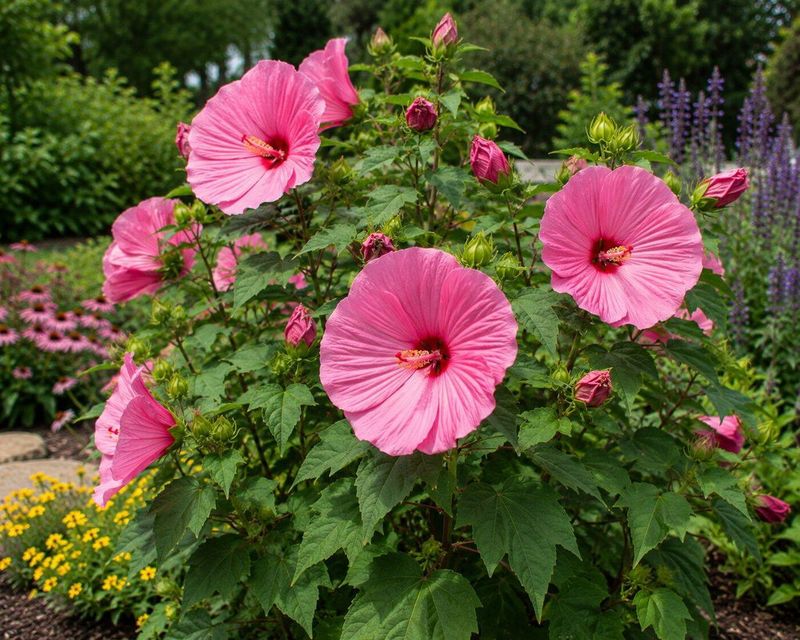
Dinner-plate-sized flowers, some as wide as ten inches across, make hardy hibiscus the showstopper finale of this list. A single pink bloom can be bigger than your outstretched hand.
Its sheer flower size is unmatched by anything else here, turning one plant into a summer spectacle that neighbors ask about.
Do not give up on it in spring. Hardy hibiscus is famously late to wake up, often not sprouting until the soil is truly warm, so mark its spot and be patient.
Full sun and steady moisture fuel those enormous blooms, and it actually tolerates wet soil better than most perennials.
Japanese beetles adore the leaves and can chew them to lace. Hand-picking beetles in the morning or using a targeted control can help limit the damage.
Each flower lasts only a day or two, but the plant produces so many that the show goes on for weeks.
Cut the stems to the ground after frost, since new growth comes from the roots each spring.
Give it plenty of room, as a mature plant can reach four or five feet tall and equally wide.