
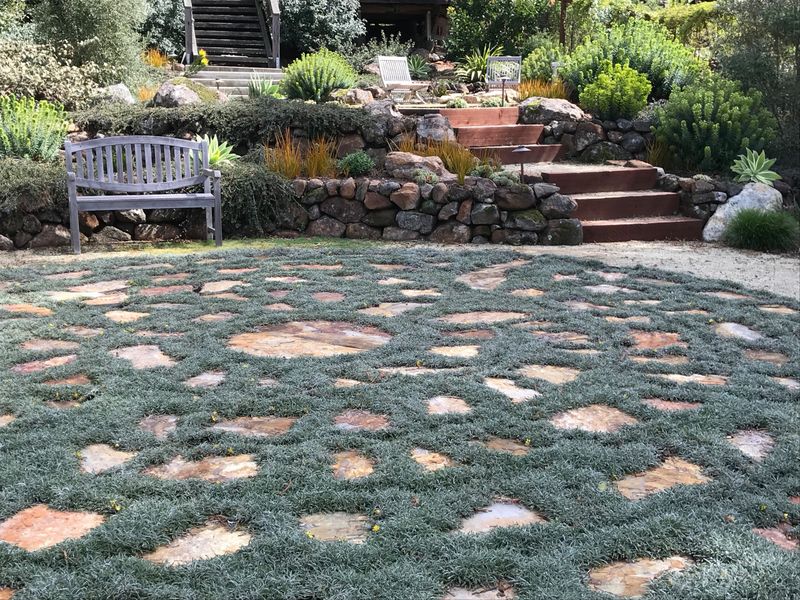
That worn-out dirt path across your yard doesn’t have to stay bare and dusty. There are tough little California-friendly groundcovers that actually like being stepped on, filling in gaps between pavers and turning muddy trails into soft green carpet.
Better yet, most of them sip very little water, which matters a lot during our long dry summers and tight water rules. Here are seven plants that hold up to daily feet while making your yard look alive.
1. Elfin Thyme (Thymus serpyllum ‘Elfin’)
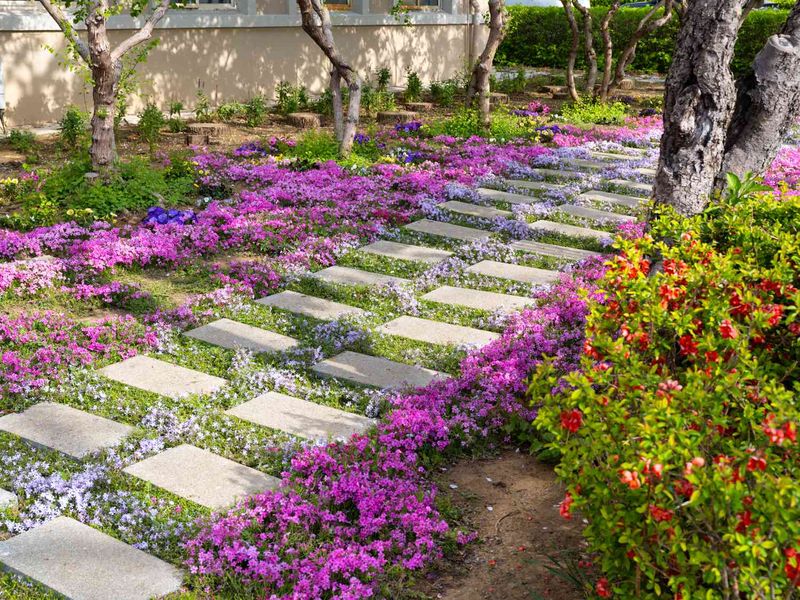
Step on a patch of elfin thyme and it forgives you instantly, springing back up like nothing happened. The tiny leaves release a soft herbal scent when crushed, so your walkway smells faintly of the kitchen garden every time you pass through.
Hugging the ground at barely an inch tall, it slips neatly between stepping stones and never needs mowing. In late spring it throws out a haze of pink flowers that bees adore, giving pollinators a reason to visit your path.
Once established, it shrugs off drought and thrives in full sun with fast-draining soil, which suits most inland and coastal California yards. Give it lean ground and go easy on the water, since soggy roots are the main thing that will let it down.
2. Dymondia (Dymondia margaretae)
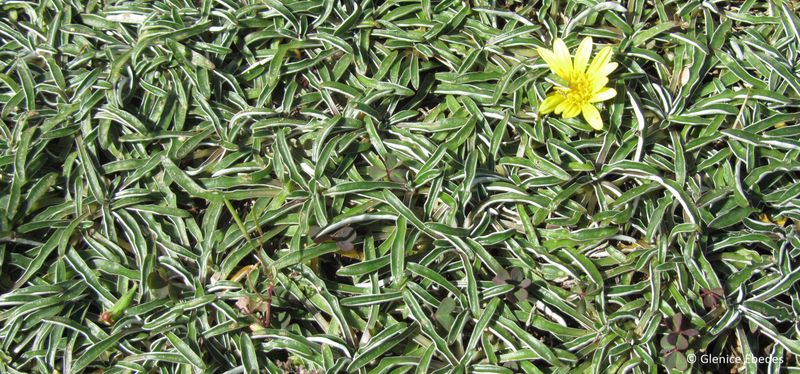
If you want something that looks almost too tidy to be real, dymondia is your plant. Its slim silver-backed leaves lie flat and tight against the soil, forming a dense mat that laughs off footsteps and even the occasional car tire in a driveway strip.
Native to South Africa, it feels right at home in California’s dry Mediterranean climate and asks for almost no water once its roots dig in. During the hottest stretch of summer, the leaves curl slightly to show their silvery undersides, a clever trick that helps it hold moisture.
Small yellow daisy-like flowers pop up here and there in warm months. Plant it in full sun with good drainage, and it will slowly knit into a living grout between your pavers that never needs mowing.
3. Kurapia (Lippia nodiflora)
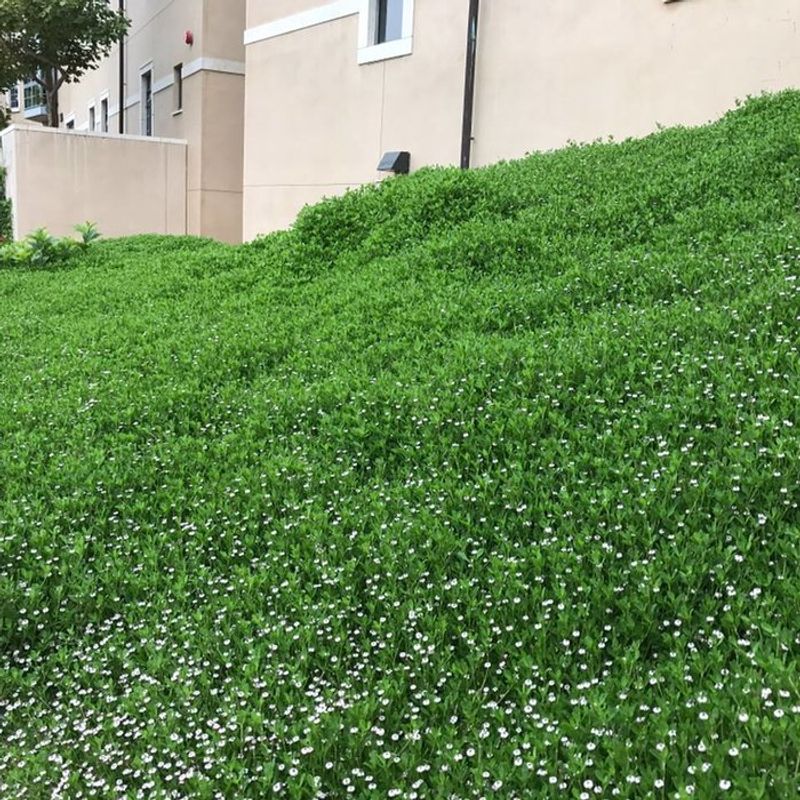
Homeowners tired of thirsty lawns keep discovering kurapia, and for good reason. It creates a soft, turf-like carpet that handles regular foot traffic while drinking a fraction of the water a traditional lawn demands.
The little white flowers that dot its surface are magnets for bees, turning an ordinary path or play area into a small pollinator pit stop. If the buzzing worries anyone barefoot, a quick mow keeps the blooms in check.
Deep roots let it stay green through California’s dry summer stretches with very little help, and it fills in fast to crowd out weeds. Full sun and occasional mowing are about all it needs to stay dense, tough, and genuinely walkable.
4. Yerba Buena (Clinopodium douglasii)
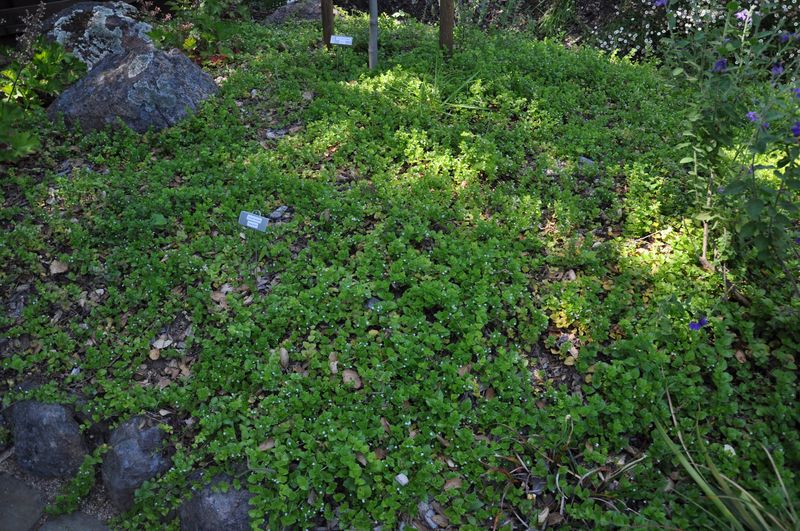
Here’s a true California native with history in its leaves. Yerba buena, meaning good herb, gave San Francisco its original name and has been brewed into a minty tea by locals for generations.
Its trailing stems root as they spread, weaving a low green mat that takes light foot traffic and releases a gentle mint fragrance underfoot. Unlike many sun-lovers on this list, it actually prefers the dappled shade beneath oaks and taller shrubs.
Because it evolved right here, it partners naturally with local wildlife and needs little fuss once settled in. Keep it in part shade with occasional summer water in the driest spots, and you get a fragrant, historically rich carpet for the shadier stretches of your yard.
5. Silver Carpet (Dymondia and Cerastium alternatives – Cerastium tomentosum)
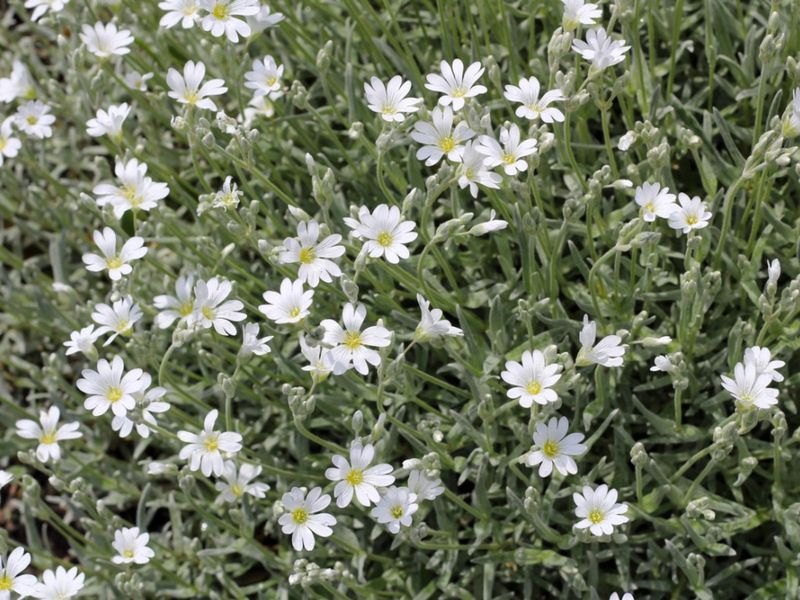
Sometimes a path just wants a little drama, and snow-in-summer delivers it with fuzzy silver-gray foliage that glows against warm paving. When it blooms, a flush of bright white flowers blankets the whole mat like a light dusting of snow, which is exactly how it earned its name.
It tolerates being brushed and walked along the edges of a path, though it does best framing the walkway rather than taking heavy central traffic. That silvery color also plays beautifully with drought-tolerant companions like lavender and sage.
Full sun and sharp drainage keep it happy, and it truly resents sitting in wet soil. Trim it back after flowering to keep the mat tight and prevent it from getting leggy in California’s long warm season.
6. Creeping Mazus (Mazus reptans)
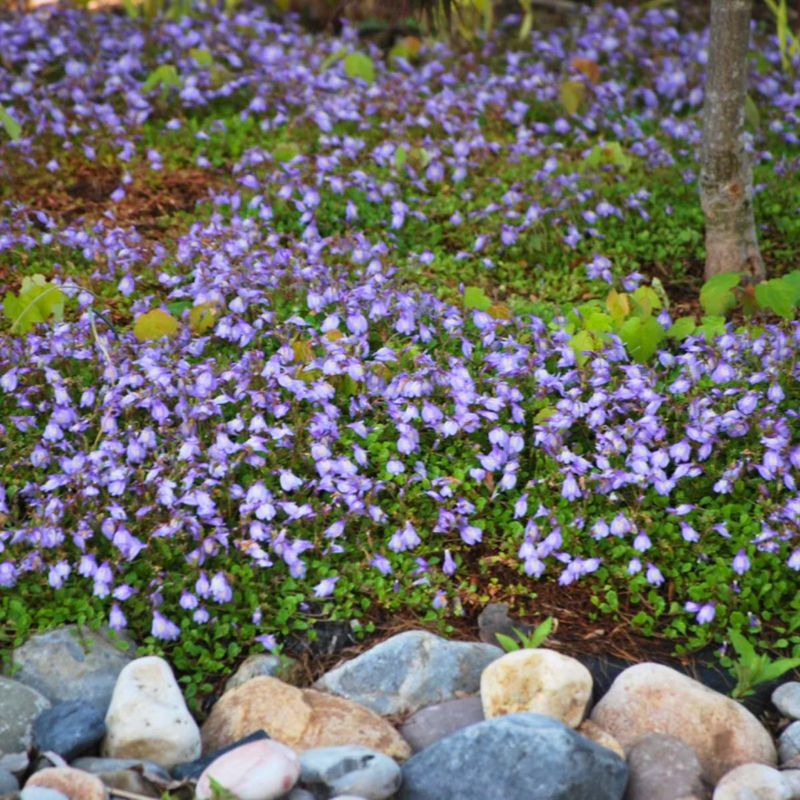
For the damp, shadier corners where other groundcovers sulk, creeping mazus steps up cheerfully. It forms a low green mat studded with purple-blue flowers that look like tiny orchids, adding surprising color to spots that usually stay plain.
The soft foliage handles light to moderate foot traffic and knits tightly between flagstones, filling gaps that would otherwise collect mud. It spreads quickly, so it rewards patience with fast coverage in a single season.
Unlike the drought champs here, mazus does appreciate steadier moisture, making it a smart pick for shadier, cooler pockets of a coastal California yard. Give it part shade and consistent water, and it will reward you with a lively carpet where sun-loving plants simply give up.
7. Woolly Yarrow (Achillea tomentosa)
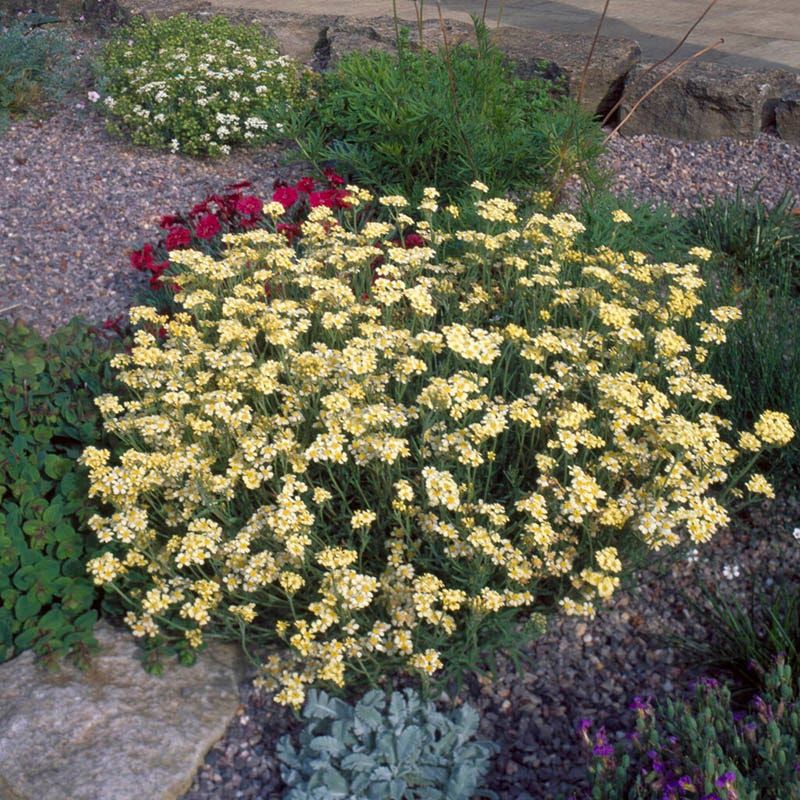
Tough as they come, woolly yarrow thrives in the kind of hot, dry, neglected ground that defeats fussier plants. Its feathery, fern-like foliage forms a soft green mat that takes foot traffic in stride and stays low without demanding much attention.
Come warm weather, flat clusters of sunny yellow flowers rise above the leaves, drawing in butterflies and beneficial insects that help keep your garden balanced. Between blooms, the fine-textured carpet looks handsome all on its own.
Drought is no threat here; in fact, too much water and rich soil make it flop. Plant it in full sun with lean, well-drained ground, and it becomes one of the most reliable, water-wise walkable covers you can grow in a California yard.