
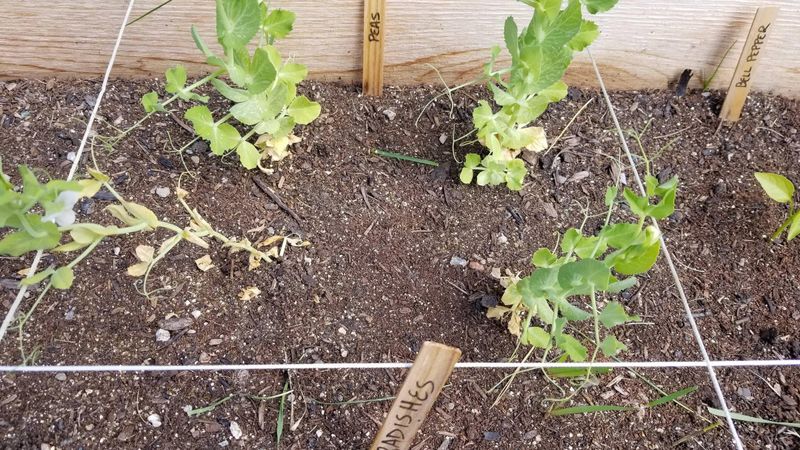
Your pea seedlings went in with such promise, and now the leaves are turning yellow and the vines are not climbing. Wet, cool garden beds are one possible reason, but they are not the only one.
A few quick checks on the stems, roots, and soil can point you toward the real problem. Here is how to sort it out before you change what you are doing in the bed.
Yellow leaves and stalled growth need a diagnosis
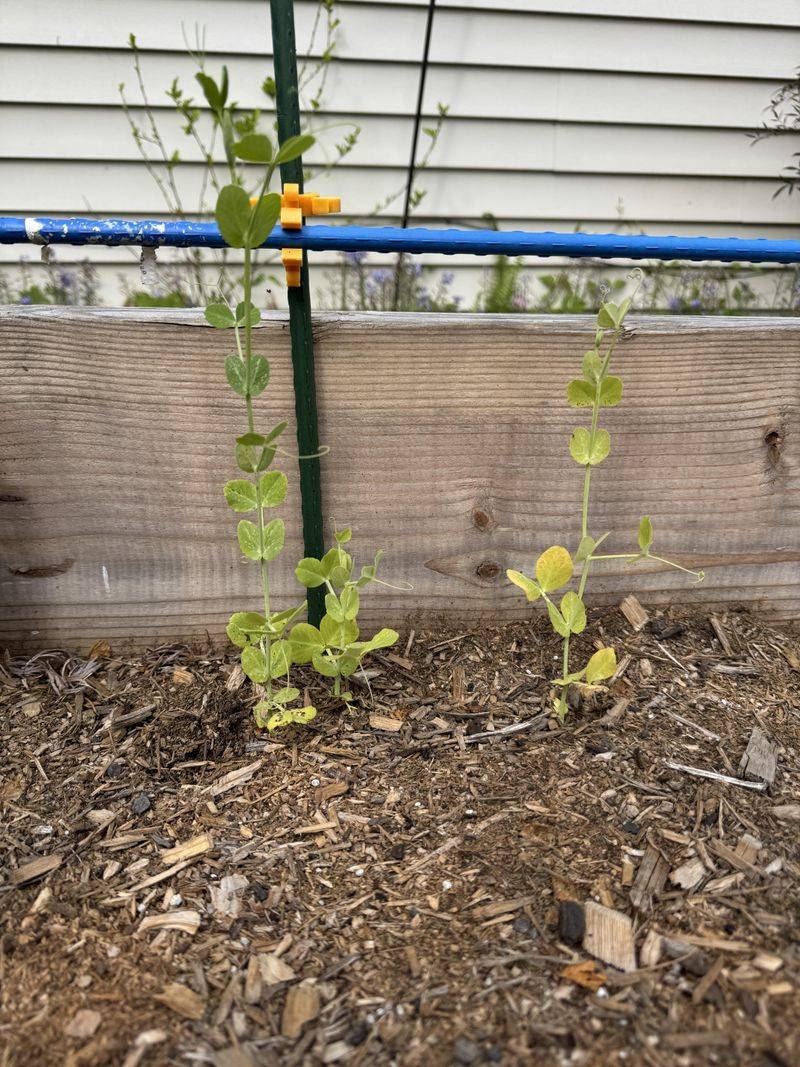
Yellow leaves and slow growth are symptoms, not a diagnosis. Several different problems can produce the same look, including seedling diseases, root trouble, and nutrient issues.
University of Maryland Extension notes that seedling diseases can cause yellowing and stunting, which is why looking closer matters.
A pea that is not climbing is not proof of waterlogged roots, either. English peas often need something to climb on, and UF/IFAS recommends giving them a trellis or other support.
A seedling with nothing to grab may simply sprawl.
So before you change the watering routine or reach for fertilizer, take a few minutes to look at the plant and the bed. The next sections walk through what to check, in order.
Persistently wet soil can put pea roots at risk
Soil that stays soggy for days is hard on young pea roots. UC IPM guidance on peas links wet, poorly drained soil with damping-off and root rot, and suggests keeping soil moist but not overly wet.
Cool weather adds another wrinkle. Cold, damp conditions can slow seeds and seedlings and can favor some of the fungi behind damping-off, according to the University of Maryland Extension page on poor germination.
That makes wet soil worth checking, but it does not prove it caused your seedlings to yellow. Cool soil alone is also too broad an explanation for a plant that is already established.
Think of wet soil as one suspect on a list, and let the plant itself tell you more.
What do the stems and roots show?
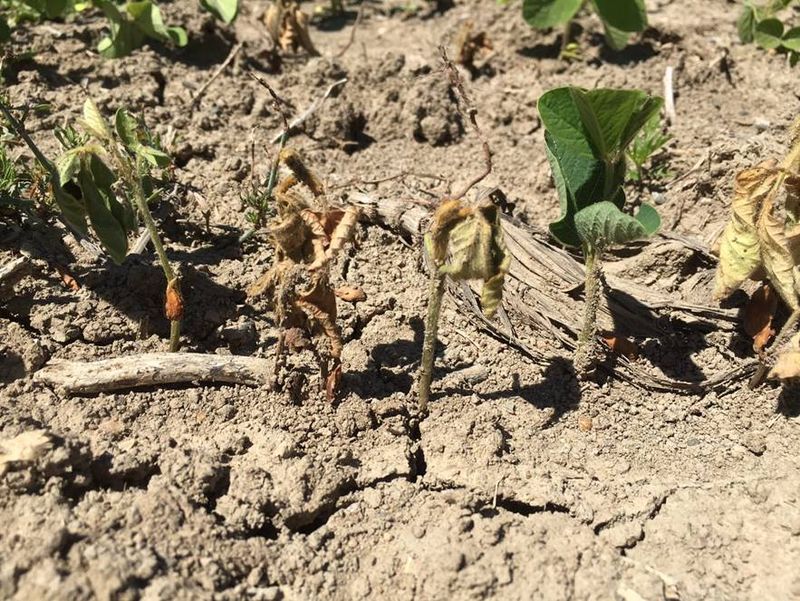
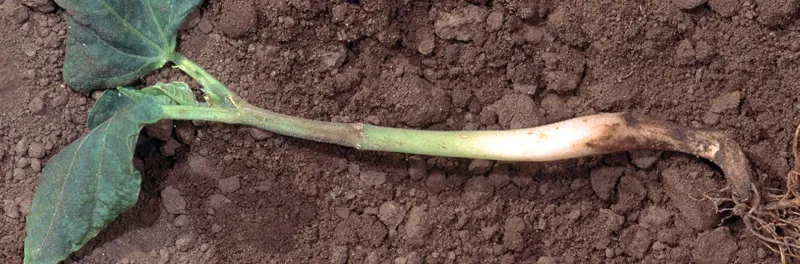
Gently lift one struggling seedling and look closely. Stems with water-soaked patches, a pinched or rotting area at the soil line, or a plant that has flopped over point more toward damping-off or root disease than a simple watering-schedule problem, as described by UC IPM.
Then check the roots. Healthy roots are usually pale and firm, while decayed, mushy, or missing roots suggest the plant has trouble taking up water.
The University of Maryland Extension also lists rotted roots among seedling disease signs.
You may read about Aphanomyces root rot, which Montana State describes in field peas as causing brownish roots, stunting, and yellowing that starts on older leaves. Treat that as a pattern that may help you ask questions, not as proof your home-garden peas have it.
Let soil moisture—not a calendar—guide watering
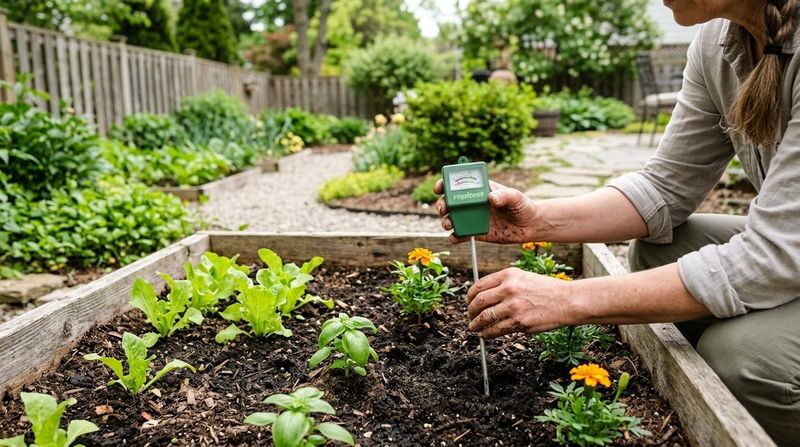
Skip the fixed schedule and use your finger instead. UF/IFAS advises watering when the top half inch to one inch of soil begins to dry, and warns that soggy roots can rot.
Soil type changes the answer. Sandy beds, common in much of Florida, dry out faster than heavy clay, which can hold water for days in a Texas bed.
Two gardeners in the same town may need very different routines.
If the bed is still wet after rain or irrigation, pause supplemental watering until the surface begins to dry. That is a pause, not a permanent stop, since peas still need steady moisture.
Easing off may reduce ongoing stress, but it cannot promise that damaged seedlings will bounce back.
Address beds where water pools
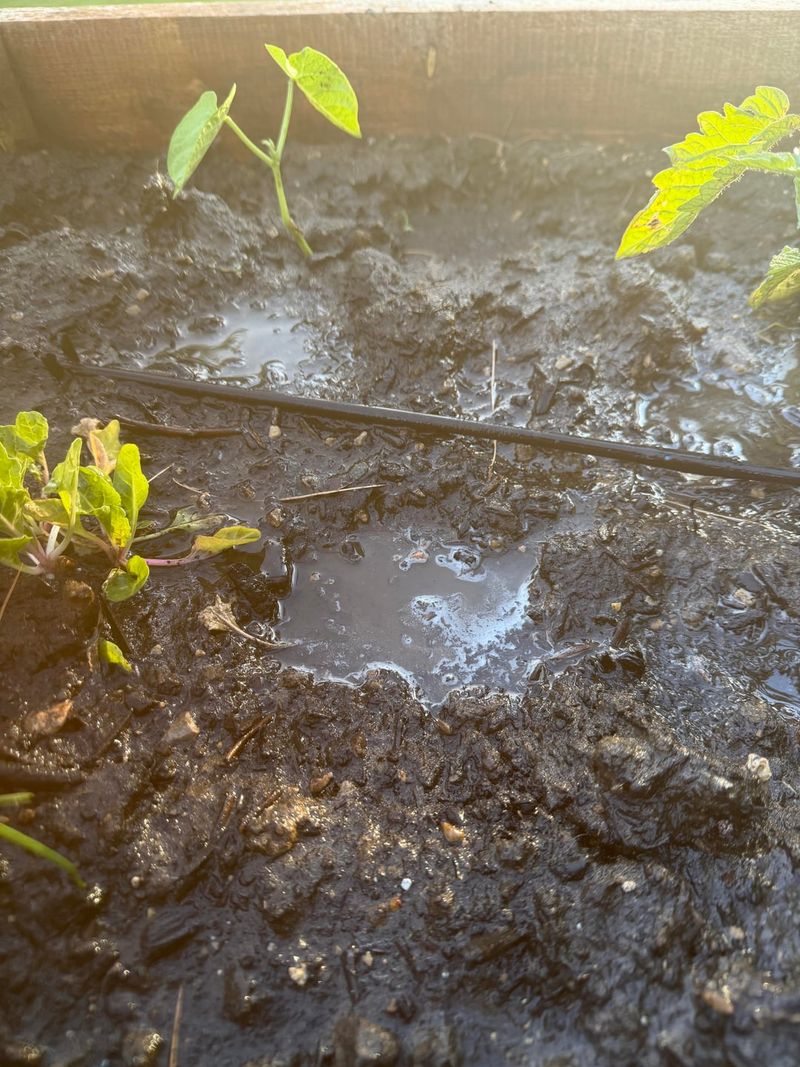
Sometimes the watering can is not the problem at all. A low spot that collects runoff, or a bed with heavy soil that never drains, can stay wet no matter how carefully you water.
Walk the bed after a good rain and look for puddles, shiny soggy patches, or areas that stay wet long after the rest has dried. Those are clues that the site itself needs attention.
UC IPM recommends avoiding wet, low areas for peas and using raised beds where drainage is poor. Mixing compost into the soil may also help water move through.
Next season, you could move the pea row to higher ground or build a raised bed so the roots sit above the wettest soil.
Yellow leaves alone are not a reason to add nitrogen
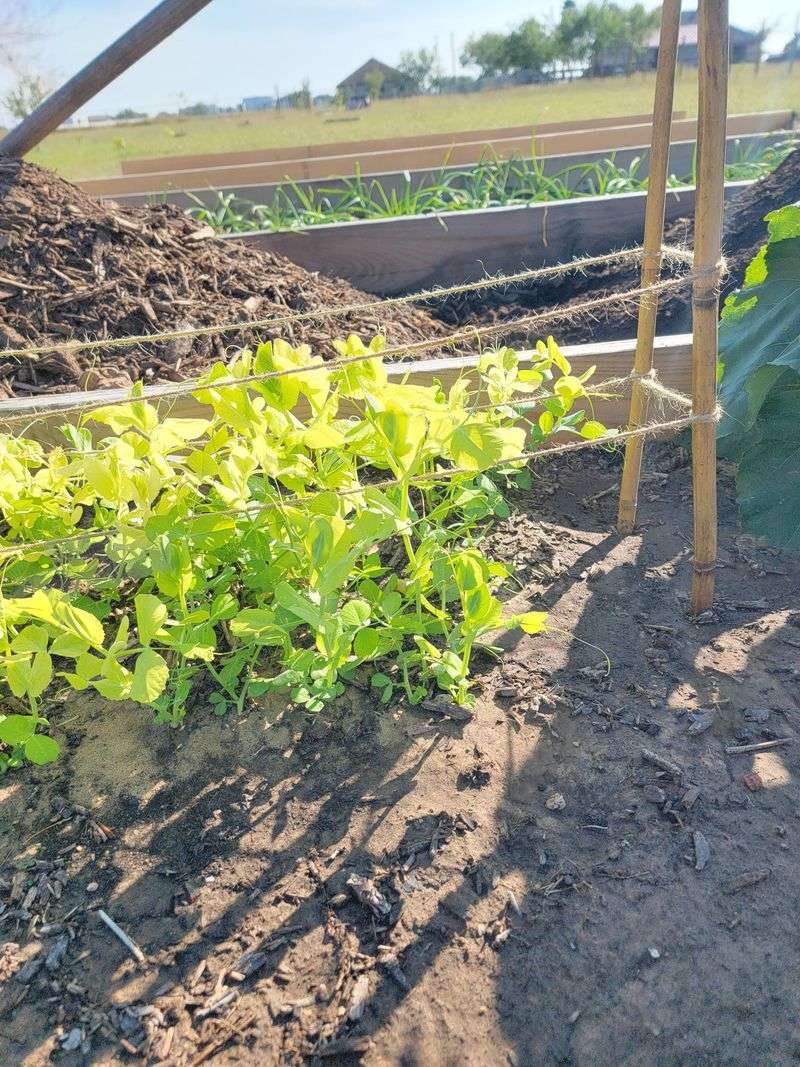
It is tempting to treat yellow leaves with a dose of fertilizer. With peas, that may backfire.
Peas can pull nitrogen from the air with help from rhizobium, bacteria that live in root nodules, so they often need little added nitrogen.
University of Minnesota Extension covers how peas get nitrogen, and UF/IFAS advises a reduced fertilizer rate for English or snow peas, noting that too much nitrogen can limit production.
Yellowing also shows up with root and seedling diseases, so fertilizer could mask the real issue. Not every yellow pea is a root problem, though.
If a nutrient issue still seems plausible after you check stems, roots, and moisture, a soil test can give you facts before you add anything.
November planting windows depend on pea type and region
November is not the same everywhere in the South. For English peas, UF/IFAS lists September through February for Central and South Florida, but January through March for North Florida.
A seedling planted in November may be on schedule in Miami and early in Tallahassee.
Texas adds more variety. The Texas A&M AgriLife vegetable planting calendar gives different outdoor sowing windows for garden or English peas and for southern peas.
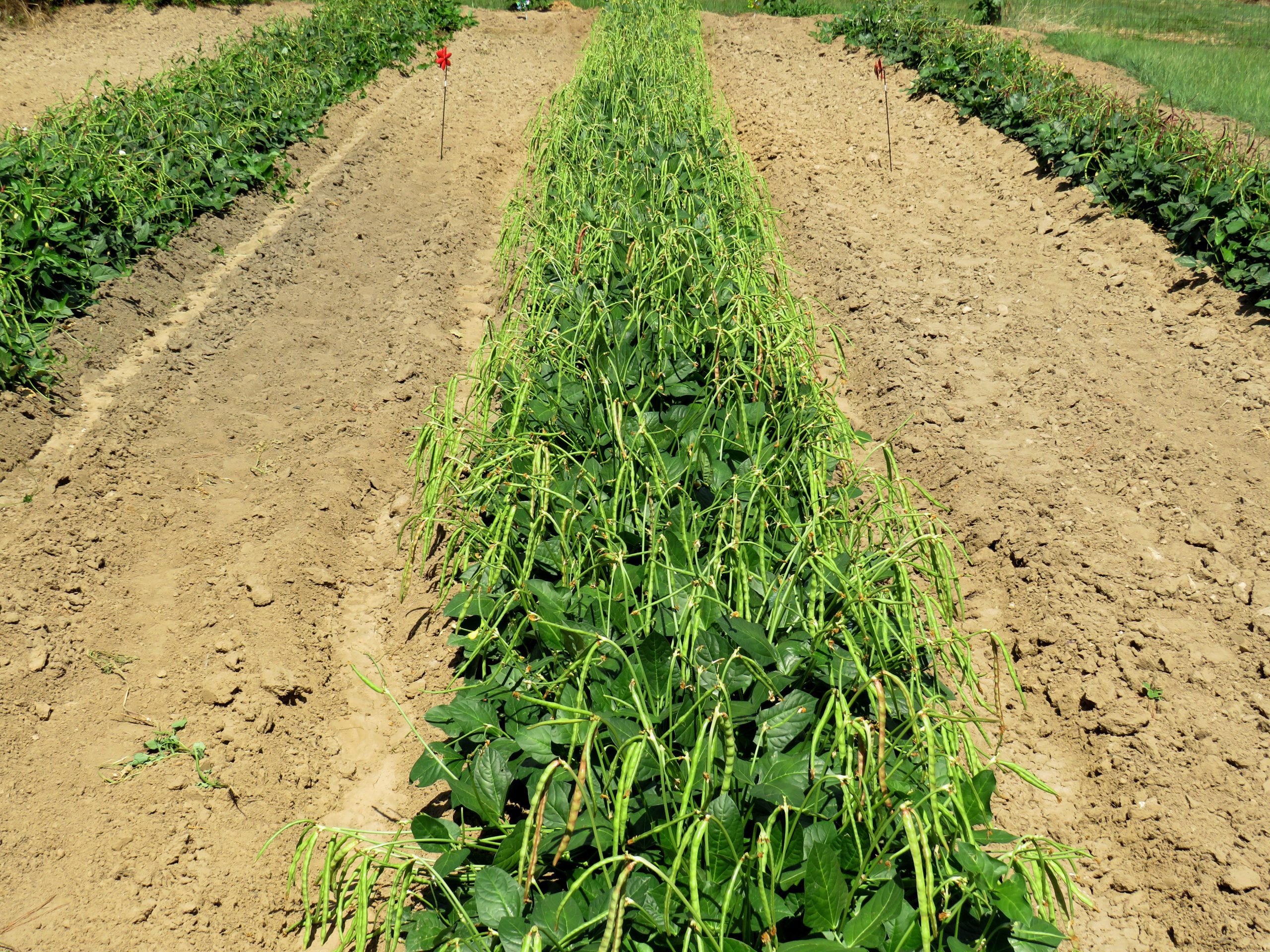
Those two crops are not interchangeable. Southern peas such as cowpeas are warm-season plants, while English peas prefer cool weather.
Check which type you planted and which regional calendar fits your area before blaming the bed.
Use the checks to choose your next step
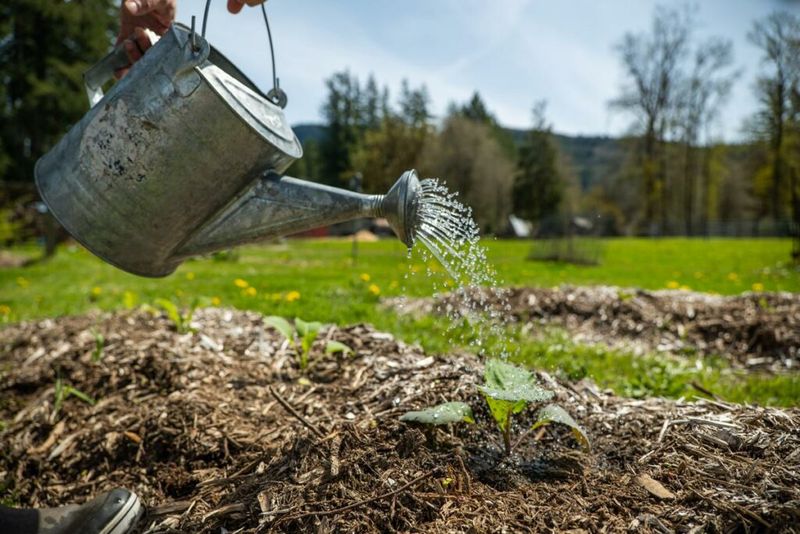
Start with the plant: inspect stems and roots. Then check whether the soil is still wet, and think about recent rain and how well the bed drains.
Hold off on fertilizer unless a soil test points that way.
If the bed is soggy, easing back on supplemental water, as UF/IFAS watering guidance suggests, and improving drainage can reduce stress. Seedlings with badly damaged roots may still not recover, and replanting may be the kinder option.
Every struggling seedling is a small clue about the bed it grew in.