
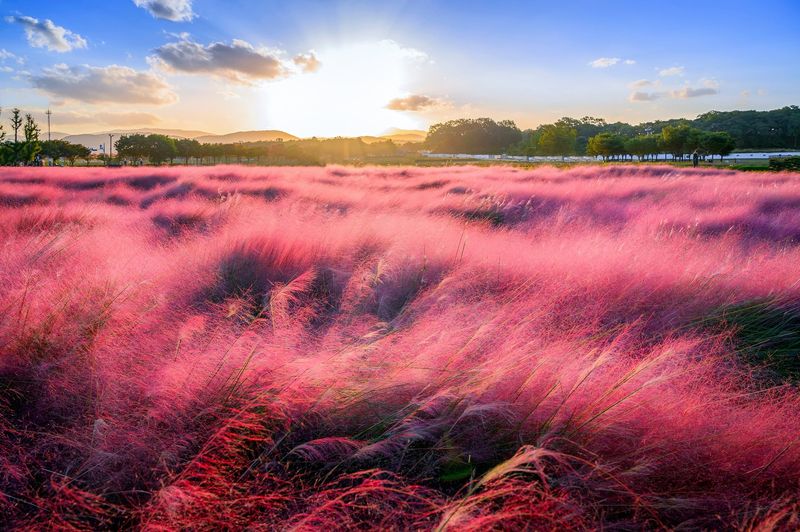
Some Florida yards glow pink in the fall, and the color does not come from leaves. It comes from pink muhly grass, a native plant that sends up airy, cloudlike flower clusters as the season cools.
The show shifts from place to place and year to year, so timing is never the same everywhere. Here is how it works and how to get it going in your own yard.
How muhly makes its pink cloud
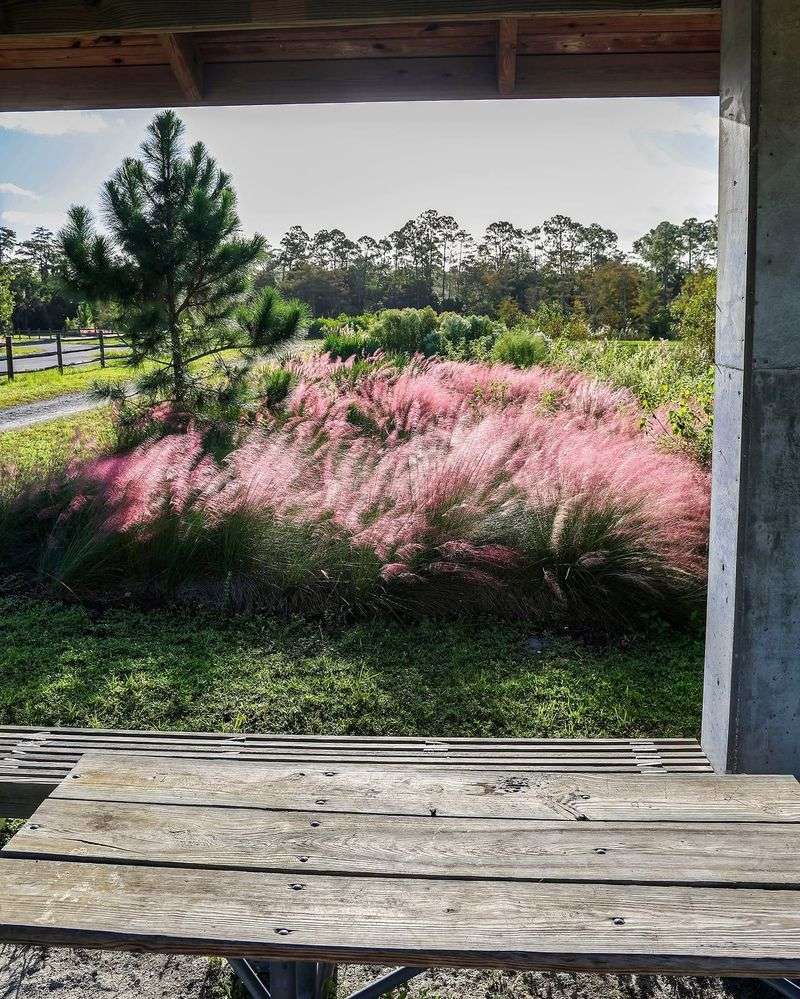
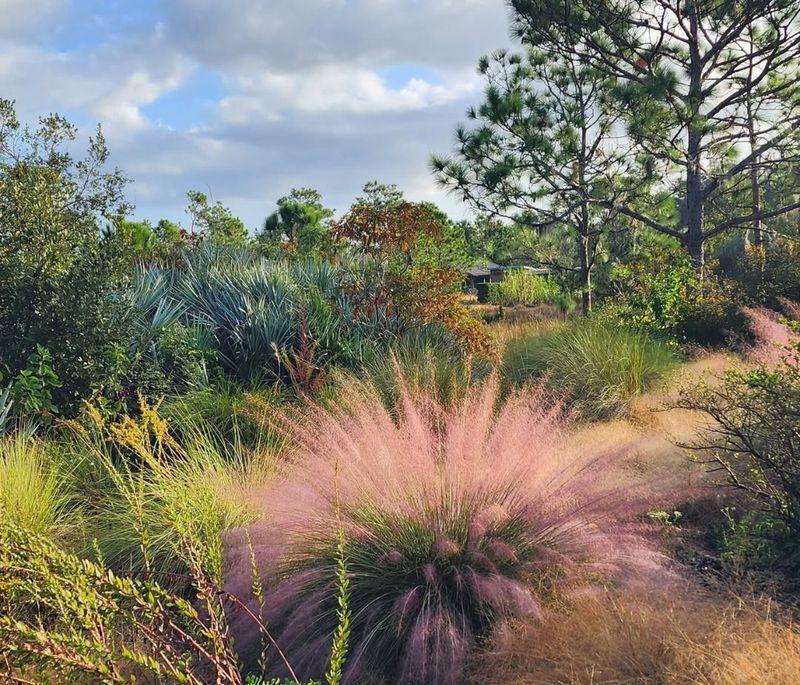
Walk past a mature clump of pink muhly in fall and the first thing you notice is a hazy pink mist floating above the foliage. That mist is made of thousands of tiny flowers packed onto fine, thread-like branches.
The Florida Wildflower Foundation describes the display as large, airy clusters of small blooms, with seeds forming later.
So the color comes from the flower stalks, not from pink leaves. No single flower is showy on its own.
The effect is all about numbers, with each plume holding so many delicate branches that the whole clump reads as a soft cloud.
Below the plumes, the narrow green leaves form a tidy, fountain-shaped mound. UF/IFAS Gardening Solutions notes the foliage stays attractive through the year, and a UF/IFAS fact sheet mentions it can take on a coppery tone as temperatures cool.
That gives you a second layer of color to enjoy beside the pink.
Muhly is not the only way a Florida yard shows fall color. Firebush, goldenrod, and other late bloomers all add their own notes.
What sets muhly apart is the cloudlike texture, which looks different from almost anything else in a typical Florida bed. Planted in drifts, it can make a border look soft and glowing at sunrise or sunset.
When to expect the fall display

Think of muhly as a fall bloomer, not a plant that follows a calendar date. Where you live and what the weather did that year both shift the timing.
A yard in one county may be glowing while another is still green and waiting.
Local Extension offices show how much the timing can vary. UF/IFAS Escambia County wrote about a display in late September and early October in the Panhandle.
Farther south, UF/IFAS Sarasota County featured muhly as a plant at its peak in early November.
UF/IFAS Charlotte County also described a November display. These are good signs that late autumn shows are common, but they are examples from particular places and years.
They do not mean every Florida yard is pink on the same day.
The practical move is to watch your own plants. If your clumps are healthy and in sun, look for flower stalks rising in the weeks as days shorten.
Plumes may show up anywhere from early fall into late autumn, and they often hold their color for several weeks. Visit neighborhood parks and roadside plantings to see what is happening near you, then plan your own planting with that rhythm in mind.
A Florida native with specific habitat benefits
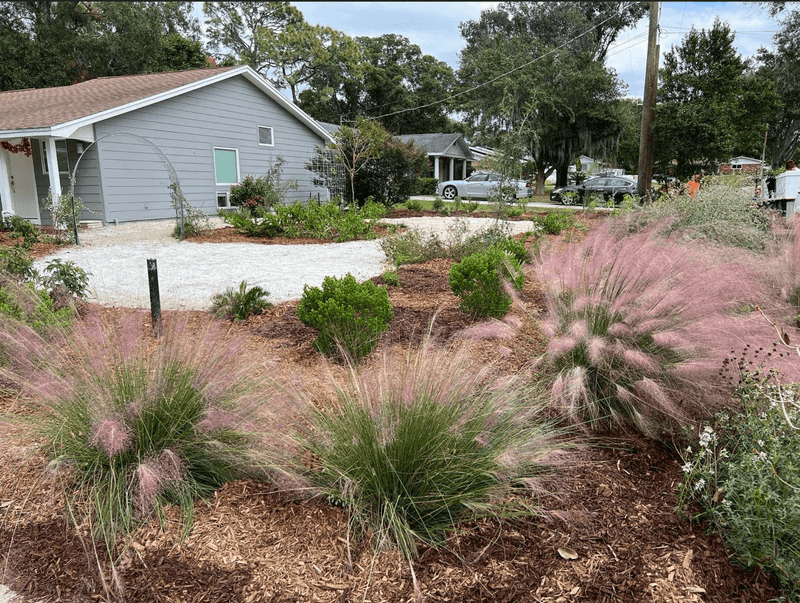
Pink muhly is Muhlenbergia capillaris, a perennial grass native to Florida. UF/IFAS lists it as native and not known to be invasive, which makes it an easy fit for gardeners who want local plants in their beds.
It looks at home in mailbox plantings, foundation borders, and along driveways.
There is a modest habitat payoff too. The Florida Native Plant Society says small birds eat the seeds, and small animals may use the clumps for shelter.
Those are real benefits, but they are modest ones.
No plant guarantees a visit from any particular creature, and muhly is no exception. Whether you see birds depends on your neighborhood, nearby cover, and what else grows in your yard.
Pairing muhly with other native plants gives wildlife more to work with.
Native status also does not mean the plant looks after itself. A new muhly still needs good siting and some early watering, and it benefits from sensible upkeep later.
Think of it as a tough, well-matched Florida plant that rewards a little attention rather than a plant you can ignore completely.
Choose sun and space for the look you want
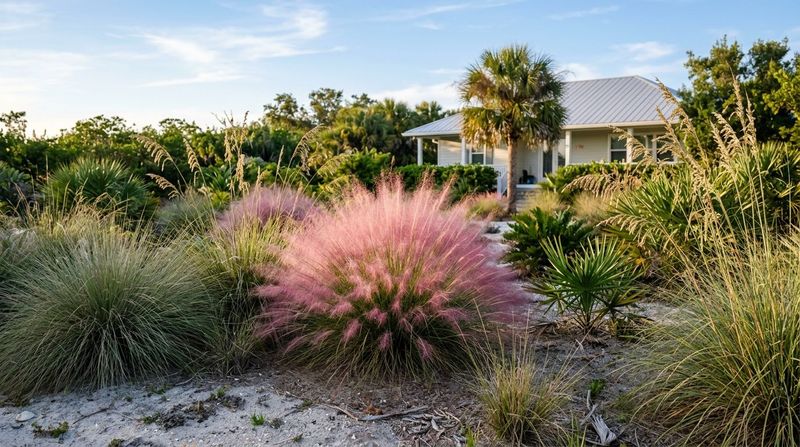
Sun is the first rule. Pick a spot that gets full sun for most of the day, because that is where muhly is most likely to flower heavily.
UF/IFAS Gardening Solutions recommends a sunny site and lists full sun for the plant.
Plants in shade may still grow, but they are less likely to put on a full, dense display. If a bed is shaded by a big oak or a tall fence, save muhly for a brighter area.
A clump that leans and thins out is often a sign it wants more light.
Spacing depends on the effect you want. For a solid mass, UF/IFAS suggests placing plants 24 to 36 inches apart so the clumps knit together into one pink band.
If you prefer a looser, waving look, UF/IFAS Sarasota County recommends at least 4-foot centers. That gives each plant room to arch and sway, so the plumes catch breezes and light.
Neither number is a universal rule. Sketch your bed, decide whether you want a carpet or a scattering of individual clouds, and space accordingly.
Remember that mature clumps are wider than the small pots you buy.
Water plants as they establish
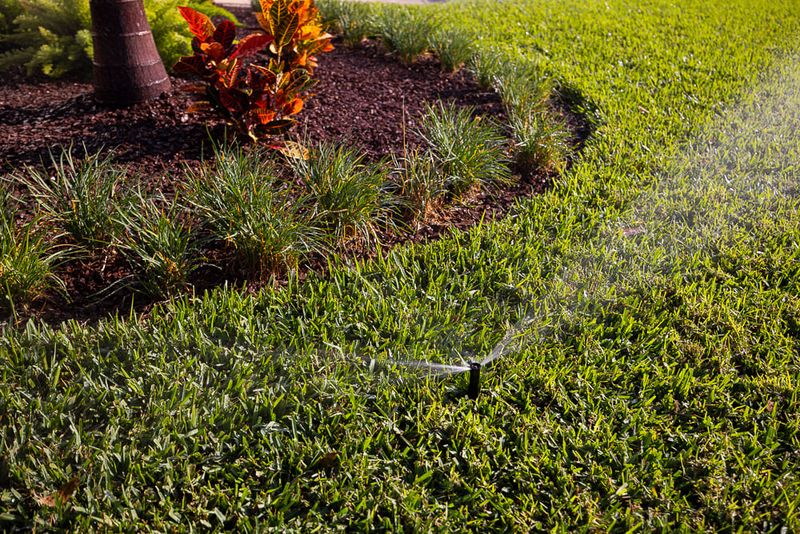
Newly planted muhly needs regular watering while its roots settle in. UF/IFAS Gardening Solutions advises watering until the plant is established, after which it has good drought tolerance.
Florida’s sandy soil drains fast, so a new root ball can dry out quickly. Check it by touching the soil near the clump.
If it feels dry a couple of inches down, give it a slow, deep soak rather than a quick sprinkle.
Plan on frequent watering at first, then gradually stretch the time between sessions as new growth shows. A thin layer of mulch around the plant, kept off the crowns, helps hold moisture.
Fresh green blades are a good sign that roots have taken hold.
Good drought tolerance is not the same as never needing water. During a long dry spell, even an established clump may appreciate an occasional drink, especially in a hot, exposed spot.
The same UF/IFAS profile lists planting months covering the whole year across Florida’s zones. Fall is not the only time to plant, so you can add muhly whenever you can commit to watering through the first weeks.
A summer planting that gets steady care can be bloom-ready by the next autumn.
Keep pruning modest
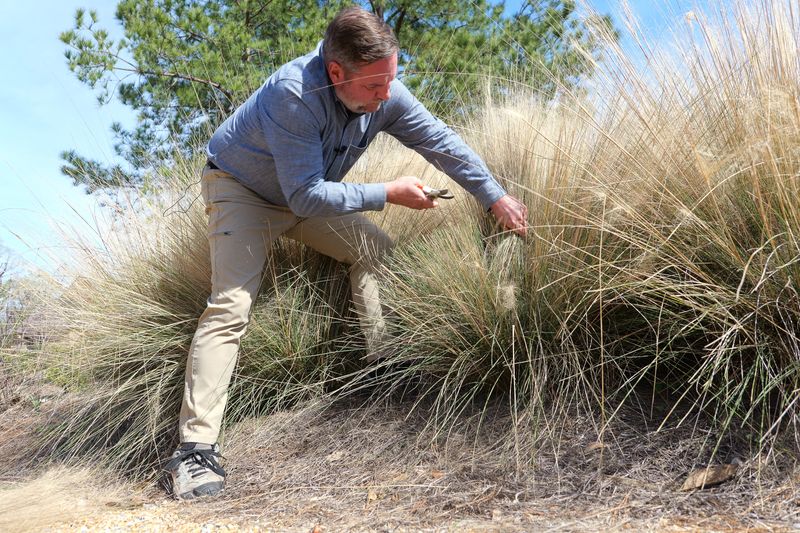
Muhly does not demand heavy cutting. Evergreen ornamental grasses like this one often look fine with only light grooming, so you can start by trimming away ragged or brown leaf tips and leaving the rest.
If a clump looks tired or messy, a cutback is an option. UF/IFAS Gardening Solutions says plants can be cut back in late winter, before new spring growth begins.
Waiting until the plumes have faded gives you the full fall show first.
Not every plant needs a hard annual haircut. A UF/IFAS publication on ornamental grasses covers how to choose and use these plants, and it treats upkeep as something that fits the grass and the site.
Let your clump’s appearance guide you rather than a fixed schedule.
When you do cut, use sharp pruners or hedge shears and leave a few inches of the base. Wear gloves, since the blades can be scratchy.
New green growth usually fills in as the weather warms.
Skip burning. Fire plays a role in some wild habitats, but it is not a safe or sensible tool in a home landscape, and pruning does the job.
Check the limits before planting
Two cautions help you decide whether muhly fits your site. The first is seeding.
UF/IFAS says muhly is not known to be invasive, yet the Florida Native Plant Society notes that it can self-seed. Expect an occasional seedling and pull or move extras as you see them.
The second caution is salt. Muhly can handle salty wind and some salt spray, which makes it a reasonable choice for many coastal yards.
That is different from tolerating water that is salty or brackish, and the plant does not do well when inundated by it.
If your yard floods with tidal or storm-surge water, choose something else for the low spots. On higher ground with breezy, salty air, muhly is a better bet.
Check these two points first, then match the plant to your yard. Full sun, spacing that suits your design, and steady watering while roots establish are what UF/IFAS Gardening Solutions points toward for a recurring fall display.
The timing will still shift with place and year.
Some autumns the clouds arrive early, and others make you wait, but they usually reward the patient.