
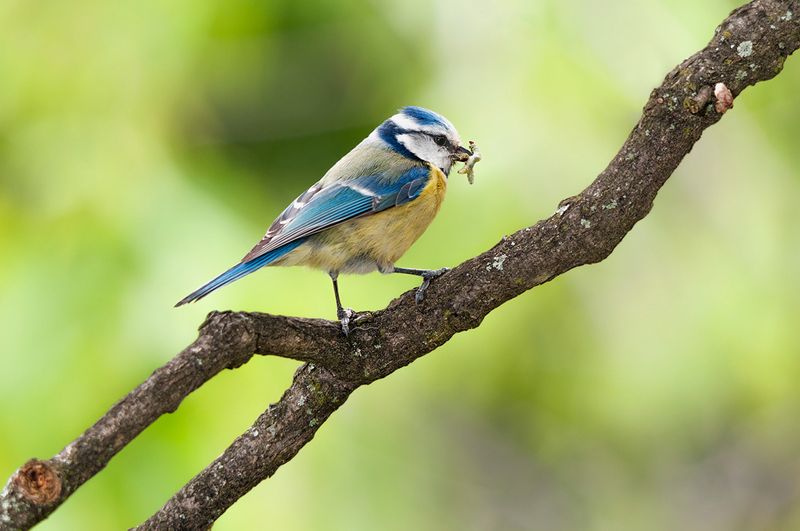
If aphids, caterpillars, and beetles keep chewing holes in your tomatoes and roses, you might already have free pest control flying overhead. Plenty of common backyard birds spend their days snapping up the same bugs that wreck your garden, and a few small changes can convince them to stick around. Below are nine feathered helpers worth attracting, plus what draws each one in. Think of it as building a hungry little cleanup crew that also happens to be fun to watch.
1. Eastern Bluebird
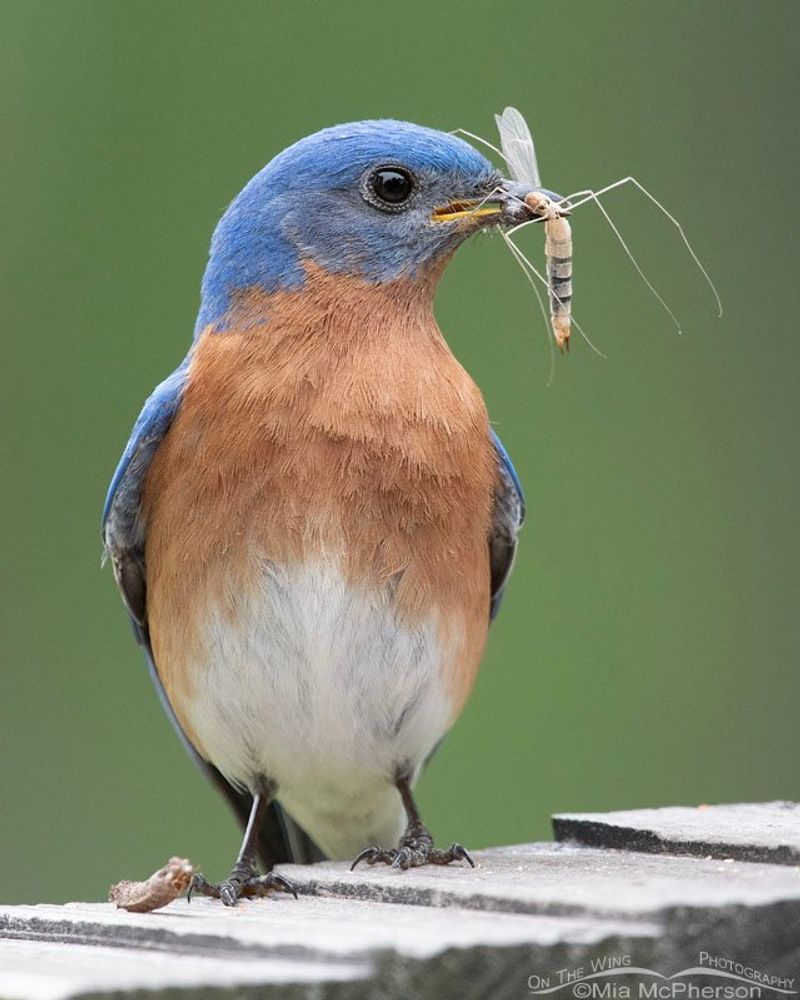
Few sights beat a flash of blue dropping from a fence post to snatch a grasshopper mid-hop. Eastern bluebirds are ground-hunting insect specialists, and their menu reads like a list of your worst garden enemies: crickets, beetles, caterpillars, and grasshoppers that shred leafy greens.
Because they hunt by perching and then pouncing, an open lawn edge near your vegetable beds gives them the perfect launch pad. A nest box mounted on a pole about five feet up, facing an open area, can invite a pair to settle in for the season.
Skip the sunflower seed if you want these birds; they mostly ignore feeders. Instead, offer mealworms in a shallow dish and keep some short grass nearby so they can spot prey easily.
Fun bit of history: bluebird numbers dropped hard last century, and backyard nest boxes are a big reason they bounced back. Providing housing may help draw a breeding pair while you get living pest patrol.
Once they claim your yard, expect fewer soft-bodied pests crawling through the mulch by midsummer.
2. Chickadee
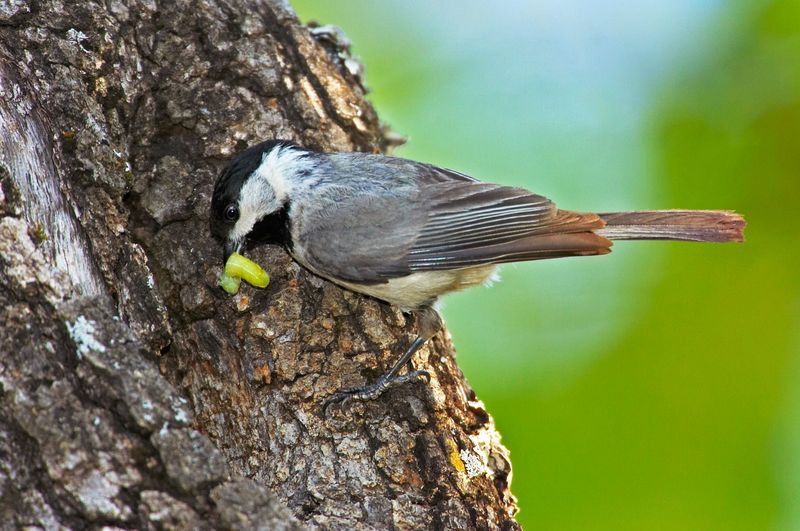
Tiny, fearless, and endlessly busy, chickadees work your shrubs like they are on a mission. A single pair feeding chicks can gather hundreds of caterpillars, aphids, and insect eggs in a single day, which makes them one of the hardest-working pest patrols you can host.
What sets them apart is where they hunt. While bigger birds stay on the ground, chickadees hang upside down under leaves and probe bark crevices, reaching the hidden spots where scale insects and aphid clusters like to hide.
They warm up to yards quickly, especially ones with a mix of native trees and a suet or seed feeder for winter fuel. Leave a dead branch or two standing if you safely can, since they nest in soft, decaying wood.
A nest box with a small entrance hole can also tempt a pair to raise a brood right beside your garden.
Did you know their alarm calls actually add more “dee” notes when danger is bigger? Keep them comfortable and their constant foraging can noticeably reduce leaf-eating pests around your plants.
3. American Robin
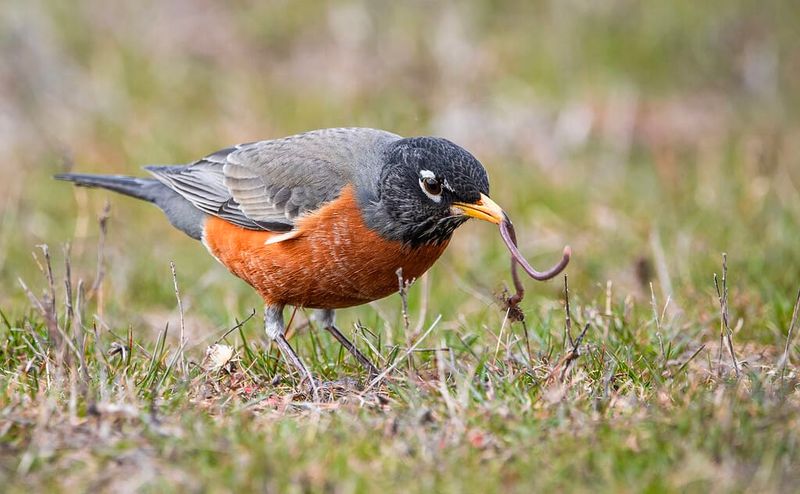
That classic robin cocking its head on the lawn is not just listening for worms. Robins are aggressive ground foragers that gobble beetle grubs, cutworms, and other soil pests that quietly destroy roots and seedlings before you ever notice the damage above ground.
Their appetite for grubs makes them especially handy near lawns and vegetable beds, where they can reduce the larvae that later hatch into leaf-chewing adults. Watching one tug a cutworm out of your carrot row feels a little like winning a small battle.
Robins are already comfortable around people, so attracting them takes little effort. A birdbath with fresh, shallow water and some mulched, moist soil will pull them in fast, since damp ground brings insects closer to the surface.
Avoid heavy pesticide use, which can poison the exact prey robins hunt and drive them elsewhere.
Here is a quirky fact: robins often forage in loose flocks during cooler months, so a welcoming yard may host several at once. More robins can mean fewer grubs chewing at your plant roots.
4. House Wren
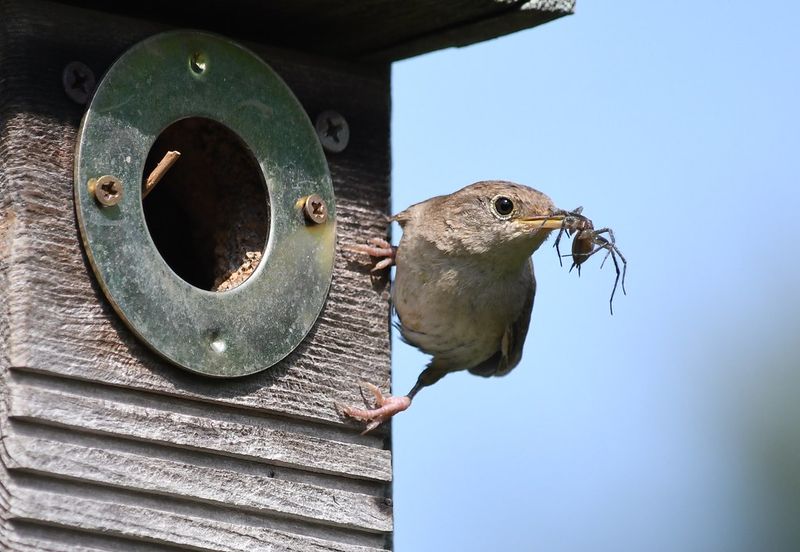
Small enough to fit in your palm but loud enough to fill the whole yard, the house wren is a bug-hunting machine wrapped in brown feathers. These birds eat almost nothing but insects, including beetles, weevils, grasshoppers, and the spiders and caterpillars that hide deep in dense plantings.
Their secret weapon is size. A wren slips into tangled shrubs, brush piles, and leafy corners where larger birds cannot follow, cleaning out pests you would never reach by hand.
They are famously easy to attract because they love nesting in cavities, including simple boxes, hanging gourds, and even old boots left on a porch. Mount a small nest box near a garden bed with a bit of cover nearby, and a pair may move right in.
Keep a brushy edge or a low shrub cluster available so they feel safe darting in and out.
One charming habit: males build several “dummy” nests to impress a mate. Encourage them to settle and their nonstop feeding can help keep beetle and caterpillar numbers down all summer long.
5. Barn Swallow
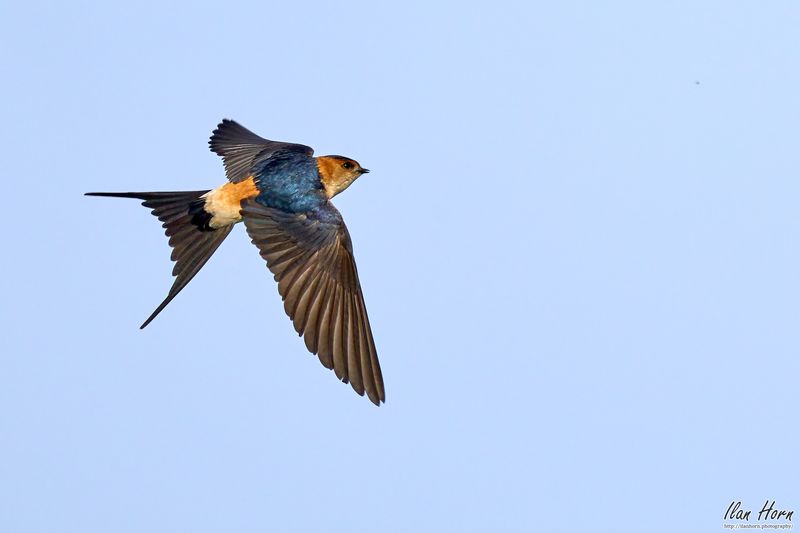
Watch a barn swallow carve loops over your yard at dusk and you are watching an airborne pest trap at work. Swallows feed almost entirely on flying insects, snapping up mosquitoes, flies, gnats, and beetles right out of the air as they swoop.
What makes them unique on this list is the zone they patrol. While other birds hunt leaves and soil, swallows own the airspace above your garden, thinning out flying pests that bother both plants and people at cookout time.
They favor open areas near water and often nest under eaves, sheds, and porch overhangs using mud they collect from puddles. Leaving a muddy patch available during nesting season can help supply their building material.
You will not lure them with feeders, since they only eat what they catch in flight. Instead, keep open flying lanes and avoid spraying insecticides that wipe out their food supply.
Fun detail: a single barn swallow can eat hundreds of insects per day. Give them room to hunt and their aerial patrols may noticeably cut down on the flying bugs swarming your beds.
6. Downy Woodpecker
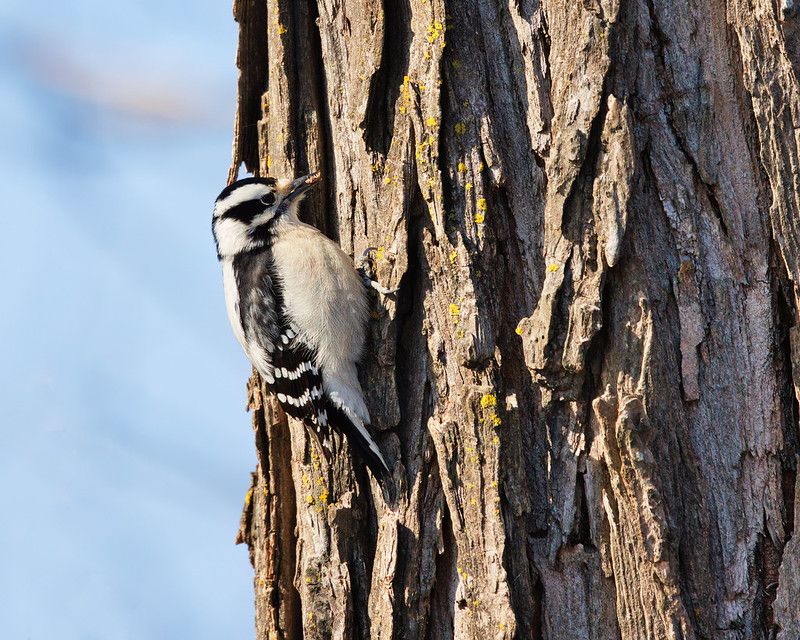
Tap, tap, tap. That soft drumming on your fruit tree is often a downy woodpecker digging out pests you can’t see. The smallest woodpecker in North America, it specializes in boring insects, wood-borer larvae, ants, and beetle grubs tucked under bark.
No other bird on this list targets pests hidden inside branches and trunks the way a downy does. Its stiff tail and strong bill let it chisel into wood and pull out larvae that would otherwise weaken your trees from the inside.
They are drawn to yards with mature trees, dead limbs, and a reliable suet feeder, which mimics the fatty grubs they crave. Hanging suet in fall and winter can help keep them nearby through the colder months when insects are scarce.
Leave a standing dead branch if it is safe, since they nest and roost in soft wood cavities.
A neat quirk: their tongues are so long they wrap around the skull when retracted. Welcome a downy and its bark-probing habit may reduce the wood-boring pests that damage your trees and shrubs.
7. Northern Cardinal
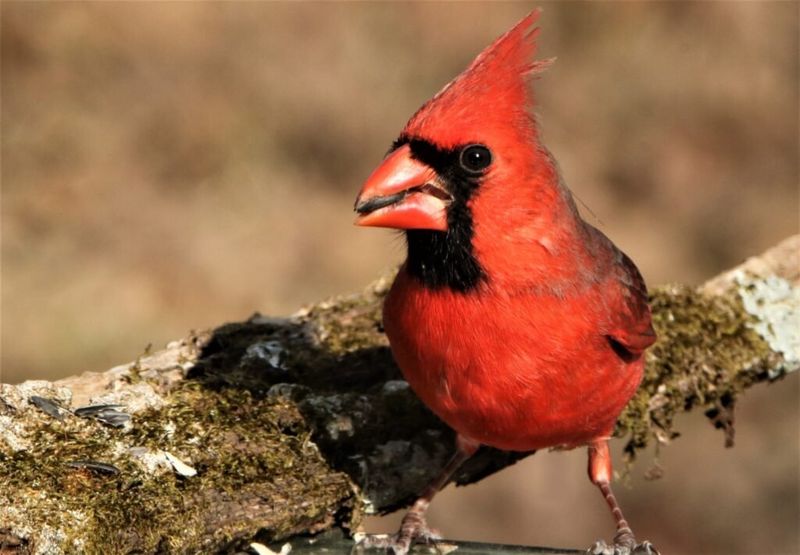
Bright red and impossible to miss, the northern cardinal is more than a pretty face at the feeder. During nesting season these birds shift heavily toward insects, feeding beetles, grasshoppers, caterpillars, and even destructive stink bugs to their young.
Cardinals stand out because they bridge two worlds. They happily crack seeds at your feeder in winter, then switch to hunting garden pests in the warmer months when their chicks need protein-packed meals.
Attracting them is refreshingly simple. A platform or hopper feeder stocked with sunflower and safflower seeds pulls them in, while dense shrubs and evergreens give them safe nesting cover close to your beds.
They tend to feed at dawn and dusk, so early risers get the best show as pairs move through the garden.
Here is a sweet detail: male cardinals often feed seeds to females during courtship, beak to beak. Keep them fed and sheltered, and their summer pest hunting can help trim caterpillar and beetle populations right when your plants are most vulnerable to being eaten alive.
8. Purple Martin
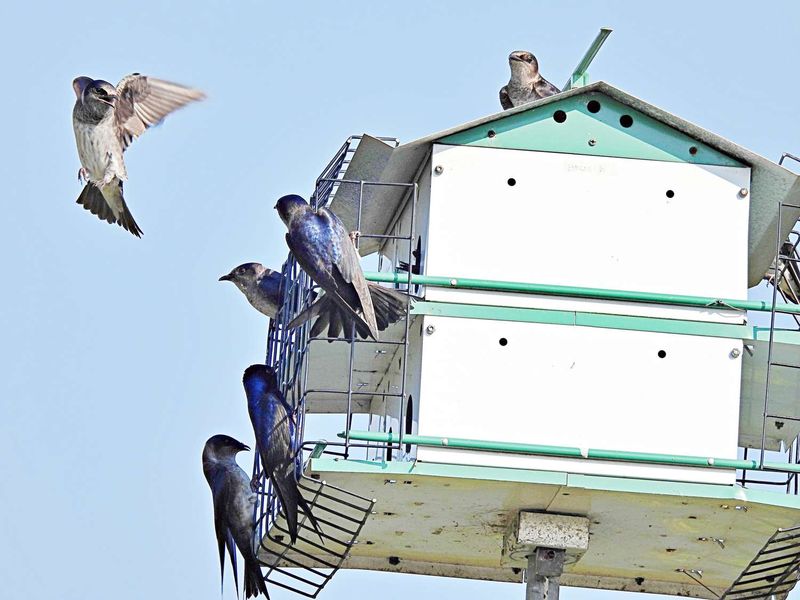
Colonial, chatty, and totally dependent on us for housing, purple martins are the largest swallows in North America and voracious flying-insect eaters. They sweep the sky for beetles, flies, moths, dragonflies, and other airborne pests all day long.
Their claim to fame here is teamwork. Martins nest in groups, so a single well-placed martin house can bring in a whole colony that patrols the airspace above and around your garden together.
In the eastern United States, martins now rely almost entirely on human-supplied housing, usually white multi-room houses or clusters of hollow gourds mounted on tall poles in open areas. Placing that housing away from trees and close to open sky gives them the flight room they need.
Once a colony discovers your setup, they often return year after year to the same site.
Fun fact: landlords have hosted martins for centuries, a tradition passed down from Indigenous peoples who hung gourds long ago. Set up housing and their constant aerial feeding may help thin the flying insects buzzing around your yard and beds.
9. Carolina Wren
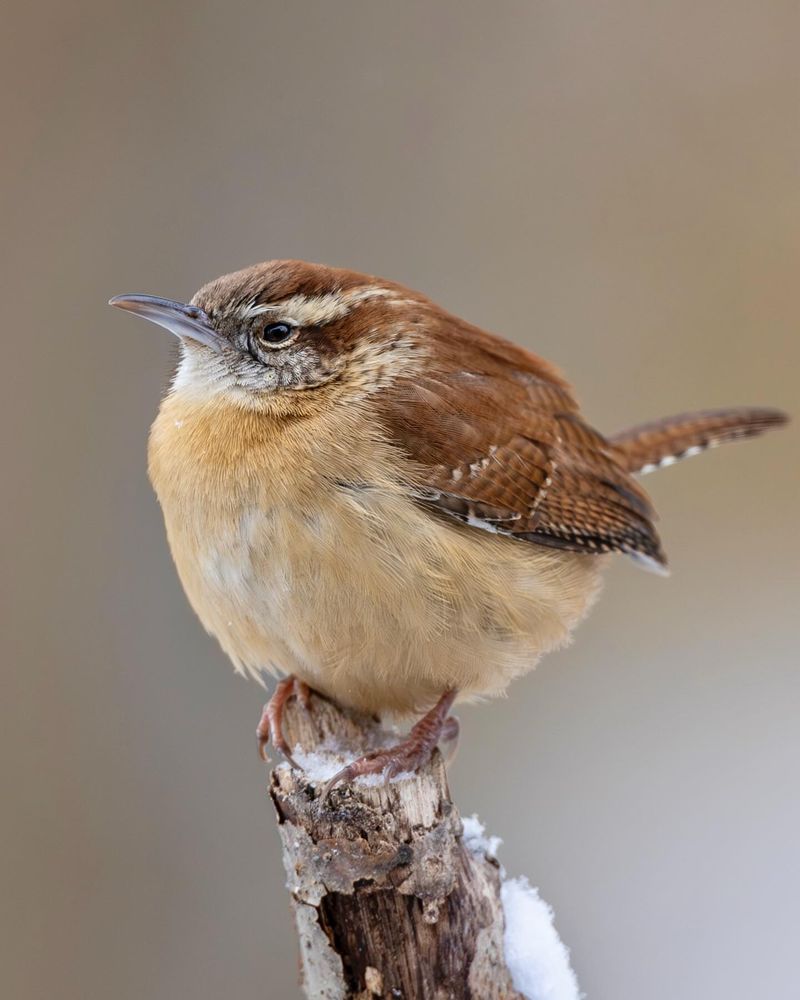
Loud far beyond its size, the Carolina wren announces itself with a ringing song while quietly clearing your garden of trouble. These rusty-brown birds feast on caterpillars, beetles, stink bugs, snails, and the many crawling pests that lurk low in leaf litter and mulch.
What separates them from their house wren cousins is persistence. Carolina wrens stay put all year in much of the eastern US, so they keep hunting pests through fall and winter when many other insect eaters have flown south.
They love messy, natural spaces, so a brush pile, leaf-covered beds, and dense shrubs will make your yard irresistible. A little offering of mealworms or suet in cold weather can help keep a resident pair happy and hunting nearby.
They will also poke around woodpiles, flower pots, and porch corners looking for hidden bugs.
Charming habit: mated pairs often stay together year-round and sing duets back and forth. Keep some wild corners and a winter food source, and their nonstop ground-level searching may help hold down slugs, beetles, and other creeping pests through every season.