
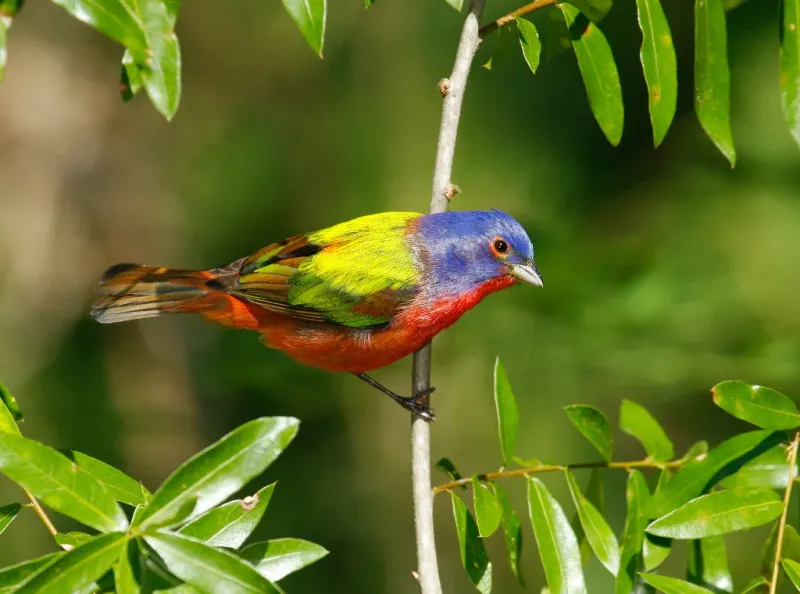
Painted Buntings are among the most colorful birds in North America, and Florida is one of the few places where you can spot them year-round in certain areas. Yet many Florida residents go seasons without ever seeing one, even when the birds may be passing through nearby habitat. Whether you live near the Atlantic coast or deep in the interior, understanding where these birds actually occur and what kind of yard they find usable can help you make smarter, lower-effort changes. No single fix guarantees a visit, but a few evidence-informed adjustments can meaningfully improve your yard’s suitability.
Florida location and season set the odds before landscaping begins
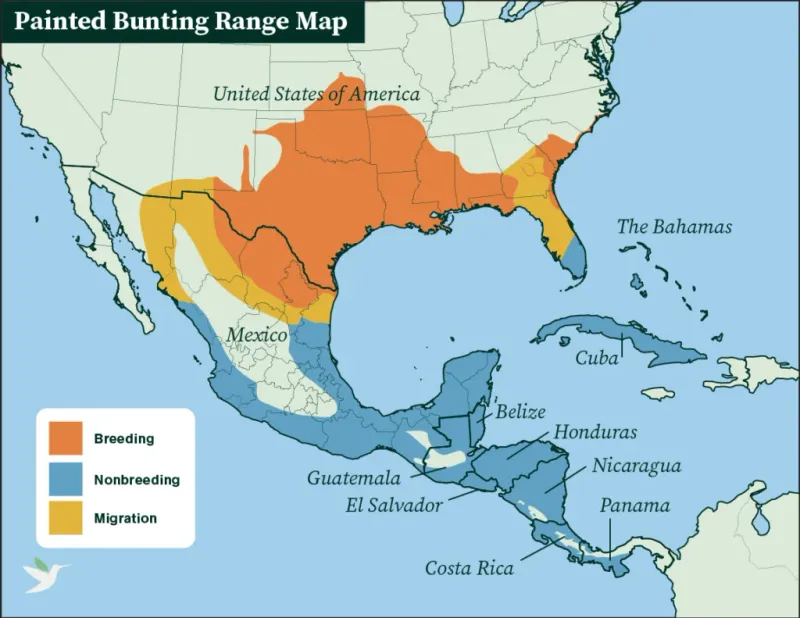
Before rearranging a single shrub, the most useful thing a Florida homeowner can do is figure out where they actually stand in the Painted Bunting’s range. FWC’s Painted Bunting research page explains that Florida supports both breeding and wintering populations, but they are not spread evenly across the state. Breeding is concentrated along Atlantic coastal counties from roughly northern Brevard County north to the Georgia border, while eastern-population birds winter in Florida and the Caribbean more broadly.
A yard near the Brevard-Volusia coast during spring and summer is working with a very different set of odds than a yard in Naples or the Panhandle in the same season. That does not mean inland or southern yards are hopeless, but it does mean that seasonal timing and geography shape the likelihood of a visit more than any landscaping decision can. Yard improvements may make habitat more usable, but they cannot substitute for being in or near the right place at the right time.
FWC’s species profile notes that FWC breeding and winter survey results show roughly a 4 to 6 percent annual decrease in Florida populations. That figure comes specifically from those survey datasets and should not be read as a precise yard-by-yard or county-by-county loss rate, but it does underscore that the birds are not uniformly abundant or expanding.
One reason visits go unnoticed even in suitable areas is the birds themselves. Males are the eye-catching ones, painted in red, blue, and green, but females and immature birds are greenish-yellow and far easier to overlook. Audubon’s field guide describes Painted Buntings as secretive around dense cover and woodland edges, which means a bird may be present without ever giving a homeowner a clear look. Resetting expectations here matters: a yard that never produces a sighting may still be hosting birds that go undetected, and a yard that does produce sightings may simply sit in a well-traveled corridor.
Build a semi-open edge with cover and room to forage
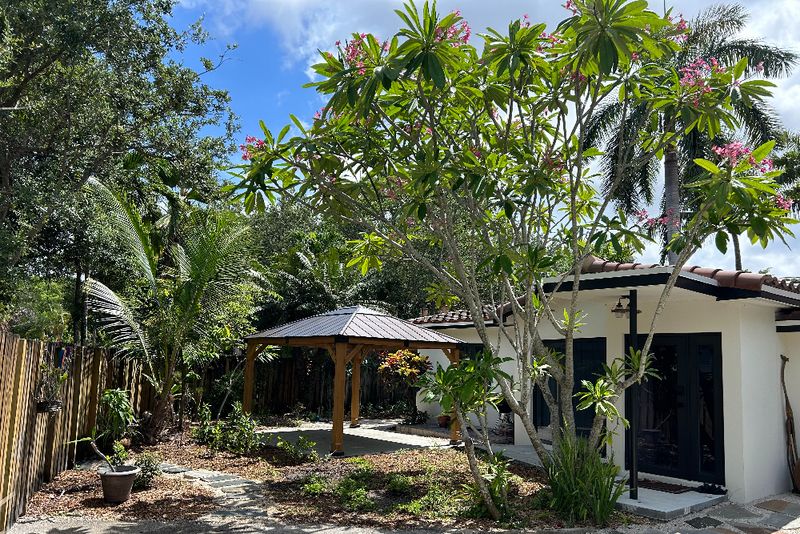
Painted Buntings are not birds of close-cropped lawns or impenetrable thickets. Cornell Lab’s life history account describes them using semi-open habitats with scattered shrubs or trees, grasses, weeds, wildflowers, hedges, fallow fields, old citrus groves, palmetto thickets, and maritime-hammock edges. The practical translation for a Florida yard is a low, dense planting cluster positioned beside a more open area where the birds can move along the ground and forage without feeling exposed or cornered.
FWC’s profile specifically lists brushy vegetation in open areas, roadside thickets, field edges, coastal hammocks, and backyard gardens as relevant habitat. A yard that is entirely short turf offers little of what the birds need. Equally, a yard packed wall-to-wall with dense plantings can limit the open ground access they prefer. The goal is contrast: dense low cover in one part of the yard, open foraging ground nearby.
Native plants are worth considering here, but they require honest matching to your specific site. UF/IFAS guidance on landscaping for wildlife recommends natives because they can provide food and cover while generally needing less irrigation, fertilizer, and pesticide use after establishment. The key qualifier is “after establishment” and “correctly matched.” A native plant placed in the wrong soil type, drainage situation, or sun exposure will struggle regardless of its wildlife value.
Florida yards vary enormously in conditions. Sandy, fast-draining soil, salt exposure near the coast, periodic flooding in low-lying areas, and summer drought stress all affect which plants will actually establish and thrive. Choosing a species that tolerates your specific combination of sun, moisture, and soil is more important than selecting any particular plant by name. A thriving native shrub of almost any suitable species will do more for habitat than a stressed or dead specimen of the “right” species.
Supply small seeds while leaving room for breeding-season insects
Painted Buntings eat seeds for most of the year, and their natural diet reflects what grows in weedy, semi-open Florida habitat. Cornell’s life history account documents natural food sources including bristle grass, panic grass, sedges, pigweed, dock, wood sorrel, spurge, and related herbaceous vegetation. A yard that retains some of these plants in a managed edge or corner is offering the birds something closer to what they seek in the wild, without requiring a feeder at all.
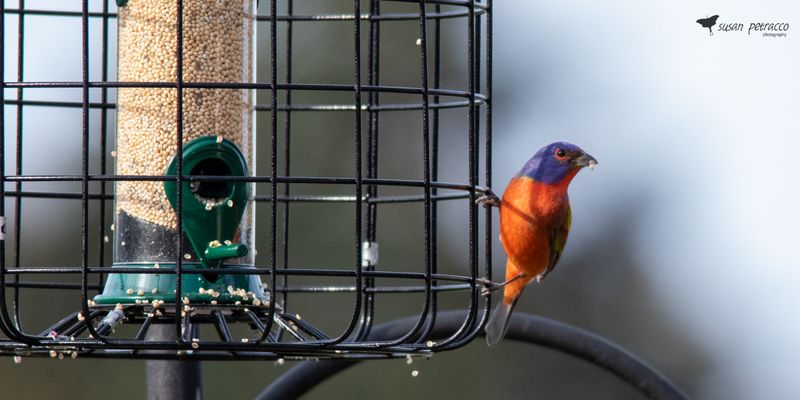
If you do use a feeder, seed choice matters. The U.S. Fish and Wildlife Service states that Painted Buntings prefer white millet, which gives that seed stronger direct support than a generic wild-bird blend or sunflower seed. A small-seed mix that includes millet is a reasonable option; a mix dominated by large seeds like striped sunflower is less well-matched to what the birds actually seek.
Feeder placement and style also deserve thought. These birds are primarily ground foragers, so a low platform feeder, an open tray, or a carefully managed ground-feeding area may suit their behavior better than a tall tube feeder. The sources do not establish one universally best feeder design, so some experimentation is reasonable, but keeping the feeding surface low and accessible aligns with how the birds naturally move and eat.
During the breeding season, the diet shifts. Adults move toward insects and feed insects to their nestlings, which means a yard managed with routine broad-spectrum pesticide sprays may be removing part of the food supply at the time it matters most. EPA guidance on reducing pesticide impacts on wildlife advises using pesticides only when necessary, following label directions carefully, and taking steps to protect non-target birds and beneficial insects. Cutting back on unnecessary broad-spectrum spraying is a reasonable wildlife-management habit, though it should not be framed as a proven way to draw Painted Buntings specifically.
The connection is ecological and indirect: fewer pesticides means more insects available when breeding birds need them most.
Add optional shallow water without calling it a Painted Bunting lure
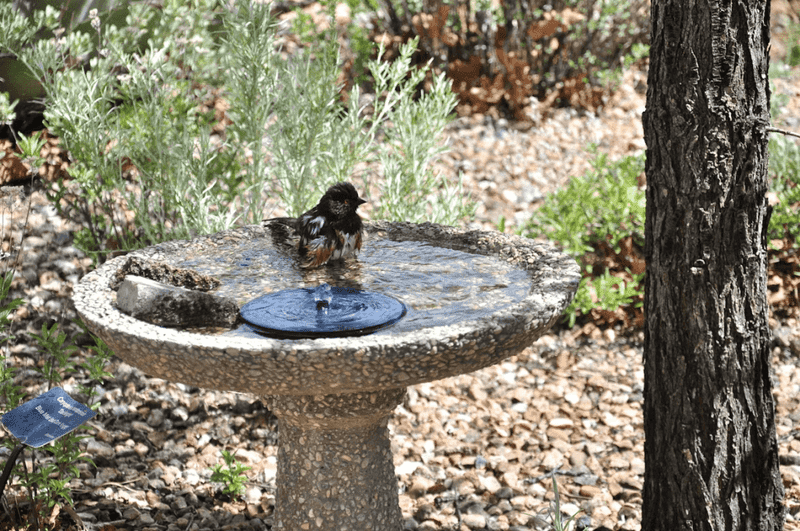
Clean, shallow water benefits birds broadly, and adding a birdbath to a Florida yard is a reasonable habitat enhancement. What the evidence does not support is treating a birdbath as a proven Painted Bunting attractant or a required step. Whether or not it increases Painted Bunting visits specifically depends on factors that a birdbath cannot control, including your location, the season, and whether the birds are moving through the surrounding landscape at all.
The setup details matter for both safety and usefulness. UF/IFAS guidance on providing water to wildlife recommends shallow baths with gently sloping sides, textured footing so birds can grip the surface, and a maximum depth of roughly two to three inches at the center. Those specifications make the bath usable for small songbirds that cannot safely navigate steep or deep water.
Placement affects safety as much as design does. Birds need a clear sightline to spot approaching predators while they drink or bathe, which means dense shrubbery immediately beside a low bath can give a cat or other predator a convenient ambush point. Setting the bath in a more open spot, with cover nearby but not right at the edge, gives birds time to react if something approaches.
Florida’s heat creates a hygiene challenge that northern birding guides sometimes understate. Cornell recommends changing birdbath water every day or two for a safer drinking and bathing environment, and UF/IFAS advises washing baths regularly with soap and water while flushing them at least weekly during summer to discourage mosquito larvae. A drip attachment or gentle bubbler can make the water source easier for birds to notice from a distance, but that is an optional upgrade rather than a species-specific requirement.
Remove the hazards that feeding and water can introduce
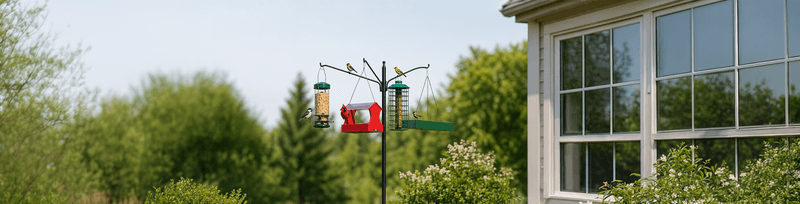
Putting out food and water is an invitation, and accepting that invitation comes with some responsibility for what happens next. A feeding station that draws birds also concentrates them, which raises the risk from predators, window collisions, and disease transmission if the station is not managed carefully. Thinking through these hazards before setting anything up is easier than correcting problems after birds have started using the space.
Cats are the most immediate concern. Both Cornell and UF/IFAS identify free-ranging cats and nearby ambush cover as serious hazards to feeding and bathing birds. Keeping cats indoors or physically separated from the yard while birds are active is the most straightforward fix. A cat that has outdoor access to a feeding area is not a minor inconvenience for visiting birds; it is a genuine predation risk, especially for birds focused on foraging at ground level.
Windows are the other major hazard. Cornell’s feeder placement guidance recommends positioning feeders either within three feet of a window or far enough away to reduce high-speed approaches, and emphasizes making the window itself bird-safe rather than relying on distance alone. Effective collision prevention means treating the glass with external screens, netting, or closely spaced visual markers where strikes occur. A few widely spaced decals are not sufficient to break up the reflective surface enough to deter birds in flight.
Feeders and baths need regular cleaning year-round, and Florida’s warm, humid conditions accelerate mold and bacterial growth. FWC’s guidance during unexplained songbird illness events advises temporarily removing feeders, using a 10 percent bleach solution for cleaning feeders and baths when appropriate, avoiding unnecessary handling of sick or dead birds, and reporting mortality events to FWC. FWC also warns that feeding stations can attract unintended wildlife such as raccoons, concentrate animals in ways that increase disease transmission, and generate conflicts that homeowners did not anticipate. Spilled seed on the ground adds to that risk by drawing species that were never the intended audience.
Measure success by better habitat, not a guaranteed sighting
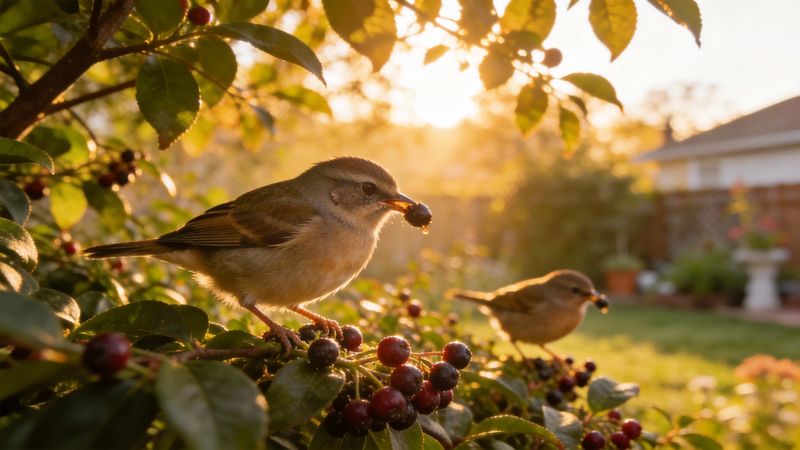
Cover, food availability, optional water, and safety measures each serve a different purpose, and none of them operates as part of a locked-in formula. FWC’s research on Painted Buntings makes clear that location, season, surrounding habitat, and population trends remain decisive factors that a homeowner cannot control. No source establishes that any specific combination of yard changes will reliably produce Painted Bunting visits, and presenting these improvements as a guaranteed recipe would overstate what the evidence actually shows.
A more useful way to measure progress is to track what other birds are using the yard. Cornell’s life history data shows that Painted Buntings use the same semi-open, seed-rich, insect-supporting habitat that many other Florida songbirds depend on. If a yard with improved structure, reduced pesticide use, and cleaner water starts drawing a wider variety of small birds, that is a meaningful sign that the habitat quality has improved, even if Painted Buntings have not appeared yet.
A missed sighting does not prove the yard failed, and a successful one does not prove a particular change caused it. UF/IFAS guidance on wildlife landscaping frames habitat improvements as investments that build value over time and across many species. A yard that supports a richer community of birds, insects, and plants is doing something worthwhile regardless of whether the most colorful bird in Florida ever lands in it. The best version of this project ends with a more ecologically useful yard – and a pair of binoculars kept near the window just in case.