
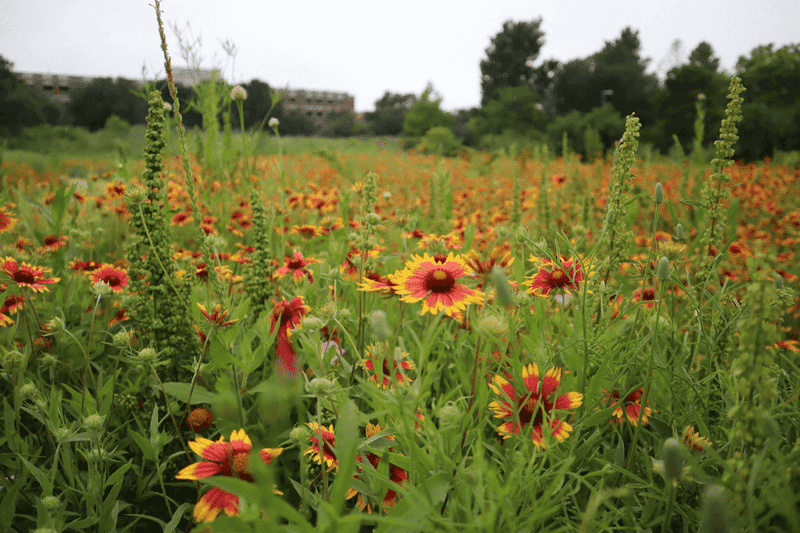
Every summer across Texas roadsides and open fields, a low-growing wildflower blazes in rings of red and gold, stopping drivers in their tracks. That flower is Indian blanket, also called firewheel, and it has a trick that makes it especially appealing to Texas gardeners: it can drop its own seed and potentially return the following season without you replanting. Getting that renewal to happen reliably takes some know-how, because the plant is an annual, not a perennial, and Texas weather has a way of changing the rules every year.
Meet the annual that renews itself by seed
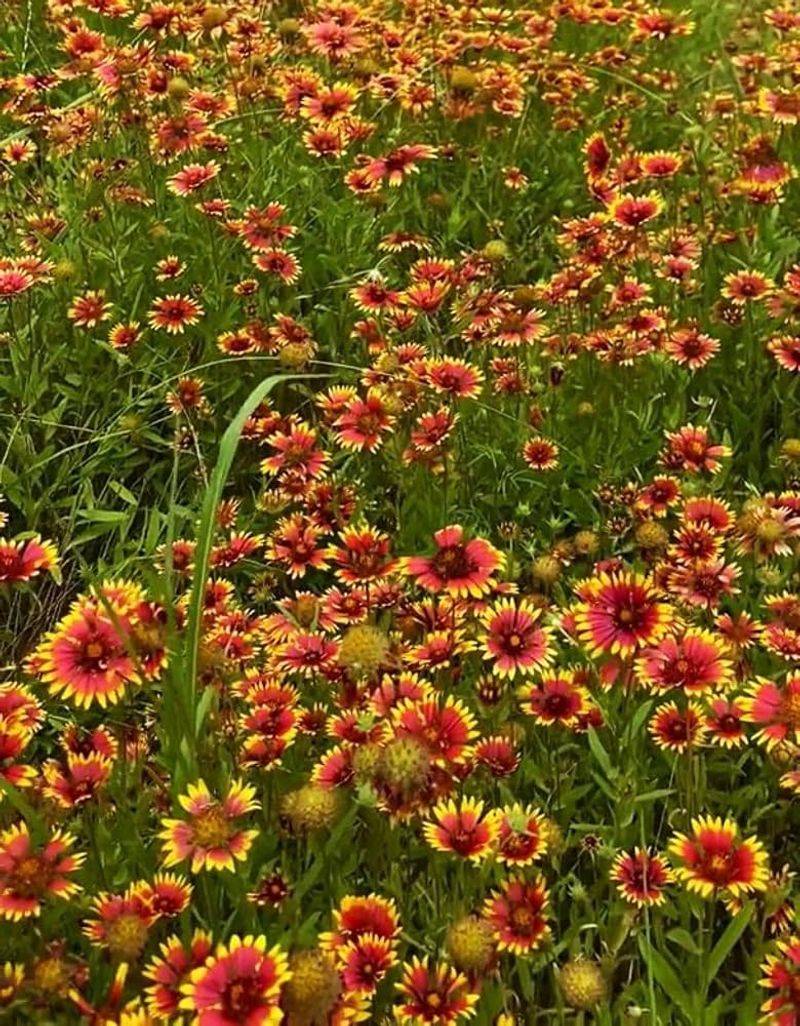
Gaillardia pulchella goes by two common names in Texas: Indian blanket and firewheel. The flower earns both nicknames honestly. Its petals fan out in concentric rings of deep red and bright yellow, mimicking the bold patterns of woven blankets and the spinning shape of an old wagon wheel. Texas Tech University’s plant resources program classifies it as a Texas-native landscape plant with a documented potential to reseed, making it a strong candidate for gardeners who want recurring color without replanting every spring.
What sets Indian blanket apart from many popular garden flowers is its life cycle. Texas A&M AgriLife Extension lists it as an annual, which means the parent plant completes its full life cycle, flowers, sets seed, and then dies. The display you see next season does not come from the same plant surviving the winter. It comes from seeds that fell to the ground, germinated under the right conditions, and grew into a new generation.
That distinction matters. A self-renewing patch of Indian blanket is really a succession of annual generations, not a single long-lived plant. The Native Plant Society of Texas notes that an abundant display the following year depends on allowing the plant to mature and drop its seed fully before any cutting or mowing occurs. When that window is protected, a planting can persist and sometimes expand.
When it is cut short, the seed bank shrinks and so does the next season’s show.
Indian blanket is a compelling choice for Texas gardens, but it is not the only native wildflower capable of reseeding. Many Texas natives reproduce by seed or spread vegetatively. What makes this particular species worth knowing well is the combination of heat tolerance, adaptability to difficult soils, and a bloom window that can stretch from spring through fall under favorable Texas conditions.
Why its bloom window suits Texas conditions
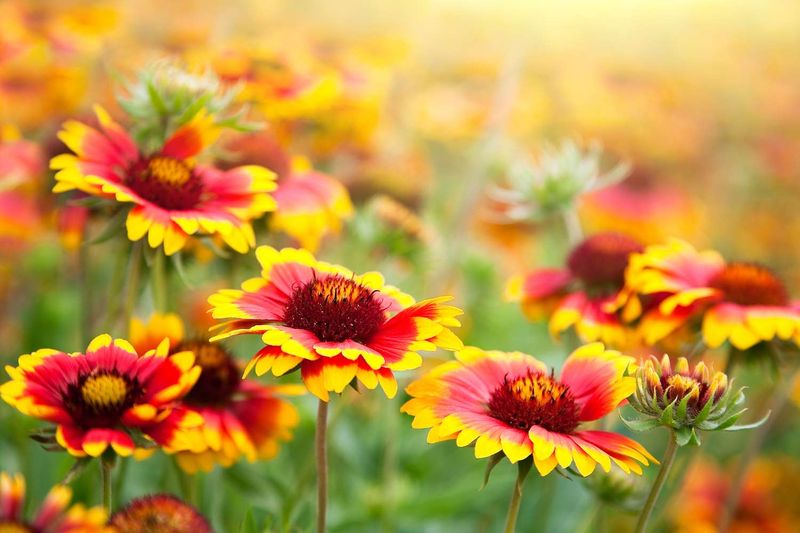
Texas summers are punishing in ways that knock out many cultivated garden flowers by July. Triple-digit temperatures, weeks without meaningful rain, and baked, rocky, or sandy soils create conditions that most ornamental annuals simply cannot handle. Indian blanket was shaped by exactly those pressures. According to Texas Tech’s plant information sheet for Gaillardia pulchella, the species carries high heat tolerance, drought tolerance, and low water needs once established.
It also adapts to a wide range of soil types while preferring well-drained ground, which describes most of Texas outside the Piney Woods and low-lying coastal areas.
Full sun is where this plant performs best. Shaded spots or beds that receive only partial sun tend to produce leggier plants with fewer flowers and less vigorous seed set. A south- or west-facing bed, an open slope, or a sunny strip along a fence line gives Indian blanket the light it needs to flower freely and build a seed bank for next season.
Texas Tech lists the bloom period as spring, summer, and fall, which frames a generous potential window. That range reflects what the plant can achieve under favorable conditions, not a guarantee of continuous color in every yard. Rainfall, soil quality, and local competition all shape how long any individual planting stays in flower. A USDA NRCS plant guide for Indian blanket describes a germplasm selected for vigor and extended blooming in the Rio Grande Plain, Coastal Sand Plain, and Gulf Coast Prairies and Marshes, where flowering and seed production continued through the season, particularly after rainfall events.
That evidence applies to specific South Texas regions and conditions, not to every corner of the state.
The practical takeaway for Texas homeowners is straightforward. Plant Indian blanket where it gets full sun and the soil drains well, manage watering carefully during establishment, and then step back. Once rooted in, the plant handles heat and periodic dry spells that would stress or kill less adapted flowers, giving it a realistic shot at color during stretches when other plants struggle.
Let the seed heads build next year’s display
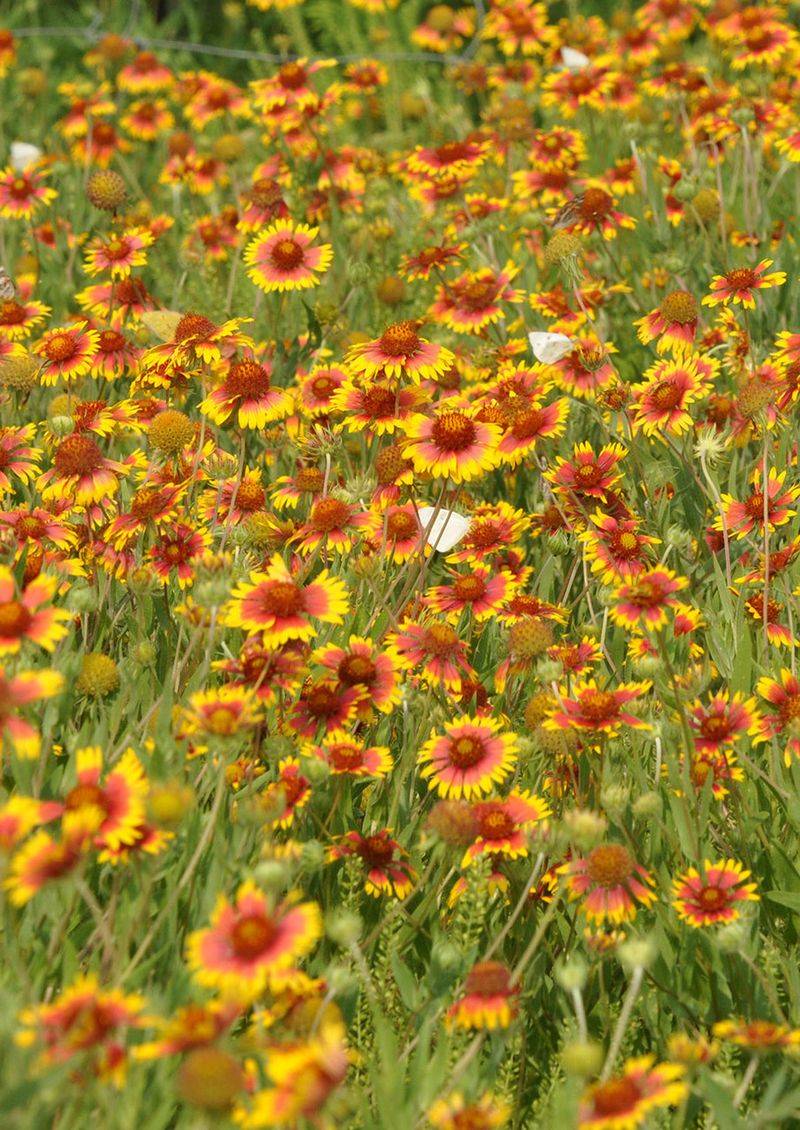
Watching a bed of Indian blanket fade in late summer can feel like the wrong time to leave plants alone, but that fading stage is exactly when the next season’s display is being built. Each spent flower head becomes a small, spiky sphere packed with seeds. Leave those seed heads on the plant, let them dry completely, and the seeds will fall naturally onto the soil below. That fallen seed is the raw material for next year’s generation.
The Native Plant Society of Texas advises waiting until seeds are fully mature before cutting plants back, and that timing is the single most important management decision a gardener makes for a self-renewing planting. Cut too early, and the seeds are not yet viable. Mow the bed down in August while flowers are still finishing, and you may harvest nothing but stems. The reward for patience is a seed bank that can germinate when fall rains arrive or soil temperatures drop to a favorable range in late winter.
Texas Parks and Wildlife similarly advises allowing native wildflowers to wither, dry, and drop seed before mowing or trimming, noting that the resulting seed bank can produce more plants for years. That guidance applies broadly to native wildflower management, and Indian blanket fits the pattern well.
Deadheading, the practice of removing spent flowers before seeds mature, is sometimes recommended to keep plants looking tidy or to push them into producing more blooms. Texas Tech lists deadheading as a maintenance option for Gaillardia pulchella. If reseeding is the goal, though, deadheading every flower head works against that objective. A practical middle path is to deadhead selectively through the main bloom period for a tidier appearance, then stop deadheading in late summer and let the remaining flowers mature fully and drop their seeds before the bed is cut back.
Even with perfect timing, a denser patch next season is a possible outcome, not a certainty. Rainfall during germination, soil surface conditions, and temperature all determine how many seeds actually sprout. Expect variation from year to year.
Start with a prepared seedbed and fall sowing
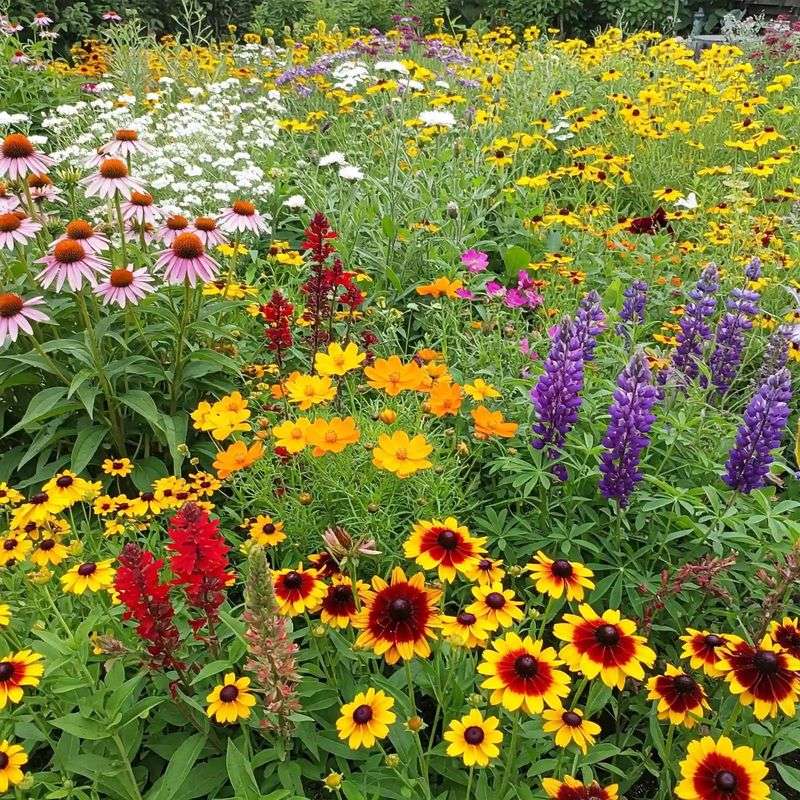
A self-renewing planting only gets one chance to start correctly. The first year sets the seed bank, and a weak first-year stand means thin reseeding potential in every year that follows. Preparation before sowing makes a real difference, especially in Texas, where hard-packed clay, caliche layers, and compacted suburban lawns can prevent seeds from ever reaching suitable soil.
Start by removing or killing existing turf and competing vegetation from the area where Indian blanket will grow. Grass competition is one of the most common reasons wildflower sowings fail. Once the area is clear, loosen the top inch or two of soil if it is heavily compacted, but avoid deep tilling, which can bury weed seeds and disrupt the soil structure that native seeds prefer. The goal is a firm, slightly rough surface where seeds can settle into contact with the soil without being buried under a thick layer of loose dirt.
Scatter seed evenly across the prepared area, then lightly rake or tamp the surface to press seeds into firm contact with the soil. Deep burial is the enemy of germination for small wildflower seeds. A light pass with the back of a rake or a tamper is enough. TxDOT’s wildflower planting guidance recommends fall sowing for most of Texas, generally from September 1 through November 30.
That window gives seeds time to stratify naturally and germinate when winter moisture and cooler temperatures trigger sprouting.
Moisture during establishment is non-negotiable. Texas Parks and Wildlife recommends keeping the seedbed moist during establishment and using regional native seed sources. An established Indian blanket plant handles dry spells well, but a seedling is fragile. If fall rains do not arrive on schedule, plan to water the seedbed lightly and regularly until germination is underway and young plants are visibly rooted.
Do not treat Indian blanket as a plant-and-forget project in its first season. Establishment requires the right site, firm seed-to-soil contact, adequate moisture, and protection from foot traffic and premature mowing. Get those conditions right in year one, and the plant has a real chance of building the seed bank that makes future seasons easier.
Match the seed to your Texas region
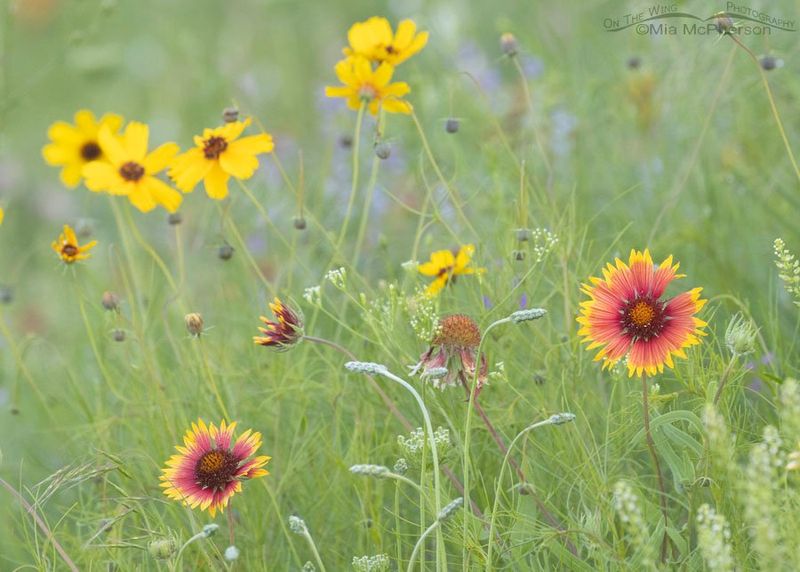
Texas is not one gardening climate. The Panhandle, the Edwards Plateau, the Piney Woods, the Gulf Coast Prairies, the Rio Grande Plain, and North Texas all differ in rainfall totals, soil chemistry, freeze dates, and summer heat patterns. A seed source selected for conditions in deep South Texas may not perform the same way in Amarillo or Nacogdoches, even if the species is technically the same.
Regional fit matters most for reseeding success. The USDA NRCS plant guide for Indian blanket describes a germplasm selected specifically for the Rio Grande Plain, Coastal Sand Plain, and Gulf Coast Prairies and Marshes, where it showed vigorous growth, long flowering, and continued seed production through the season. That is useful evidence for gardeners in those regions. It is not proof that every Indian blanket seed source will perform the same way in the Hill Country or West Texas.
Buying seed from a source matched to your ecoregion improves the odds that the plants will be adapted to local rainfall patterns, soil types, and temperature swings. The Texas Native Seeds program’s native seed selection tool from the Caesar Kleberg Wildlife Research Institute allows gardeners to search by county, soil type, and ecoregion to find appropriate native species and seed sources. That kind of targeted guidance is far more reliable than a generic commercial wildflower mix, which may contain non-native species or varieties selected for very different conditions.
The Native Plant Society of Texas emphasizes that “native to Texas” does not mean equally appropriate throughout the entire state. Local provenance, meaning seed collected from plants already adapted to your specific area, gives new plantings the best foundation for long-term success. When possible, source seed from a Texas native plant nursery or seed supplier that can tell you where the parent plants grew.
The Texas Parks and Wildlife Department also recommends regionally appropriate native plants for pollinator support, reinforcing the value of matching species selection to local conditions rather than defaulting to whatever is on the shelf at a big-box garden center.
Manage volunteers without losing the habitat value
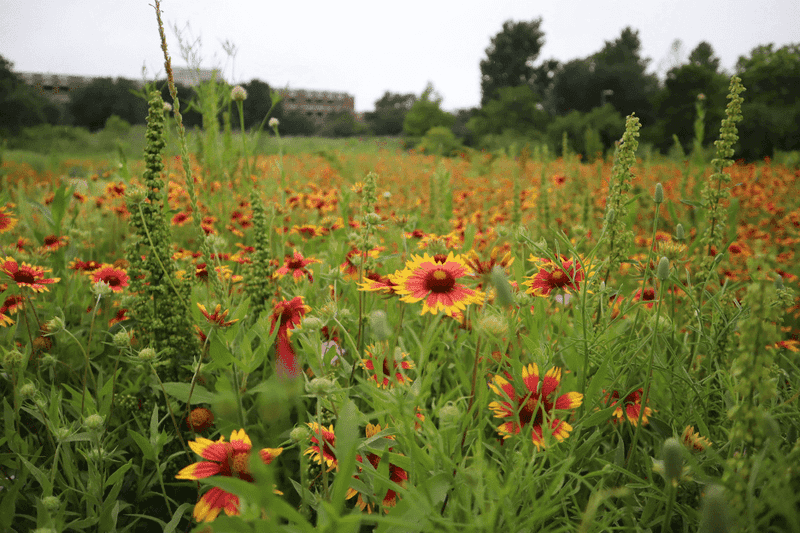
A successful self-sown planting eventually produces more seedlings than the original bed can neatly contain. That abundance is a sign the system is working, but it also means seedlings will occasionally appear in places you did not plan for. Volunteer plants showing up in a gravel path, along a bed edge, or among other plantings are a management consideration, not a crisis. Pulling or transplanting young seedlings while they are small is straightforward, and selective removal lets you keep the plants where you want them while clearing the spots where you do not.
The key is timing. Young seedlings are easy to remove when they first emerge. Wait until they are large and rooted in, and removal becomes harder. Walk the bed periodically after germination season and pull volunteers early in areas where they conflict with other plants or create a tripping hazard.
Leave the ones growing where they are welcome. The Native Plant Society of Texas recommends allowing plants to set mature seed before cutting back, so even as you manage volunteers, make sure enough plants in the main bed are allowed to finish their seed cycle fully.
Beyond managing the plants themselves, think about what Indian blanket contributes to a broader yard ecosystem. The flowers attract bees, butterflies, and other pollinators during a long potential bloom window. That is genuinely valuable, but one species cannot provide everything a pollinator community needs across an entire year. Texas Parks and Wildlife recommends a succession of native plants that flower in spring, summer, and fall, with multiple species rather than one flower carrying the whole load.
Pairing Indian blanket with other Texas natives, such as black-eyed Susan, prairie verbena, or fall-blooming native asters, fills the gaps before and after Indian blanket’s main flowering push. TPWD’s guidance on native wildflower plantings also cautions against generic commercial seed mixes, which may include non-native species. Building a habitat garden around several well-chosen, regionally appropriate natives gives pollinators more reliable support through the entire season and gives your yard more visual interest from March through November.
Expect a recurring display, not a yearly guarantee
Indian blanket earns its reputation in Texas gardens not because it defies the rules of annual plants, but because it works with them. The parent plant completes its life cycle, drops seed, and hands the job to the next generation. When mature seed meets bare or lightly vegetated soil, adequate moisture, and the right temperatures, a new stand can emerge and sometimes fill in more densely than the year before.
Weather is the variable no gardener controls. A dry fall with no germination rain, a late freeze that kills young seedlings, or a summer drought that cuts flowering short can all reduce the seed bank and thin the following season’s display. Texas Tech’s documentation of Indian blanket’s heat and drought tolerance describes what an established plant can handle, not what a seedling can survive in a brutal dry spell. Plan for that variability by protecting the seed cycle in good years and supplementing with fresh seed after bad ones.
The practical steps stay the same regardless of what last season brought: choose seed matched to your Texas ecoregion, prepare the seedbed properly, protect seed heads until they mature fully, and give young plants enough moisture to root in. The Native Plant Society of Texas and Texas Parks and Wildlife both point toward the same foundation: let the seed cycle complete, use regionally appropriate sources, and manage the site to support germination.
Over time, a well-managed Indian blanket planting can become one of the most rewarding low-effort patches in a Texas yard, not because it is effortless, but because it works with the Texas climate rather than against it. Some years the patch will be thinner, some years surprisingly full. That seasonal variation is part of what makes it a living piece of the Texas landscape rather than just another flower in a pot.