
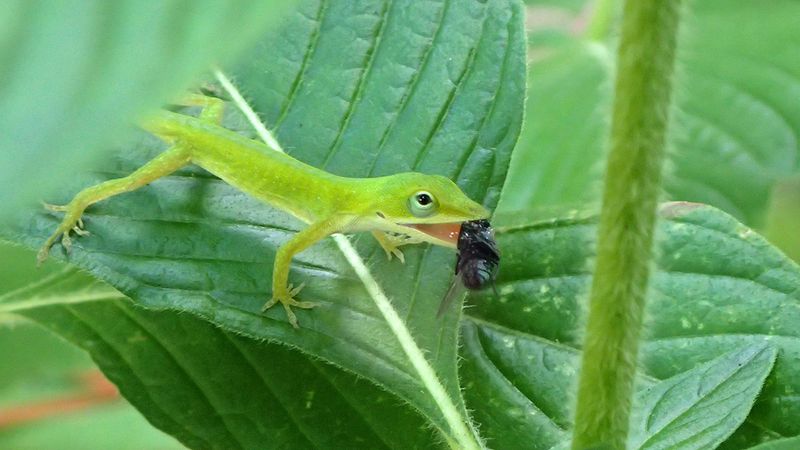
Walk through almost any Florida yard in July and you are likely to spot a small lizard darting through the shrubs or freezing on a fence post. Many gardeners assume that more anoles means fewer bugs, and it is easy to see why. The reality is more layered, and understanding it can help you make smarter choices about your yard all summer long.
Anoles may help, but they do not promise a pest-free summer
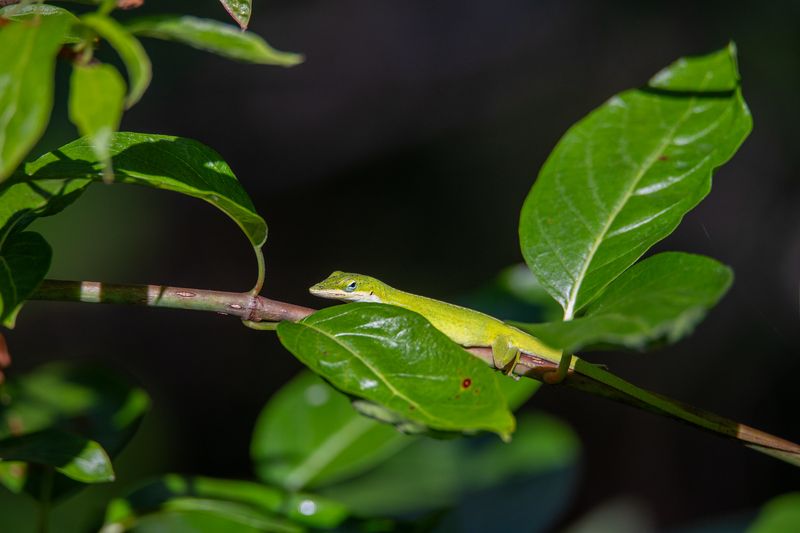
Plenty of Florida gardeners have noticed that a yard full of lizards seems quieter on the bug front, and that observation is not completely wrong. UF/IFAS Gardening Solutions confirms that both native green anoles and the widespread nonnative Cuban brown anole eat beetles, flies, spiders, roaches, and other small invertebrates. So yes, these lizards are actively hunting in your garden.
Where the story gets complicated is the jump from “anoles eat bugs” to “my yard has the fewest problem insects all summer.” No Florida residential-yard study has shown that homes with the most anoles end up with measurably fewer nuisance insects across an entire season. Lush yards may attract more lizards precisely because they also support more insects, more shelter, and more food. You cannot easily separate which factor is doing what.
Research in tropical agricultural systems does suggest that anole presence can reduce some arthropod populations in particular settings. A 2017 review of anoles as biocontrol agents found evidence of pest suppression in coffee and island ecosystems, but those results do not translate directly to a Florida suburb with a different plant mix, a different insect community, and a very different scale.
The governing conclusion for home gardeners is practical and honest: anoles can be a useful part of a wildlife-friendly, integrated approach to pest management. They are one piece of a larger system, not a replacement for identifying actual pest problems or taking targeted action when something is genuinely damaging your plants or your family’s comfort.
Identify the anole before judging its role
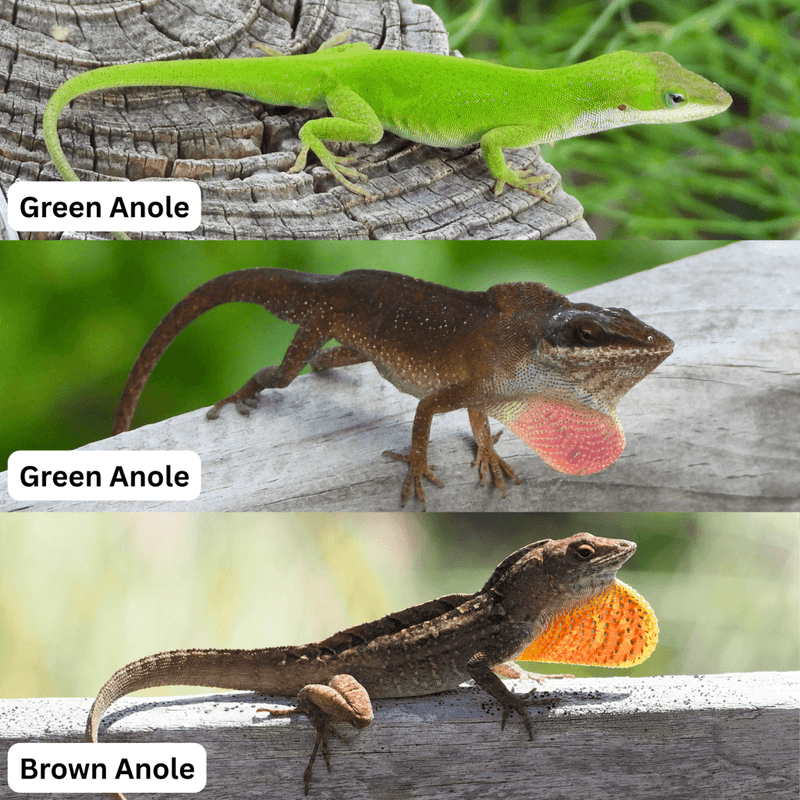
Before deciding whether the lizard on your fence is a conservation win or an ecological complication, you need to know which species you are looking at. Florida has only one native anole: the green anole, Anolis carolinensis. The Cuban brown anole, Anolis sagrei, arrived as a nonnative species and is now extremely common in suburban and urban yards across the state, as UF/IFAS documentation on Florida’s introduced reptiles makes clear.
The most reliable field ID clue is color behavior. Green anoles can shift between bright green and a dull brownish tone depending on temperature, stress, and background, which means a green anole sitting on bark may look brown. Cuban brown anoles, by contrast, do not turn green. If the lizard you are watching is always some shade of brown, tan, or gray with a patterned back and never shifts to solid green, you are almost certainly looking at a brown anole.
Both species hunt small invertebrates, and both will take advantage of a yard with good cover and prey. The ecological picture for brown anoles is more complicated, though. UF/IFAS Gardening Solutions notes that brown anoles compete directly with green anoles and can prey on young green anoles. A yard dominated exclusively by brown anoles is not the same ecological story as one where native green anoles are thriving.
Getting the identification right also matters if you are ever considering any management steps. Avoid acting on an unidentified lizard. Learn the key differences first, and defer to specific UF/IFAS guidance for any questions about managing nonnative species in your yard.
Build layered habitat without manufacturing mosquito habitat
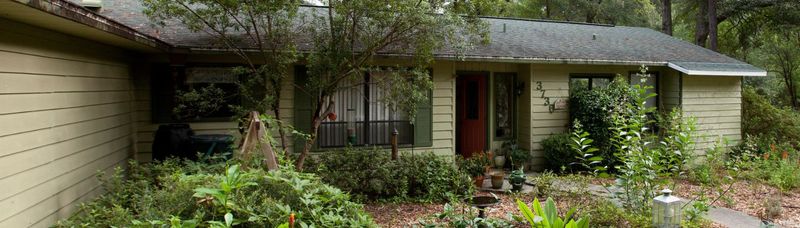
Anoles do not thrive in a yard that is mostly mown grass with a few isolated shrubs. They need structure: places to hide from predators, routes to move vertically, and enough vegetation density to support a consistent supply of small insects. Reducing your dependence on closely mown turf and replacing some of that open space with ground-level plants, mid-height shrubs, and small trees gives lizards both the shelter and the hunting ground they need.
UF/IFAS guidance on the brown anole specifically recommends dense vegetation and vertical habitat such as trees to make a yard more suitable for native green anoles. Vertical structure matters for a second reason as well: a UF study on how green anoles respond to brown anole invasion found that native green anoles shift upward into higher vegetation when brown anoles colonize the ground layer. A yard with tall shrubs and trees gives green anoles somewhere to go.
When choosing plants, select Florida-appropriate species suited to your site’s sun exposure, soil drainage, and regional climate. Florida-native plants are a practical first choice because they tend to require less irrigation and maintenance once established, and they support the broader food web that lizards depend on.
One shortcut to skip entirely: do not add buckets, saucers, low-lying birdbaths, or other containers to attract lizards with standing water. CDC guidance on mosquito control at home recommends emptying, scrubbing, covering, turning over, or discarding any water-holding container at least once a week. Anoles can get moisture from prey and dew. Standing water is not a habitat feature you want to add, regardless of the intended purpose.
Layered planting may increase your chances of seeing green anoles in higher vegetation and may contribute to natural insect suppression over time, but it does not guarantee a specific lizard population or a measurable drop in pest numbers. Think of it as creating conditions that support a balanced yard, not as installing a pest-control system.
Their insect-eating effect is real, but limited and difficult to measure
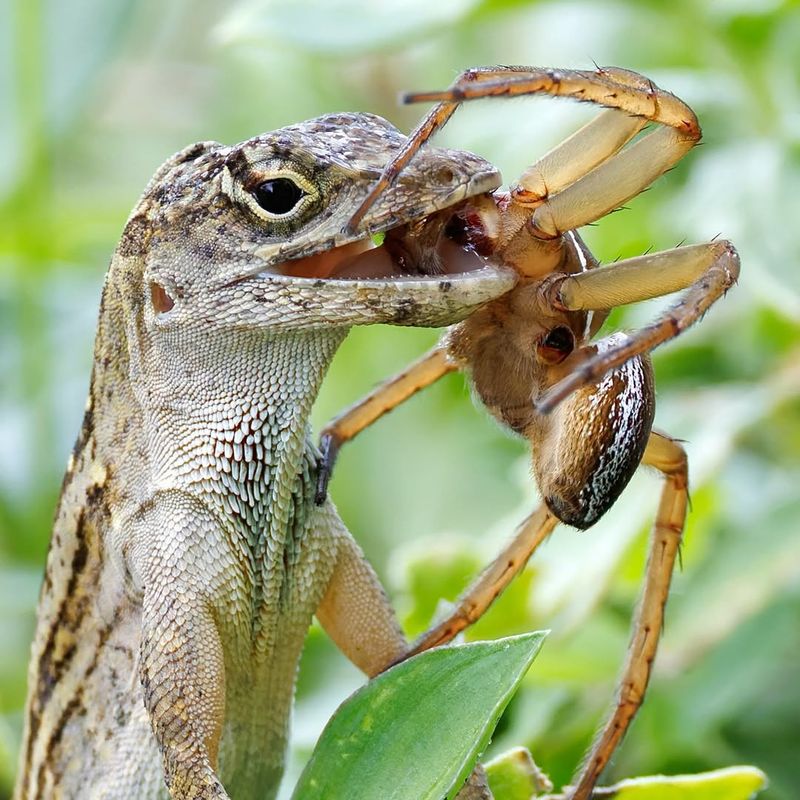
Anoles genuinely eat insects, and that predation does have some effect on the invertebrate community around them. UF/IFAS Gardening Solutions lists beetles, flies, spiders, roaches, and other small invertebrates as regular prey for both green and brown anoles. A lizard hunting through your shrubs every day is removing some portion of those populations. The honest question is: how much does that matter in a Florida home landscape?
The clearest experimental evidence comes from ecosystems quite different from a suburban Florida yard. Research on anoles as biocontrol agents in agroecosystems found that anole presence was associated with reduced coffee-berry-borer infestation in some settings and that anoles were more abundant in less-intensively managed coffee landscapes. An earlier island exclusion experiment also documented large effects on some arthropod groups after anoles were removed. Those are meaningful findings, but they come from specific managed and island environments, not from residential yards with a mix of ornamental plants, turf, and hardscape.
An important causation problem also applies to home yards. Dense vegetation supports more insects because it offers more food sources, shelter, and microhabitats. That same vegetation draws more anoles. So when you observe a lush yard with many lizards and seem to notice fewer pest insects, the vegetation itself may be doing much of the work, and the anoles and the insects may both be responding to it.
You cannot tell from observation alone whether the lizards caused the insect numbers to drop.
Anoles are also generalist predators, not selective pest-control agents. They will eat whatever small invertebrate is accessible and worth the energy. That includes harmless ground beetles that prey on other pests, pollinators moving near ground level, and other beneficial insects. Counting on them to target only the insects you dislike is not how generalist predation works.
Their contribution is real but diffuse, and it fits better into a food-web support role than a targeted pest-reduction strategy.
Mosquito control still starts with removing water
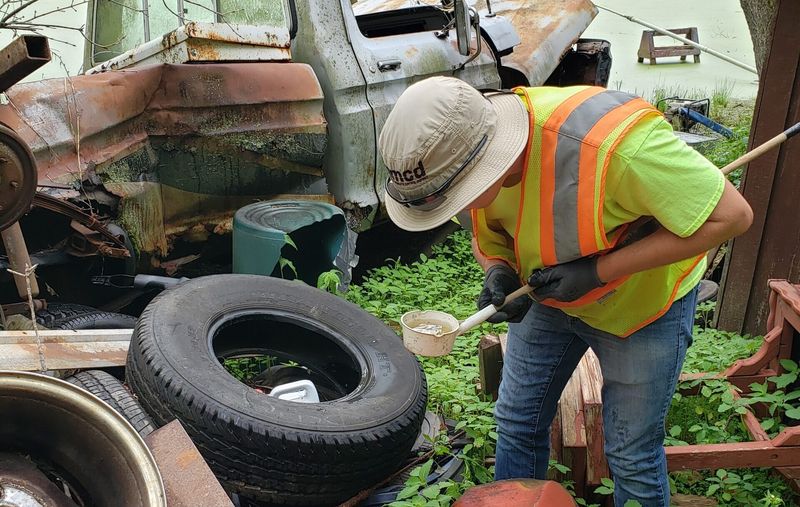
Mosquitoes deserve their own section because the stakes are higher and the evidence is more specific. Florida’s warm, wet summers create ideal conditions for mosquito breeding, and the Florida Department of Health tracks several mosquito-borne diseases active in the state, including West Nile virus, eastern equine encephalitis, and St. Louis encephalitis. Counting on lizards to manage that risk is not a strategy supported by available evidence.
A 2022 Florida study did find a notable connection between brown anoles and mosquitoes, but not the one many gardeners hope for. Research published in Frontiers in Tropical Diseases found that brown anoles were frequently used as blood-meal hosts by Culex nigripalpus, a mosquito species that can transmit West Nile virus and St. Louis encephalitis. That finding tells us about mosquito host preference, not about whether anoles reduce the number of mosquitoes in a yard or lower the risk of bites.
The practical actions that reliably reduce mosquito populations around your home are well established. CDC guidance on mosquito control at home directs homeowners to empty and scrub water-holding containers weekly, cover or discard items that collect rain, maintain window and door screens in good repair, and use EPA-registered repellents according to label directions when spending time outdoors. These steps address the source of the problem.
Check your yard for common water-holding spots: plant saucers, clogged gutters, low spots in tarps, forgotten toys, and even bottle caps can hold enough water to support mosquito larvae. Florida Department of Health mosquito prevention guidance emphasizes that source reduction is the most dependable community-level and yard-level tool available. Anoles are welcome in a well-managed yard, but they do not substitute for these weekly habits.
Use integrated pest management to protect the food web
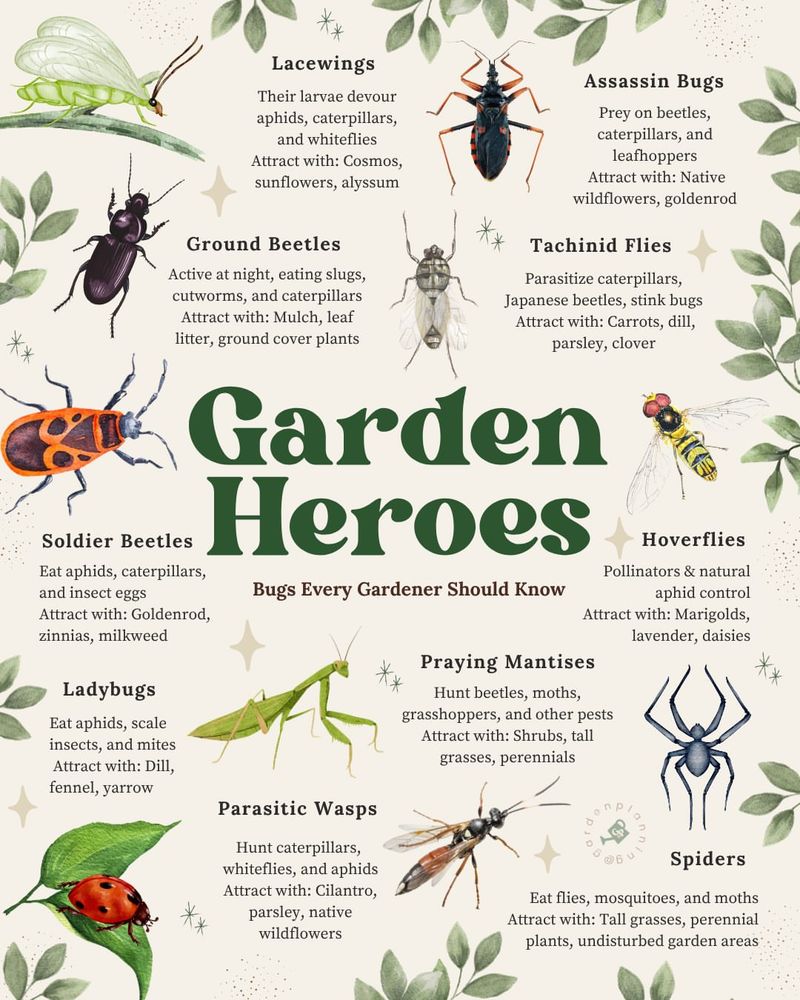
Supporting anoles and other natural predators in your yard only makes sense if your pest-management habits do not undercut the food web you are trying to build. Routine broad-spectrum insecticide applications can kill predatory insects, beneficial beetles, and other organisms that anoles depend on for food. That kind of collateral loss can leave your yard with fewer natural controls than it started with, even if the immediate pest problem gets knocked back.
UF/IFAS Florida-Friendly Landscaping guidelines recommend working through pest management in a deliberate sequence. Start by correctly identifying what is actually causing damage. Many insects found on plants are harmless or beneficial, and treating the wrong organism wastes effort and resources. Once you know what you are dealing with, monitor how widespread and severe the problem actually is before deciding whether action is needed.
Cultural and mechanical controls come next: hand-picking, physical barriers, adjusting irrigation schedules, or changing plant placement can resolve many common problems without any chemical input. When those steps are not enough, the goal is to preserve natural enemies while addressing the specific pest. Spot treatments targeted at the affected area are preferable to blanket spraying across the whole yard.
When a pesticide is genuinely necessary, product selection and label compliance matter. EPA guidance on pesticide labels explains that labels carry legally binding instructions for safe application rates, storage, first aid, and environmental precautions. Selective products that target the specific pest category cause less damage to the broader insect community than wide-spectrum options. UF/IFAS steps for a Florida-Friendly landscape also encourage tolerating minor plant damage when the pest pressure is low and beneficial organisms are present.
A few chewed leaves in a yard that supports lizards, predatory insects, and birds is often a sign of a functioning food web, not a crisis.
Treat anoles as one useful piece of a summer strategy
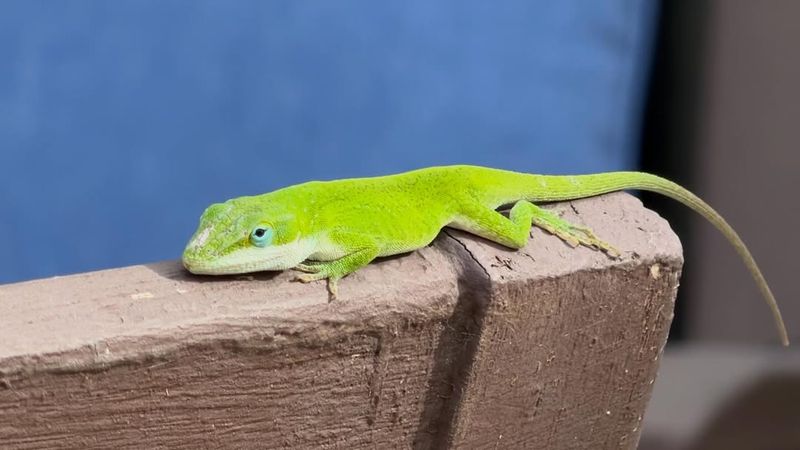
A yard with layered vegetation, native plants suited to Florida’s heat and drainage, and minimal chemical disruption gives anoles a real foothold. Those lizards may, in turn, suppress some small invertebrates and contribute to a more balanced insect community over time. That is a genuine benefit, and it is worth designing for.
What it does not do is guarantee a pest-free summer or make mosquito precautions optional. UF/IFAS Gardening Solutions and UF/IFAS guidance on introduced anoles both treat these lizards as part of a broader ecological picture, not as a standalone solution. Anole abundance reflects good habitat conditions; it does not measure how safe your yard is from mosquito bites or how few pest insects will show up next week.
The practical hierarchy for Florida gardeners is straightforward. Build suitable, layered habitat with native plants. Never create standing water, and follow CDC weekly container-management steps consistently. Identify and monitor actual pest problems before reaching for any product.
When treatment is needed, use UF/IFAS integrated pest management steps and follow label directions precisely. A yard managed that way gives both you and the anoles the best conditions to work with, and that combination tends to produce fewer surprises than relying on any single fix.