
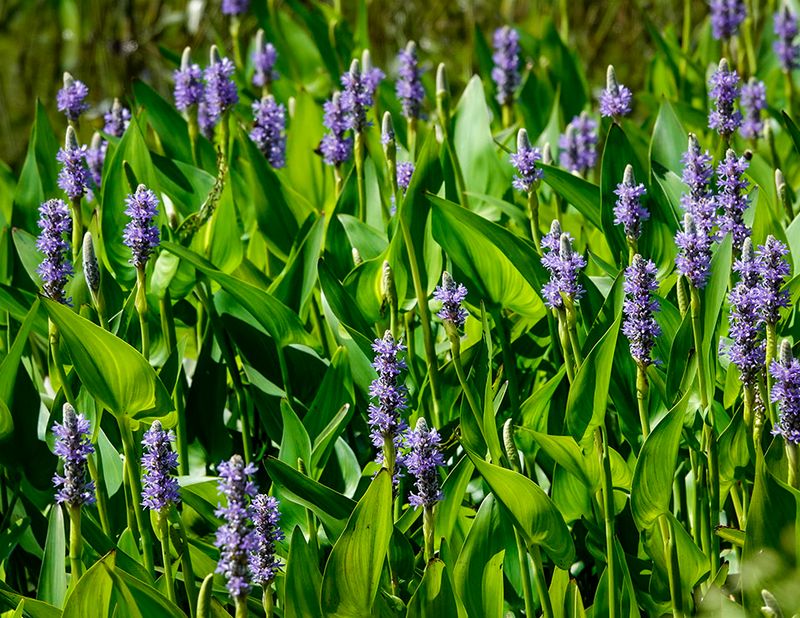
Pickerelweed is a native Texas aquatic plant that blooms with blue-to-lavender flowers from June through October, and it may be one of the most practical things you can add to a consistently wet pond edge if you want dragonflies around your yard. Unlike a typical dry-yard wildflower, this plant grows with its roots in the water and its flowers reaching toward the sky. Understanding what it can and cannot do for dragonflies will help you build a habitat that actually works rather than chasing a promise that sounds too good to be true.
Pickerelweed is a Texas pond-edge native, not a dry-yard wildflower
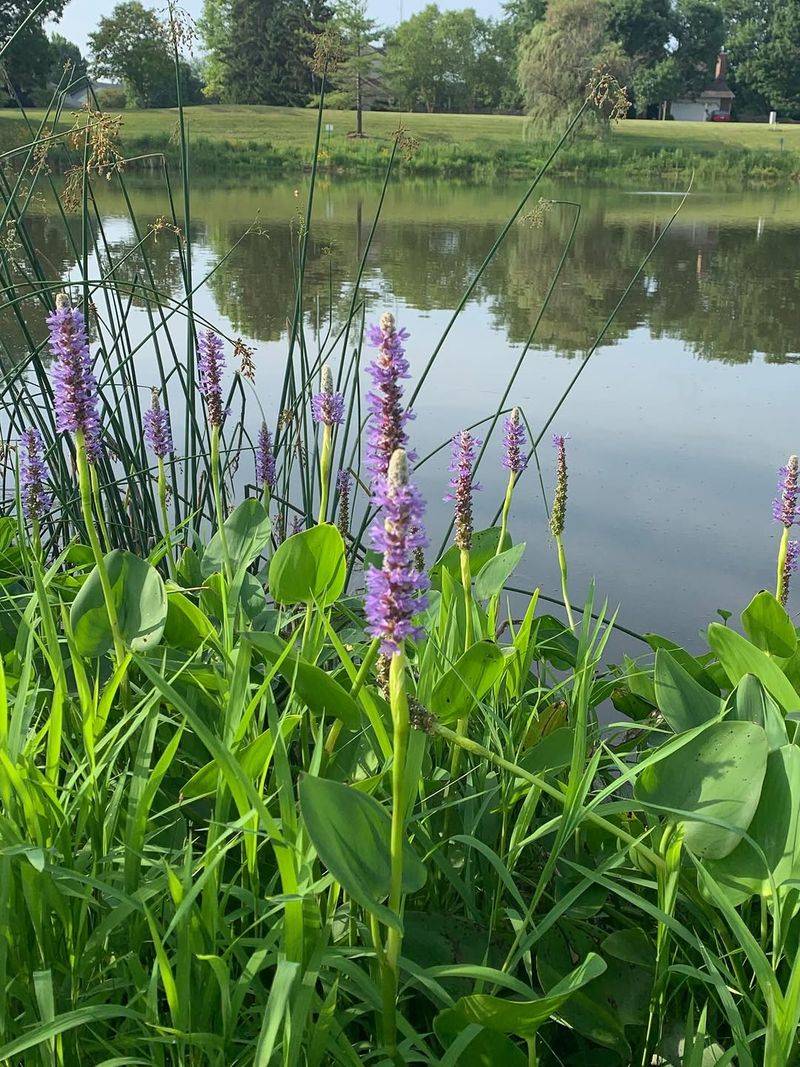
Pickerelweed, known botanically as Pontederia cordata, is a flowering aquatic perennial that grows in marshes and swamps rather than in ordinary garden beds. The University of Texas Wildflowers of Texas profile documents its presence in East Texas, the Edwards Plateau, and North-Central Texas, with blue-to-lavender flowers appearing mainly from June through October. That regional distribution matters: pickerelweed is not a statewide solution you can drop into any corner of the Panhandle, West Texas, or the Gulf Coast and expect reliable results.
The term “emergent plant” describes exactly how pickerelweed lives. Its roots and lower stem stay submerged or saturated in water while its leaves and flower spikes push up above the surface. That structure is what makes it genuinely useful at a pond edge, because it creates the kind of shoreline architecture that wildlife, including dragonflies, can use for shelter and perching. A dry flower bed simply cannot replicate those conditions, so planting pickerelweed there would conflict with everything its documented habitat requires.
Austin Parks and Recreation’s wildlife habitat guidance lists pickerel plant among native emergent species recommended for ponds, distinguishing it from exotic aquatic plants that can escape and damage natural ecosystems. That endorsement applies specifically to pond settings with consistent moisture, not to periodically dry rain-garden basins or raised beds that dry out between rains. The honest conditional promise here is that pickerelweed, placed beside a genuinely wet pond, may help that water feature provide better habitat conditions. Whether dragonflies show up depends on far more than one plant, a point the sections ahead will make clear.
Dragonflies need aquatic habitat, not a magic flower
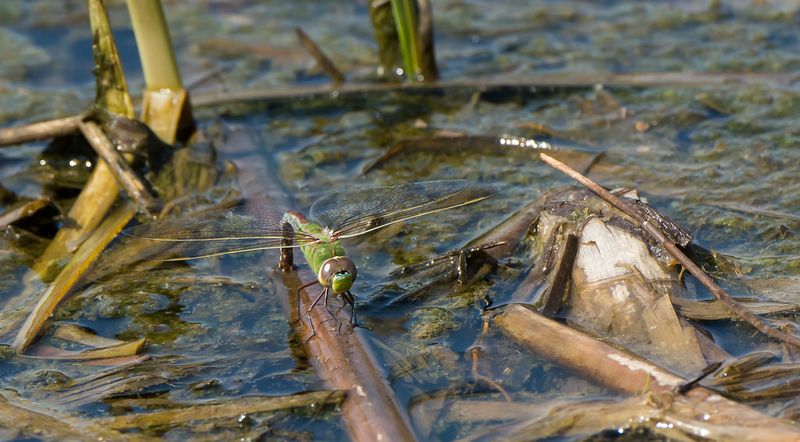
Dragonflies are tied to water in a way that no single flowering plant can replicate on its own. Their life cycle begins underwater: females deposit eggs in or near the water, and the larvae that hatch spend months or even years as aquatic predators before emerging as the adults that patrol your yard. The National Park Service’s profile of the common green darner describes how this widespread species uses ponds, wetlands, marshes, lakes, and slow-moving water areas, with larvae hunting as active predators below the surface and adults targeting flies, beetles, leafhoppers, and other small flying insects once they emerge.
The common green darner is one example, not a stand-in for every dragonfly species you might see in Texas. Different species have different habitat preferences, flight seasons, and geographic ranges. What they share is a dependence on suitable water for reproduction, which is why any honest conversation about attracting dragonflies has to start with the pond, not the plant.
Pickerelweed connects to this life cycle indirectly rather than directly. Its emergent stems and leaves offer structure at the water’s edge where adult dragonflies can rest, warm up in the sun, and watch for prey. Submerged portions of emergent plants also provide surfaces where eggs may be laid and where larvae can hide from predators. None of that means pickerelweed chemically signals dragonflies or draws them from a distance.
The plant contributes to a habitat system; it does not summon anything. Adults are hunting insects, not visiting flowers the way a pollinator would, so the bloom color and fragrance that attract butterflies or bees play no equivalent role in pulling dragonflies toward your yard.
Build the habitat around water, cover, sun, and prey
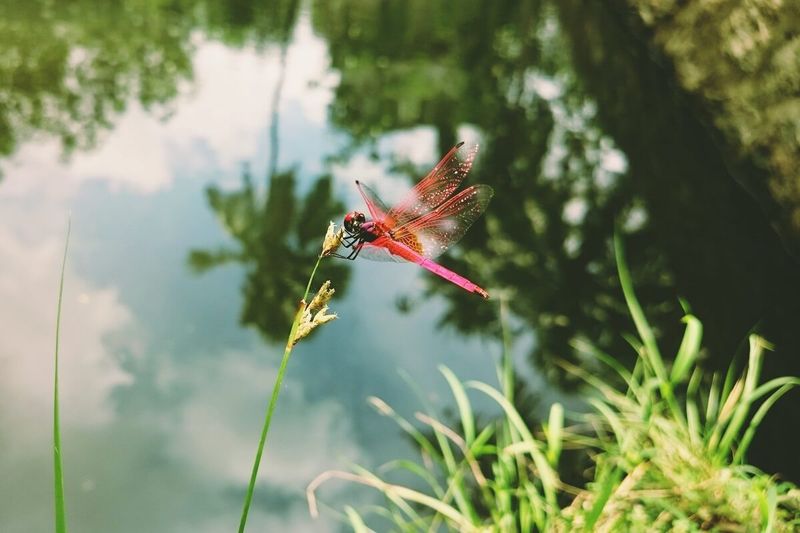
A wildlife pond that genuinely supports dragonflies needs four things working together: suitable water, emergent or shoreline vegetation, open sunny areas, and enough insect prey to keep adults hunting nearby. Remove any one of those pieces and the others lose much of their value. Pickerelweed can contribute the vegetation component at a consistently wet edge, but the plant alone cannot substitute for the full system.
Research on dragonfly and damselfly communities in north-temperate lakes found that aquatic vegetation, shoreline structure, and riparian vegetation are associated with habitat conditions that support these insects. That lake study by Remsburg and Turner provides useful context about broad habitat associations, but its setting was north-temperate lakes rather than Texas ponds, and its findings describe correlations rather than proof that planting pickerelweed will cause dragonfly numbers to increase at your specific water feature. Treat it as a reason to invest in shoreline structure, not as a guarantee.
Open, sunny water matters as much as the vegetation. Dragonflies are ectotherms that warm themselves in sunlight, and adults need clear aerial space to hunt and patrol territories. A pond shaded entirely by tree canopy or crowded with floating vegetation from bank to bank gives them little to work with. Austin’s wildlife habitat guidance recommends gently sloped edges and stones so that wildlife can enter and exit safely, which also creates the transitional shoreline zone where dragonflies are most active.
A birdbath or small decorative container should not be presented as a dragonfly breeding habitat. Those features may provide water for birds and other wildlife, but they generally lack the depth, stable water quality, aquatic vegetation, and surface area that dragonfly larvae need to complete their development. As the NPS green darner profile makes clear, these insects use ponds, wetlands, and marshes, not container water, for reproduction.
Match pickerelweed to dependable Texas moisture
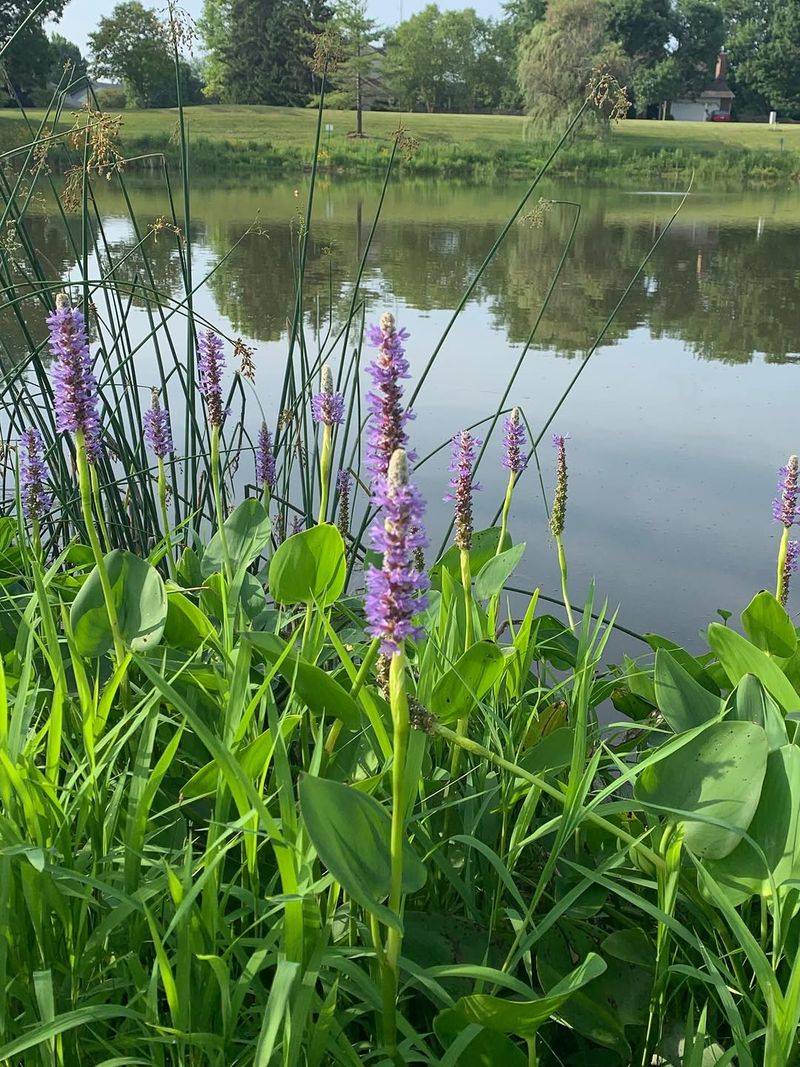
Siting pickerelweed correctly comes down to one question: can this spot stay wet all season? The plant’s documented habitats are marshes and swamps, so a consistently saturated pond edge or shallow standing water is where it belongs. Placing it in an ordinary flower bed, a raised planter, or a rain-garden basin that drains between storms puts the plant in conditions that directly contradict what its natural range describes. Drought resilience should not be assumed just because pickerelweed is a Texas native; being native to Texas does not mean being adapted to dry-bed conditions.
The University of Texas profile for Pontederia cordata records the plant in East Texas, the Edwards Plateau, and North-Central Texas. That regional footprint means gardeners in the Panhandle, far West Texas, and parts of the Gulf Coast should check local conditions carefully before assuming pickerelweed will perform well in their area. Local moisture levels, soil type, sunlight exposure, and regional climate all affect whether a planting succeeds, and no source in the current evidence base supports treating pickerelweed as a statewide solution.
Choosing native aquatic plants over exotic alternatives is a practical reason to reach for pickerelweed when conditions are right. Austin Parks and Recreation warns that escaped exotic water plants can damage natural ecosystems, and it specifically names pickerel plant as a native emergent option for ponds. That preference for native species reflects both ecological responsibility and the fact that a plant matched to its regional habitat is more likely to thrive with minimal intervention. When your pond edge can genuinely maintain wetland conditions through a Texas summer, pickerelweed earns its place there.
Manage the pond without creating a mosquito problem
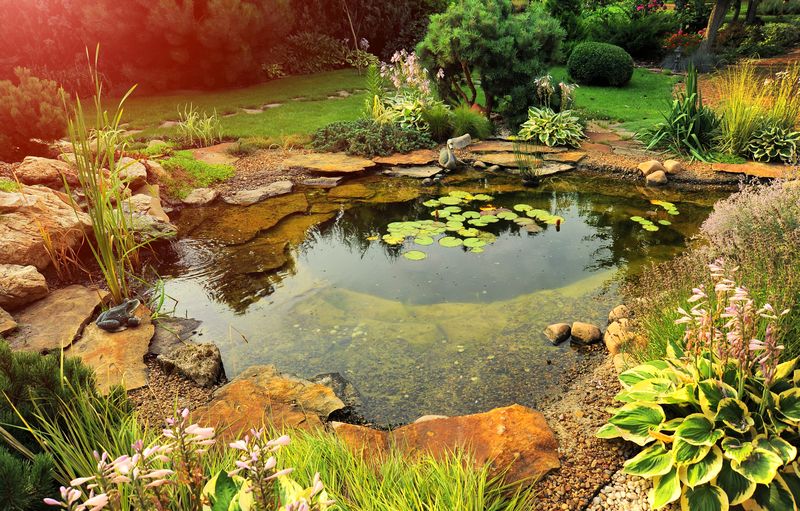
A wildlife pond that supports dragonflies also needs active management to stay healthy and avoid becoming a mosquito breeding site. Stagnant, algae-filled water is a problem on both counts: it degrades the habitat conditions dragonflies need and creates the organic-rich standing water where mosquito larvae thrive. Austin’s wildlife habitat guidance recommends maintaining healthy water quality, using circulation where appropriate to keep water moving, and designing gently sloped edges or placing stones so that wildlife can enter and escape the water safely.
Source reduction is the first and most important mosquito step. Texas A&M AgriLife Extension’s backyard mosquito control guidance emphasizes eliminating or treating standing-water breeding sites, noting that mosquito larvae can develop in stagnant water containing organic matter. For a wildlife pond, that means keeping water moving where possible, removing decaying plant debris, and not allowing shallow, disconnected puddles to sit untreated at the pond’s edge.
When permanent water cannot be drained or kept moving, appropriately labeled larvicides such as Bacillus thuringiensis israelensis (Bti) are a reasonable option, but only for water that cannot be managed another way and only when applied strictly according to label directions. Texas A&M AgriLife’s pond management resources make clear that artificial ponds require ongoing attention to water quality and mosquito issues as part of responsible stewardship.
Dragonflies do eat flying insects, and some of those insects may be mosquitoes. However, dragonfly presence around a pond is not a reliable mosquito-control program and should not be treated as one. CDC public health guidance on mosquito management states that biological control by adult predators such as dragonflies and bats has not been proven effective as a mosquito-control method. Integrated control relies on source reduction, surveillance, larvicides, and other targeted measures, none of which a wildlife pond or its resident dragonflies can replace.
Fish and child safety change the pond’s priorities
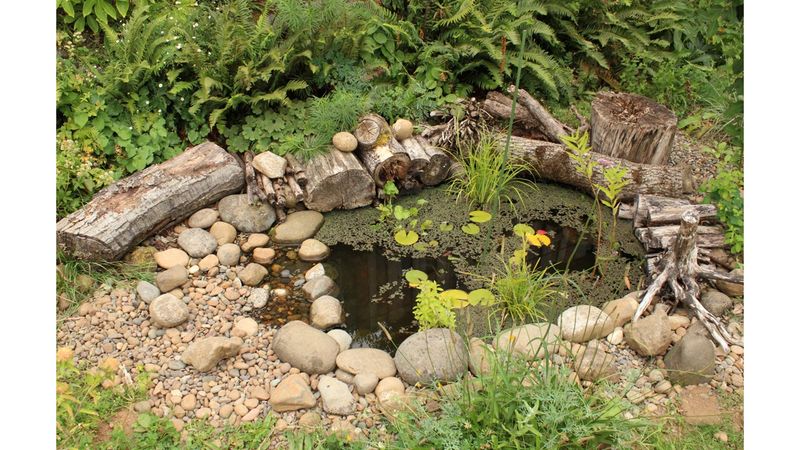
Stocking fish in a wildlife pond creates a real tradeoff that deserves honest consideration before you add any. Fish and frogs can contribute to some pond-management goals, including consuming mosquito larvae and adding ecological diversity. Texas A&M AgriLife Horticulture’s wildlife water garden guidance acknowledges the role wildlife can play in pond management while also noting the complexity of balancing different species and goals. What that guidance does not support is the idea that adding fish simultaneously maximizes dragonfly populations and controls mosquitoes, because fish readily prey on dragonfly larvae living in the same water.
The decision about whether to stock fish should reflect your primary goal. A fish pond optimized for goldfish or koi is a different ecosystem from a wildlife pond managed for dragonfly reproduction. If supporting dragonflies is the priority, a fish-free or low-fish environment gives larvae a better chance of surviving to adulthood. If fish are already present and mosquito control is the concern, other management tools from the previous section apply.
Treating fish as an automatic dragonfly attractant misrepresents the biology and may lead to a pond that serves neither goal well.
Child safety around any backyard pond deserves direct attention. A pond deep enough to support aquatic wildlife is deep enough to pose a drowning risk to a small child. Austin Parks and Recreation advises treating a backyard pond like a swimming pool when children may have access to the area, which means installing fencing or dense planted barriers that physically prevent young children from reaching the water’s edge unsupervised. That safety step should be planned before the pond is built, not added as an afterthought once dragonflies and children are both present.
Set a realistic summer expectation
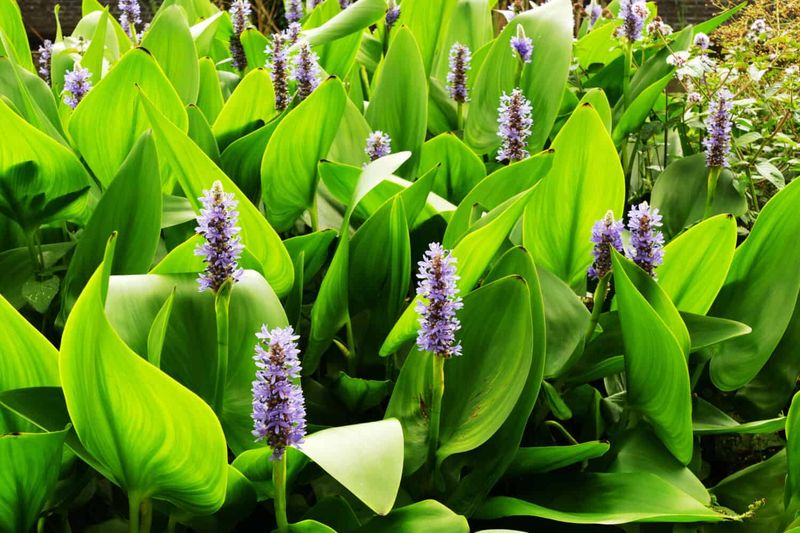
Pickerelweed’s documented bloom window runs mainly from June through October, which lines up with the heart of Texas summer and into early fall. That bloom period makes it a structurally useful emergent plant during the months when dragonfly activity tends to be highest, but the flowers themselves are not what pulls dragonflies in. The broader habitat, including the water, the open sunny areas, the shoreline vegetation, and the insect prey available around the pond, determines whether dragonflies are present and active.
A pickerelweed-planted pond edge is not a universal Texas solution, a drought-proof planting, a guaranteed annual dragonfly magnet, or a substitute for mosquito management. What it can be, when the property genuinely supports wetland conditions and the plant is matched to the right region, is a more ecologically complete pond edge that gives dragonflies better reasons to use the space. Dragonflies need functioning aquatic habitat for reproduction, and pickerelweed contributes one useful piece of that system.
The clearest decision rule is this: choose pickerelweed when your property can maintain genuine wetland conditions at the pond edge, then build the habitat around the plant rather than expecting the plant to carry the whole effort. A well-managed, native-planted pond with clean water, open sun, and healthy shoreline structure gives you the best realistic chance of seeing dragonflies hover over your yard on a Texas summer afternoon, and that is a payoff worth building toward honestly.