
Most California homeowners never expect a neighbor to show up complaining about falling leaves from a backyard tree. But once that conversation happens, it raises a real question: does your neighbor actually have any legal power to make you cut the tree down?
The short answer is usually no, but California law has a catch that every tree owner should understand before dismissing the complaint.
Ordinary leaf fall does not automatically justify tree removal
Seasonal leaves crossing a property line are not enough, on their own, to give your neighbor the legal right to demand you remove your tree. California courts have consistently treated ordinary leaf fall as a fact of life in shared suburban neighborhoods, not as an automatic legal violation.
Your neighbor cannot simply hand you a letter and force removal to happen.
That said, California law does create a path for neighbors who face something more serious. California Civil Code section 3479 defines a nuisance broadly as any condition that obstructs or interferes with the comfortable enjoyment of life or property.
When a tree’s branches, roots, falling debris, or related conditions cross that line and substantially interfere with a neighbor’s use or enjoyment of their property, the law may offer them a remedy.
That remedy requires going to court. Under Code of Civil Procedure section 731, an affected owner can seek an injunction, abatement, or damages.
A judge then evaluates the actual evidence and circumstances before deciding whether any order is warranted. The complaining neighbor does not get to skip that step and unilaterally declare the tree a problem that must come down.
The practical takeaway for tree owners is clear: receiving a demand letter does not create a legal obligation to act. Whether the condition rises to the level of an actionable nuisance depends on the facts, and that determination belongs to the court, not to the person doing the complaining.
The nuisance claim grows stronger when leaves are part of a larger problem
The clearest California example of when a leaf dispute can become a real legal problem comes from Bonde v. Bishop, a Court of Appeal decision that tree owners should read carefully.
In that case, an overhanging oak dropped branches and leaves onto the neighboring property, clogged gutters, littered a lawn and patio, created safety concerns, and required the neighbor to clean up frequently. The court upheld a nuisance finding, but the outcome hinged on the combined weight of all those conditions working together over time.
The case did not establish that every falling leaf is a nuisance. The court’s reasoning focused on the overall seriousness and continuing effect of the encroachment, not on a simple rule that any debris crossing the boundary line is automatically actionable.
A neighbor who rakes a modest pile of leaves a few times each fall is in a very different legal position from one dealing with gutters that back up and overflow every rainstorm because of a neighbor’s tree.
The distinction California courts draw is between minor inconvenience and substantial interference. Occasional leaf litter, routine seasonal raking, and a few twigs in the yard sit on the weaker end of the spectrum.
The claim gets meaningfully stronger when debris repeatedly blocks gutters or drainage, when falling branches create a hazard, when outdoor living areas become unusable during much of the year, or when property is damaged.
For homeowners on the receiving end of a nuisance complaint, the relevant question is not just whether leaves cross the line. The more useful question is whether the overall pattern of encroachment and debris causes real, recurring, and serious disruption.
California Civil Code section 3479 reaches conditions that genuinely interfere with property enjoyment, not every inconvenience that comes with living next to a tree.
Tree ownership and nuisance responsibility are separate questions
Before any nuisance question gets answered, it helps to know who actually owns the tree. California Civil Code section 833 provides the answer for most situations: if the trunk stands wholly on your land, the tree belongs entirely to you, even if roots extend under the neighboring property.
Roots crossing the boundary line do not transfer ownership or create shared rights.
The rule changes when a trunk straddles the property line. Under California Civil Code section 834, a tree whose trunk grows on both properties belongs to both owners in common.
That shared ownership matters practically because one owner should not remove or materially damage a boundary tree without the other’s agreement. Unilateral removal of a jointly owned tree can expose the person who acted to a legal claim from their co-owner.
Owning the tree, however, does not automatically protect you from a nuisance action. Ownership and nuisance responsibility operate on separate tracks.
A homeowner who holds clear title to a tree entirely on their side of the line can still face a court action if the tree’s branches, roots, or debris substantially interfere with the neighbor’s use and enjoyment of their property. As the UC Agriculture and Natural Resources tree-dispute guide explains, the presence of encroaching growth does not automatically make the entire tree unlawful, but it can give rise to a claim for abatement of the specific conditions causing the interference.
Sorting out ownership first is not just a technical step. It tells both parties who has authority to consent to pruning, who bears responsibility for maintenance decisions, and who could face liability if a court finds the condition has crossed into nuisance territory.
A neighbor’s trimming rights stop short of damaging the tree
California law does give neighbors some ability to address branches or roots that cross onto their property, but those rights come with real limits. The leading case on this point, Booska v.
Patel, recognized a neighbor’s ability to trim encroaching growth, while also making clear that the work must stay within the neighbor’s own property and must be performed reasonably. A neighbor cannot cross onto the tree owner’s land, cut into the owner’s side of the property, or take actions that foreseeably damage or kill the tree.
Self-help abatement is also not a free pass. California Civil Code section 3502 permits a person to abate a private nuisance without unnecessary injury, but California courts treat that remedy as limited by the requirement of actual injury and genuinely reasonable conduct.
A neighbor who goes too far and causes significant damage to the tree can face a trespass claim and potentially enhanced damages under Civil Code section 3346, which addresses wrongful injury to timber or trees and can allow double damages in some circumstances.
The risks are not hypothetical. In Fulle v.
Kanani, a California Court of Appeal addressed a situation where aggressive pruning work went beyond reasonable bounds, illustrating that a neighbor who overreacts to an encroachment can end up as the defendant in litigation rather than the plaintiff.
One specific caution worth flagging: topping a tree is not a reasonable compromise. UC Master Gardeners guidance on tree care warns that topping weakens a tree structurally and produces poorly attached regrowth that can become a hazard over time.
A neighbor who tops your tree, or who pressures you to agree to topping as a solution, is not proposing a safe or legally sound fix.
A court’s remedy depends on the facts and applicable law
When a California tree dispute reaches court, the judge does not work from a fixed menu that starts with pruning and ends with removal. Code of Civil Procedure section 731 authorizes civil actions for injunction, abatement, and damages, but the statute does not prescribe a single outcome or require courts to work through a mandatory sequence of lesser remedies before ordering anything more serious.
What a court actually orders depends on what the evidence shows. In Bonde v.
Bishop, the court addressed a serious and continuing pattern of encroachment and debris. In Booska v.
Patel, the court focused on the limits of trimming rights and the risk of negligent damage. Neither case announced a universal rule about what remedy is always appropriate.
Each outcome reflected the specific facts before the court.
Possible remedies include targeted pruning of dangerous or encroaching limbs, measures to prevent debris from clogging gutters or drains, other corrective work that addresses the specific interference, or, in an appropriate case, removal. Removal is a real possibility when a nuisance or hazard cannot reasonably be addressed any other way.
But it is not the automatic consequence of leaves crossing the property line or branches growing over the fence.
Equitable considerations also play a role. A court may weigh the value of a mature tree, the severity of the interference, the availability of less drastic solutions, and the conduct of both parties.
Tree owners facing a nuisance claim benefit from having documented the condition accurately and from being able to show they responded reasonably to any legitimate concern raised by their neighbor.
Evidence of substantial interference matters more than the number of leaves
When a neighbor pushes back about your tree, what you document from the start can shape the entire outcome if the dispute escalates. The legal question is not how many leaves fall but whether the condition substantially interferes with the neighbor’s use, enjoyment, drainage, or safety.
Solid documentation helps you, or a court, answer that question accurately.
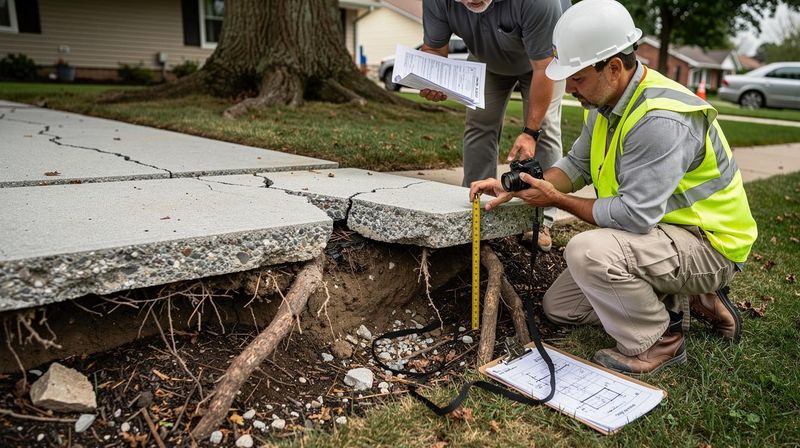
Photographs are the most practical starting point. Take clear pictures of the property line and the location of branches relative to it, any blocked gutters or drainage features, visible property damage, and any conditions that could be considered hazardous.
Keep a simple written log showing how often cleanup is needed and what it involves. That record helps distinguish a neighbor who rakes twice a year from one dealing with gutters that overflow every storm because of debris from your tree.
The legal standard used in Bonde v. Bishop and described under Code of Civil Procedure section 731 centers on substantial interference, not minor inconvenience.
Documentation that shows the actual frequency, severity, and effect of the condition is far more useful than either party’s general impression of how bad the problem is.
For safety or pruning questions, a qualified arborist is worth consulting before taking any action. UC Master Gardeners guidance on tree care recommends professional assessment when a tree may pose a hazard, and the UC Master Gardeners tree resource explains that improper pruning, including topping, can weaken a tree’s structure and create new safety problems rather than solving existing ones.
An arborist’s written report gives both parties and any court a factual basis for decisions about the tree’s condition and appropriate care.
Local tree and wildfire rules can create separate requirements
California nuisance law is not the only framework that may apply to your tree. Cities and counties across the state have adopted their own tree-protection ordinances, and those rules can restrict removal or major pruning independently of anything a neighbor claims.
Before removing a mature tree or agreeing to significant work in response to a neighbor’s demand, check what your local jurisdiction requires.
Two well-known examples illustrate how different local rules can be. Oakland’s protected-tree program requires a permit for removal of qualifying trees on both public and private property.
In Los Angeles, the city’s environmental resources review process addresses separate protections for specified native trees and shrubs, and the Los Angeles protected-tree ordinance sets out additional requirements. These are local rules, not statewide standards, so readers need to check the ordinances that actually govern their property.
HOA or planned-community documents may also impose separate restrictions. The research here does not establish any single statewide HOA rule, and HOA covenants vary widely.
Homeowners should review their own recorded covenants, conditions, and restrictions and consult the HOA or a lawyer about any applicable requirement before acting.
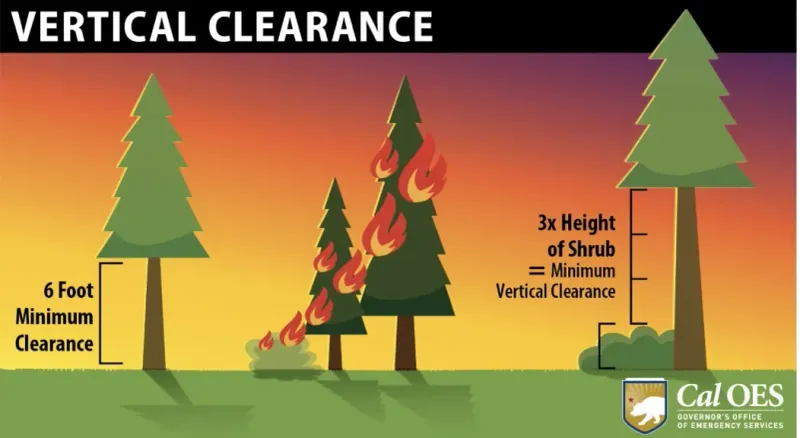
Wildfire obligations are a separate category entirely. CAL FIRE defensible-space guidance recommends clearing leaves and debris from roofs, gutters, and areas near structures, and maintaining branch clearances in fire-risk areas.
The California Board of Forestry’s defensible-space zone requirements apply where the governing fire-zone rules make them applicable, and local authorities may impose stricter standards. The UC ANR Fire Network’s guidance on trees and wildfire covers how tree placement and maintenance intersect with fire risk, but those fire-safety obligations are distinct from a neighbor’s complaint about seasonal leaf litter.
A neighbor’s demand that you remove a tree is not automatically a fire-code issue, and a fire-code obligation does not automatically justify a neighbor forcing removal.
Professional advice and mediation may resolve the dispute first
Before anyone files anything in court, there are several practical steps that often resolve tree disputes without litigation. Start by documenting the actual condition of the tree and the property line.
Confirm where the boundary sits, check your city or county’s tree-protection rules and any permit requirements, and review your HOA documents if your property is in a planned community. These steps take time upfront but can prevent costly mistakes later.
When safety or pruning is genuinely disputed, a qualified arborist’s assessment is more useful than either neighbor’s opinion. UC Master Gardeners tree-care guidance supports professional evaluation when a tree’s condition is in question, and an arborist’s written report gives both parties a factual basis for any agreement or, if needed, for court proceedings under Code of Civil Procedure section 731.
Mediation is worth considering before the dispute gets adversarial. California Courts identify mediation as particularly useful for ongoing neighbor relationships, and the California Courts ADR guide explains how alternative dispute resolution can help neighbors reach written agreements covering pruning schedules, gutter maintenance, access for work, or cost sharing.
A signed agreement is easier to live with than a court order and usually cheaper to reach.
The core rule stays the same throughout: ordinary seasonal leaf fall does not give a neighbor an automatic right to demand removal, but substantial and continuing interference with property use or enjoyment can support a legitimate legal action. Knowing that distinction early, and acting on it carefully, is the most useful thing either neighbor can do.
A tree worth keeping is usually worth handling thoughtfully.