
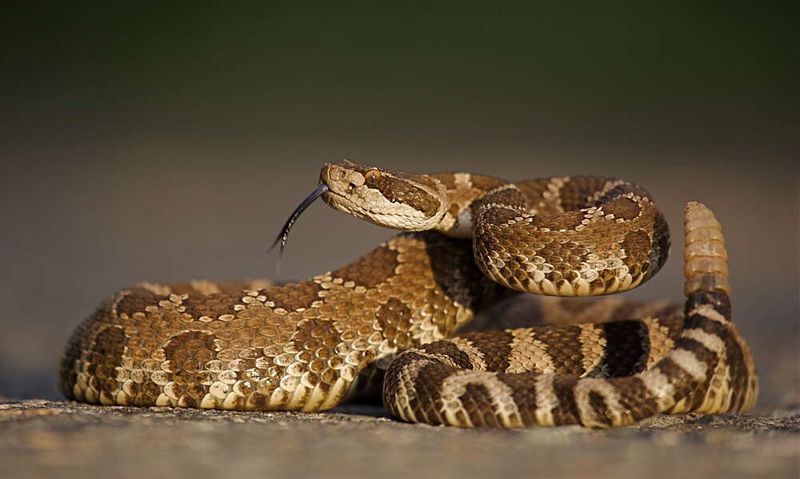
Finding a rattlesnake coiled near your back steps is enough to stop anyone cold, and in California it happens more often than most homeowners expect. Knowing which snake is most likely in your yard, and what its presence actually signals about your property, can shift a panicked reaction into a calm, informed one.
The answer is more regional than a single species name suggests, and the right response has nothing to do with chasing, killing, or handling the snake.
California’s most widespread rattlesnake is the western rattlesnake
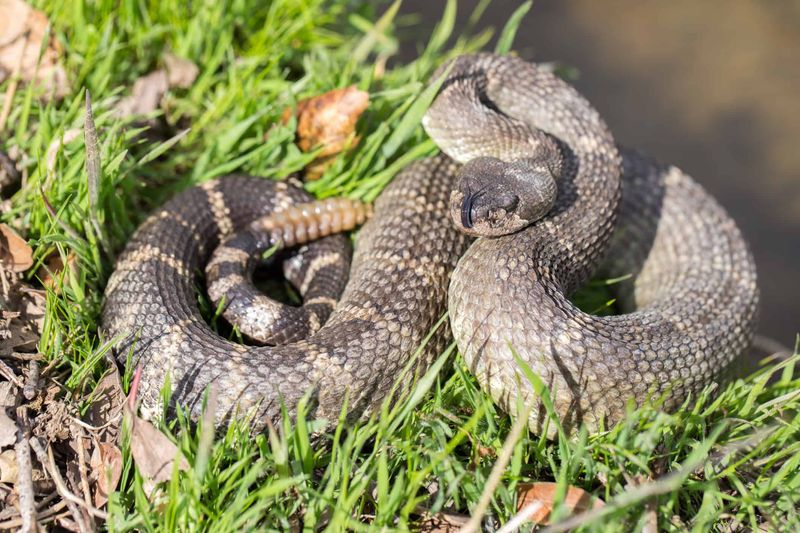
California is home to several rattlesnake species, but one stands out for its sheer statewide reach. California Department of Fish and Wildlife (CDFW) identifies the western rattlesnake, Crotalus oreganus, as the state’s most widespread rattlesnake, found from sea level up to roughly 7,000 feet across nearly every region.
That kind of range means it turns up in coastal neighborhoods, inland valleys, foothill communities, and mountain-adjacent suburbs alike.
CDFW recognizes three California forms within this group: the Northern Pacific, Southern Pacific, and Great Basin rattlesnakes. Depending on the source and the era it was written, you may see these listed as subspecies of Crotalus oreganus or as closely related but distinct species under older classification systems.
Rattlesnake taxonomy has shifted over time, so the terminology in one agency’s materials may not match another’s exactly. Retaining the source’s own language matters more than forcing a single label onto a group that researchers still debate.
Wide statewide distribution does not translate into a guarantee that every California yard will produce a western rattlesnake sighting. Local conditions and geography shape which species or form is actually present.
A homeowner in coastal Southern California is most likely dealing with the Southern Pacific rattlesnake, which CDFW includes within the Crotalus oreganus group. Desert communities in the southeastern part of the state face a different local mix that can include sidewinders, Mojave rattlesnakes, red diamond rattlesnakes, and speckled rattlesnakes.
CDFW currently lists seven rattlesnake species in California, while older UC materials reference nine, reflecting how classification has evolved.
The practical takeaway is straightforward: the western rattlesnake is the correct broad statewide answer, but your region shapes which form or related species is the realistic candidate in your yard. Knowing that helps calibrate expectations without overstating certainty about any single encounter.
A yard sighting usually reflects habitat, not an attack
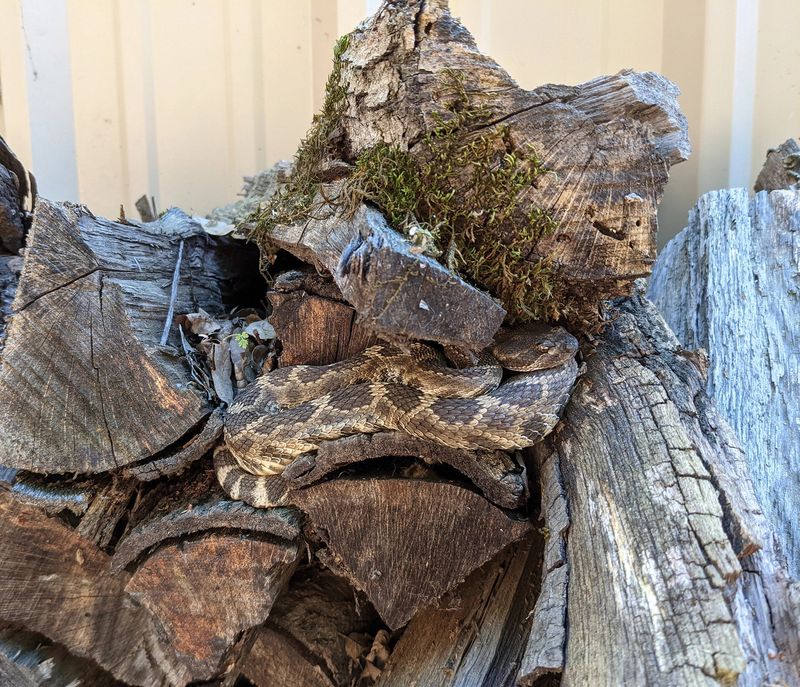
Seeing a rattlesnake in your yard tends to trigger alarm, but the snake’s presence almost always has a practical explanation rooted in habitat rather than aggression. Rattlesnakes are drawn to places that offer a combination of cover, basking surfaces, water, and prey.
A yard with any of those elements, even unintentionally, can become a useful stopping point for a snake moving through the landscape.
Rodents are the biggest draw. Mice, rats, and ground squirrels are a rattlesnake’s primary food source, and a yard that supports active rodent populations is also a yard that can attract the snakes hunting them.
CDFW’s human-wildlife conflict guidance on snakes notes that rattlesnakes commonly forage near rodent burrows and will follow prey into residential areas. A brush pile, a compost bin with accessible scraps, a leaky irrigation line, or a cluttered storage area can quietly support rodent activity and, by extension, snake activity.
One sighting does not mean a den is established under the house, that the property is infested, or that the yard is unusually dangerous compared to neighboring properties. CDFW is clear that rattlesnakes generally avoid people and typically move away when given room.
A snake crossing your patio may simply be traveling between a shaded resting spot and a hunting area, following a scent trail left by a mouse, or warming up on a sun-heated surface before moving on.
Treating a single sighting as evidence of a larger problem can push homeowners toward hasty decisions that increase bite risk. A snake that is left alone and given a clear exit route will often disappear on its own within a day.
Understanding why it showed up in the first place is the starting point for reducing the chances of a repeat visit.
Recognize possible danger without moving closer
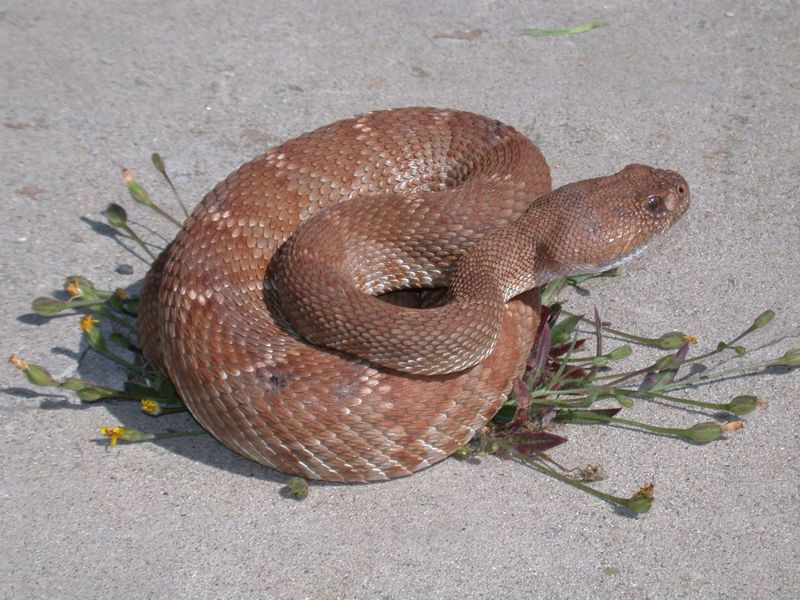
Rattlesnakes share a few consistent physical traits that most people can spot from a safe distance, and recognizing those traits is all you need to make the right call. The classic signs are a broad, distinctly triangular head that widens noticeably behind the jaw, rough-looking or keeled scales along the body, and a rattle at the tail tip.
Spotting any one of those features at a reasonable distance is enough reason to treat the snake as potentially venomous and back away.
A missing rattle does not clear the snake. UC Integrated Pest Management notes that rattles can break off through normal wear or encounters with rough terrain, leaving no obvious buzzing device at the tail.
Young rattlesnakes present a different challenge: a newly hatched snake may have only a small button where the rattle will eventually develop, and it may produce little or no audible sound even when agitated. Neither situation makes the snake safer, and neither should prompt a closer look.
Gopher snakes are a common source of confusion in California yards. They have a superficially similar pattern and can flatten their heads to look more triangular when threatened, mimicking the posture of a rattlesnake.
The key difference is that gopher snakes have no rattle. Even so, California State Parks recommends staying at least six feet from any snake, and UC IPM cautions that a person can still be within effective striking range at several feet.
Leaning in to check whether a tail has a rattle puts you closer than you should ever be to an unidentified snake.
Species-level identification is not a safety requirement. The only recognition that matters in the moment is “this could be a venomous rattlesnake,” and the only action that follows from that recognition is creating distance.
Everything else can wait.
Back away and leave the snake an escape route
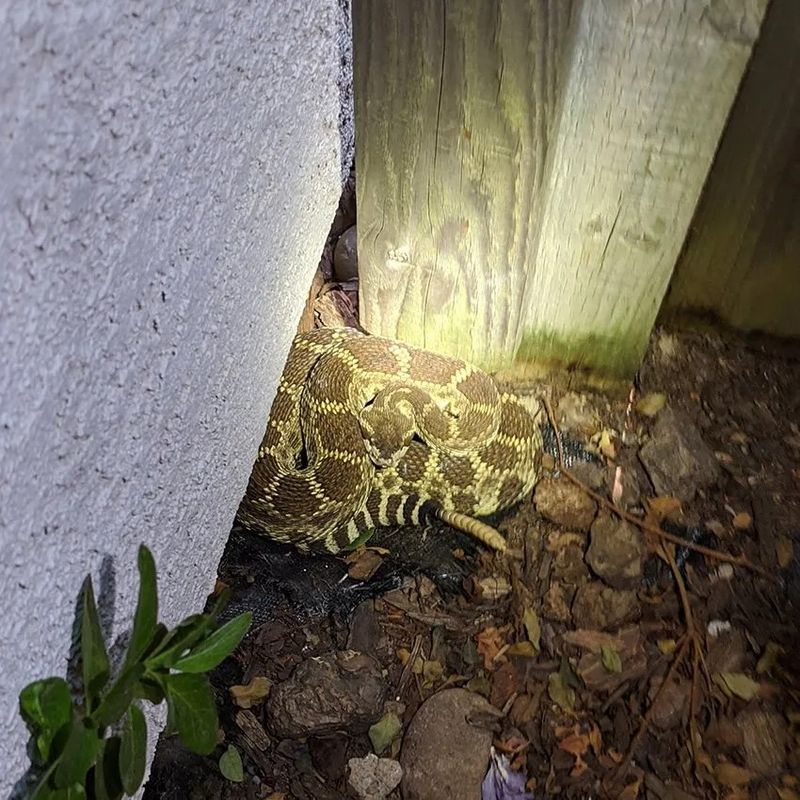
The first move after spotting a rattlesnake in your yard is the simplest one: stop, stay calm, and create distance. Move children and pets away from the area immediately, then back away slowly yourself without making sudden movements or crowding the snake.
Avoid cutting off its path. A rattlesnake that feels cornered is far more likely to hold its ground, and that is exactly when bites happen.
CDFW reports that most bites occur when people handle a rattlesnake or accidentally touch one while walking or climbing in areas where snakes rest. Deliberate provocation, including trying to shoo the snake away or pick it up, puts the person in the role of the threat.
Giving the snake a clear, unobstructed route away from high-traffic areas is the single most useful thing you can do in the first few minutes.
Whether to wait it out or call for help depends on where the snake is. A rattlesnake resting in a low-traffic corner of the yard, well away from doors, play equipment, and paths people use regularly, may simply move on if left alone.
That is a reasonable outcome and requires no intervention beyond keeping people and pets clear of the area for a few hours.
The calculation changes when the snake is in or near a doorway, a garage, a children’s play area, or any space that gets regular foot traffic. In those situations, UC IPM specifically recommends professional removal rather than homeowner handling.
A qualified wildlife removal professional or licensed pest control operator with venomous-snake experience has the training and equipment to relocate the animal without putting either the handler or the snake at unnecessary risk. Looking up that contact before a snake appears, rather than searching during a tense encounter, is genuinely useful advance preparation.
Do not attempt to identify the snake’s exact species before calling. The professional needs to know its general location and that it appears to be a rattlesnake.
That is enough information to get the right help on the way.
Do not turn a sighting into a bite
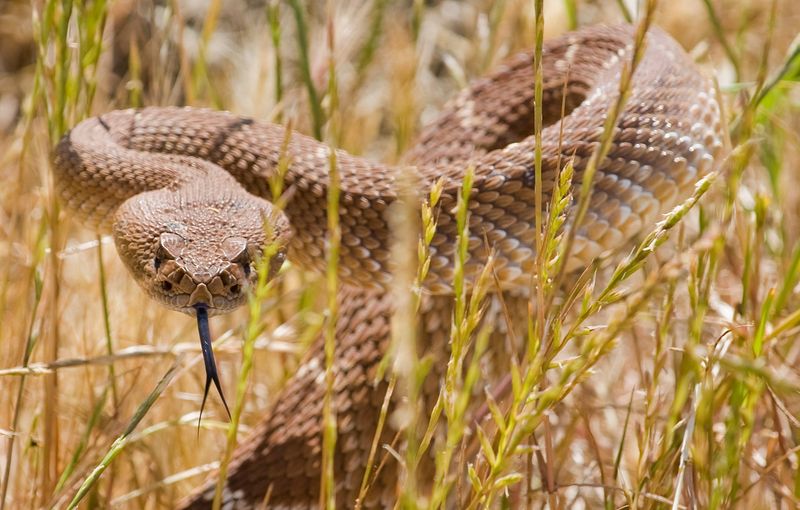
A rattlesnake in the yard tends to trigger a strong impulse to do something, and nearly every available something makes the situation worse. Chasing the snake, trying to pin or grab it, spraying it with a hose, sweeping it with a broom, or using a shovel to flip or kill it all require getting close enough to be within striking range.
That is how a manageable wildlife encounter becomes a medical emergency.
UC IPM warns that attempts to kill or handle rattlesnakes are among the most common causes of bites, and the danger does not end when the snake stops moving. A dead rattlesnake can retain a functional bite reflex for an extended period after death and can inject venom if the head is handled or disturbed.
Picking up what appears to be a dead rattlesnake by the neck or tail has sent people to the emergency room. The reflex is not a sign of life; it is a physical response that persists in the tissue regardless of the snake’s condition.
Killing a rattlesnake is also unnecessary as a safety measure. A snake that is left alone and given room will move away.
If it is in a location where that outcome is not acceptable, a professional can remove it without anyone being harmed. Killing it yourself does not make the property safer, and it eliminates a predator that was likely keeping the local rodent population in check.
The behavioral shift that matters most is replacing the urge to act with the decision to step back. Recognize that the snake is potentially dangerous, maintain a wide margin of distance, keep others away from the area, and contact a professional if the location requires it.
That sequence costs nothing and dramatically reduces bite risk compared to any hands-on approach a homeowner might attempt on their own.
Reduce cover, rodents, and openings around the home
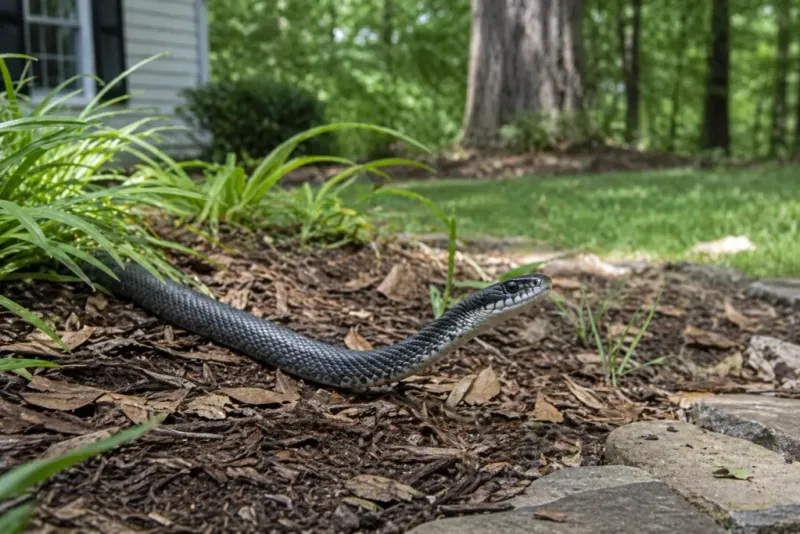
Making a yard less attractive to rattlesnakes starts with understanding what draws them in the first place: cover, prey, and access. Addressing all three reduces the likelihood of a repeat encounter, though no set of yard changes can make a property completely snake-proof.
The goal is reducing conditions that make your yard useful habitat, not eliminating a species from the landscape.
Ground-level clutter is the most common source of cover. Rock piles, log stacks, lumber piles, rotten stumps, heavy brush, and tall weeds all create the shaded, sheltered spots rattlesnakes use for resting and thermoregulation.
Moving these materials away from frequently used areas, or eliminating them where practical, removes resting sites near the house. UC IPM recommends keeping vegetation trimmed and debris managed as a primary habitat-reduction strategy.
Rodent control is equally important. CDFW notes that reducing rodent populations can make a yard less attractive to snakes because the food source disappears.
Address active burrows, secure compost bins, eliminate accessible pet food or bird seed that draws mice, and fix leaky irrigation that creates moisture pockets rodents favor. A yard with fewer rodents gives a hunting rattlesnake less reason to linger.
Physical exclusion is the most reliable layer of protection. Seal any opening larger than one-quarter inch around the foundation, crawl spaces, garages, and utility or pool equipment enclosures.
Inspect snake-exclusion fencing for gaps at the base and corners, and keep vegetation from piling up against fence lines where it can create a ramp or bridge over the barrier.
Repellents are not a reliable substitute for these physical measures. UC IPM does not recommend plants, sulfur, horsehair ropes, or commercial chemical repellents because none has been shown to work consistently.
Mothballs deserve a specific note: scattering them along a fence line or in a garden bed is an off-label use that the EPA says can violate pesticide labeling requirements. Beyond the legal issue, they pose a risk to children, pets, and wildlife while providing no proven snake-deterrent benefit.
Treat every suspected bite as an emergency
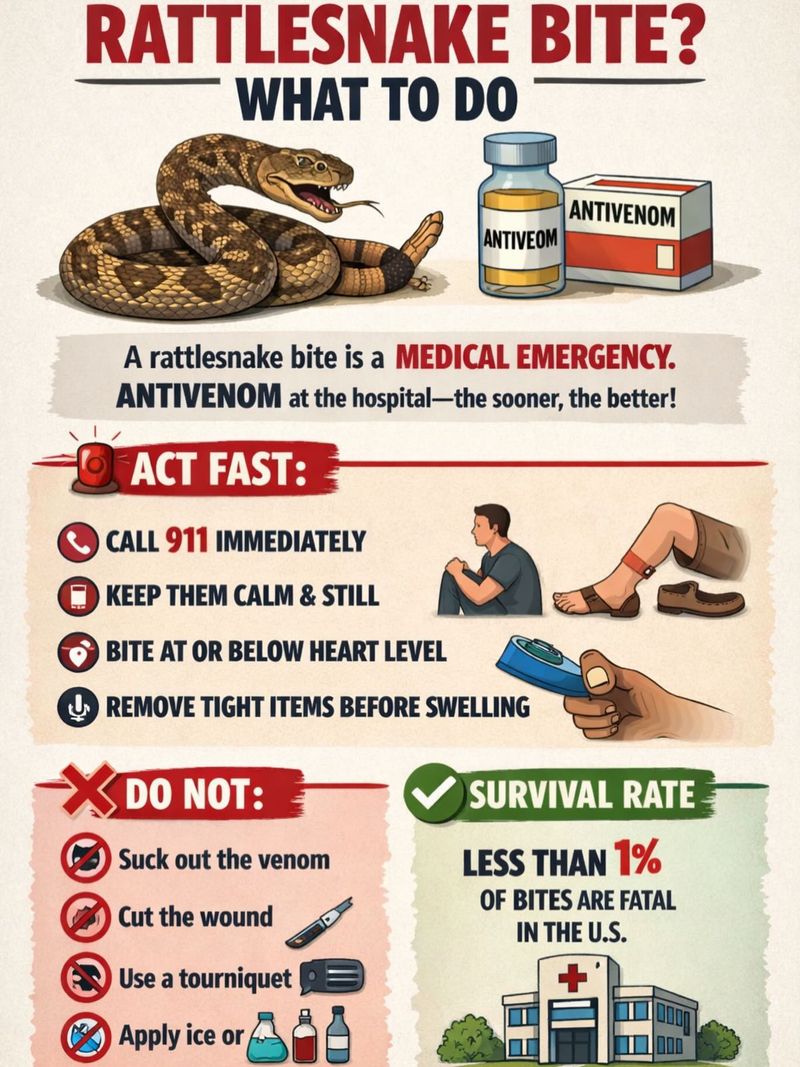
A rattlesnake bite is a medical emergency from the moment it happens, and the only correct first response is calling 911 and getting the victim to emergency care as fast as possible. California Poison Control states that severe or life-threatening symptoms can develop within minutes or a few hours, which means time spent on anything other than transport is time the victim cannot afford to lose.
While waiting for help or during transport, keep the victim as calm and still as possible. Limiting movement slows the spread of venom through the lymphatic system.
Remove rings, watches, shoes, or any tight clothing near the bite site before swelling makes removal painful or impossible. If soap and water are close at hand, gently washing the area is fine, but do not delay leaving for the hospital to do it.
Poison Control’s rattlesnake guidance is explicit about what not to do: no tourniquet, no ice, no cutting around the bite, no suction device, no electric shock, no alcohol, and no commercial snakebite kit. These approaches are rejected by CDFW, California Poison Control, and UC IPM because they do not help and can cause additional harm.
Do not stop to photograph the snake or attempt to identify the species before leaving. Emergency physicians treat the patient’s symptoms, not the snake’s identity, and a photograph is never worth a delay in care.
Pets need the same urgency. A dog or cat bitten by a rattlesnake should go to a veterinarian immediately, not after a wait-and-see period at home.
CDFW advises discussing rattlesnake vaccination with your veterinarian as one option for dogs in high-risk areas, but vaccination is not a substitute for emergency treatment after a bite. Any suspected bite, in any animal at any age, requires professional medical assessment right away.
The useful takeaway is space, not certainty
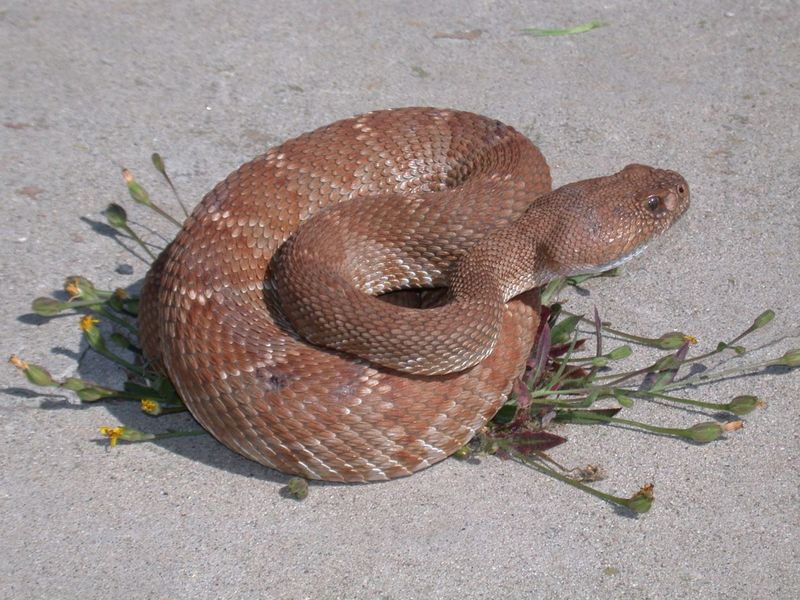
The western rattlesnake is California’s most widespread rattlesnake and the correct broad statewide answer when someone asks which species is most likely. But local forms and related species vary enough by region that no single name covers every California yard with equal accuracy.
CDFW and UC IPM both make clear that a sighting most often reflects available habitat or prey rather than any kind of territorial claim or aggressive intent.
The actionable sequence stays the same regardless of species: recognize a potentially venomous snake, give it a wide berth, call a professional if the location makes removal necessary, and reduce the cover, rodents, and entry points that made your yard attractive in the first place. None of those steps require knowing the snake’s exact name, and none of them require getting closer.
California’s rattlesnakes are native predators doing exactly what they evolved to do. A yard that occasionally hosts one is often a yard that also has fewer rodents.
Coexistence and sensible caution are not opposites.