
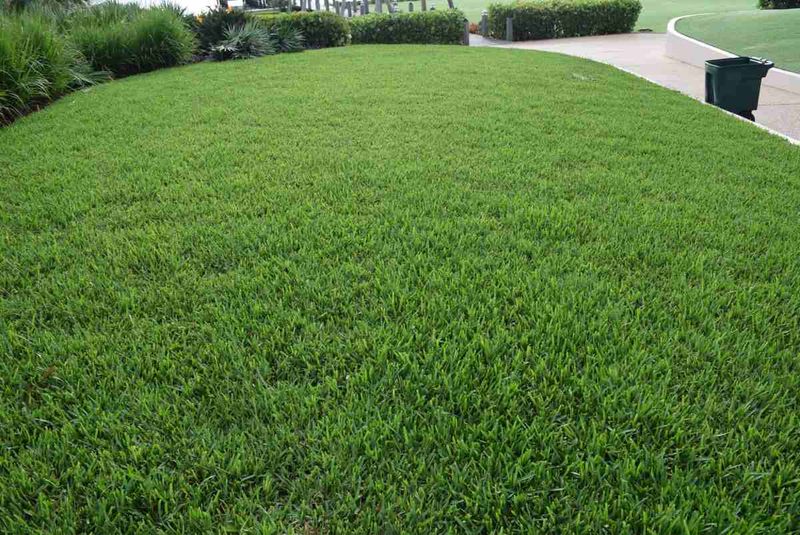
A Florida summer can leave St. Augustinegrass looking thin, brown, and beaten down by the time September rolls around. The temptation is to grab a bag of fertilizer and start feeding, but that move can backfire if the real problem is pests, disease, poor drainage, or dead turf.
Getting the lawn back on track starts with figuring out what actually went wrong, then working through a practical sequence that protects the grass you still have.
September recovery starts with triage, not fertilizer
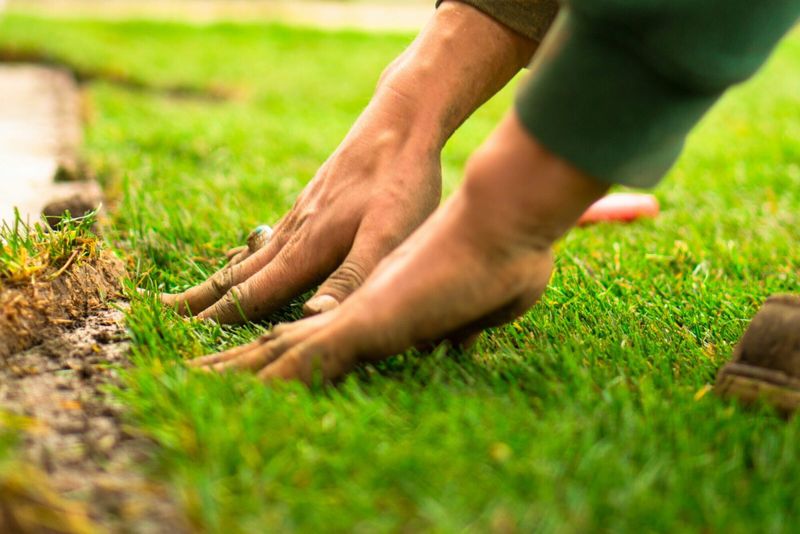
Before reaching for any product, the most useful thing you can do in September is get down close to the lawn and look at what is actually there. Pull back some of the brown or thin grass and check whether the stolons, those horizontal stems that spread across the surface, are still green and firm underneath.
A crown that is alive and slightly flexible still has a chance to recover. One that is dry, brittle, and pulls away from the soil with no resistance is dead, and no fertilizer will change that.
St. Augustine, Florida sits in the part of the state that UF/IFAS guidance on St. Augustinegrass generally classifies as North Florida, meaning the lawn is approaching a slower growth period as nights cool in September. That seasonal shift matters because it affects which repairs are realistic and whether a fertilizer application will actually help.
Current local ordinances, water-management district rules, and actual weather conditions in your specific area still control what you can and should do, so check those first.
Walk the edges where healthy grass meets the damaged areas and note what you find. Is the soil soggy or bone dry?
Are there spots where the sprinkler clearly misses, or areas where water pools after rain? Is there heavy shade from a tree that has filled in over the summer?
Did a vehicle park on the turf repeatedly? Each of those observations points toward a different cause, and treating the wrong one wastes time and money while the actual problem continues.
Fertilizer cannot fix dead roots, active insect feeding, fungal disease, compacted soil, poor drainage, or salt injury from storm surge or road runoff. UF/IFAS guidance on turf recovery after storm events makes clear that even flood-damaged lawns need debris removal, drainage correction, and compaction assessment before any inputs are added.
The same logic applies to any summer-stressed lawn: identify the stressor first, then choose the response that actually addresses it.
Raise the mower and protect the remaining leaf area

Mowing height is one of the simplest adjustments a homeowner can make in September, and it has a real effect on how well stressed turf holds up through the rest of the season. Standard St. Augustinegrass cultivars, including Floratam, Classic, and Bitterblue, should be maintained at roughly 3.5 to 4 inches.
Dwarf cultivars such as Seville and Captiva perform better at about 2 to 2.5 inches. If your mower has been set lower than those ranges all summer, raising it now gives the grass more leaf area to capture sunlight and continue producing the energy it needs to fill in.
The one-third rule matters here. UF/IFAS recommendations for St. Augustinegrass are clear that no more than one-third of the leaf blade should be removed during any single mowing.
If the grass grew tall while you were managing irrigation problems or waiting out a stretch of heavy rain, do not try to drop it back to the correct height in one pass. Mow at the highest setting first, wait a few days, and then bring it down to the target range with a second cut.
Scalping a stressed lawn in September removes the very leaf area the grass needs to recover.
Clippings can stay on the lawn when you are mowing at the right height and frequency. They do not cause thatch under those conditions and return small amounts of nutrients and organic matter to the soil.
The exception is a heavy clump left sitting on top of the turf after a missed mowing or a very wet cut. Scatter those clumps with a rake or a quick pass with the mower after they dry out, so they do not smother the grass underneath.
A dull mower blade tears rather than cuts the grass, leaving ragged ends that turn brown and create entry points for disease. September is a reasonable time to sharpen or replace the blade if it has not been done this season.
Clean cuts close faster and put less mechanical stress on a lawn that is already working to recover from a difficult summer.
Irrigate by visible stress and pause after adequate rainfall
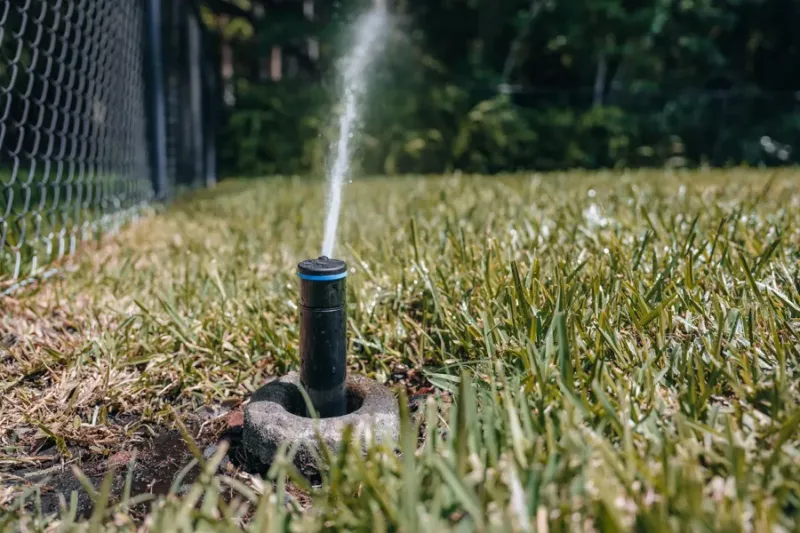
Calendar-based watering schedules are one of the most common reasons Florida lawns suffer in September. The rainy season can deliver several inches of water in a single week, and an irrigation system running on a fixed timer keeps adding water the lawn does not need.
The result is shallow roots, increased disease pressure, and mobile nutrients pushed below the root zone before the grass can use them. Switching to a visible-stress approach solves that problem without guesswork.
Watch for four specific signs that established St. Augustinegrass actually needs water: leaf blades that fold lengthwise, a blue-gray color where the grass normally looks green, wilting that makes the turf look limp, and footprints that stay visible in the lawn for more than a few minutes after you walk across it. When you see those signs in a portion of the yard, run the irrigation for that zone.
When you do not see them, hold off. UF/IFAS guidance on watering Florida lawns describes the target application as approximately 0.5 to 0.75 inch per irrigation event, not a light daily sprinkle.
Florida’s sandy soils hold water poorly, which means frequent shallow watering encourages roots to stay near the surface rather than growing deeper where moisture is more stable. UF/IFAS research on landscape irrigation and soil nutrient management also notes that overwatering on sandy soils can push nitrogen and other mobile nutrients below the root zone, meaning you lose the benefit of any fertilizer you apply.
Compacted soil compounds the problem by slowing infiltration and causing runoff before water reaches the roots at all.
Use a rain gauge or a set of straight-sided cans placed around the yard to measure what your sprinkler zones are actually delivering. Sprinkler heads apply water unevenly across a zone, so measuring lets you confirm coverage rather than assuming it.
If runoff begins before you reach the 0.5-inch target, break the irrigation into shorter cycles with a pause in between so the water has time to soak in.
Water early in the morning when possible. Evening irrigation leaves the leaf blades wet overnight, which raises the risk of fungal disease during September when conditions for large patch begin to develop.
SWFWMD guidance on lawn watering in Florida recommends reducing or suspending supplemental irrigation after adequate rainfall, and current district water restrictions in your county may limit which days and times you can irrigate regardless of what the lawn looks like. Check those restrictions before adjusting your schedule, and count any significant rainfall as part of your irrigation total for the week.
Brown and thin patches need a diagnosis before treatment
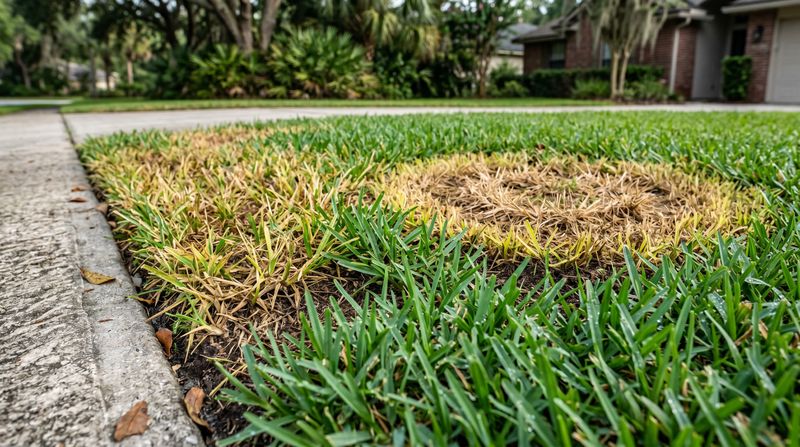
Brown or thinning turf in September can come from a long list of causes, and they can look nearly identical from a few feet away. Treating for the wrong one, spraying a pesticide when the problem is actually a drainage failure, or applying fungicide when chinch bugs are actively feeding, wastes money and leaves the real stressor in place.
The first job when you find a damaged area is to gather enough information to make a reasonable call about what you are dealing with.
Sunny areas along driveways, sidewalks, or the edges of the yard that turned yellow and then brown during dry stretches are worth inspecting for southern chinch bugs. Damage from chinch bugs typically starts as yellowing that progresses outward, and it tends to appear in the hottest, driest spots first.
However, UF/IFAS information on chinch bugs is clear that brown grass alone does not confirm an infestation. Inspect the border between healthy and damaged turf, where active insects are most likely to be present, or use the coffee-can flotation test: remove both ends of a coffee can, press it a few inches into the soil at the healthy-damaged boundary, fill it with water, and watch for small black-and-white insects floating to the surface over the next few minutes.
Confirm before you treat.
As September progresses and nights become cooler and damper, large patch becomes a growing concern for North Florida lawns. UF/IFAS guidance on large patch in Florida lawns describes it as a Rhizoctonia fungal disease that is particularly problematic on St. Augustinegrass, with preventive fungicide applications, where supported by prior history, commonly timed around the end of September in North Florida.
Patches typically appear as roughly circular areas of orange-tan or brown turf with a yellow halo at the active edge. If you have had large patch before and conditions are right, this is worth watching closely.
Gray leaf spot is more of a summer disease, associated with lush growth, prolonged leaf wetness, excess nitrogen, and stressed turf. Herbicide injury, compaction, and overwatering can all increase susceptibility.
UF/IFAS St. Augustinegrass management guidance also lists nematodes as a possibility when turf stays persistently thin and weak despite adequate water and otherwise reasonable care. Nematode populations can peak again in late August and early September, but positive identification requires laboratory testing of a soil sample.
Do not assume nematodes from appearance alone.
Beyond insects and disease, check sprinkler coverage, drainage patterns, shade from trees or structures, soil compaction, and any recent herbicide applications. When the cause is unclear or you suspect a disease you cannot identify from appearance, UF/IFAS guidance on fungicides for lawn disease recommends seeking help from a certified professional or your county extension office rather than applying products based on guesswork.
Feed only when North Florida timing and lawn condition agree
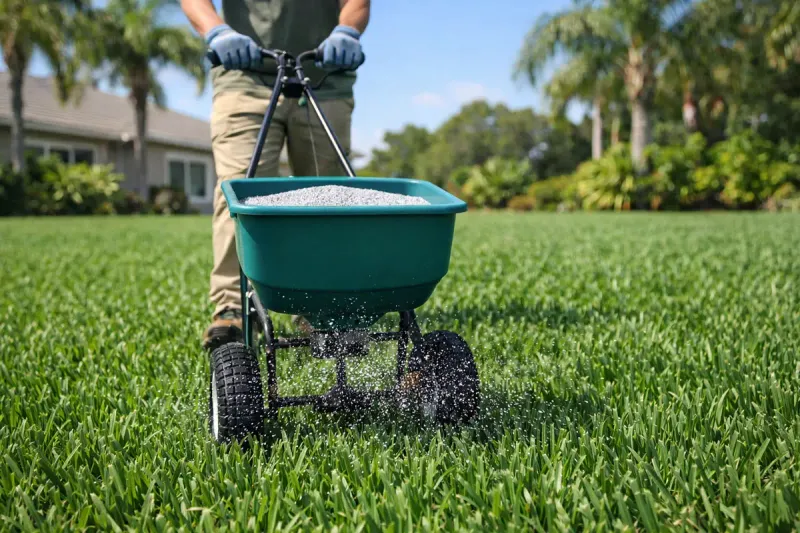
September sits at the end of the recommended fertilization window for North Florida St. Augustinegrass, which means it can be an appropriate time to apply nitrogen, but only when the lawn, the product, and local rules all support it. This is not a universal instruction to feed every stressed lawn in the state.
Central and South Florida follow different schedules because turf growth patterns differ, and even within North Florida, the right call depends on the specific condition of the grass in front of you.
UF/IFAS general fertilization recommendations for Florida turfgrasses include a September complete-fertilizer application for St. Augustinegrass in North Florida programs and some Central Florida schedules. South Florida may include fall applications because turf can continue active growth year-round.
Whatever region you are in, the nitrogen rates in those recommendations are annual totals, not amounts intended for a single September application. The UF/IFAS homeowners guide to St. Augustinegrass management lists annual nitrogen ranges of approximately 2 to 4 pounds per 1,000 square feet for North Florida, 2 to 5 pounds for Central Florida, and 4 to 6 pounds for South Florida, with adjustments for shade, drought, soil type, irrigation, and lawn age.
If the lawn has living turf, is not actively diseased, and the timing fits your region and local ordinances, a slow-release nitrogen product generally presents less risk than a large quick-release application. Slow-release formulations reduce the chance of rapid, weak growth that is more vulnerable to disease and pest pressure.
Excess nitrogen, particularly fast-release nitrogen, can encourage large patch and gray leaf spot and may increase chinch-bug susceptibility, so more is not better in September.
Skip the automatic additions of phosphorus, potassium, iron, or micronutrients unless a soil test or a specific diagnosis supports them. Yellowing can reflect iron or manganese availability, high soil pH, root damage, overwatering, or disease, and iron will not correct any of those causes except an actual iron deficiency.
UF/IFAS guidance on St. Augustinegrass recommends soil testing to determine pH and available nutrients before adding anything beyond nitrogen. If you want to test, the UF/IFAS soil testing form for landscape and vegetable gardens describes the sampling process and what the results can tell you.
Always follow the product label and verify that your city, county, and water-management district permit the application before spreading anything.
Repair living gaps, but do not rush a failing renovation
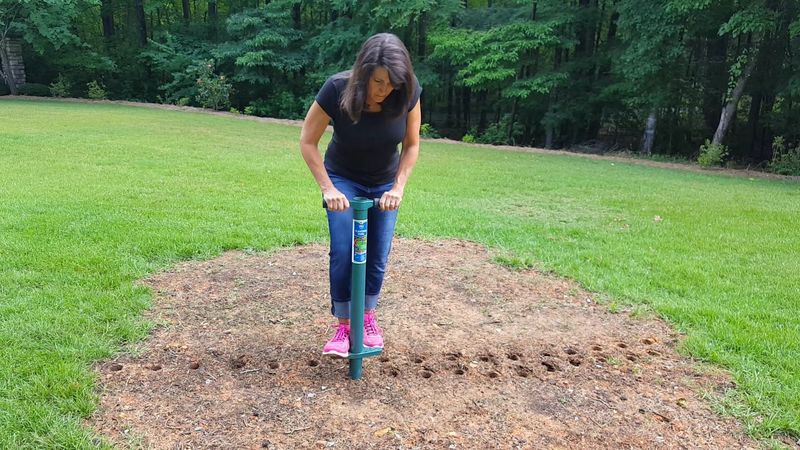
Small bare spots surrounded by healthy, actively growing St. Augustinegrass are reasonable candidates for September repair as long as the cause of the damage has been identified and corrected. Putting plugs or small sod pieces into an area that is still being damaged by insects, disease, compaction, or a broken sprinkler head is a waste of effort.
Confirm the cause first, fix it, and then fill in what is missing.
St. Augustinegrass does not produce viable seed, so repairs are always done with sod, plugs, or sprigs. UF/IFAS guidance on establishing Florida lawns describes plug spacing on six- to twelve-inch centers as a practical approach, with the understanding that wider spacing means more time before the bare areas fill in.
Newly installed plugs or sod need establishment watering that is more frequent than what an established lawn requires, so keep those areas on a separate temporary schedule and do not confuse establishment irrigation with the visible-stress approach used for the rest of the yard.
Larger-scale renovation requires a more careful decision. UF/IFAS renovation guidance recommends asking three questions before committing: Did management practices cause the decline?
Is St. Augustinegrass actually the right grass for this site given the shade, soil, drainage, and traffic? And does more than half the lawn need replacement?
If the answer to the last question is yes, a full renovation may be more practical than spot repair, but it may also be better to wait for a more favorable establishment window rather than push new turf into the ground just before growth slows.
Core aeration is worth considering when compaction is causing poor water infiltration, runoff on flat ground, or shallow rooting confirmed by a screwdriver test. UF/IFAS research on landscape irrigation and soil management identifies compaction as a specific barrier to water penetration, not a universal feature of every thin lawn.
Verticutting or dethatching is a different matter. The UF/IFAS St. Augustinegrass homeowners guide places verticutting in early spring to midsummer when the grass is actively growing, making September a poorly timed window for that operation in North Florida.
Forcing it now can injure the turf and require recovery time the grass does not have before cooler weather arrives.
If the lawn was affected by flooding or tidal surge, treat that situation separately. UF/IFAS guidance on post-storm turf recovery outlines the need to remove debris, address standing water, assess sediment and compaction, and account for saltwater intrusion before attempting any repair.
St. Augustinegrass has only moderate salinity tolerance, and salt damage from coastal storm events does not respond the same way as ordinary summer drought stress.
Choose the fall move that removes the cause
Working through September with a summer-stressed lawn comes down to a short sequence of decisions, each one building on the last. Set the mower to 3.5 to 4 inches for standard cultivars and stop there.
Check the lawn for visible drought stress before running irrigation, apply roughly 0.5 to 0.75 inch per event, and count any meaningful rainfall as part of your weekly total. Follow current local watering restrictions before adjusting your schedule.
When brown or thin areas appear, inspect before treating. Confirm chinch bugs at the healthy-damaged border, watch for large-patch symptoms as nights cool, and send a soil sample to the lab if nematodes seem possible.
If the timing, lawn condition, and local rules support a nitrogen application, use a slow-release product and follow UF/IFAS regional fertilization rates rather than applying the maximum. Skip automatic additions of phosphorus, potassium, or iron unless a soil test or specific diagnosis points to a need.
For bare spots with living turf nearby and a confirmed, corrected cause, plugging or small sod repairs can work in September while warm growing conditions remain. If more than half the lawn is dead or the decline has no clear fix yet, delaying major renovation is often the more practical choice.
A lawn that goes into fall thinner than you would like is still recoverable. One that was rushed into renovation without addressing the underlying problem usually is not.
Recovery follows the cause, not the calendar.