
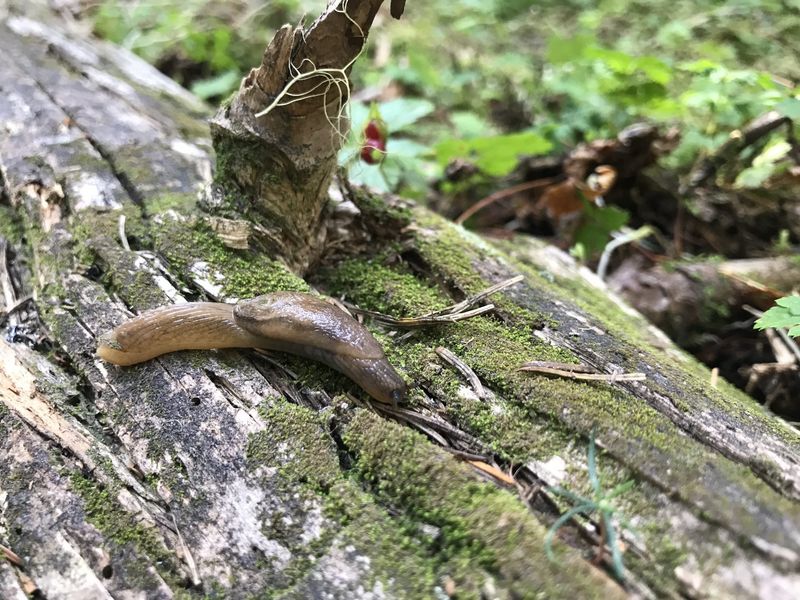
You plant a neat row of lettuce and spinach, and a few days later the bed looks thin and ragged. Slugs may be the cause, but other culprits can make seedlings vanish too.
A flashlight and a few quiet minutes after dark can tell you a lot. Here is how to check, what to do tonight, and when to look for a different answer.
Slugs fit the pattern, but check the damage
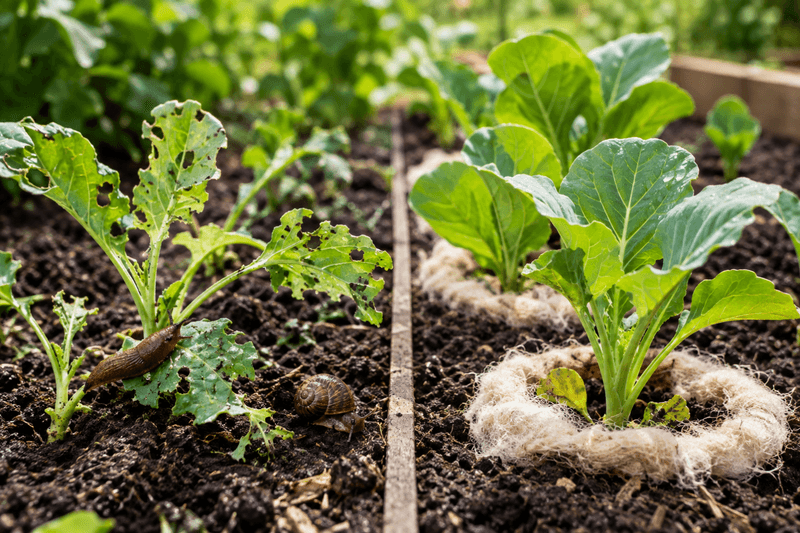
Tender greens are a favorite meal for slugs. According to University of Minnesota Extension, slugs feed on lettuce and other soft plants, and seedlings can be badly hurt because they have so little leaf to spare.
That makes slugs a reasonable suspect when your fall lettuce or spinach looks chewed. It does not make them the proven cause.
A seedling that is simply gone could have been eaten, cut, rotted, or never sprouted at all.
Look closely at what remains. Slug feeding tends to leave irregular, ragged edges or holes in the leaves, and a shiny, dried slime trail on leaves or soil is a strong clue.
Neat, clean cuts or collapsed stems point somewhere else.
Treat slugs as a lead to follow. The next few sections show how to confirm it before you spend time or money on a fix.
Local conditions matter more than the calendar
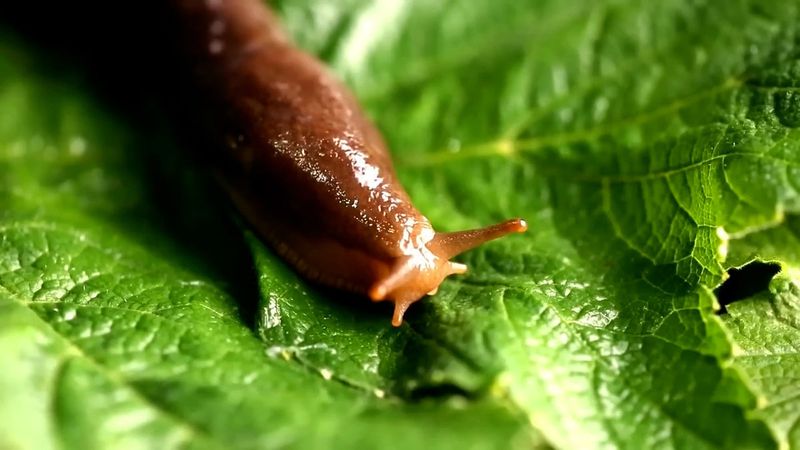
Slugs are mostly active at night, and they like cool, damp conditions. When those conditions show up, vulnerable seedlings are easy targets.
Still, a date on the calendar proves nothing by itself.
What counts is what your bed is actually doing. Recent rainfall, how often you irrigate, how much shade the bed gets, and how humid the air stays all shape slug activity.
A shady bed that stays wet after sprinklers run is a better slug habitat than a sunny, breezy one.
UF/IFAS notes that slugs and snails favor humid, wet environments, and Florida also has many kinds of snails and slugs, so identifying the animal first is wise. The Texas A&M guide suggests checking at night and cutting back excess moisture.
Florida and Texas do not share one climate. A humid Gulf Coast yard and a drier part of Texas can behave very differently, so judge your own bed rather than a regional rule of thumb.
Use a flashlight to inspect after dark
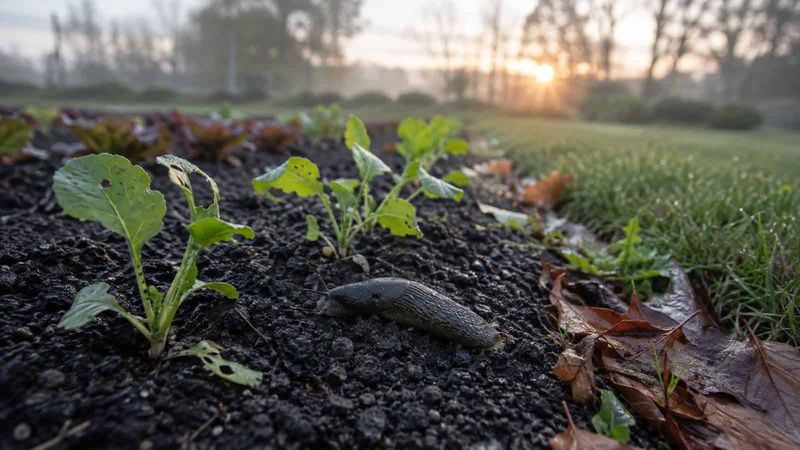
Grab a flashlight and head out an hour or two after dark, when slugs are most likely to be feeding. Walk the bed slowly and shine the light on damaged plants first.
Check the undersides of leaves and the soil right around the stems.
Next, look at the places slugs hide during the day. University of Minnesota Extension points to spots under pots, boards, stones, mulch, and leaf litter.
UF/IFAS gives similar advice about checking sheltered, damp spots.
Seeing slugs on or near chewed plants, or finding fresh, wet slime trails, makes the diagnosis much stronger. Write down what you find and where.
If you see nothing on the first night, do not give up. Slugs do not feed every night, so a second or third look gives a truer picture.
Check for cutworms and damping-off, too
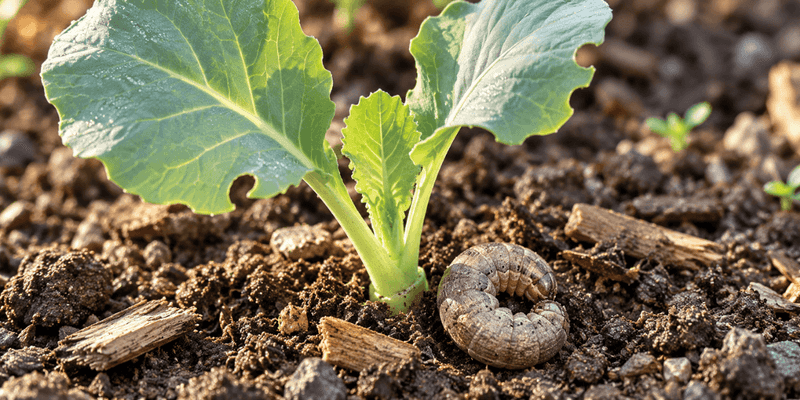
Plenty of things besides slugs can make seedlings disappear. Two common ones are cutworms and damping-off, and the clues look quite different from slug chewing.
Cutworms are caterpillars that can sever a seedling at or just above the soil line, as described by University of Minnesota Extension. You may find a clean-cut stem lying on the ground with little leaf damage.
Damping-off is a disease. Per Utah State University Extension, affected seedlings can develop water-soaked or discolored stems and then collapse.
Missing seedlings or patchy sprouting with none of these signs do not confirm slugs. Gently check the stems and the soil near the gaps.
If the stems are cut, mushy, or discolored and there are no holes or slime, slugs may not be your problem.
Hand-pick slugs and check beneath a shelter
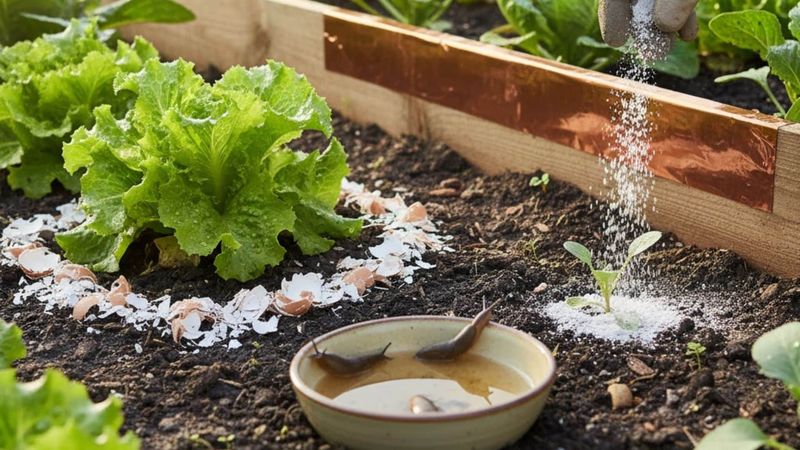
If your night walk turns up slugs, the quickest response is to pick them off. Wear gloves, drop them into a container, and dispose of them.
University of Minnesota Extension lists hand-picking as a practical first step.
You can also set a small board or flat piece of wood on the soil near the bed. Slugs tend to crawl under it to hide, so lift it the next morning and collect whatever is there.
The Texas A&M guide covers this kind of simple shelter check.
Beer or yeast traps are another option. Oregon State University Extension treats traps as one tool among several.
They catch some slugs, but they need emptying and refilling, and they will not protect a whole bed on their own.
Keep at it while damage continues. One round rarely clears everything.
Reduce hiding places without drying out the greens
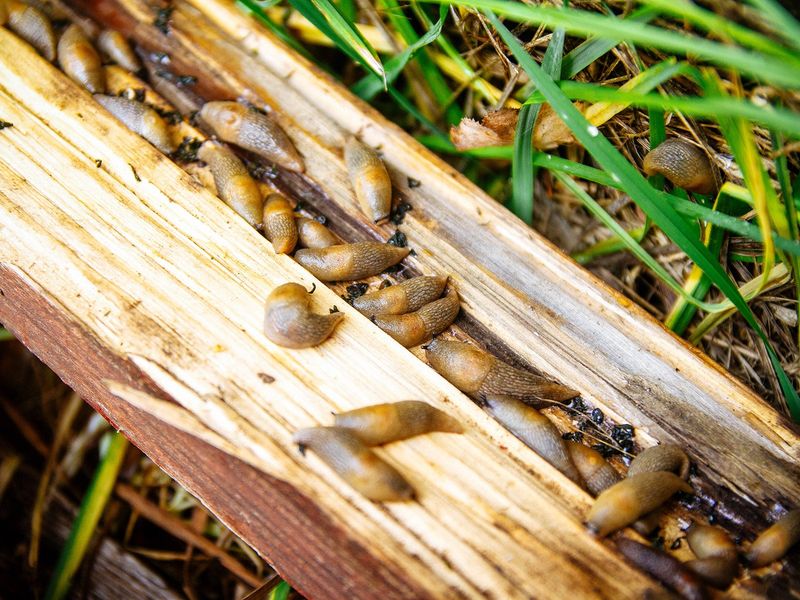
Slugs need cover and moisture, so a few small changes can make your bed less welcoming. Clear fallen leaves, old boards, and other debris that sit against the soil.
Thin crowded plantings so air can move through.
Watering habits matter too. University of Minnesota Extension and UF/IFAS both point toward avoiding overwatering and wetting the soil rather than the whole bed.
Water in the morning, and aim at the root zone when you can, so leaves and soil surfaces are not soggy all night.
The goal is less needless dampness, not less water. Lettuce and spinach still need steady moisture, especially as seedlings.
These steps can make conditions less favorable, but they will not guarantee the slugs stay away.
Consider labeled bait if damage continues
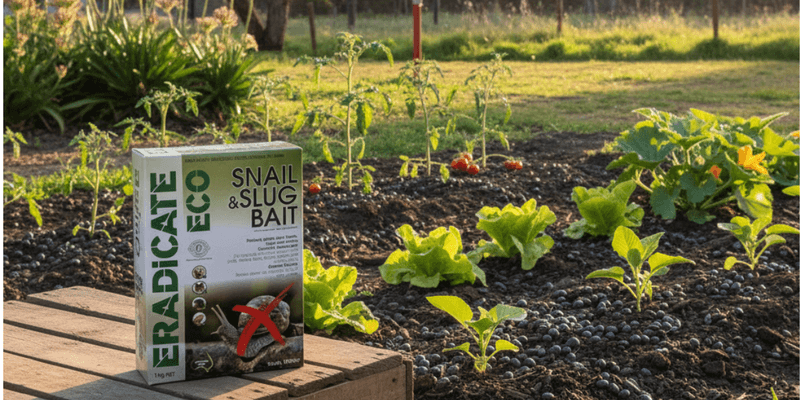
If you have scouted repeatedly, removed slugs, and cleaned up the bed, but chewing continues, bait may be worth considering. University of Minnesota Extension places it after nonchemical steps, and the UGA Cooperative Extension handbook is a good place to look for options.
Choose only a product labeled for the crop and the site, such as a vegetable garden. Follow the directions exactly, including the harvest interval, which is the waiting time before you can pick.
Baits are not all alike. Metaldehyde is very toxic to dogs and other animals, so keep any bait where pets and wildlife cannot reach it, and read the label for how to apply it safely.
Skip salt, which can harm plants and soil. Diatomaceous earth is also not a dependable outdoor slug fix, especially in wet weather.
Keep checking and reassess the diagnosis
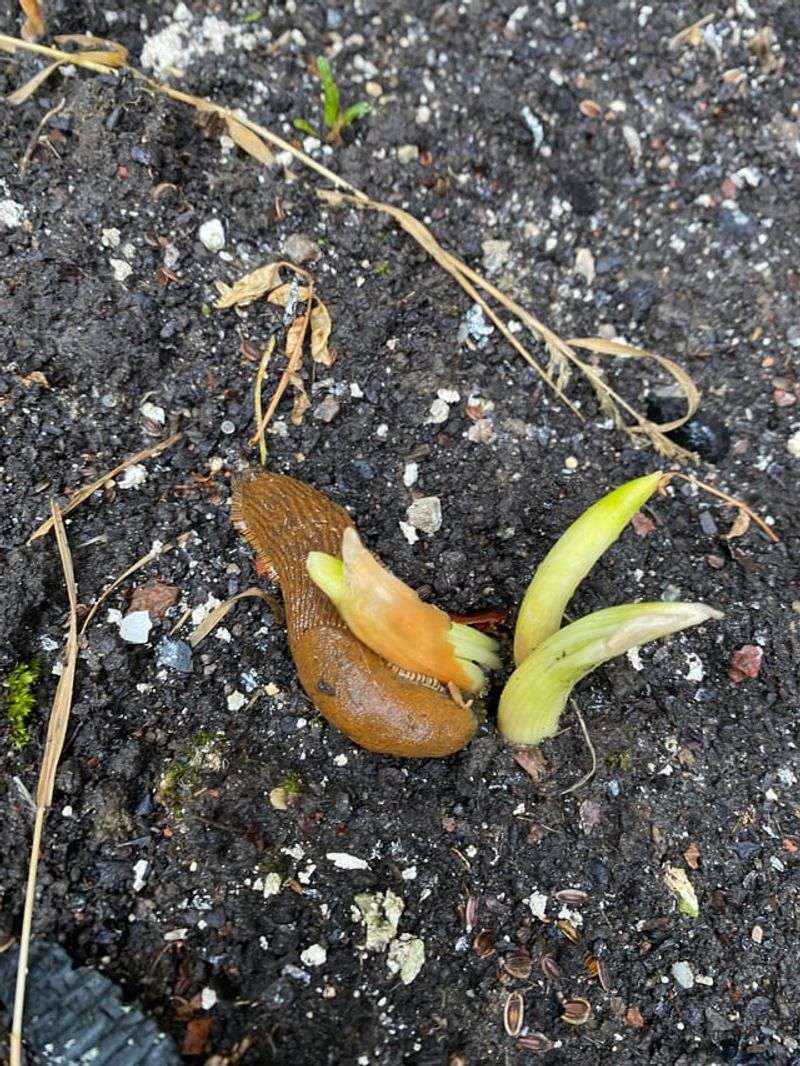
The routine is simple. Look for chewed edges, holes, or slime.
Go out after dark with a light. Remove the slugs you find, and keep doing it for as long as the damage continues.
Be ready to change your mind. If the leaves show no chewing, or seedlings keep vanishing with no slime and no slugs, look again at cutworm signs and damping-off symptoms.
These steps can reduce losses, but they will not stop every one.
Slug guidance from University of Minnesota Extension leans on repeated checks, and your own notes will show whether numbers are dropping.
A flashlight tells you more than a guess ever will.